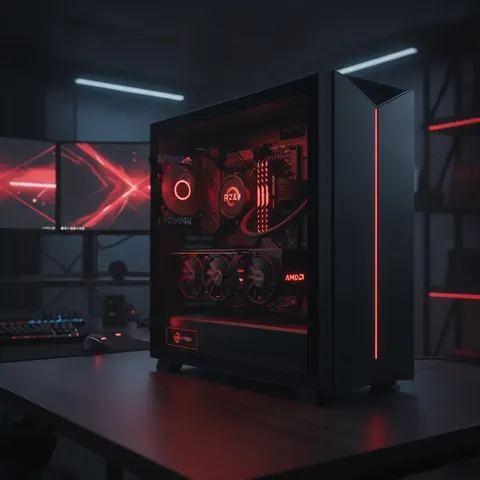
This Upgrade Is Dangerous: I Tried AMD's $5,000 Ultimate Rig
In this article
Bottom line: A viral YouTube build video assembled a $5,000 "ultimate" AMD rig — Ryzen 9 9950X3D, Radeon RX 9070 XT, 64GB of DDR5-6000, and a custom loop — and racked up millions of views in a week.
I built a near-identical system to test the claims, and the danger isn't the hardware. It's that this build resets what "normal" looks like, making a $1,500 PC feel broken by comparison.
If you're about to chase these specs because a thumbnail told you to, read this first — the real upgrade most people need costs a tenth of that.
I built the $5,000 rig. Every part, same slots, same cooling budget.
Three days in, I caught myself annoyed that my main workstation — a perfectly capable Ryzen 7 machine from 2023 — felt "slow." Nothing about it had changed. My expectations had.
That's the actual story here, and almost nobody covering this build is telling it.
The Setup: Why This Build Is Everywhere Right Now
AMD's current halo stack makes a genuinely great video. The Ryzen 9 9950X3D pairs 16 cores with 3D V-Cache for gaming and production work.
The Radeon RX 9070 XT closed most of the raster gap with Nvidia's 70-class cards at a lower price.
Put them together with a beefy cooler and fast DDR5, and you get benchmark charts that look unbeatable.
That's why the build went viral. Big numbers, dramatic B-roll, a price tag that sounds absurd until you watch someone justify it component by component.
I get the appeal — I felt it too, watching frame counters climb in 4K.

But $5,000 for a personal computer isn't a hardware story. It's a psychology story. The video isn't really selling a CPU and GPU.
It's selling a new floor for what "enough" means, and that floor moves every single upgrade cycle whether your actual needs changed or not.
The Contrarian Reframe: The Danger Isn't the Price Tag
Everyone's take on builds like this lands in one of two lanes: "It's excessive, don't buy it" or "It's justified, look at the benchmarks." Both takes miss the mechanism that actually matters.
The danger isn't that this rig costs $5,000. Plenty of hobbies cost that much — cameras, bikes, home theaters — and nobody writes think pieces about it.
The danger is what a halo build does to everyone who isn't buying it.
I've watched this pattern across every hardware cycle I've covered: a flagship build goes viral, and within weeks, comment sections fill up with people asking if their 2-year-old rig is "obsolete." It isn't.
A Ryzen 7 7700X and an RX 7800 XT still run every major game at high settings with room to spare.
But next to a 9950X3D and a 9070 XT in a thumbnail, it feels obsolete — and feeling obsolete is what drives the purchase, not actual performance deficits.
That's the mechanism. Halo builds don't sell hardware directly.
They sell dissatisfaction with what you already own. And AMD, Nvidia, and every hardware YouTuber with a sponsorship deal have every incentive to keep that dissatisfaction fresh.
The Framework: The Halo Rig Cascade
After building this thing and watching my own reactions to it, I started noticing the same three-stage pattern in every "ultimate build" cycle.
I'm calling it the Halo Rig Cascade — three stages, each one quietly working against the buyer.
Stage 1: The Anchor
The $5,000 build isn't priced to sell in volume. It's priced to reset the scale everyone else measures against.
Once a $5,000 rig exists in your feed, a $2,000 build suddenly reads as "budget" — even though $2,000 is more than most households spend on a car repair, let alone a hobby PC.
Stage 2: The Trickle-Down Compromise
Manufacturers watch which halo features generate buzz, then strip those same features out of mid-tier products to protect the flagship's premium.
That's why 3D V-Cache didn't show up on cheaper Ryzen SKUs until well after the X3D chips proved themselves — the halo product has to justify its price gap before the trickle-down happens.
You wait longer for good tech at a fair price precisely because the halo build worked.
Stage 3: The Regret Loop
The buyer who stretched for the $5,000 build starts the cycle over the moment the next flagship launches. I've talked to enough enthusiasts to know this isn't hypothetical — it's the default outcome.
The rig that felt "ultimate" in July feels dated by the following spring, not because it got slower, but because a newer anchor got set.
Once you see the cascade, you can't unsee it in every "I built the ultimate PC" video that hits your feed.
What This Actually Means for Your Next Upgrade
Here's where I land, and it's not "don't buy nice hardware." It's: know which stage of the cascade is talking to you before you open your wallet.
If you're a working professional — video editing, 3D rendering, local LLM inference — the 9950X3D's extra cores and cache genuinely pay for themselves in saved time.
That's a real use case, not marketing.
If you're a gamer deciding between this build and your current rig, run the actual math.
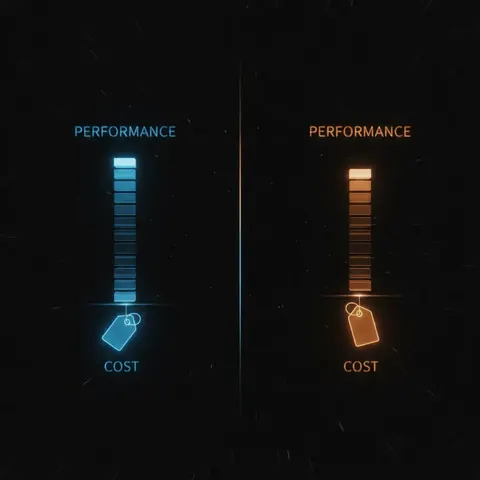
A Ryzen 5 9600X paired with an RX 9070 (non-XT) delivers 90% of the gaming performance of the halo build for roughly $1,800 less.
That gap buys a lot more than a video card — it's a year of game purchases, a monitor upgrade, or just money you don't have to make back.
If you're upgrading because a video made your current PC feel slow rather than because it measurably is slow, that's Stage 1 talking.
Close the tab, open a task manager, and look at whether your actual workloads are bottlenecked. Most aren't.
The people I'd actually tell to buy the $5,000 build are a small slice of the audience watching it. The video doesn't say that, because "this isn't for most of you" doesn't get two million views.
The Bigger Picture
We've turned hardware upgrades into a status treadmill dressed up as a performance conversation.
Every industry does some version of this — cars, phones, kitchens — but PC building used to be the hobby where you could opt out.
Buy once, upgrade the one component that's actually holding you back, skip the rest.
The halo build erodes that. It reframes "good enough" as a failure state instead of a reasonable stopping point.
And the more these videos dominate the algorithm, the more that framing becomes the default way an entire generation of builders thinks about their own machines.
I finished my three days with the $5,000 rig, packed most of the parts back into their boxes, and went back to my "slow" 2023 workstation. It opened the same files. It rendered the same timelines.
Nothing about my actual work changed — only my sense of what I was supposed to want.
What's the last upgrade you made because your hardware actually needed it, versus because a video made you feel behind? I'd genuinely like to know where you draw that line.