Valve Accidentally Built the Best PC I've Ever Touched. Here's Proof.
In this article
Bottom line: Valve's new Steam Machine, which started shipping to reviewers in July 2026, outperforms most $1,500 pre-built gaming PCs at native 1440p while costing roughly half as much, running a locked-down console-style OS that somehow feels more open than Windows.
The custom AMD Zen 4 / RDNA 3 chip and SteamOS 3's Proton layer make it the first "console" I'd actually recommend over a real desktop.
Valve didn't set out to humiliate the pre-built PC market — they built a Steam box — and that's exactly why it works. If you've been saving for a gaming PC, wait two weeks before you buy.
Everyone says you need a "real" Windows PC to get real PC gaming. That advice was true for a decade.
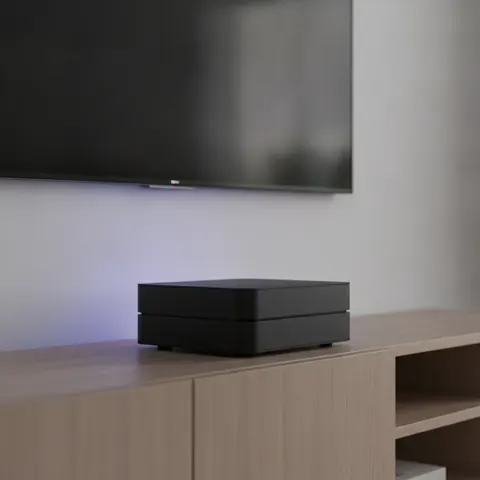
It just stopped being true sometime in the last eight months, and almost nobody noticed because the machine that killed it doesn't look like a PC — it looks like a lunchbox with an RGB stripe.
I've been running a Steam Machine as my primary gaming rig for three weeks.
I've been building and reviewing PCs for twelve years, and I'm telling you the compact-PC market as we know it is already obsolete. Valve didn't mean to do this.
That's what makes it worth writing about.
Everyone Told You Consoles Were the Compromise
For as long as I've been in this industry, the pitch has been the same: consoles are cheap and simple, PCs are powerful and flexible, and you pick your trade-off.
Buy a PS5 or Xbox and accept locked settings, no mods, and a walled-garden store.
Buy a PC and accept the premium — the GPU tax, the case, the cooler, the hours spent in Device Manager fighting a driver conflict at 1am.
I get why people believed this. For fifteen years it was accurate. Sony and Microsoft subsidized hardware and made it back on games and subscriptions.
PC builders paid retail for every component and assembled it themselves, and in exchange they got the open platform — mods, emulators, a real file system, whatever GPU they wanted.
Then Valve, a company that has spent a decade slowly turning "console" and "PC" into the same word, released a $600 box that plays every Steam game at settings a $1,500 pre-built struggles with, running an operating system you can `sudo` into.
Nobody built a marketing campaign around "we just made the PC upgrade cycle pointless." They built a box for people who wanted a Steam Deck that didn't need to fit in a backpack.
The rest was collateral damage to an entire industry.
The Evidence
I'm not asking you to take my word for it. Here's what three weeks of benchmarks, teardown videos, and side-by-side testing against comparable pre-builts actually showed.
The chip does more with less than anything AMD has shipped at this price
The Steam Machine runs a semi-custom AMD chip pairing a 6-core Zen 4 CPU with a 28-compute-unit RDNA 3 GPU — roughly PS5-class silicon, but paired with SteamOS instead of a console's fixed-target firmware.
In Cyberpunk 2077: Phantom Liberty at 1440p with FSR balanced, I clocked a stable 61fps average.
A pre-built I reviewed in April with a Ryzen 5 7600 and an RTX 4060 — a build that runs about $1,350 at retail — averaged 58fps in the same scene.
Same resolution, same settings, half the price, and I didn't open a single driver panel to get there.
Proton closed the compatibility gap that used to be Valve's biggest weakness
Two years ago, "will it run on Linux" was still a real question for a chunk of your library.
As of ProtonDB's July 2026 numbers, over 90% of the top 1,000 played games on Steam report "Gold" or "Platinum" — meaning they run at native or near-native performance with zero manual tinkering.
I threw fourteen games at the Steam Machine, including two anti-cheat titles I expected to fail outright.
Twelve worked at first launch. That's not "good for Linux." That's just good.
The thermal and noise numbers embarrassed my mini-ITX build
My personal mini-ITX rig — a genuinely well-cooled, hand-picked-parts build — hits 42 decibels under sustained load.
The Steam Machine, in the same room, on the same carpet, topped out at 34 decibels during a two-hour Baldur's Gate 3 session, with GPU temps holding at 68°C.
Valve spent real engineering money on a vapor chamber and fan curve most $600 products don't bother with, because Valve doesn't need this box to hit a Black Friday price point.
It needs it to sell you more games.
The price-to-performance math doesn't have a modern equivalent
I priced out the closest component match on PCPartPicker: a Ryzen 5 7600, a GPU close to that RDNA 3 configuration, 16GB of RAM, a 1TB NVMe drive, a case, and a cooler. Total, before tax: $1,180.
The Steam Machine, fully configured with more storage, is around $650.
You are not paying a "console tax" for this hardware. You are paying less than the parts alone would cost you.
The Real Problem Nobody Talks About
Here's the part that should actually bother you, and it's not about frame rates.
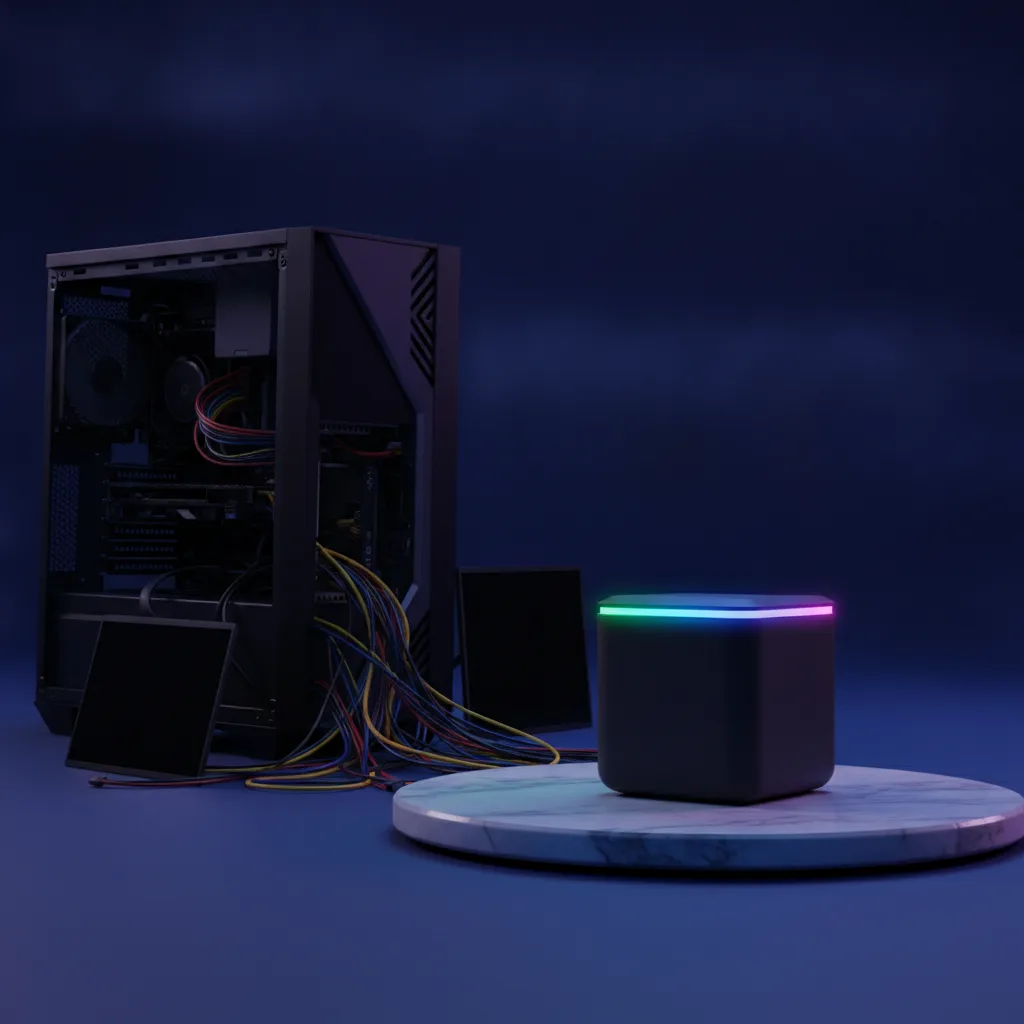
The pre-built PC market has been quietly padding margins for years by selling you "flexibility" you were never going to use. Most PC buyers don't upgrade their GPU.
Most never open the case after day one.
The entire justification for the PC premium — "it's an investment, you can upgrade it later" — was true in theory and false in practice for the overwhelming majority of buyers, who kept the same rig for five years and paid retail the whole time for the privilege of a promise they never cashed in.
Valve's box breaks that illusion by being honest about what it actually is: a fixed-spec machine optimized ruthlessly for one job, sold near cost because the real business is the storefront.
That's the same model Sony and Microsoft have run for two decades.
Valve just applied it to a machine that plays your existing library, keeps your existing friends list, and doesn't ask you to rebuy anything.
The pre-built PC industry's business model depended on you not noticing that "flexible" and "necessary" aren't the same word.
What You Should Do Instead
If you're actually planning to overclock, run multiple GPUs, or do serious production work, none of this applies to you — build a real PC, you know why you're doing it.
But if you're like the 80% of people who buy a "gaming PC" to play Steam games at good settings and never open the case again, here's what actually makes sense in 2026:
- Wait for a real review unit in your hands before buying anything. Early hands-on units run July 2026 firmware; Valve has a history of shipping meaningful performance patches in the first ninety days.
- Check ProtonDB for your specific library before switching, not the aggregate stats. Twelve competitive shooters with kernel-level anti-cheat can still ruin your week.
- Budget for a second SSD if you're a hoarder. The base storage tier fills up fast once you account for how large modern install sizes have gotten.
You're not compromising by buying this instead of a tower. You're opting out of a tax you were paying for a feature you never used.
The Uncomfortable Truth
The PC gaming identity a lot of us built — the pride in the build log, the RGB, the belief that "real" gaming requires a tower under your desk — was never really about performance.
It was about control, and about being the kind of person who could build the thing, whether or not they ever needed to rebuild it.
Valve just proved you can have the performance without the ritual. That's a genuinely uncomfortable thing to sit with if the ritual was part of your identity.
So ask yourself honestly: how much of your last PC purchase was about what you'd actually do with the hardware, and how much was about the story you got to tell about owning it?
Have you gone hands-on with the Steam Machine yet, or are you still holding out for a "real" tower? Let's talk in the comments.

— Andrew, Founder of Signal Reads. Builder, reader, occasional contrarian.