Stop Buying Printers Until You See This Uncomfortable Truth
In this article
Bottom line: HP's Dynamic Security firmware update has bricked non-HP ink cartridges since 2016, and the company settled a $1.35 million class-action suit over it in 2019 — then kept doing it anyway.
In 2024, Canon printers started flashing "genuine ink" warnings that void warranty claims, and both companies now push subscription models (HP Instant Ink, Canon's PIXMA plans) where you don't own your ink, you rent access to it.
If you buy a printer in 2026 without checking whether it's subscription-locked, you're signing up for a razor-and-blades business model that's gotten far more aggressive than razors and blades ever were.
Skip the impulse buy — check the ink-lock policy first.
I bought a $79 printer in March. By June, it wanted $7.99 a month just to keep printing at the resolution I'd already paid for.
That's not a glitch. That's the business model. I spent a weekend digging into how printer companies actually make money, and what I found made me want to throw my HP OfficeJet through a window.
It also explains something bigger about where hardware is headed — and it's not just printers.
Why This Is Suddenly Everyone's Problem
Printers used to be a punchline, not a headline.
Then Louis Rossmann's teardown videos on firmware-locked cartridges started pulling millions of views, and suddenly a category nobody thought about was trending on YouTube alongside AI chips and iPhone leaks.
Here's why it matters now, in August 2026, more than it did five years ago.
HP and Canon have both quietly shifted from selling you a machine to selling you a subscription that happens to come with a machine. HP's Instant Ink program already has north of 10 million subscribers.
Canon rolled out its own ink-plan equivalent across its PIXMA line. Brother and Epson are testing similar models in select markets.
I talked to a friend who manages IT procurement for a 40-person architecture firm.
She told me their printer fleet costs went up 60% over two years — not from buying new machines, but from mandatory firmware updates that disabled compatible third-party cartridges the office had already stockpiled.
They didn't choose to spend more. The printers chose for them.
That's the part that should bother you. This isn't a story about ink being expensive. Ink has always been expensive — famously more per ounce than good champagne.
This is a story about a company reaching into a machine you own, sitting on your desk, and changing what it's allowed to do after you bought it.
Everyone's Furious About the Wrong Thing
The internet's take on this is "printer companies are greedy, ink is a scam, HP sucks." All true. All boring. All missing the actual shift happening here.
The real story isn't that ink is overpriced.
It's that your printer is no longer a printer — it's a subscription enforcement device that happens to also print documents. The hardware is now a loss-leader delivery mechanism for a recurring revenue stream, and the firmware exists primarily to protect that revenue, not to make the machine work better.
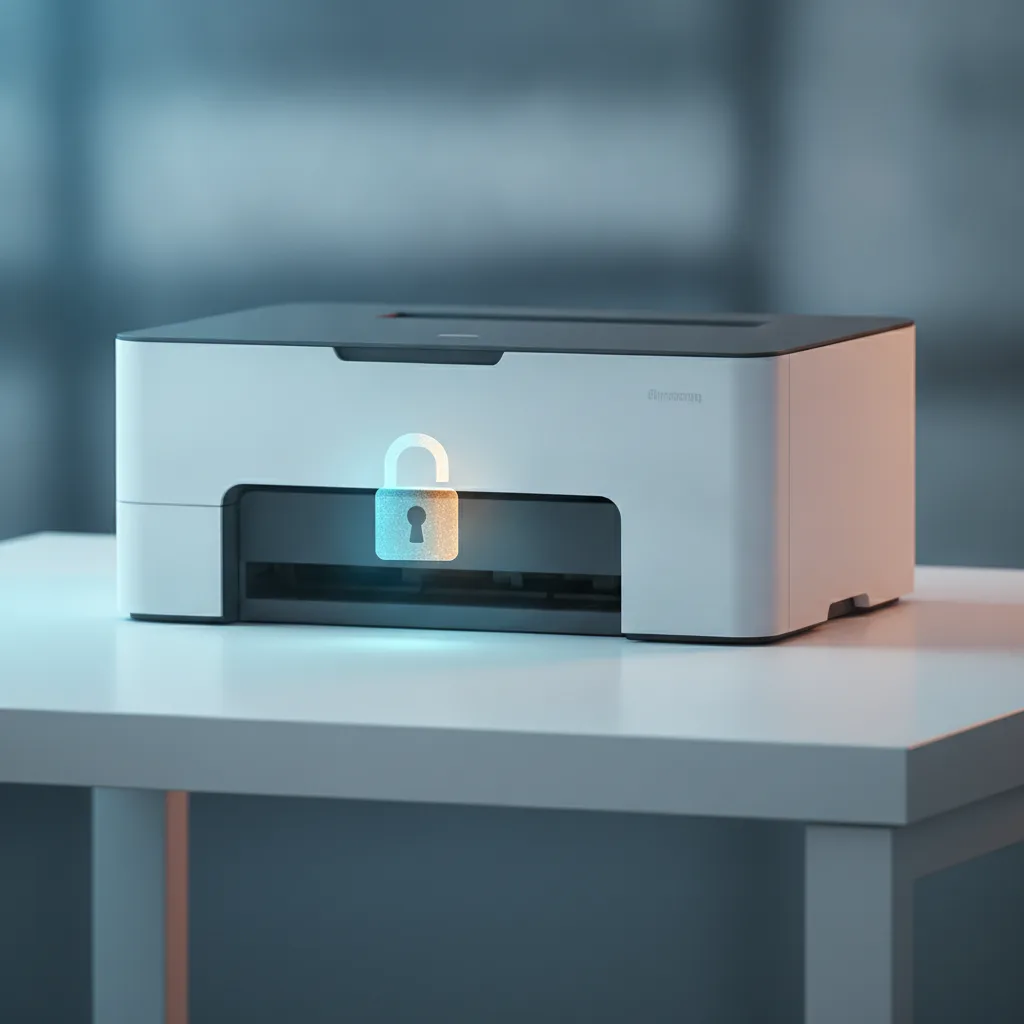
Think about what "Dynamic Security" actually does. HP pushes an update over Wi-Fi. That update checks whether your cartridge has an HP-authorized chip.
If it doesn't — even if the cartridge is a perfectly good refill you bought legally — the printer refuses to print. Not degrades. Refuses.
A machine you paid for, sitting on your desk, connected to your network, is being remotely reconfigured by a company that no longer needs your consent to do it.
That's not a pricing dispute. That's a remote kill switch on private property, and we've collectively decided to call it a business model instead of what it is.
And here's the part that should really worry you if you're in tech: printers are the least dangerous version of this pattern.
Printers are cheap, replaceable, and annoying but not catastrophic when they misbehave.
The same subscription-enforcement logic is already showing up in cars (BMW's heated-seat subscription), farm equipment (John Deere's infamous right-to-repair fights), and increasingly, smart home hardware.
Printers are the test case. If we accept it here, we've already lost the argument everywhere else.
The Three-Layer Lock: How Printer Companies Actually Trap You
After going through class-action filings, FTC complaints, and about six hours of forum threads from furious IT admins, I built a framework for understanding exactly how this trap closes.
I call it the Three-Layer Lock.
Layer 1: The Hardware Hook
The printer itself is priced below cost, sometimes dramatically so. That $79 machine likely cost HP more than $79 to manufacture and ship. This isn't generosity — it's customer acquisition.
You are the product being subsidized, and the subsidy is a bet that you'll pay it back through ink.
Layer 2: The Firmware Gate
Once the hardware's in your home, periodic firmware updates re-establish control that hardware ownership used to guarantee.
This is the part people miss: you don't just buy the risk once at purchase — you re-consent to it every time you accept an update, usually without reading anything, because the printer nags you until you click "yes."
Layer 3: The Subscription Wrapper
The final layer reframes the whole relationship.
Instant Ink doesn't sell you ink — it sells you a plan based on pages printed per month, and if you go over, you pay overage fees like a phone bill from 2009.
Cancel the plan, and in some documented cases, cartridges that still have ink in them stop working entirely, because the ink was never really "yours" — it was inventory HP tracked remotely and reclaimed on churn.
Stack all three layers and you get a machine that behaves less like a purchase and more like a lease you didn't know you signed. The printer isn't the product. The printer is the enrollment form.
What This Actually Means for You
If you manage a household or a business, here's the concrete shift: stop evaluating printers on price-per-unit and start evaluating them on exit cost — what it takes to walk away from the ecosystem once you're in it.
For consumers, that means checking three things before you buy, not after: whether the model supports Dynamic Security-style firmware locks, whether third-party cartridges are explicitly supported (not just "compatible" in fine print), and whether the company has a history of remotely disabling features post-purchase.
Brother, notably, has stayed mostly out of this fight and become the default recommendation in right-to-repair communities for exactly that reason.
For IT buyers, the calculus is bigger.
Fleet-wide firmware policies mean a single update pushed overnight can change your operating costs company-wide without a purchase order, a vendor call, or a signature.
That's a procurement risk, not just an annoyance, and it belongs in vendor contracts — with explicit clauses locking firmware behavior at time of purchase.

For anyone building hardware products yourself — and I mean anyone in IoT, smart devices, even SaaS-adjacent physical products — this is a cautionary tale, not a playbook.
The printer industry proved you can extract subscription revenue from owned hardware. It also proved that customers notice, remember, and eventually revolt.
HP's Trustpilot rating hovers near the bottom of its category for a reason. Short-term ARR is not worth becoming the industry's cautionary YouTube video.
The Bigger Question We're Not Asking
Here's what actually keeps me up about this. We used to have a clean line: you buy a thing, you own the thing, the thing does what it did when you bought it.
That line is dissolving across almost every category of hardware, one firmware update at a time, and printers just happen to be the most visible, most infuriating example because we interact with the betrayal directly — mid-print, ink light blinking, deadline looming.
The uncomfortable truth isn't that printers are bad.
It's that ownership itself is becoming a subscription with extra steps, and most of us are opting in every time we click "update now" without reading what changed.
I'm not saying don't buy a printer. I'm saying read the ink policy with the same scrutiny you'd give a phone contract, because that's functionally what it is now.
Have you had a device change what it does after you bought it — printer, car, appliance, anything? What did you do when it happened, and did you actually switch brands, or just grumble and stay?
Let's compare notes in the comments.