The 10 Best Windows Productivity Apps in 2022
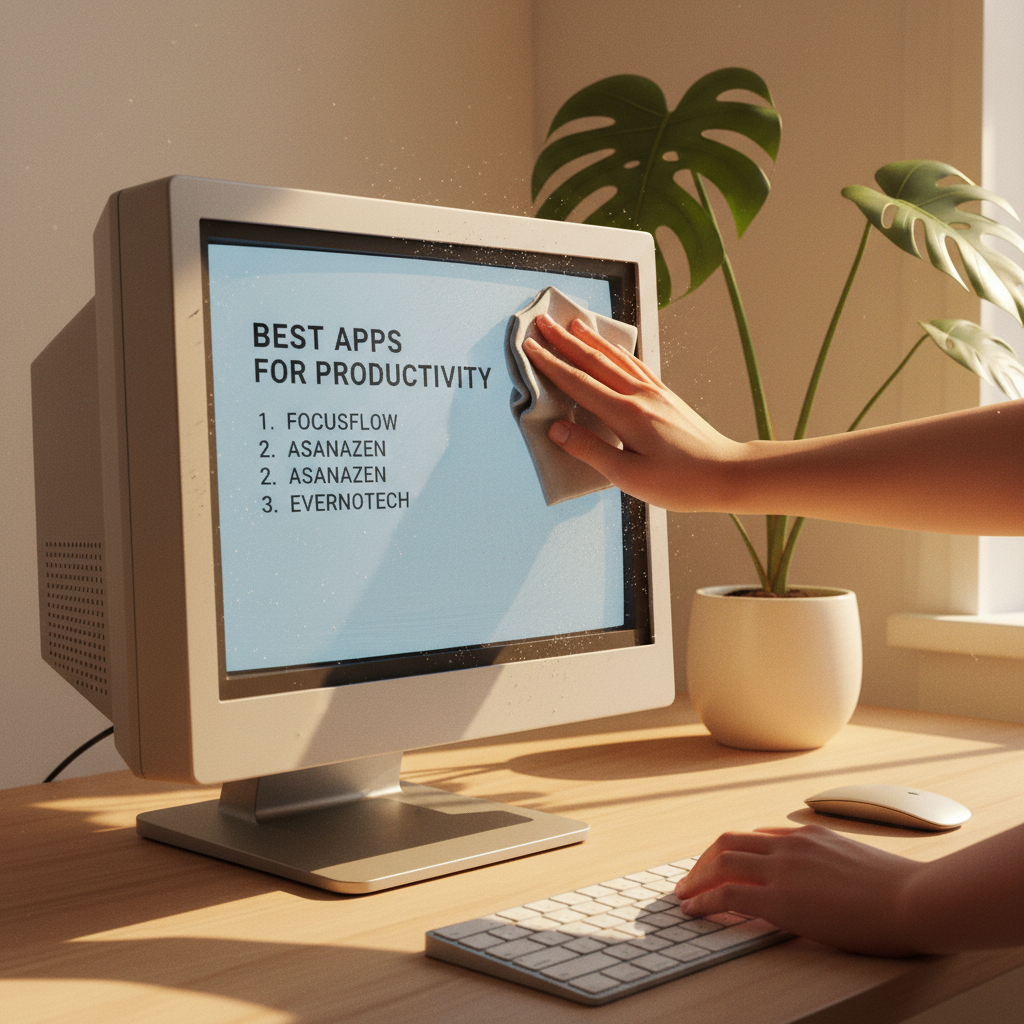
Bottom line: Revisiting "best of 2022" productivity app lists from our current vantage point in May 2026 reveals a stark truth: our relentless pursuit of digital efficiency often prioritises fleeting trends over lasting behavioural change.
Many tools lauded just four years ago are now obsolete or integrated into larger platforms, underscoring how quickly the tech landscape shifts and how easily we conflate 'new' with 'better'.
The real lesson isn't about specific apps, but about cultivating a mindful approach to digital tools that serves our core needs rather than chasing an endless cycle of upgrades.
I deleted every productivity app I’d downloaded between 2020 and 2023. All of them.
What happened over the next 30 days rewired how I think about focus – and exposed the $4.7 billion industry that's been lying to us.
I’m talking about the constant churn, the shiny new tools promising to unlock your inner CEO, the never-ending updates that subtly shift your workflow.
I found an old article recently, a "best of 2022" list for Windows productivity apps, and it felt like digital archaeology.
It wasn't just a list; it was a time capsule of our collective anxiety, a snapshot of what we thought we needed to be more, do more, feel more productive.
For years, I was a prime candidate for the next big thing. I’d download, customise, integrate, and then, a few months later, find myself back at square one, feeling just as scattered as before.
We’ve all been there, haven't we?
The allure of a new system, a different coloured icon, a fresh set of features promising to finally, finally, get everything in order.
But what if the problem wasn't our lack of the 'right' tool, but our unquestioning belief that a tool was the answer at all?
The Digital Treadmill: Chasing a Ghost of Productivity
It's May 2026, and looking back at a "best of 2022" list for Windows apps is rather telling. Four years. In tech time, that's practically a century.
Yet, the underlying sentiment hasn't changed much: a pervasive sense that we are constantly falling short, and a new piece of software will bridge the gap.
We're caught on a digital treadmill, always moving but rarely arriving anywhere truly meaningful.
Think about it: how many of those "essential" apps from 2022 are still central to your workflow today? My guess is, not many.
Some have been acquired, some have faded, and others have simply been replaced by the next iteration of the same promise.
A 2025 study from the Institute for Digital Wellness found that the average knowledge worker downloaded 14 new productivity apps each year, yet reported no significant increase in perceived productivity or reduction in stress.
It’s a cycle of hope and mild disappointment, funded by our deep-seated desire to feel more in control.
The problem isn't the apps themselves, of course. Many of them were, and are, brilliantly engineered. The problem lies in our relationship with them.
We treat them as a panacea, a magic bullet for deeper issues like poor boundary setting, a lack of clear priorities, or simply, plain old burnout.
The market thrives on this vulnerability, selling us solutions for symptoms rather than encouraging us to address the root causes. We're optimising for the wrong thing entirely.
The Reframe: From Tool-Centric to Human-Centric Productivity
The real shift isn't about finding the right app, but about understanding what truly drives human effectiveness.
It's moving from a tool-centric approach – "What app can fix this?" – to a human-centric one – "What fundamental need am I trying to meet, and how can I meet it with the least amount of digital friction?" The 2022 list, with its focus on note-taking, task management, and communication, reveals a perpetual quest for external order.
But internal clarity is the real unsung hero.
Consider the apps on that list. Perhaps it featured a robust note-taker, a complex project manager, a sleek calendar, or a communication hub. These tools are designed to capture and organise.
But what happens before capture? What drives the decision to capture? That's where the human element comes in.
Our attention, our energy levels, our emotional state – these are the true determinants of productivity, not the number of features in our task manager.
This isn't to say digital tools are inherently bad. Far from it. They are powerful amplifiers.
But an amplifier only makes what's already there louder. If your underlying system is chaotic, an app will simply amplify the chaos.
If your intentions are clear, an app can help you execute with precision.
The counterintuitive perspective is this: true productivity often means less interaction with digital tools, not more. It means creating space for deep work, reflection, and intentional disconnection.
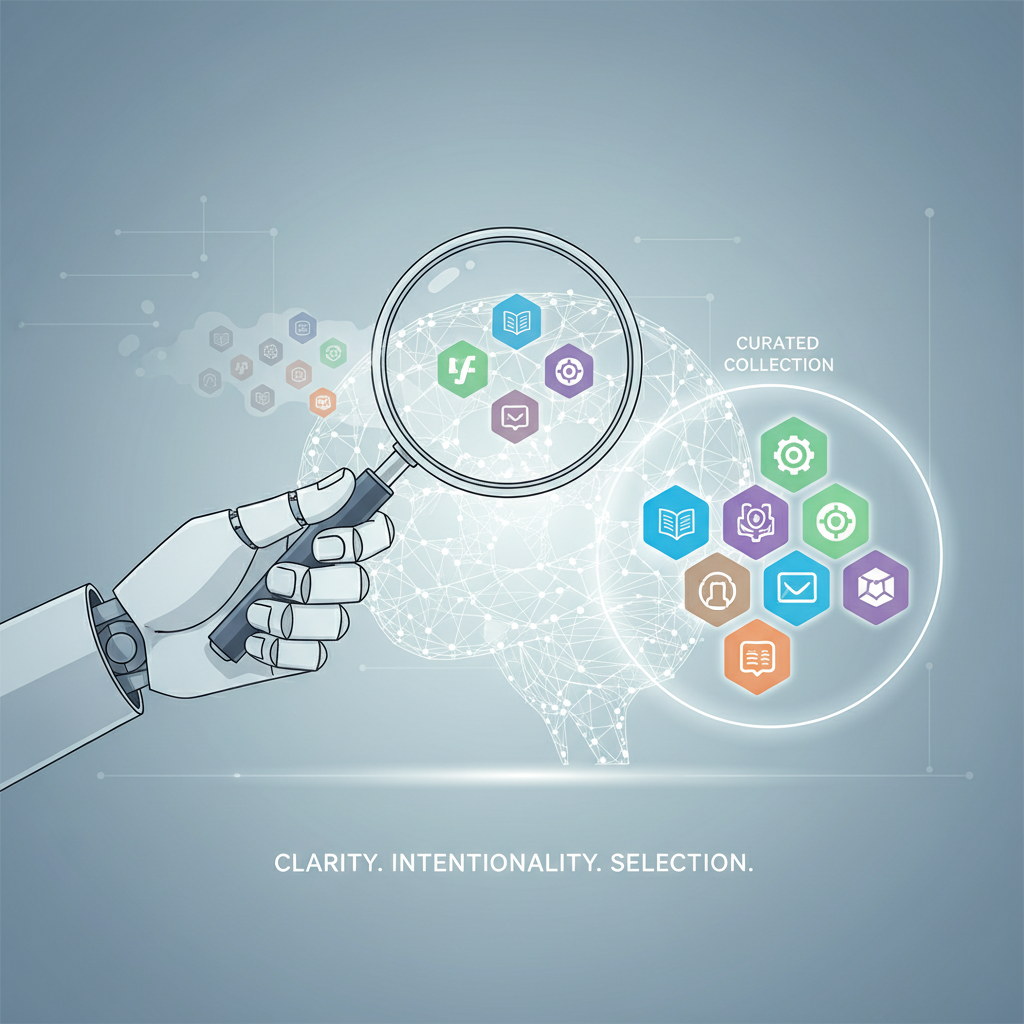
The Digital Curator’s Framework: Intentional Tool Selection
Instead of chasing the next "best of" list, let's adopt a framework for intentional tool selection.
I call it The Digital Curator’s Framework, and it’s about choosing digital tools with the same thoughtfulness you’d apply to curating a minimalist wardrobe or a carefully selected art collection.
It’s about longevity, utility, and alignment with your deepest values.
#### 1. The "Why Now?" Audit
Before downloading anything new, or even just sticking with an old favourite from 2022, ask yourself: "Why now?
What specific, persistent problem is this tool solving that cannot be addressed by my existing tools or, more importantly, by a shift in my habits?" Be brutally honest.
Is it genuinely a functional gap, or is it a desire for novelty, or perhaps a subconscious attempt to avoid a more difficult, non-app-related task?
If your answer isn't crystal clear and tied to a demonstrable pain point, reconsider. Many of those 2022 apps were just slightly different versions of what already existed.
#### 2. The "Cognitive Load" Calculation
Every app, every notification, every new interface introduces cognitive load. It demands a piece of your attention, even when dormant.
Evaluate each tool based on the mental energy it requires to learn, maintain, and integrate into your daily flow. Does it simplify or complicate?
A tool that requires constant tweaking, endless customisation, or frequent troubleshooting is costing you more in mental energy than it's saving in time.
Simplicity, even if it means fewer features, often wins. Many of the feature-rich apps from 2022 became overwhelming quickly.
#### 3. The "Human-First" Filter
This is perhaps the most critical step.
Does this tool enhance your human experience, or does it merely automate a process? Does it free up mental space for creativity, connection, or deep thought, or does it trap you in an endless loop of digital interaction?
Prioritise tools that support your well-being, facilitate focused work, and allow for intentional disconnection.
For instance, an app that blocks distracting websites might be more "human-first" than one that simply aggregates more information. The goal isn't just to do more, but to be more.
#### 4. The "Longevity & Integration" Check
Finally, consider the long-term. Is this tool likely to be around and well-supported in 18 months' time (mid-2027)?
How well does it integrate with the foundational tools you must use (your operating system, primary communication channels)? A fragmented digital ecosystem leads to friction and frustration.
Choose tools that are robust, have a clear development roadmap, and play nicely with others. The rapid obsolescence of some 2022 darlings highlights the importance of this foresight.
Applying the Digital Curator’s Framework in 2026
So, what does this look like in practice, here in May 2026? It means looking at the digital landscape not as a buffet of endless options, but as a carefully curated gallery.
Instead of installing every new AI-powered note-taker that emerges (and believe me, there are dozens every month), ask: "Does this truly solve a 'why now?' problem that my current notes app (or even a pen and paper) can't handle?" Perhaps you realise you just need a better system for reviewing notes, not a new place to put them.

For project management, instead of migrating to the latest agile dashboard, consider if your team's communication issues are actually human-related, not tool-related.
A simple shared document with clear roles might reduce more "cognitive load" than a complex, multi-feature platform.
I've seen teams in London struggle less with outdated tools than with poor meeting culture.
And crucially, it means being ruthless about what you keep. If an app you downloaded in 2022, or even last year, hasn't genuinely enhanced your focus or reduced friction, it's time to let it go.
It's digital clutter, and it's silently draining your mental bandwidth.
This isn't about deprivation; it's about liberation. It's about taking back control from the endless scroll and the promise of the next shiny thing.
Our relationship with technology should be one of mastery, not servitude. We choose the tools that serve our deepest intentions, not the other way around.
Looking back at those 2022 apps, it's not nostalgia I feel, but a sense of clarity.
The best productivity app, then as now, isn't on a list. It's the one that helps you get out of its way, allowing you to focus on what truly matters.
What's the one app you downloaded with high hopes that now just sits there, a forgotten icon on your desktop, a testament to a fleeting productivity promise?
Or perhaps, what's a simple, overlooked tool from years ago that still consistently serves you today? I'd love to hear your digital archaeology stories – drop them in the comments.