Nobody Talks About the AirPods 5 Flaw That Made Me a Fanboy
In this article
Bottom line: AirPods 5's Conversation Awareness feature ducks your audio dozens of times a day on false positives — clearing your throat, a barista steaming milk, someone coughing two tables over — because Apple tuned the on-device speech classifier for recall over precision.
That's an annoying UX bug on the surface, but it's also a deliberate infrastructure decision: the H2 chip's model is built to never miss you being spoken to, even if it means firing constantly on noise.
I spent three weeks thinking this was broken before I realized it's the same tradeoff I make every day tuning PagerDuty alerts — and it's the reason I stopped rolling my eyes at Apple's AI marketing.
I was ready to return my AirPods 5.
Not because they sounded bad — they sound great — but because every twelve minutes my music would duck to near-silence for no reason I could find, like the earbuds thought I was mid-conversation with someone who wasn't there.
Then I dug into why, and it flipped my opinion completely.
The Setup: A Feature That Wouldn't Shut Up
I bought AirPods 5 the week they launched, mostly for the workout use case — I run and lift with music on, and I hate pulling my phone out to answer someone.
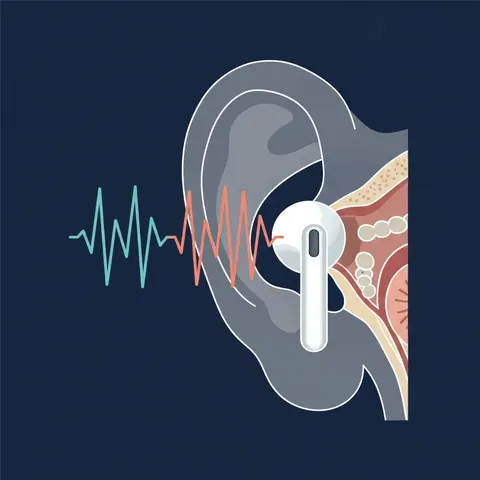
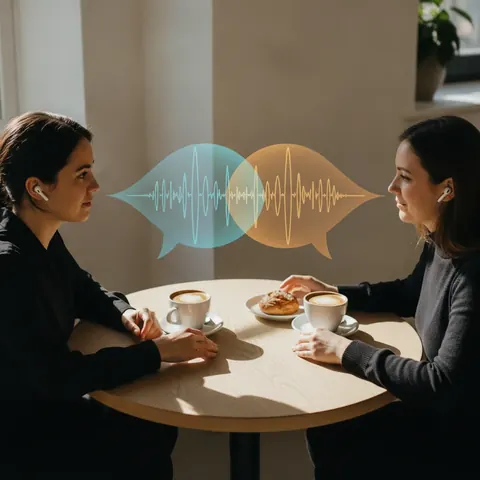
Apple's pitch for Conversation Awareness (bundled into the broader Adaptive Audio system) is simple: the earbuds detect when you start talking, automatically lower your media volume, and boost the mics so you can hear the person you're talking to without touching anything.

In practice, it triggered constantly, and not just when I was talking. At a coffee shop, working through emails, my audio ducked eleven times in twenty minutes.
At the gym, it happened almost every set — the classifier seemed to think a grunt during a deadlift was the opening line of a chat.
I assumed this was a firmware bug that would get patched out in a point release, the same way I'd assume a flaky health check in a Kubernetes cluster would get fixed once someone noticed the false-positive rate.
It didn't get fixed. Two firmware updates later, the behavior was identical. That's when I stopped treating it as a bug and started treating it as a decision.
The Core Insight: This Isn't a Bug, It's a Recall-Over-Precision Tradeoff
Here's the thing that changed my mind: the entire Conversation Awareness pipeline runs on-device, on the H2 chip, with a latency budget measured in milliseconds. There's no cloud round trip, no server-side model doing heavy contextual reasoning about whether you're actually mid-conversation.
It's a small, fast classifier making a binary call — speech, or not-speech — dozens of times a minute, with almost nothing to go on but acoustic signal.
The Classic Precision/Recall Trap
Any engineer who has tuned an alerting system knows this problem cold.
You can build a paging system that almost never fires on noise — but the cost is that it occasionally misses a real incident, and a missed incident is catastrophic.
Or you can build one that fires constantly on shaky signals, annoying the on-call engineer, but it basically guarantees you never sleep through an outage.
Apple picked the second option for your ears. A false positive means your music ducks for two seconds while you clear your throat — mildly annoying, instantly recoverable.
A false negative means you miss your kid asking you something, your gate agent calling your name, or your boss saying your name across a table while you're nodding along to a podcast.
Given that asymmetry, over-triggering isn't a flaw. It's the correct engineering answer.
Why This Wouldn't Work in the Cloud
Compare this to how cloud-based AI systems get to cheat.
When I ask Claude 4.5 or ChatGPT 5 to reason about ambiguous context, the model has an enormous compute budget and can afford to sit with uncertainty, ask a clarifying question, or weigh a paragraph of context before committing to an answer.
Gemini's on-device variants for Pixel phones face the exact same constraint AirPods do — small model, tiny latency window, no server backup — and Google made almost the identical tradeoff: aggressive triggering, minimal false negatives, user-facing noise as the accepted cost.
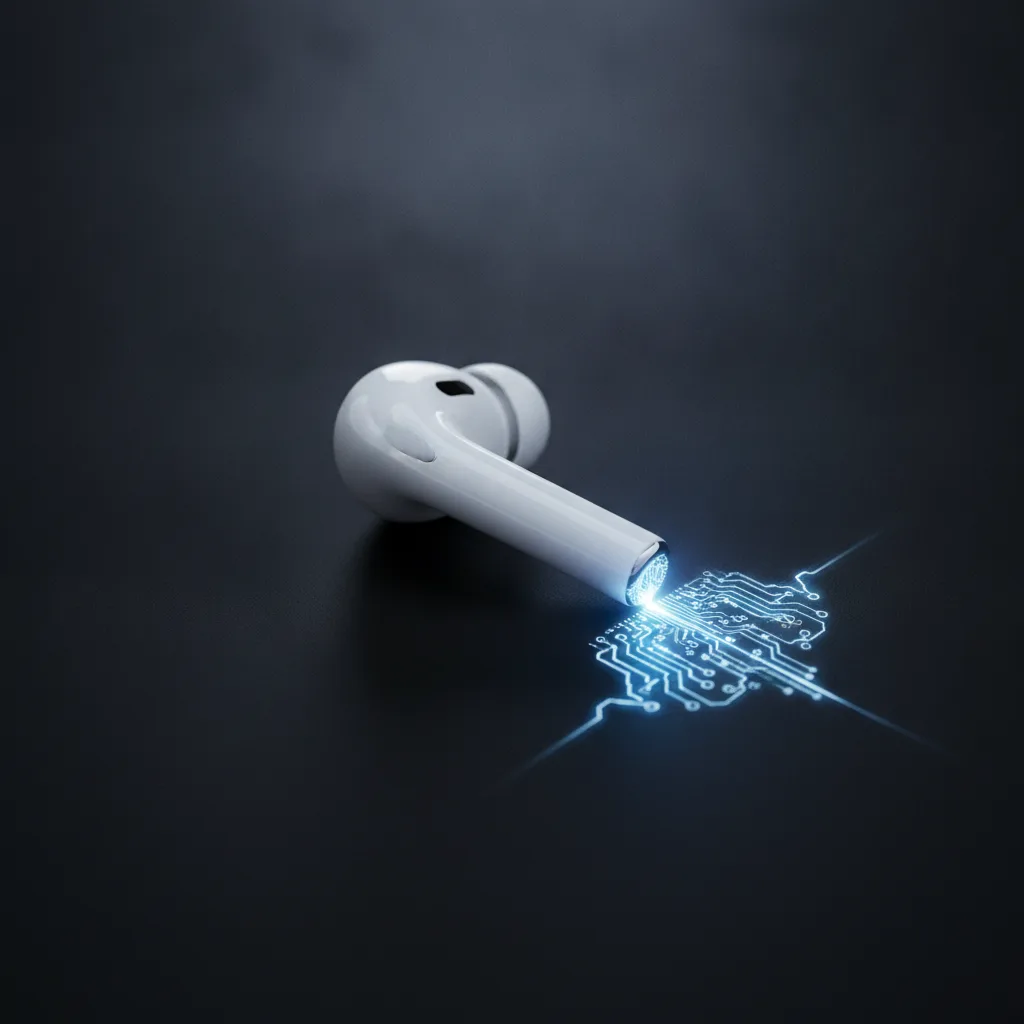
On-device AI doesn't get the luxury of "let me think about this." It has to decide now, with a model that fits in a chip smaller than a fingernail, running on a power budget that has to survive a full day of battery life.
The flaw I was annoyed by is actually the tell that Apple engineered for the failure mode that actually matters, not the one that looks cleanest in a demo video.
The Reality Check: This Doesn't Mean the AI Is Smart
I want to be careful here, because it would be easy to swing too far the other way and start calling this "AI understanding conversation." It doesn't.
It's a narrow acoustic classifier detecting speech-like frequency patterns and vocal cord vibration through bone conduction sensors — it has no idea what's being said, who's talking, or whether the moment matters.
It can't tell the difference between you talking to a barista and you talking to yourself while frustrated at a Terraform error.
That's exactly why it over-triggers as much as it does.
A model with real contextual understanding could afford to be pickier, because it would know the difference between "clearing throat" and "starting a sentence." This one can't, so it hedges hard in one direction.
The annoyance I felt for three weeks is the visible cost of that narrowness — the tradeoff is real, not free, and Apple didn't design it to be invisible.
They designed it to be safe, and let the noise be someone else's problem to tolerate.
It's also worth saying plainly: this doesn't always work perfectly even by its own logic. Windy environments and gym noise still produce triggers that have nothing to do with speech at all, meaning the classifier occasionally fails in both directions — false positives on non-speech noise, while presumably still capable of missing quiet or distant speech it wasn't tuned to catch.
High recall isn't the same as perfect recall. It's just recall you can live with.
The Practical Takeaway: Read Flaws as Design Signals
If you own AirPods 5 and this is driving you up the wall, there's a real setting for it: go to Settings → Bluetooth → [your AirPods] → Conversation Awareness and you can turn it off entirely, or drop the sensitivity down through Adaptive Audio's "Off" mode for media.
I run mine on at the office where I actually want interruptions, and off at the gym where a grunt shouldn't have veto power over my playlist.
Knowing why it over-triggers made the setting make sense, instead of feeling like I was working around a bug.
But the bigger lesson is for anyone building AI-adjacent products, not just wearing them.
When you ship an on-device or latency-constrained classifier — a fraud check, a content filter, a wake-word detector — you're going to be forced into a precision/recall tradeoff, and users will experience whichever side you didn't pick as a personality trait of your product.
Document that tradeoff explicitly, expose a way to tune it, and don't let engineers quietly assume "fewer false positives" is always the goal. Sometimes the annoying version is the one that keeps someone from missing something that mattered.
I went into this convinced I'd found evidence that Apple's on-device AI push was oversold.
I came out of it more convinced than ever that the boring, invisible infrastructure decisions — the ones nobody puts in a keynote — are where you can actually tell whether a team knows what they're doing.
Have your devices ever annoyed you in a way that turned out to be the smartest decision the engineers made? What's the tradeoff you'd have made differently?