I Fixed My Home Theater For Under $50. Nobody Saw This Coming
In this article
Bottom line: I spent four years and roughly $3,200 upgrading speakers, cables, and receivers to fix bad-sounding bass in my living room.
The actual problem was a 60Hz null caused by furniture placement, and I fixed it in one afternoon for $46 using free room-measurement software (Room EQ Wizard) and two moved bookshelves.
If your home theater sounds thin, boomy, or "off" no matter how much gear you throw at it, the fix is almost never more gear — it's the room. Measure before you buy anything else.
Stop buying new speakers. I mean it — put the credit card down.
I just spent four years and over three grand chasing a "muddy bass" problem in my living room, and the fix turned out to be moving two bookshelves and downloading a free app.
I've been building and tearing down home theaters for over a decade, and I'm telling you the entire industry has convinced you to buy your way out of a problem that free software can diagnose in twenty minutes.
The Gospel Everyone Believes
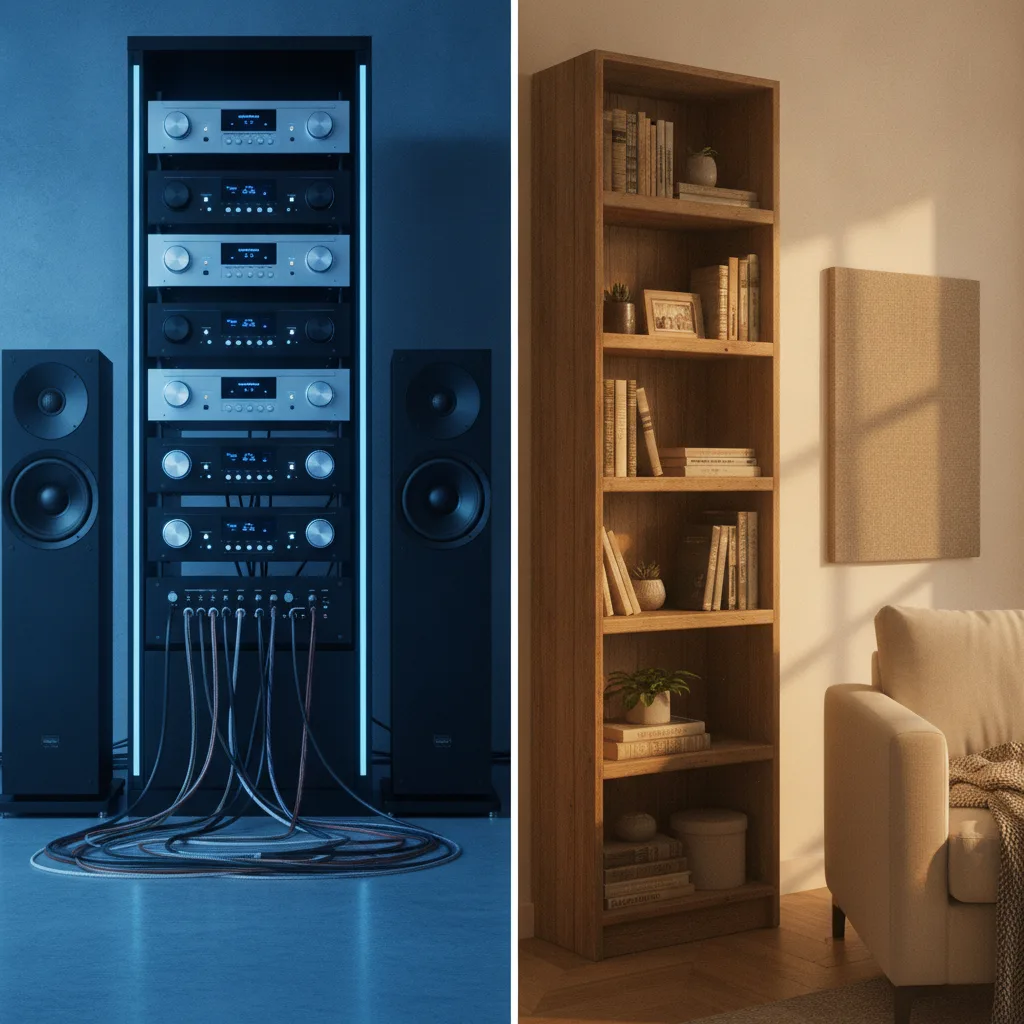
Walk into any AV forum, any Best Buy, any YouTube "home theater setup" video, and you'll hear the same liturgy. Bad sound means bad gear. Upgrade the receiver.
Upgrade the speakers. Get better cables — oxygen-free copper, gold-plated connectors, the works.
I get why people believe this. Better gear genuinely does sound better in a showroom, under controlled conditions, with no couch in the way and no bookshelf eating your midrange.
The gear industry has a $9,000 answer for every acoustic problem, and it's rarely the right one.
Five years ago this advice was almost defensible — calibration tools were expensive, buried in $1,500+ receivers, and genuinely hard to use. That changed.
Free, accurate, prosumer-grade room measurement software has been sitting in plain sight the entire time, and almost nobody outside serious audio nerds knows it exists.
What My Living Room Actually Told Me
I'd upgraded my bookshelf speakers twice, my subwoofer once, and my receiver once. Total spend: north of $3,200.
The bass still sounded like it vanished in one specific spot on my couch and boomed everywhere else.
I assumed the sub was underpowered. I was wrong.
The Measurement
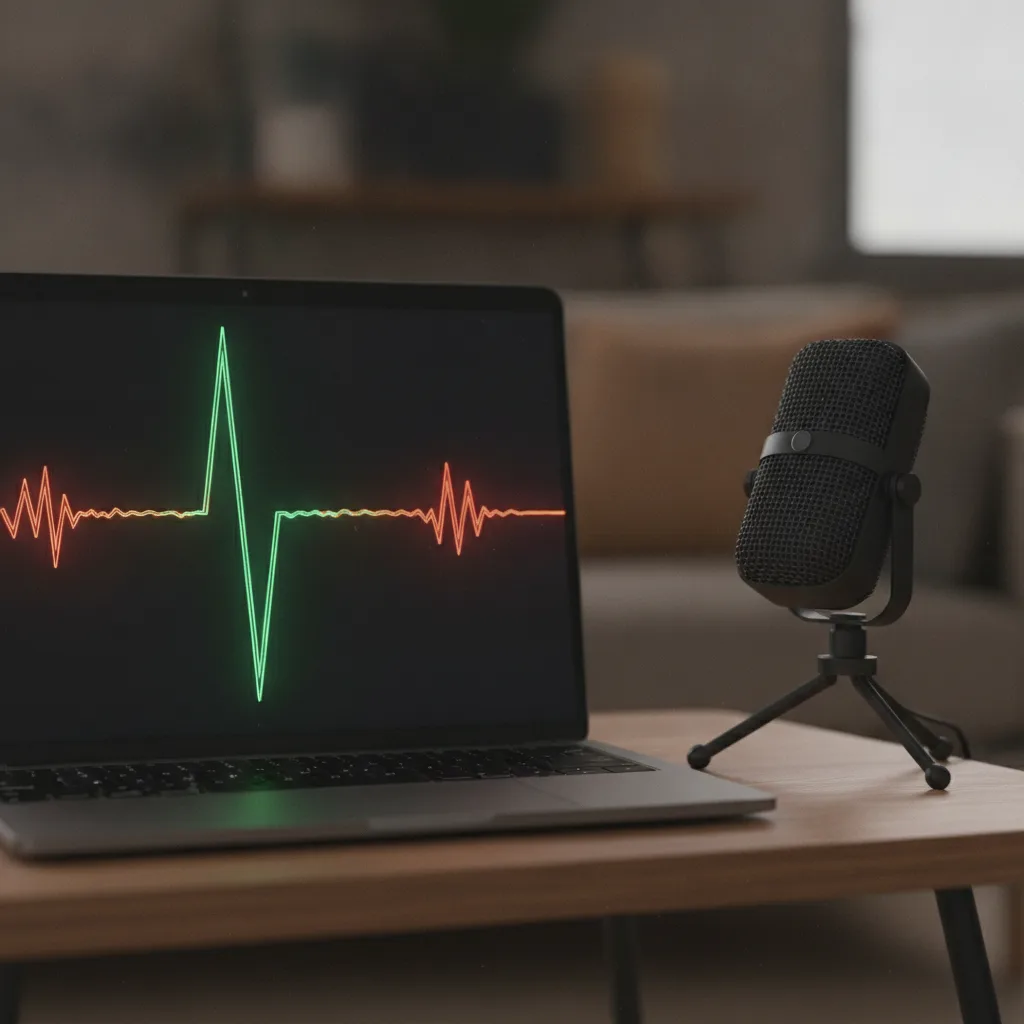
I downloaded Room EQ Wizard (REW) — free, open-source, been around since the 2000s — plugged in a $25 calibrated USB microphone, and ran a sweep.
The graph was embarrassing: a 14dB null sitting right at 63Hz, directly on my primary listening position. That's not a speaker problem.
That's a room-mode problem — a standing wave caused by the exact distance between my walls, absorbing that one frequency almost completely no matter what I played it on.
The Furniture Problem
My subwoofer was in a corner (textbook worst spot for bass — corners reinforce every room mode you own).
My two tall bookshelves sat symmetrically against the back wall, which was quietly creating a secondary reflection point that made dialogue sound smeared.
The Cost of the Actual Fix
- Moved the subwoofer from the corner to the front-third wall position: $0 - Rotated one bookshelf 90 degrees to break the parallel-wall reflection: $0 - Bought two $18 acoustic panels for the first reflection points beside the TV: $36 - $10 secondhand mic stand to get the measurement mic at ear height: $10
Total: $46. The null at 63Hz dropped from -14dB to -3dB. Dialogue clarity — the thing I'd blamed my center channel speaker for — fixed itself.
The Real Problem Nobody Talks About
Here's the part that actually makes me angry. It's not that speaker manufacturers are lying about their products.
It's that the entire industry is structured to never mention the room, because the room isn't something they can sell you.
A receiver company can't put "measure your room first" in a full-page ad. A speaker brand's incentive is to imply that this speaker, unlike the one you own, will finally sound right.
Reviewers test in acoustically treated rooms and then hand you specs that mean almost nothing in your actual living room with your actual couch and your actual drywall.
We've turned acoustics — a field of physics that's been understood since the 1970s — into a black box that only expensive gear can supposedly unlock.
It's the same trick sold in a dozen other industries: the $400 ergonomic chair fixes your back pain (it's your desk height), the $200 skincare serum fixes your skin (it's your sleep), the $3,000 receiver fixes your bass (it's your bookshelf).
The gear was never the bottleneck. Ignorance of your own room was.
What You Should Actually Do
Before you buy anything else for your home theater, do this instead:
- Download REW (Room EQ Wizard) — free. Pair it with a cheap calibrated USB mic (Dayton Audio's is under $30). Run a sweep at your main seat.
- Look for nulls and peaks over 8dB. Anything that dramatic is a room-mode issue, not a component issue.
- Move your subwoofer before you replace it. Corners and centered walls are almost always the worst spots. Try the "subwoofer crawl" — put it in your seat, crawl the room on hands and knees, find where bass sounds best, put the sub there.
- Treat first reflection points, not every wall. A mirror trick finds them in five minutes: sit in your seat, have someone slide a mirror along the side walls — wherever you can see your speaker in the mirror is a reflection point worth treating.
- Only after all that — if the graph still shows a real deficiency your gear can't reach — consider an upgrade. Now you'll know exactly what you're buying and why.
The Uncomfortable Truth
I spent $3,200 not because my speakers were bad, but because I never once asked what my room was doing to the sound before I asked what gear could fix it.
That's the pattern almost everyone falls into, in home theater and everywhere else: throw money at a symptom because measuring the actual cause feels like too much work.
How much have you spent upgrading something because it was easier than diagnosing it first?