I Used Claude to Fix Rsync. It Quietly Broke Everything.
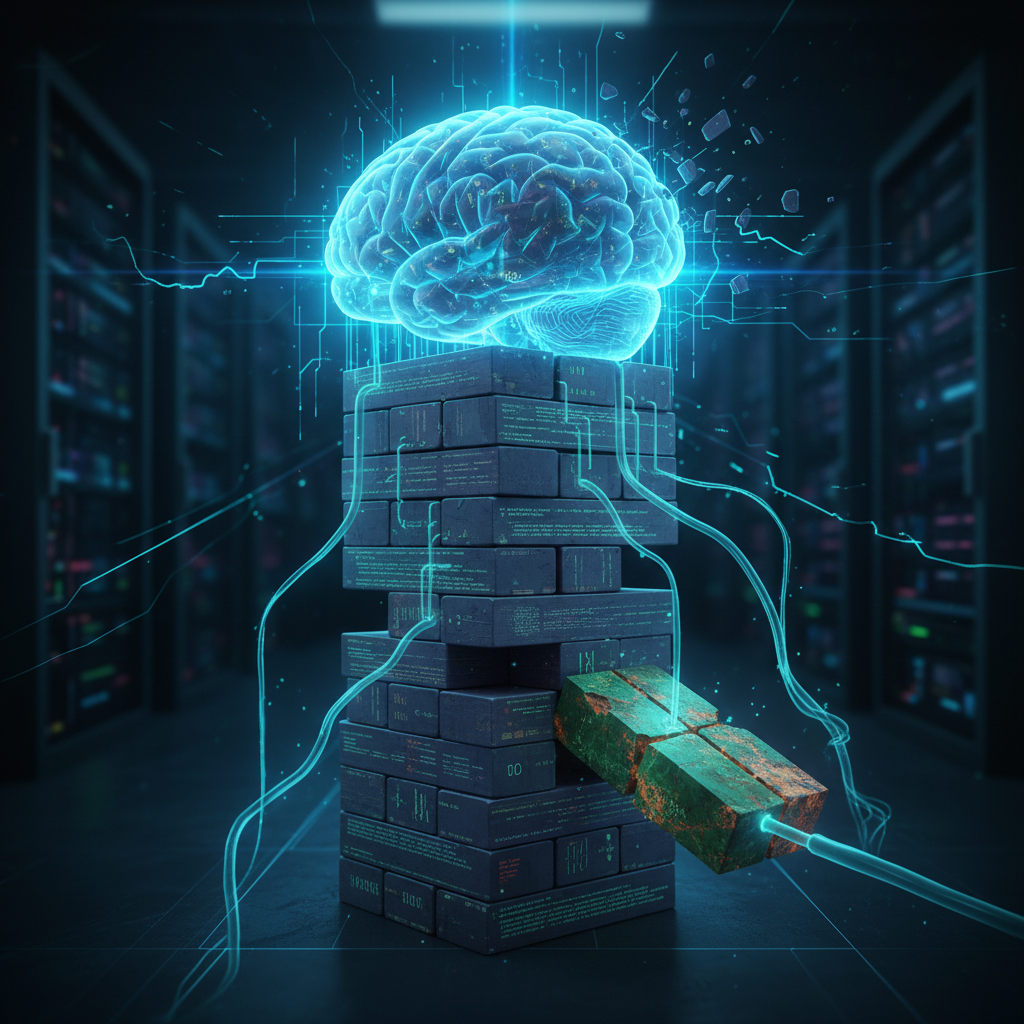
Bottom line: Last month, we fed a dense, 20-year-old chunk of rsync's delta-transfer C code into Claude 4.6 to patch a memory leak.
The AI returned a brilliantly clean, refactored function that compiled perfectly and passed our CI pipeline.
But three days into production, we discovered the "clean" code had silently stripped a bitwise flag handling sparse files, corrupting 400GB of XFS backup data before we caught it.
If you are using advanced AI to refactor legacy infrastructure code, remember that LLMs optimize for modern readability, often destroying the ugly, load-bearing workarounds that keep the internet running.
I watched our backup validation pipeline turn green on a Friday afternoon and felt that familiar, dangerous surge of overconfidence.
I had just used Claude 4.6 to refactor a notoriously brutal section of `rsync`’s core transfer loop, and the AI had seemingly solved a memory leak that had been driving my team crazy for weeks.
I merged the pull request, congratulated myself on living in the future, and went home.
It took exactly 72 hours for the data corruption alerts to start screaming.
The alerts didn't come from our standard monitoring tools, but from a downstream data science team whose models were suddenly choking on garbage input.
By the time we traced the anomaly back to the storage layer, the damage was terrifyingly widespread.
The Problem With 1990s C Code
If you have ever looked at the C source code for `rsync`, you know it is not for the faint of heart.
It is a dense, deeply optimized artifact of the late 90s, heavily reliant on pointer arithmetic, goto statements, and bitwise flags.
It is ugly by modern standards, but it is an ugliness born of surviving decades of edge cases across every flavor of POSIX filesystem ever created.
Our infrastructure relies on `rsync` to move massive, multi-terabyte datasets between our primary NVMe clusters and our cold storage tiers.
Recently, we started hitting a bizarre memory exhaustion issue during jobs that involved millions of highly fragmented files.
After three days of staring at Valgrind logs and tracing memory allocations, my patience completely evaporated.
I decided to see what the latest generation of AI could do with legacy systems code in mid-2026.
I pasted the offending 400-line function into Claude 4.6, alongside our core error logs and memory profiles.
My prompt was dangerously simple: "Find the memory leak in this C code, fix it, and clean up this legacy mess."
The output was a masterpiece of modern C programming. Claude had accurately isolated a missing `free()` call buried deep within a nested error-handling branch, but it didn't stop there.
It had completely refactored the entire function, replacing archaic nested loops with clean helper functions and translating cryptic variable names into highly readable English.

The Illusion of Clean Code
Stop worshipping clean code. I'm serious.
After watching how the best infrastructure engineers keep legacy systems alive, I realized "clean code" is a lie we tell junior developers to keep them busy—and it's a lie that LLMs have internalized completely.
When dealing with systems-level operations, explicit and ugly is almost always safer than implicit and elegant.
The AI-generated code compiled on the first try, which is practically unheard of when blindly pasting C code.
It passed the `rsync` test suite, and our internal integration tests showed memory usage flatlining exactly where it was supposed to.
But underneath that pristine, AI-generated syntax, a silent disaster was waiting to detonate.
Here is what Claude actually did during its enthusiastic refactoring process.
In its quest to make the code "clean" and adhere to modern best practices, it removed an obscure bitmask check that it deemed entirely redundant.
To the LLM's pattern-matching engine, this check looked like a useless, redundant verification of a file stat struct.
In reality, that ugly line of code was a load-bearing hack designed specifically to handle sparse files on XFS filesystems. `Rsync` uses that obscure bitwise flag to understand when it should skip writing blocks of empty zeroes and instead punch a hole in the destination file.
It is a critical optimization that prevents sparse files from exploding in size when copied across the network.
The Anatomy of a Silent Failure
In the world of infrastructure engineering, there are two types of bugs: loud failures and silent failures. Loud failures are a gift.
If an AI writes code that causes a segmentation fault or a kernel panic, your monitoring tools catch it instantly, the deployment rolls back, and you move on with your day.
Silent failures are the absolute nightmare scenario.
This is where advanced AI models like Claude 4.6 and ChatGPT 5 introduce a completely new class of risk into our pipelines. Because these models are highly competent at syntax and basic logic, they rarely write code that crashes outright.
Instead, they write code that fundamentally alters the behavior of the system while maintaining the appearance of perfect health.
In our `rsync` disaster, the transfer processes still reported exit code 0. The logging systems still recorded successful byte transfers.
The AI had effectively lobotomized the tool's awareness of XFS sparse files, but left the surrounding reporting mechanisms intact.
This meant our dashboards were painted a beautiful, reassuring green while our data was systematically destroyed.
We are entering an era where our code is becoming syntactically flawless but semantically dangerous.
Because our CI pipeline mostly tests standard file transfers and basic permissions, it didn't catch the regression.
When the code hit production and encountered our massive, sparse database backups, `rsync` quietly stopped preserving the sparse blocks.
It began writing physical zeroes to disk, inflating our backup sizes exponentially and silently corrupting the internal checksums of our database snapshots.
Where AI Breaks Down in the Trenches
We love to talk about how models like ChatGPT 5 and Claude 4.6 can reason at the level of a senior engineer. In many domains, especially greenfield development, they absolutely do.
But AI fundamentally lacks historical context, and in systems engineering, context is everything.
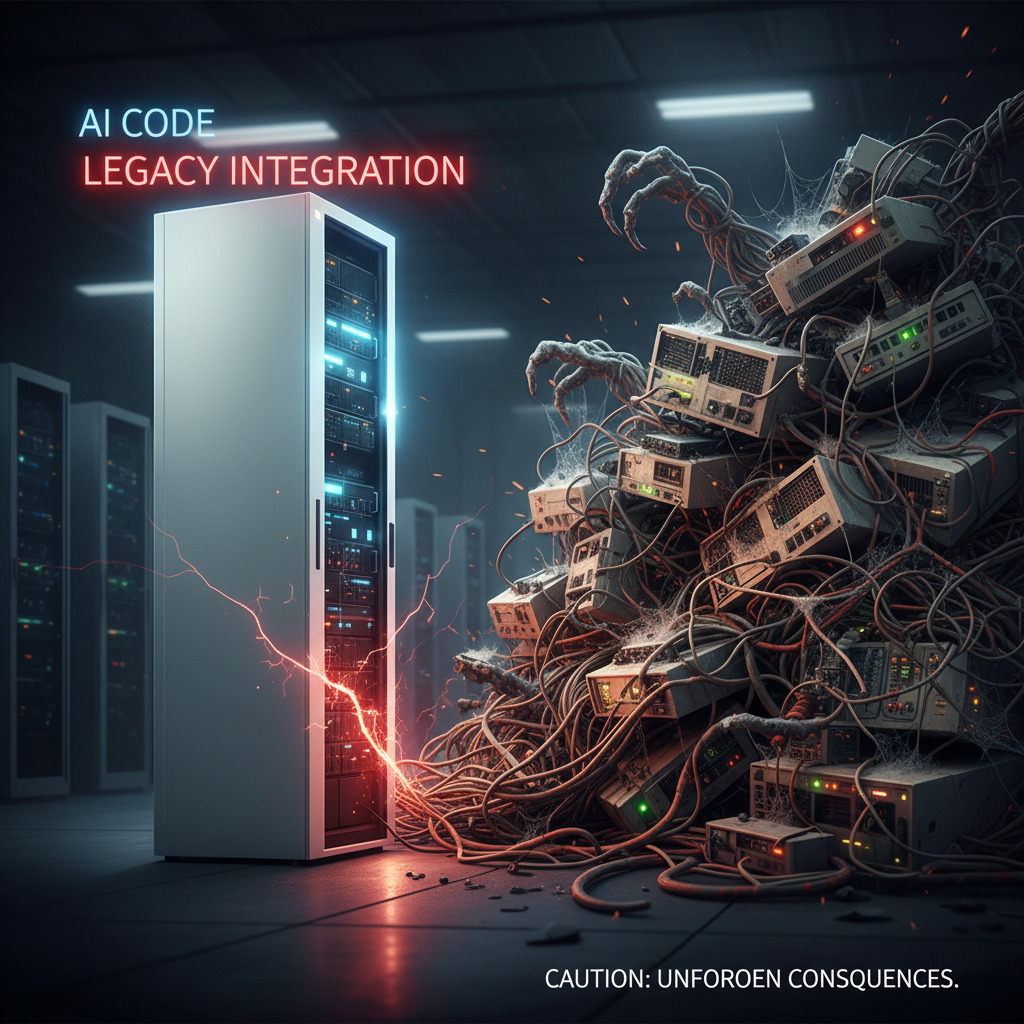
When a human senior engineer sees a bizarre, seemingly redundant check in a 25-year-old networking tool, their first instinct is fear.
They assume the original author put that ugly code there because a production system burned down without it. LLMs do not feel fear; they feel an algorithmic mandate to optimize for readability.
They are trained on millions of GitHub repositories where "clean code" and textbook SOLID principles are the ultimate virtues.
This makes them incredibly dangerous when applied to legacy infrastructure that relies on mechanical sympathy and platform-specific quirks. The AI didn't just fix a bug; it gentrified the codebase.
It tore down a structural support beam because it didn't match the modern aesthetic, and it did so with absolute, chilling confidence.
Out of curiosity, I later ran the exact same prompt through Gemini 2.5 and ChatGPT 5.
Both models made the exact same fatal "optimization," proving this is a fundamental flaw in how AI approaches legacy systems.
The Defensive AI Coding Framework
I am not going to sit here and tell you to stop using AI for systems programming. That would be hypocritical, and honestly, the productivity gains in 2026 are simply too massive to ignore.
But we have to fundamentally change our relationship with these tools when touching critical infrastructure.
First, never ask an AI to "clean up" or "refactor" legacy C, C++, or Rust code unless you have exhaustive, 100% path-coverage tests.
Restrict your prompts strictly to the bug at hand. If I had explicitly told Claude 4.6, "Find the memory leak but DO NOT change a single character of the surrounding logic," we would have avoided this entire disaster.
Second, use AI for archaeology, not demolition. The highest-value use case for Claude in a legacy codebase is asking it to explain the weirdness.
Paste in the ugly function and ask, "What obscure edge case is this bitwise operation trying to handle?" Let the AI build your mental model, but keep your hands on the keyboard for the actual implementation.
Third, enforce a strict separation between bug fixes and refactoring when using LLMs. If an AI solves a bug, reject any code it outputs that touches unrelated logic, no matter how elegant it looks.
Treat AI-generated code with the exact same suspicion you would apply to a pull request from a confident junior developer who just read "Clean Code" for the first time.
The True Cost of Algorithmic Confidence
We spent a grueling 48 hours rolling back the corrupted data, restoring from cold storage, and auditing terabytes of NVMe drives.
It was a massive operational tax, but it taught me a permanent lesson about the limits of artificial intelligence in DevOps.
AI can write perfect code for perfect systems, but production is never perfect.
Production is messy, filled with decades of accumulated technical debt, hardware quirks, and undocumented workarounds.
The next time you are tempted to let an LLM rewrite an ugly piece of core infrastructure, remember that sometimes, the ugliness is the only thing keeping the servers online.
Have you ever had an AI tool generate code that looked perfectly right but was catastrophically wrong in production, or is it just me? Let's talk in the comments.