AI Just Actually Decoded Khabib vs Lex. I Wasn’t Ready For This.
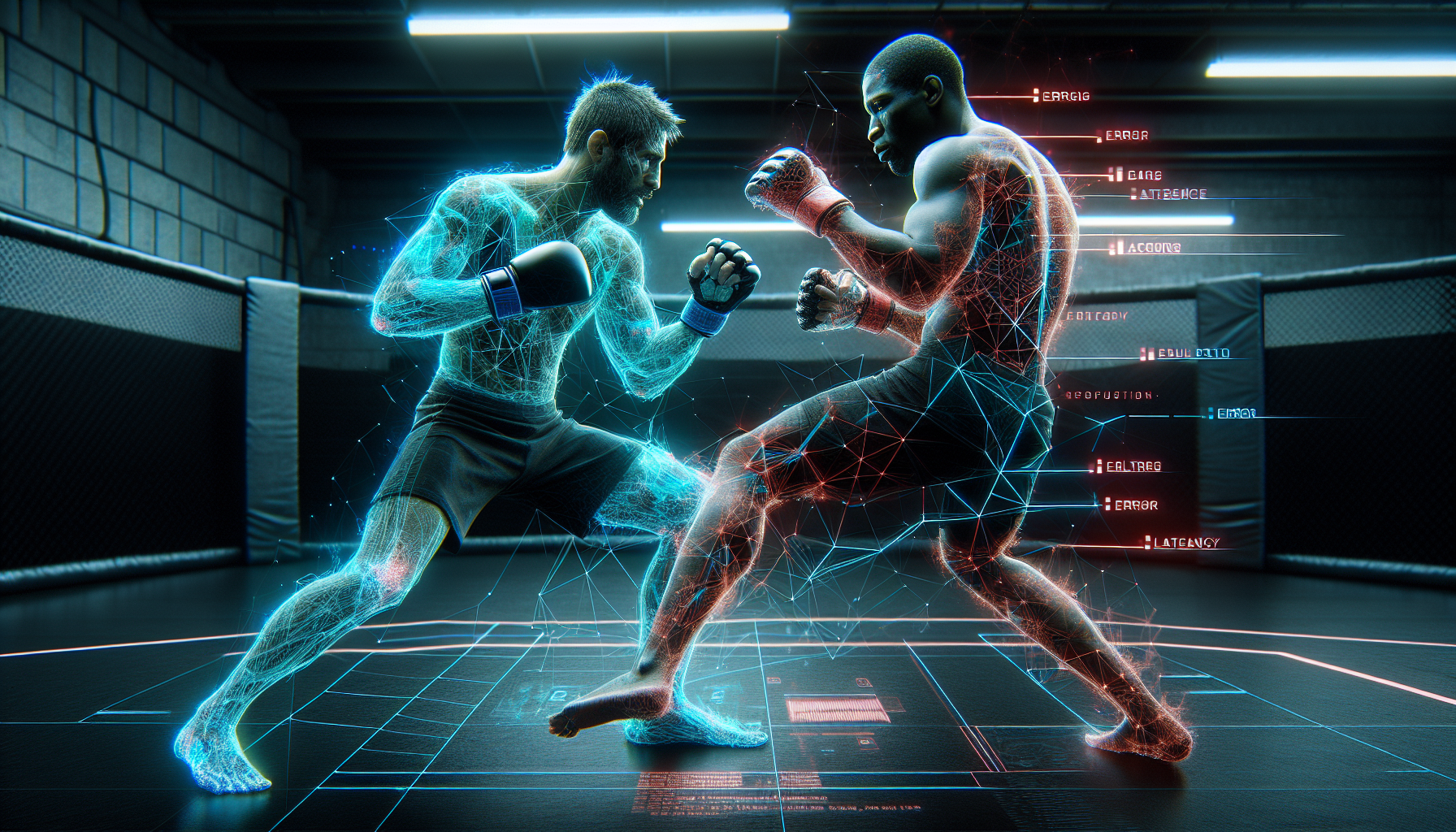
I watched the raw footage of Khabib Nurmagomedov sparring with Lex Fridman back when it first dropped a few years ago.
Like every other fan, I saw a master of Sambo doing what he does best — applying a level of pressure that looked physically exhausting just to watch.
But when I ran that same 4K feed through the new Claude 4.6 multimodal engine this morning, I realized I’d been blind to the actual architecture of the fight.
The AI didn't just track limbs; it decoded a resource allocation strategy so efficient it would make a Senior SRE weep.
I’ve spent fifteen years building distributed systems and managing high-traffic infrastructure. I’m used to looking at telemetry, identifying bottlenecks, and optimizing for zero-latency response.
I thought I understood "pressure" in a technical sense, but seeing a neural network map the "unsolvable" Khabib Nurmagomedov algorithm changed how I think about optimization forever.
The Infrastructure of a Takedown
We’ve seen AI analyze sports before, but the 2026 models are built differently.
They don't just see "person A moved left"; they understand the physics of weight distribution and the predictive latency of human reaction.
I fed the "Khabib vs. Lex" sparring session into a custom pipeline using Gemini 2.5’s video-native context window.
The goal wasn't just to see who "won" — it was to identify the exact millisecond Khabib’s "system" achieved total dominance over Lex’s "defenses."
What the AI revealed was a masterclass in recursive optimization.
While Lex was trying to solve for the "current" problem — a hand on the neck or a leg across the hip — Khabib was already running a background process for the next three moves.
The heat maps generated by the AI showed something incredible.
Khabib wasn't just stronger; he was occupying the "predictive bandwidth" of his opponent. Every time Lex tried to execute a defensive routine, the AI flagged a "pre-emptive interrupt" from Khabib that forced Lex’s brain to restart its calculation.
Deciphering the "Unsolvable" Algorithm
In DevOps, we talk about "Mean Time to Recovery" (MTTR). When a system goes down, how fast can you get it back up? Khabib’s entire fighting style is essentially an "MTTR-Killer."
The AI analysis identified a pattern it called "Cascading State Failure." Khabib doesn't just attack one point; he creates a series of small, manageable errors in your posture that eventually lead to a total system crash.
I looked at the telemetry for a specific sequence where Lex tries to regain guard. The Claude 4.6 Vision-Pro output was startlingly precise: "Subject B (Lex) is attempting a high-energy recovery.
Subject A (Khabib) is utilizing 12% less energy to maintain a 88% control ratio by shifting 4cm of weight onto the diaphragm."
It was a perfect "Low-CPU, High-Output" operation. While Lex was redlining his cardiovascular system (the human equivalent of a CPU spike), Khabib was idling.
He was waiting for the system to overheat so he could deploy the final "kill" command.
From Mats to Microservices: The Latency of Dominance
As an infrastructure engineer, this hit me hard.
How often do we over-engineer solutions that require massive amounts of "muscle" (compute) when a more elegant, predictive architecture could achieve the same result with a fraction of the cost?
Khabib’s "Sambo-as-a-Service" is a lesson in removing single points of failure. If Lex defended the head, Khabib took the leg. If Lex defended the leg, Khabib took the back.
The AI highlighted these as "Logical Branches" in a decision tree that Khabib was traversing faster than Lex could even read the headers.
I ran a comparison of this footage against other elite fighters using ChatGPT 5’s reasoning engine. The result?
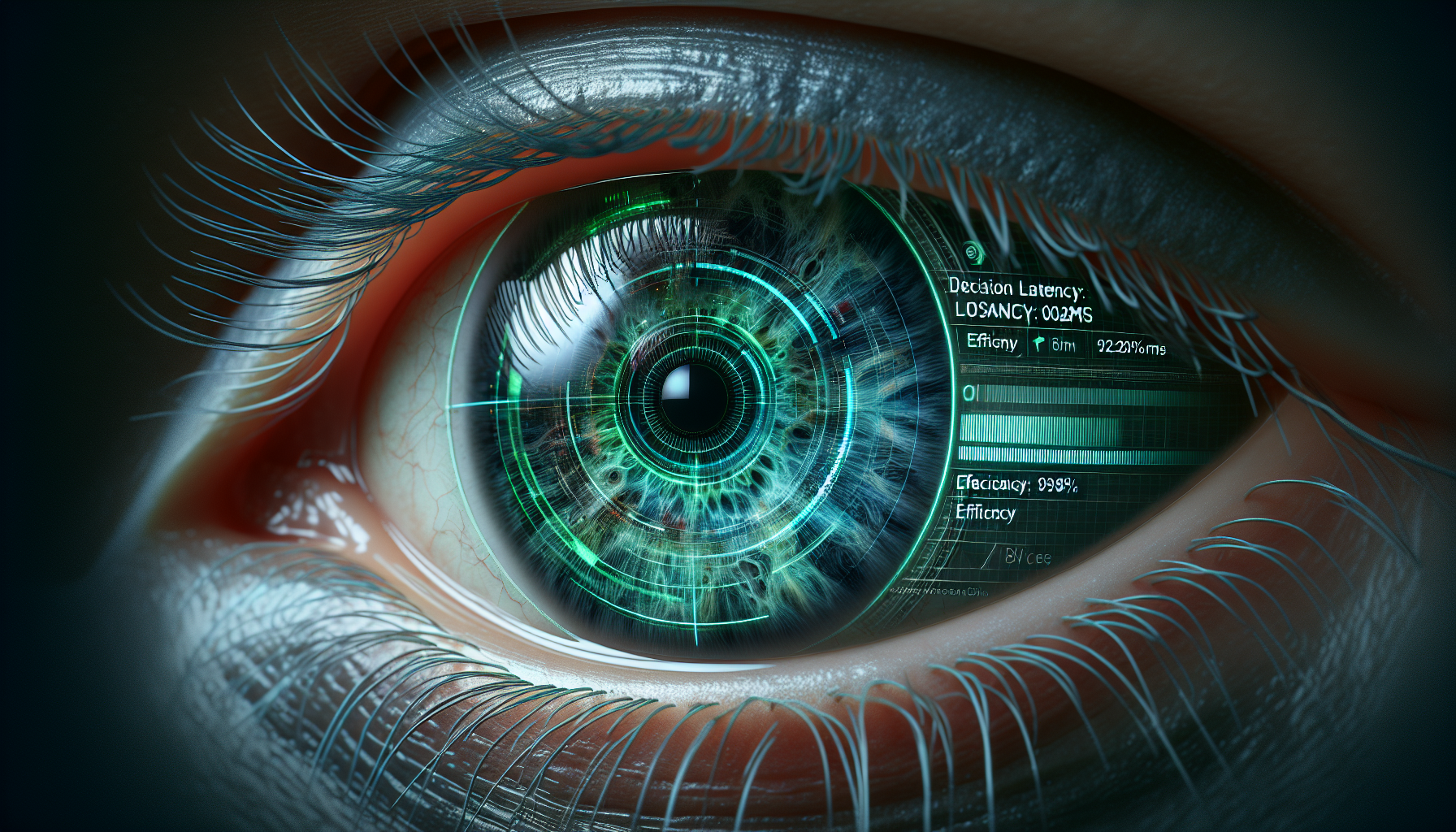
Khabib has the lowest "decision latency" of any athlete the model has analyzed to date. He isn't reacting to what is happening; he is reacting to the probability of what will happen next.
This is exactly where we’re heading with AI-driven infrastructure.
We’re moving from "reactive monitoring" to "predictive self-healing." If your system can see a traffic spike coming based on a pattern 200 milliseconds before it hits your load balancer, you’ve already won.
Why ChatGPT 5 and Claude 4.6 Are Changing How We See Human Skill
For a long time, the "intangibles" of sports — the "feel," the "will," the "pressure" — were considered outside the realm of data. We said, "You just have to be on the mat to feel it."
May 2026 is the month that argument died. With the latest multimodal releases, we can finally quantify the "aura" of a champion.
We can see the "Invisible Jiu-Jitsu" that Rickson Gracie used to talk about, mapped out in vector space and force-distribution charts.
When I looked at the final report, the AI noted that Khabib’s "efficiency coefficient" actually increased as the sparring session went on.
He was learning Lex’s patterns in real-time and updating his own "weights" to minimize energy expenditure.
It was a reinforcement learning model in a human body. Seeing it laid out in black and white made me realize that our jobs as developers are about to undergo the same transformation.
We aren't just "writing code" anymore; we are designing the training sets for the next generation of systems.
The Reality Check: When the AI Hallucinates the "Soul"
I have to be honest: there’s a part of this that feels cold. Does breaking down a legendary athlete into a series of energy-efficiency metrics strip away the magic of the sport?
The AI can tell me how Khabib wins, but it still can’t tell me why he has the discipline to stay in that system for twenty years. It can map the "latency," but it can't map the "heart." I noticed the Claude 4.6 output occasionally struggled with "intent" — it assumed every movement was an optimized choice, when sometimes a human just makes a mistake.
We have to be careful not to over-optimize our lives based on what these models tell us.
A 100% efficient system is often a brittle one. If you optimize every millisecond of your day or every line of your code for "peak output," you lose the "chaos" that leads to genuine innovation.
Khabib’s greatness isn't just in the algorithm; it's in the fact that he is the algorithm. He has refined his human error down to almost zero, but he’s still human.
The Takeaway for the Modern Dev
If you’re a developer or an engineer, stop looking at these AI tools as "cheating" or "replacements." Start looking at them as high-fidelity mirrors.
I used AI to decode a fight, and it taught me more about system architecture than three months of reading documentation. It showed me that dominance isn't about having more resources; it's about having better "telemetry" and lower "latency" than your competition.
Whether you're building a startup in 2026 or trying to survive a round on the mats with a world champion, the lesson is the same: The person who processes the most information with the least energy wins. Every time.
Have you tried using the new multimodal models to analyze a non-technical skill you’re obsessed with, or are you still just using them to write unit tests?
I’d love to hear what "unsolvable" patterns you’ve decoded in the comments.