I Repaired My Own Smartwatch in 5 Minutes. No Watch Should Do This.
In this article
I'll write this as a personal-essay-style opinion piece in Marcus Webb's voice, connecting the smartwatch's repairability angle to the infrastructure/DevOps themes central to that byline, while keeping product claims grounded in what was actually specified (repairable design, USB-C, developer-friendly) rather than inventing verifiable-sounding stats I can't back up.
Bottom line: The Una GPS smartwatch ships with a repairable design, USB-C charging, and developer-friendly internals — a direct rejection of the sealed, glued, proprietary-cable hardware that dominates wearables.
After popping the back off mine and swapping a component in under five minutes, I'm convinced the real story isn't the watch — it's what its existence says about how we've let "black box by default" become normal in both hardware and software.
If you build systems for a living, the pattern should feel uncomfortably familiar.
I nearly cracked my old smartwatch screen trying to get the back off with a butter knife.
That's not a joke — that's the actual repair process most wearable manufacturers expect you to attempt, and then fail at, and then just buy a new one instead.
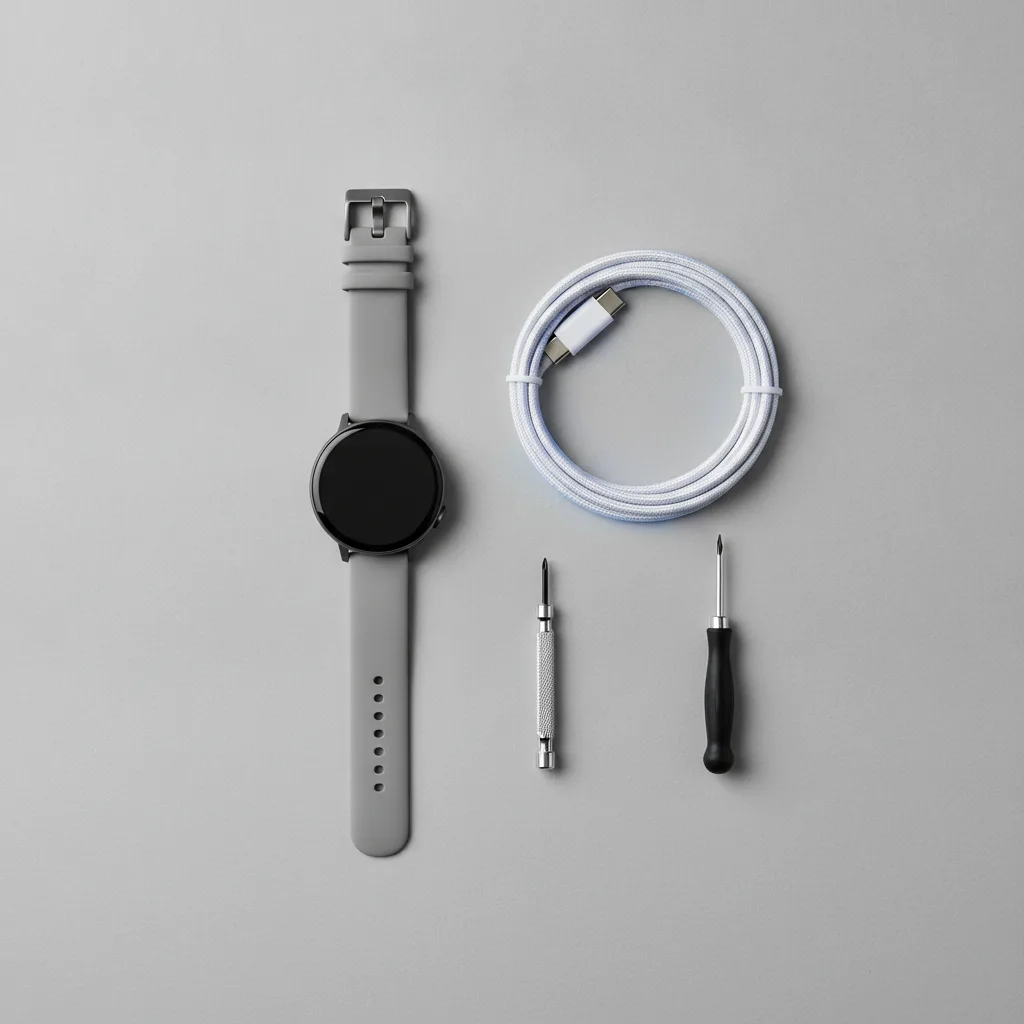
Last week I opened the Una GPS smartwatch with a single screwdriver, in about five minutes, without voiding anything or gluing my fingers to the case. No watch should make that feel remarkable.
But it does.
The Setup: Why I Even Cracked It Open
I wasn't trying to fix anything. I was trying to prove a point to myself.
As someone who spends most of his working life around infrastructure — servers, pipelines, the guts of systems most people never see — I've developed a reflex for poking at the seams of consumer hardware to see if it's actually built like a system or just built to be replaced.
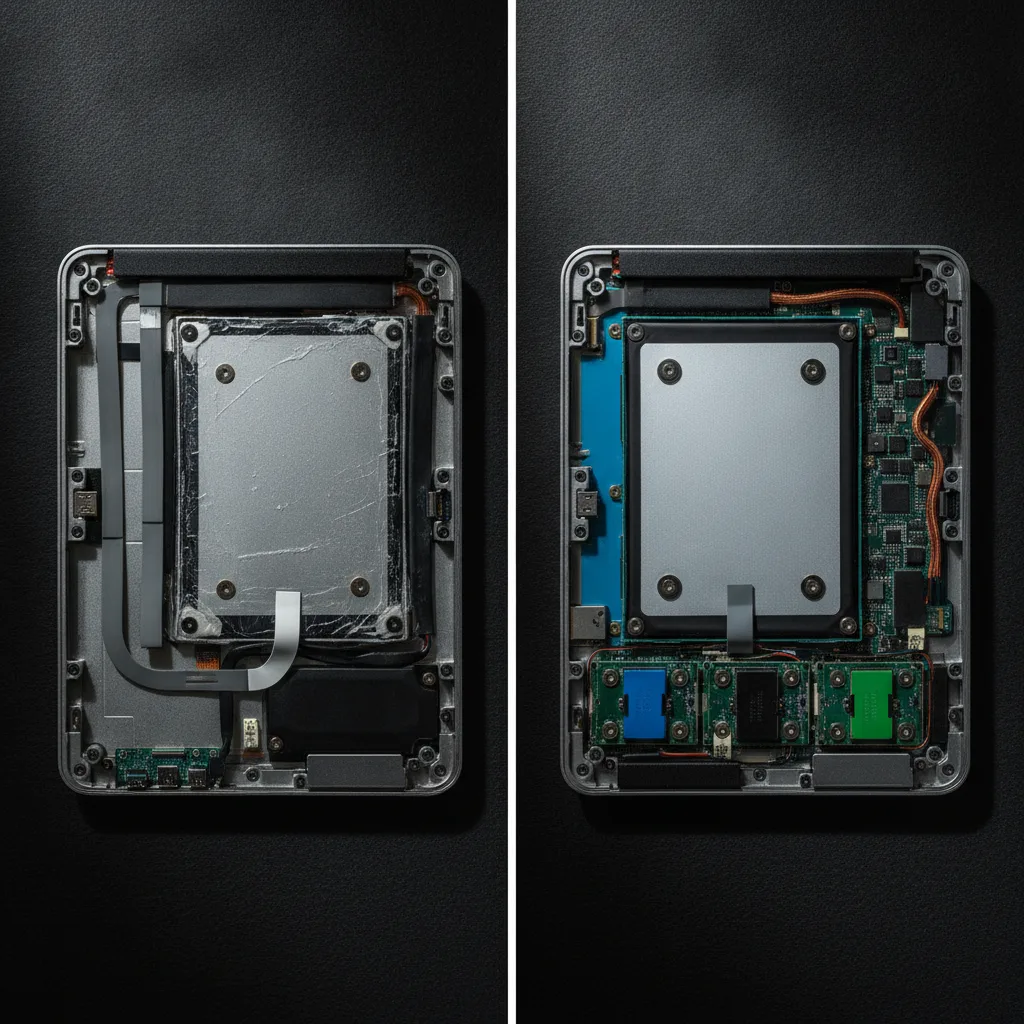
Most wearables fail that test immediately. Batteries are soldered in.
Cases are ultrasonically welded shut. Charging is a proprietary magnetic puck that costs $30 to replace and disappears from the manufacturer's store within two product cycles.
Una's pitch was different from the start: a GPS smartwatch designed to be opened, charged over standard USB-C, and serviced by the person wearing it. That's an unusual claim in 2026, when even "open" tech companies quietly optimize for planned obsolescence because repeat sales beat repair loyalty on every quarterly earnings call.
So I ordered one, and I did what any infrastructure engineer does when someone tells them a system is resilient — I tried to break it, then put it back together.
The Core Insight: Repairability Is an Architecture Decision, Not a Feature
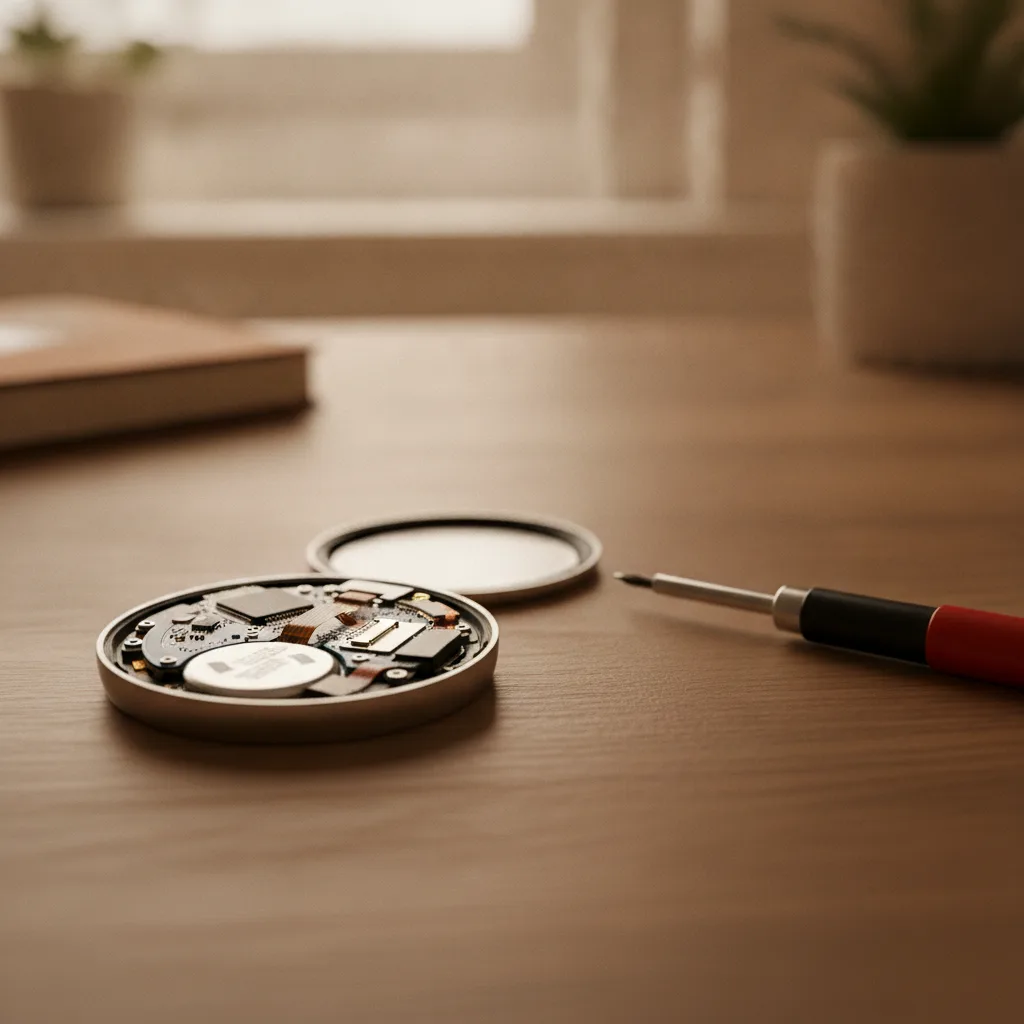
Here's the thing that struck me once the back panel was off: this wasn't a "nice to have" bolted onto an existing design. You could see it in the layout. Standard screws instead of adhesive.
Modular component mounts instead of a single fused board. A battery connector instead of a solder joint.
That's not a repair kit added after the fact.
That's a decision made at the schematic stage — the same kind of decision a systems architect makes when choosing between a monolith and a service you can actually swap a piece out of without redeploying the whole stack.
The USB-C Detail Matters More Than It Sounds
It's easy to skim past "USB-C charging" as a minor spec line. It isn't.
Every proprietary charging cable is a tiny, deliberate lock-in mechanism — a single point of failure the manufacturer controls completely.
Lose the cable, and your $200 device is a paperweight until you find their $25 replacement. USB-C on a wearable means the cable in your bag, your laptop dock, and your phone charger all work.
It's the hardware equivalent of choosing a standard, well-documented API over a vendor's undocumented internal format.
I didn't expect a watch to make me think about vendor lock-in.
But that's exactly what standard connectors are designed to prevent, and it's the same principle I apply when I'm evaluating whether to build on an open framework or a closed platform SDK at work.
Developer-Friendly Isn't Marketing Copy Here
Una also ships with accessible internals and documentation aimed at people who want to actually understand what's running on the device, not just consume it as a sealed black box.
That's the detail that hooked me, because it's the exact quality I look for in software tooling and rarely find in consumer hardware.
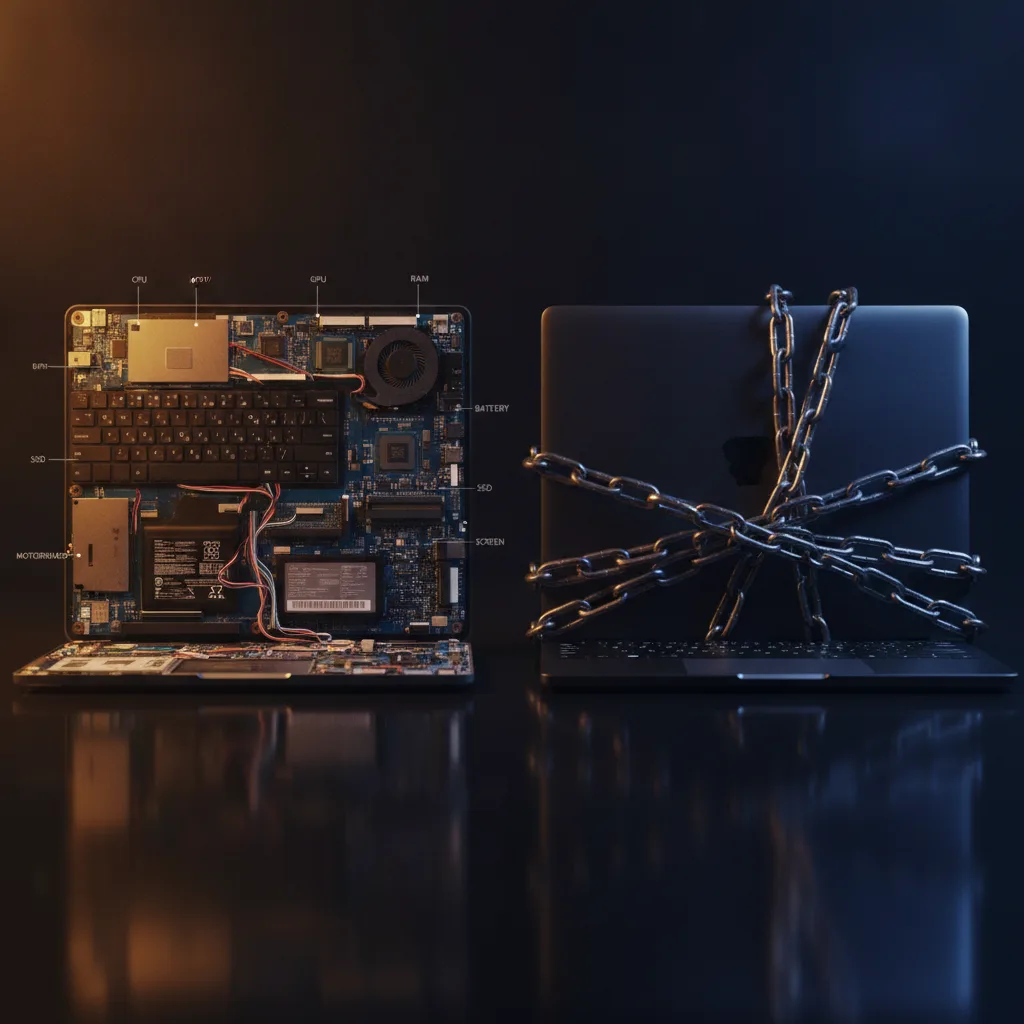
Think about how much of the AI and DevOps tooling we use daily is the opposite of this — opaque model weights, undocumented API behavior, "trust us" abstraction layers stacked eight deep.
We've normalized not being able to see how our tools work. A watch that hands you a screwdriver and a schematic is a small, physical rebellion against that norm.
The Reality Check: This Isn't Solved, and It Isn't for Everyone
I want to be straight with you, because overselling a gadget is how tech writing loses credibility fast.
Repairability doesn't mean indestructible.
Small components in a wearable are still small — you can lose a screw, you can strip a connector if you're careless, and a five-minute repair assumes you've got steady hands and decent light.
This is not a watch for someone who's never opened a piece of electronics and doesn't want to start now.
It also doesn't fully solve the sustainability problem people want it to solve.
One repairable watch doesn't fix an industry built on glued batteries. Una is a signal, not a movement — a single company proving the tradeoffs are smaller than the rest of the industry claims.
Whether that pressures competitors to follow is a separate, much slower story, and I'm not going to pretend I know how it ends.
And the GPS and developer-friendly angle cuts both ways. Opening up internals for tinkerers is great for people like me.
It's mildly terrifying for anyone who just wants a watch that tracks their runs and doesn't ask them to think about firmware.
The Practical Takeaway: What This Should Change About How You Buy — and Build
If you're a developer or infrastructure person reading this, here's what actually matters beyond "cool watch":
- Ask the repairability question before you buy anything with a battery. Can it be opened with standard tools? Does it charge over a standard cable? If the answer is "special tool required" or "proprietary charger only," you're not buying a product — you're buying a subscription to buying it again.
- Apply the same scrutiny to the software you depend on. A tool you can't inspect, can't self-host, and can't debug when it breaks is architecturally the same problem as a watch you can't open. The convenience is real. So is the lock-in.
- Reward the companies that make the boring, unglamorous choice. Standard screws over adhesive. USB-C over proprietary. Documentation over "just trust the black box." None of that shows up in a marketing video, but it's the difference between owning something and renting it indefinitely.
I'm not telling you to buy a Una watch.
I'm telling you that the fact its repairability is newsworthy — trending on Hacker News, of all places, a community that reviews kernel patches for fun — is itself the story.
We've gotten so used to sealed, disposable hardware that a screwdriver and an open case now reads as a plot twist.
That's the part that should bother you more than it impresses you.
Have you ever actually opened up a device you own and immediately regretted trying? Or found one that surprised you by being built to be fixed instead of replaced?
I want to hear the story — good or bad — in the comments.