Framework's New Laptop Made Me Emotional. Here's Why It's Different.
In this article
Bottom line: Framework's newest laptop got me — a founder who's opened, closed, and thrown out more devices than I can count — genuinely misty-eyed while swapping a mainboard in under four minutes.
That's not nostalgia. It's a direct rebuke of an industry that spent fifteen years training us to accept glued batteries, soldered RAM, and a three-year expiration date on a $2,000 purchase.
Framework's modular design means a 2021 chassis can run 2026 silicon, and the parts market — mainboards, bezels, ports — is public and priced.
If you've ever paid for a "new" laptop because a $40 battery died, this is the company that's betting you're done doing that.
I didn't expect to feel anything cracking open a laptop. I've done it a thousand times — for repairs, for reviews, for my own stupid curiosity.
It's supposed to be a mechanical act, not an emotional one.
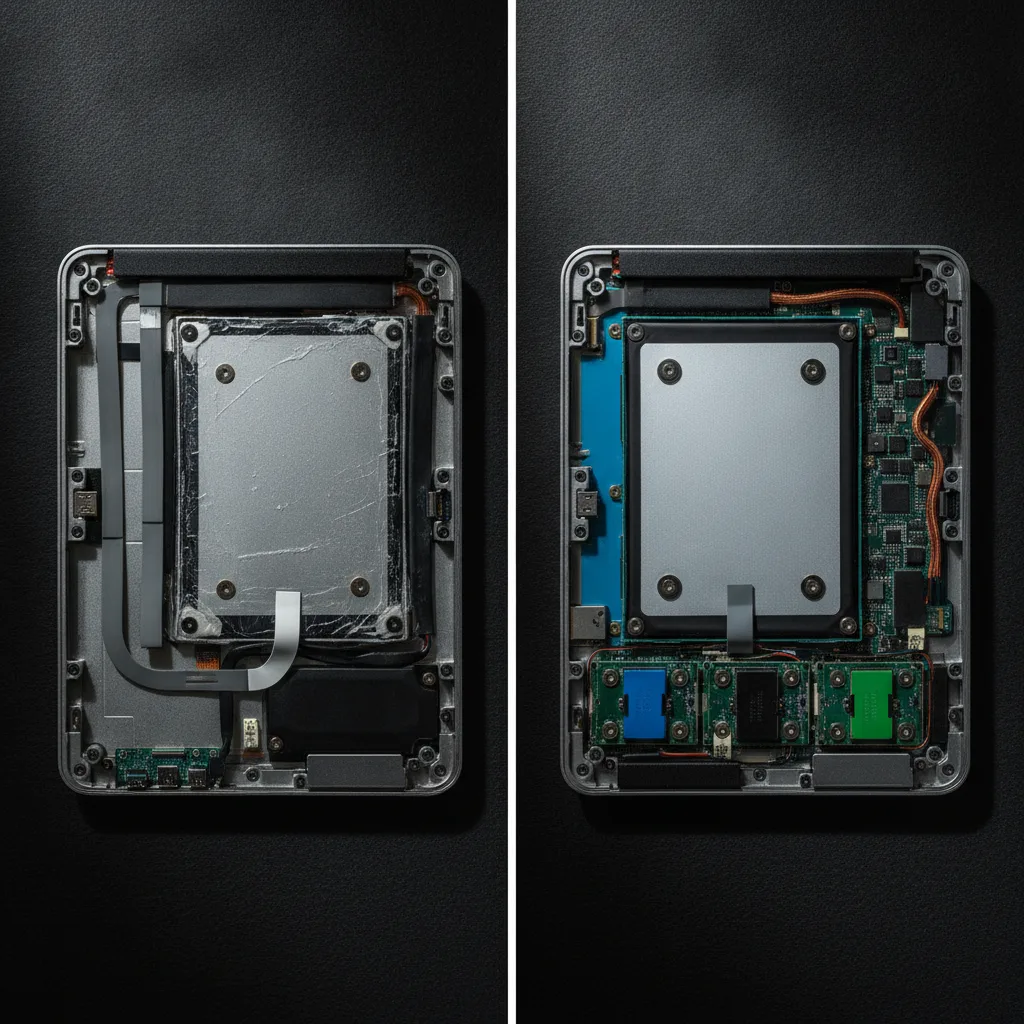
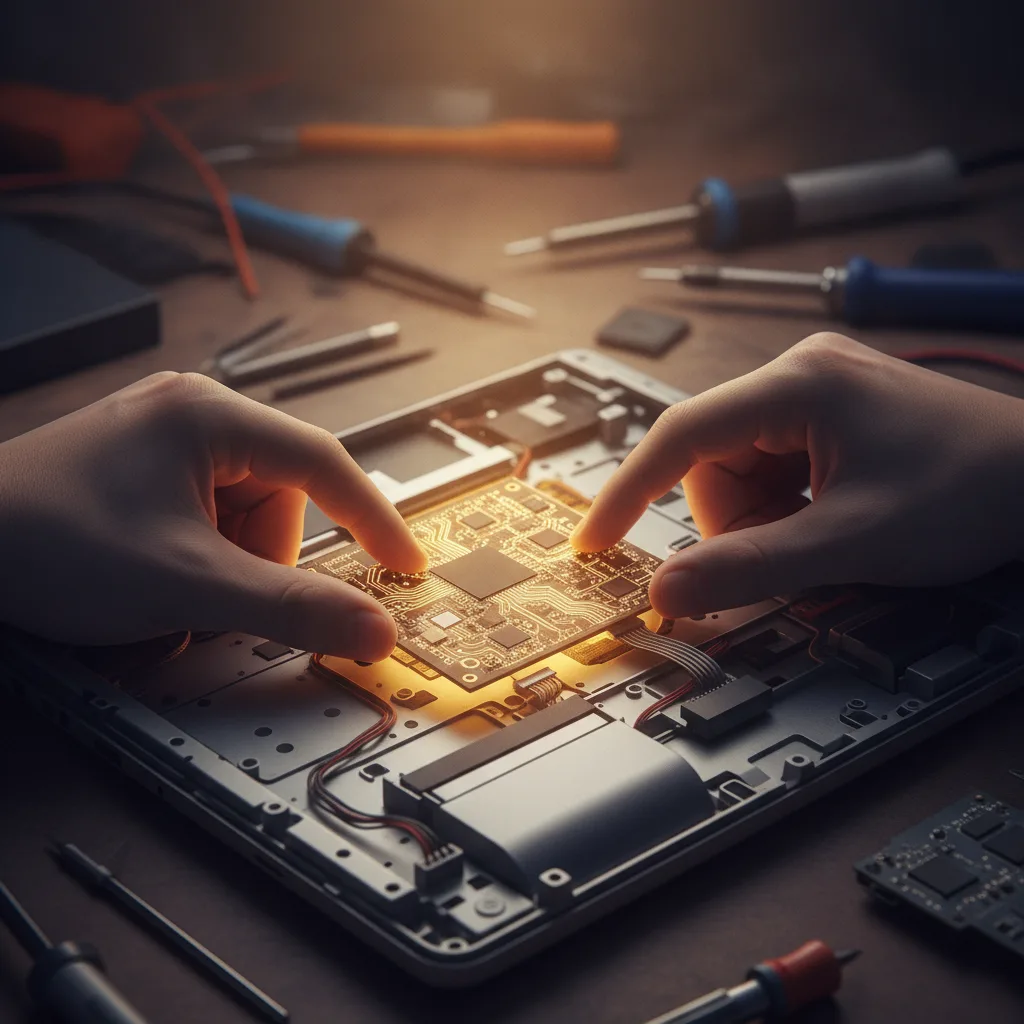
Then I unscrewed the back panel on Framework's latest machine, popped out the old mainboard, slotted in the new one, and had a fully upgraded laptop running in under four minutes. No heat gun.
No adhesive residue under my fingernails. No feeling like I was defusing a bomb built by someone who actively didn't want me in there.
I've been building software for over a decade.
I know what "engineered for the customer" looks like, and I know what "engineered against the customer" looks like — and until this week, I'd forgotten the first one was still possible.
The Sacred Cow: "Thin and Sealed Is Just Better"
Here's the conventional wisdom, and I want to be fair to it before I take it apart: thinner, sealed, glued laptops are supposedly the price of progress.
The pitch has been consistent since roughly 2012, when Apple killed the user-replaceable battery on the MacBook Pro. Sealed designs let engineers use every millimeter of internal volume.
Soldered RAM is faster and more power-efficient than socketed RAM.
Glued batteries save weight because there's no bracket, no screws, no wasted space.
Every major OEM — Apple, Dell, HP, Lenovo on their consumer lines — adopted some version of this logic, and for a while, it produced genuinely great hardware.
I bought into it too. My 2019 MacBook Pro was gorgeous.
It was also un-repairable, and when the battery started swelling in year three, Apple quoted me $199 for a battery replacement on a machine that, coincidentally, felt "due for an upgrade" right around the same time the warranty expired.
That's not an accident. That's the business model. Planned obsolescence doesn't announce itself — it just makes repair inconvenient enough that replacement feels reasonable.
For years, this tradeoff felt unavoidable. Thin was the entire industry's north star, and thin required sealing. If you wanted repairability, you accepted a brick. That was the deal.
The Evidence: The Numbers Don't Support "Unavoidable"
The E-Waste Number Nobody Wants to Say Out Loud
The UN's Global E-Waste Monitor put total e-waste generation at 62 million metric tons in 2022, projected to hit 82 million tons by 2030.
Laptops and phones — the two device categories most aggressively sealed against repair — are a disproportionate share of that growth curve, not because they fail faster, but because a swollen battery or a dead SSD makes the whole unit economically "dead" when neither part is actually replaceable on its own.
You don't throw away a car because the alternator dies. You throw away a laptop because the battery died and the repair path was designed to cost almost as much as a new one.
France's Repairability Index Exposed the Gap
When France mandated a public repairability score in 2021, the results were not subtle.
Premium ultrabooks from major OEMs routinely scored in the 6-to-7-out-of-10 range — decent on paper, but the sub-scores told the real story: disassembly requiring proprietary tools, glued components, spare parts available only through authorized service centers at markup.
Framework's laptops have consistently scored at or near the top of the index since it launched, not because the company is more virtuous, but because repairability was a design input from day one instead of a marketing bullet point bolted on after regulators started asking questions.
The EU Stopped Asking Nicely
The EU's Right to Repair Directive, which member states had until mid-2026 to transpose into national law, requires manufacturers to make spare parts and repair information available to consumers and independent repair shops for years after a product's release — not just authorized partners.
That's not a suggestion anymore. Companies that treated repairability as optional are now scrambling to retrofit compliance onto product lines that were never designed for it.
Framework didn't need to scramble.
Its mainboard, battery, keyboard, ports, and even the bezel are already sold individually, at transparent prices, on its own site — because that was the product from the start, not a compliance patch.
The Real Problem Nobody Talks About
Here's the part that actually got under my skin, and it's bigger than laptops.
We've been trained to treat "upgrade" and "replace" as the same word. They're not. An upgrade means the thing you already own gets better.
A replacement means the thing you own becomes garbage, and you buy a new one to feel the improvement you should have gotten from the old one.
The tech industry figured out somewhere in the last fifteen years that replacement is more profitable than upgrade — obviously, a full unit sale beats a $40 part sale — and then quietly re-engineered its entire product philosophy around that math.
Not through some smoke-filled-room conspiracy.
Just through a thousand small decisions, each individually defensible, that all pointed the same direction: solder the RAM, glue the battery, use pentalobe screws, stop publishing schematics.
The result is a generation of consumers who genuinely believe hardware just wears out fast now. It doesn't.
We built products that make it look that way, and we did it on purpose, because the alternative was worse for quarterly earnings.
That's the sacred cow underneath the sacred cow.
It's not "thin requires sealed." It's "profitable requires disposable." And once you see that distinction, you can't unsee it in every "planned refresh cycle" marketing email you've ever gotten.
What You Should Do Instead
I'm not telling you to buy a Framework laptop. I'm telling you to change what you evaluate before your next purchase.
Ask for the repairability score before you ask about the screen resolution. France publishes them. The EU will require disclosure more broadly under the new directive.
If a company won't tell you, that's the answer.
Check whether spare parts are sold publicly, not just through "authorized service." A battery you can buy directly, with a manual, is a device you'll keep for years.
A battery that requires shipping the whole machine to a depot is a device with a expiration date baked in.
Stop upgrading on the vendor's schedule. If your laptop still does the job, the "new model" notification is marketing, not a need.
Wait for the part that actually failed, then replace only that part — if the manufacturer lets you.
The Uncomfortable Truth
I didn't get emotional over a laptop because I love hardware. I got emotional because for four minutes, a company treated me like an owner instead of a renter who happened to pay in full upfront.

That's a low bar. It shouldn't be remarkable. The fact that it is tells you everything about how far the rest of the industry drifted from actually serving the person holding the device.
So here's the question I want you sitting with: how many things in your life — not just laptops — have you replaced instead of repaired, simply because repair was made to feel harder than it needed to be?
And who benefited from you believing that was normal?