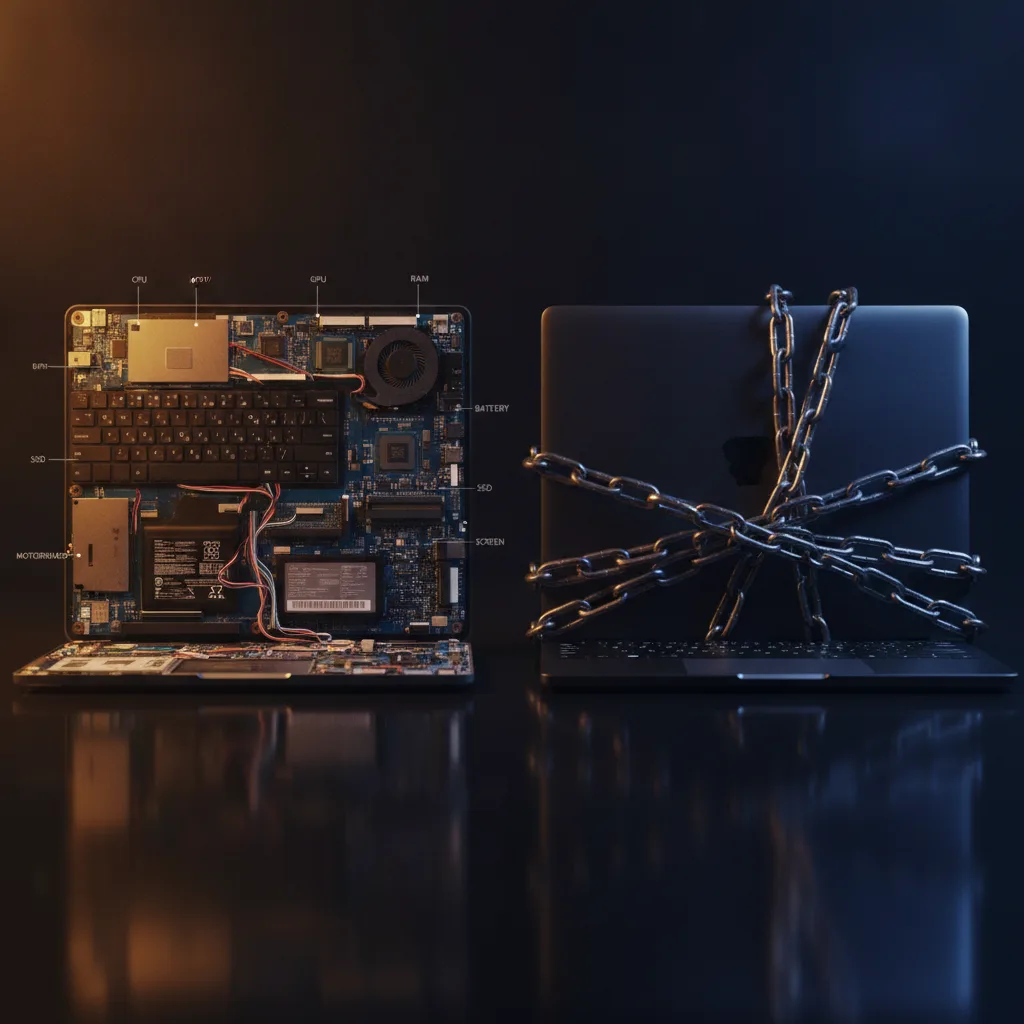
I Cried Over a Laptop. Here's Why the Framework Pro 13 Broke Me.
In this article
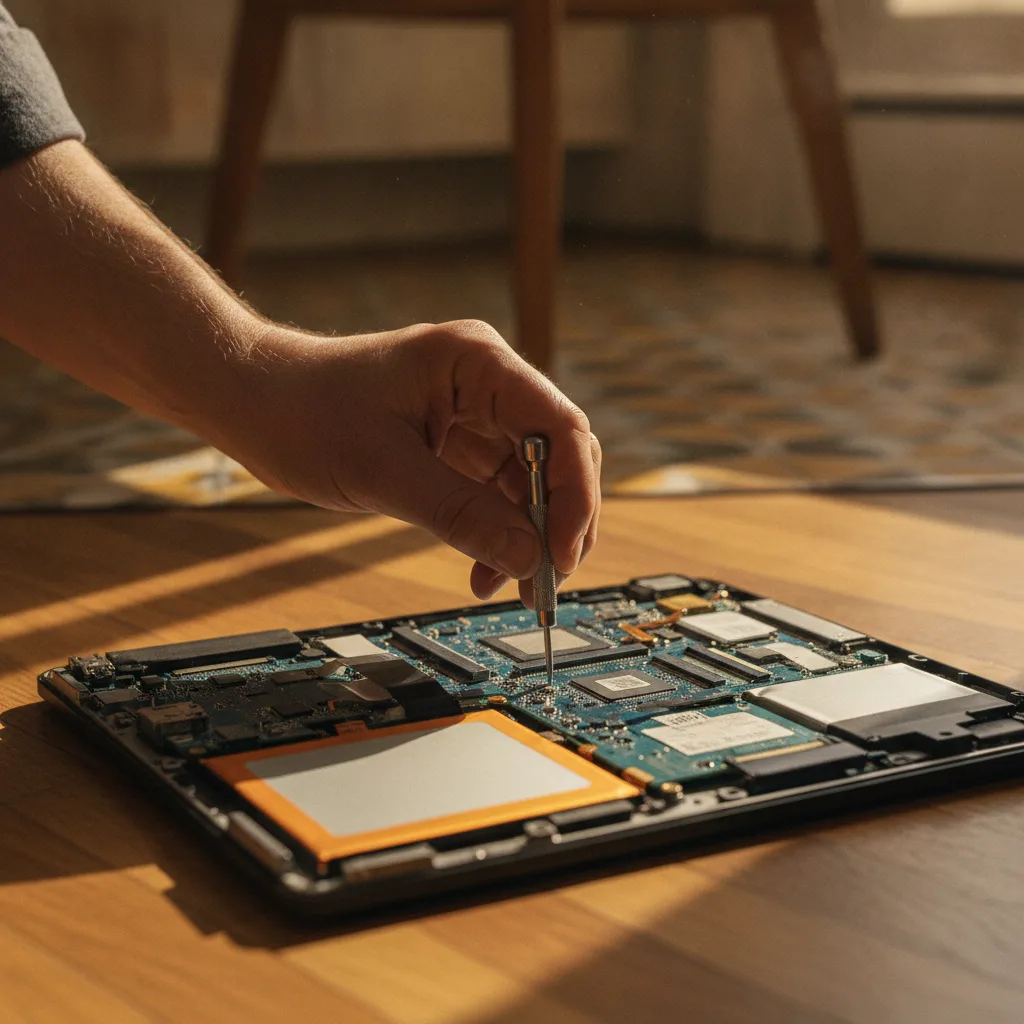
Bottom line: I replaced a swollen battery in a Framework Pro 13 with a $69 part and a Torx driver in eleven minutes, no soldering, no heat gun, no YouTube tutorial paused forty times.
I sat on my kitchen floor afterward and cried, because I realized I'd spent fifteen years being trained to throw perfectly good machines in a landfill.
Framework's laptops score a 10/10 on iFixit's repairability index; the industry average for premium ultrabooks sits closer to 3.
The real story isn't that Framework built a good laptop — it's that every other manufacturer chose, on purpose, not to.
I'm not crying about a laptop. Not really.
I'm crying about every MacBook I threw away because a battery swelled and Apple wanted $600 to look at it.
I'm crying about every Dell I watched a friend "upgrade" because the RAM was soldered and the SSD was proprietary. Fifteen years as a developer, and I only just found out none of that was necessary.
I've been a working engineer for over a decade, and I'm telling you the "premium laptop" industry has been running a con on all of us — and calling it quality.
The Sacred Cow: "Buy the Best-Built Machine You Can Afford"
Every tech reviewer says some version of the same thing: buy unibody aluminum, buy the sealed chassis, buy the machine that "feels like quality" in your hands.
Glued batteries and soldered RAM get reframed as "thinner, lighter, more reliable" — fewer moving parts, fewer points of failure.
Five years ago I believed this completely. I bought a 2021 MacBook Pro because the reviews said it was "built like a tank." I told junior devs on my team to do the same.
The machining tolerances are real. The aluminum really is nice. Apple, Dell, and Lenovo didn't lie about the materials.
What they didn't say — what nobody in the review ecosystem said loudly enough — is that "sealed" and "unrepairable" are the same word wearing different marketing.
The industry sold us "premium" and quietly redefined it to mean "disposable at scale."
Here's what changed: right-to-repair pressure, EU battery regulations landing in 2027, and one small Bay Area company deciding to prove the sealed-chassis excuse was never really about quality at all.
The Evidence: The Numbers the Industry Doesn't Want You Comparing
iFixit's Repairability Scores Tell the Whole Story
Framework's laptops — including the Pro 13 line — score a 10 out of 10 on iFixit's repairability index. The MacBook Pro lineup has scored between 2 and 4 for the better part of a decade.
Most Dell XPS and HP Spectre models land in the 3-5 range.
This isn't a rounding error. It's a design philosophy, and one side of it treats you as the owner and the other treats you as a renter who paid up front.
The Real Cost of "Just Buy a New One"
A battery replacement on my Framework Pro 13 cost $69 in parts and eleven minutes of my time.
The equivalent "genuine service" quote from an authorized Apple repair shop for a similarly aged MacBook Pro battery: $199, plus a week without the machine, plus a diagnostic fee if they decide something else "needs replacing too."
Multiply that gap across a fleet.
A mid-size engineering org replacing 200 laptops a year at an average premium-brand price of $2,400 is spending nearly half a million dollars annually on hardware — much of which is being retired not because the CPU can't keep up, but because a $40 part failed and the repair math didn't pencil out next to a new machine.
E-Waste Is Not an Abstraction
The UN's Global E-waste Monitor put e-waste generation at over 62 million tonnes globally in its most recent full accounting, and electronics are the fastest-growing waste stream on Earth.
A meaningful share of that isn't dead silicon — it's laptops with a fine motherboard and a failed battery or a cracked hinge, tossed because repair was designed to be harder than replacement.
Modularity Isn't a Gimmick — It's a Different Contract With the Buyer
The Framework Pro 13's mainboard, ports, battery, and display can all be swapped by a single owner with a standard screwdriver.
Framework sells the parts individually, publishes the repair guides for free, and doesn't serialize components to lock third-party replacements out. That's not a feature bullet point.
That's the company deciding your ownership doesn't end at the checkout page.
The Real Problem Nobody Talks About
The real problem isn't glue versus screws. The real problem is that we let an entire industry convert "durable" into a marketing word that means the opposite of what it used to mean.
Somewhere in the last fifteen years, "premium" stopped meaning "built to last" and started meaning "built to look expensive while quietly expiring on a schedule the manufacturer controls, not you." Sealed batteries.
Serialized parts that refuse to pair with a new logic board. Software updates that slow three-year-old hardware just enough to make the new model tempting.
None of that is an accident of engineering. It's a business model. A laptop you can repair for $69 is a laptop the manufacturer doesn't sell you again in three years.
A laptop that requires a $600 "genius bar" diagnosis for a battery is a laptop that quietly nudges you toward the upgrade cycle instead.
We didn't just accept this. We built a whole review culture that praised it — "so thin," "so sealed," "so premium" — without ever asking who that sealing actually serves.
What You Should Do Instead
I'm not telling you to buy a Framework. I'm telling you to change the question you ask before any laptop purchase.
- Check the iFixit score before the benchmark score. A 10/10 repairability machine that's 15% slower in a synthetic benchmark will outlive three "faster" sealed machines in your total cost of ownership.
- Ask what a battery replacement costs and takes, before you buy. If the answer requires shipping the machine away for a week, you're not buying a tool — you're leasing one with extra steps.
- Support right-to-repair legislation with more than a retweet. The EU's 2027 battery-replaceability rules exist because people showed up to public comment periods, not because manufacturers had a change of heart.
None of this requires you to become a hardware hobbyist. It requires you to stop rewarding companies for designing your machine's death.
The Uncomfortable Truth
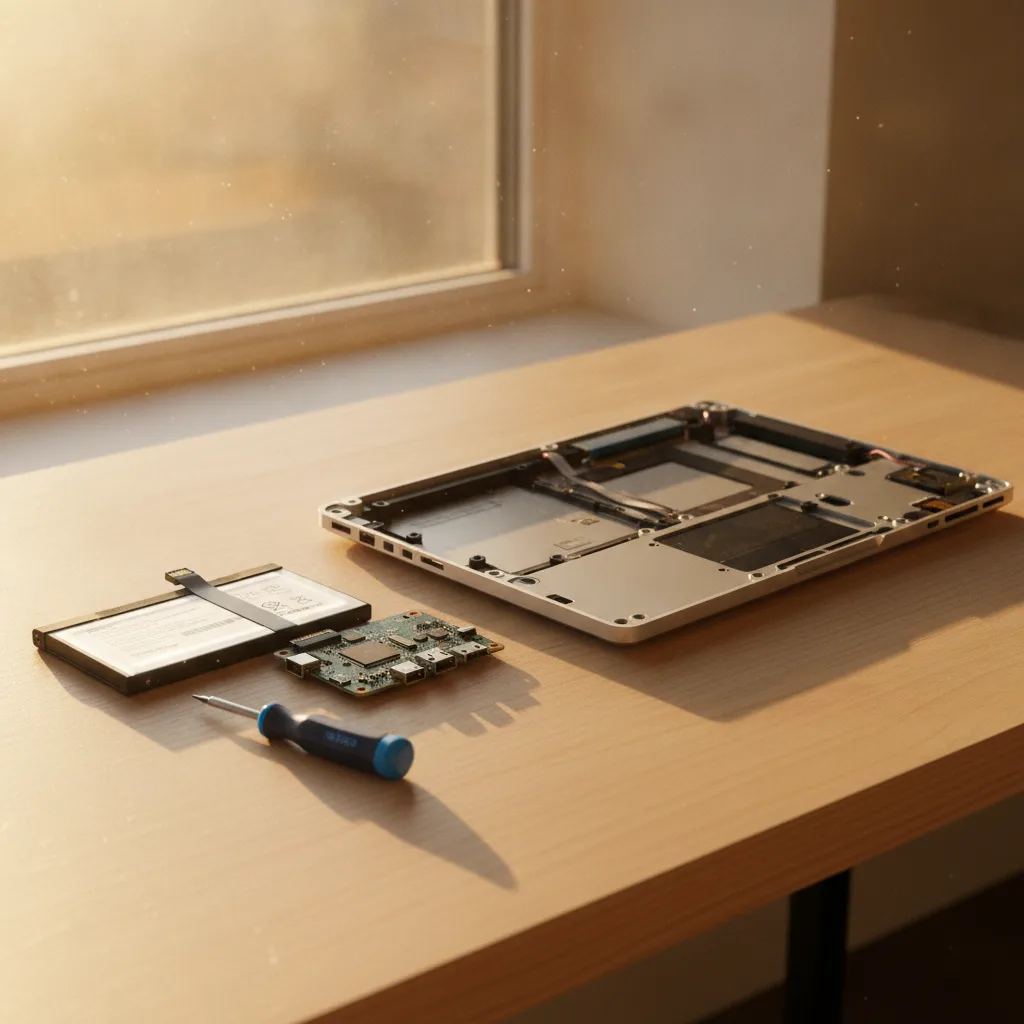
I cried on my kitchen floor holding a $69 battery and a Torx driver, and it wasn't about the laptop.
It was the sudden, physical realization that I'd spent fifteen years being told repair was hard, when it was only ever hard because someone decided it should be — and I paid a premium for the privilege of believing them.
How many machines have you thrown away that were never actually broken, just built to make you think they were?