This Guy Taught a Picture Frame to Sketch Birds Like It's 1850
In this article
This Guy Taught a Picture Frame to Sketch Birds Like It's 1850
Bottom line: A developer built an e-ink picture frame that listens for birdsong through a small microphone, identifies the species using an audio classification model, then generates and displays a hand-drawn-style illustration in the manner of a 19th-century naturalist sketchbook — no camera, no photo, just sound turned into art.
The project, posted to Hacker News as a Show HN, hit over 2,100 points in a single day, an engagement level most "I built a weekend project" posts never sniff.
The appeal isn't the tech stack (that part's almost boring by 2026 standards) — it's that the finished object is deliberately, defiantly slow, quiet, and analog-feeling in a way almost nothing else in your house is.
I stared at the demo video for way longer than I meant to.
A cardinal calls somewhere off-screen, the frame goes dark for a few seconds, and then a sketch bleeds onto the display like ink through wet paper — cross-hatched wing feathers, a little Latin name in copperplate script underneath, the whole thing looking like it fell out of an 1850s field journal.
No notification.
No app. No "3 new birds detected today, tap to see your streak." Just a frame on a wall, quietly becoming a naturalist's notebook one call at a time.
That restraint is the whole story here, and I think most people commenting on the Hacker News thread are missing why it matters.
The Setup: Why a "Dumb" Frame Feels Radical Right Now
Here's the stack, because it's worth naming: a Raspberry Pi–class board, a cheap USB microphone, an open audio classification model in the BirdNET family trained to recognize species from song alone, and a generative image model prompted — hard — to output in the style of period ornithological illustration.
The result gets pushed to an e-ink display, the same low-power, paper-like screen tech in your Kindle.
None of those pieces are new. BirdNET has been open-source and running on Raspberry Pis in backyard bird feeders for a few years now.
E-ink frames for photos have been a Kickstarter staple since the early 2020s.
Image generation that mimics a specific illustrative style is, at this point, a solved problem you can prompt your way into in an afternoon.
What's new is the decision to combine them into something that does almost nothing. It doesn't stream. It doesn't log.
It doesn't ask you to open an app to see "insights." It just sits there, and once in a while, it draws you a bird.
That's the part of the Hacker News thread that's actually interesting — not the implementation notes, but the top comment thread arguing about whether this is "the future of ambient computing" or "a very elaborate way to avoid building a real product." I think both camps are half right, and I think the disagreement is the whole reason it's sitting north of 2,100 points.
The Contrarian Reframe: This Isn't a Smart-Home Device. It's an Argument Against Smart-Home Devices.
The instinct when you see a Pi, a microphone, and a generative model is to slot it into the smart-home bucket — Nest, Ring, Alexa, the whole surveillance-adjacent product category that's spent a decade training us to expect real-time notifications for literally everything happening near our houses.
But this frame actively refuses that framing, and I'd argue that refusal is the actual innovation.
Every mainstream "smart" device in 2026 is built around the same loop: detect event, generate notification, drive engagement, harvest data.
A smart bird feeder with a camera — and there are several good commercial ones — will happily push you a phone alert every time a chickadee lands, tag it, log it to a life list, and quietly build a profile of your backyard's biodiversity that lives on someone else's server.
That's genuinely useful for citizen science. It's also exhausting, and it's also extractive in ways we've mostly stopped noticing because we're used to it.
This frame does the opposite of all of that on purpose. There's no cloud round-trip in the demo, no account, no dashboard. The output isn't data — it's an artifact.
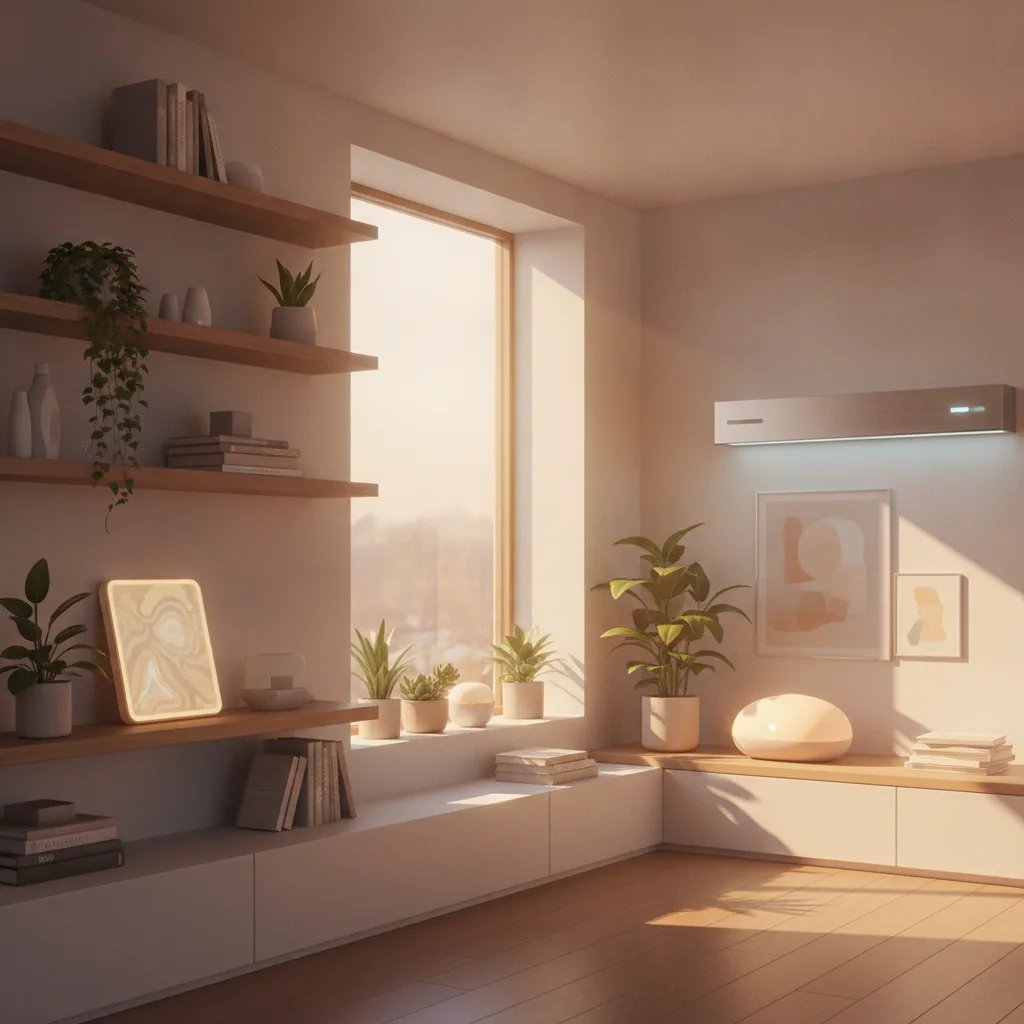
You don't check it. You just live near it, and it changes without asking for your attention.
I think the developer stumbled into something that a lot of AI product teams are actively trying to avoid discovering: that "delightful" and "attention-seeking" are not the same design goal, and most consumer AI right now optimizes hard for the second one while pretending it's the first.
A frame that draws you a cardinal once and then leaves you alone until the next one sings is a rebuke to every app on your phone that pings you seven times a day to keep its engagement metrics up.
The Framework: The Three-Layer Ghost Stack
If you want to understand why this project works — and why I think it's a template worth stealing for other ambient AI ideas — I'd break it into three layers.
I'm calling it the Ghost Stack, because at every layer, the design choice is to make the technology disappear rather than announce itself.
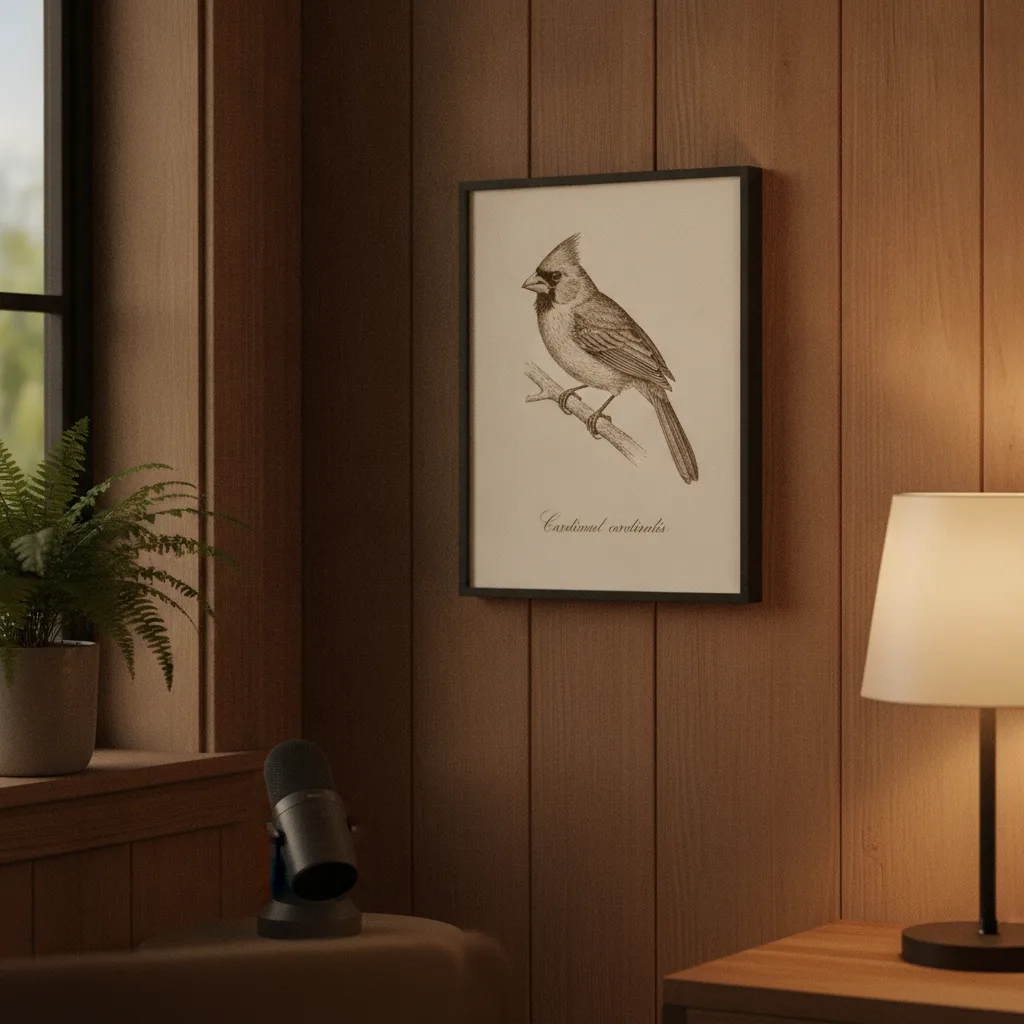
Layer 1: The Sensor Is Passive, Not Predatory
No camera. Just sound.
That's a privacy decision as much as a technical one — a microphone picking up birdsong in your yard isn't recording your neighbor's kid or your own conversations on the porch (assuming reasonable filtering, which is its own open question the thread rightly presses on).
Passive sensing that's scoped tightly to one non-human signal source is a much easier thing to trust than "smart camera, don't worry, it's private."
Layer 2: The Inference Is Local and Bounded
BirdNET-style classifiers run on-device, on hardware that costs less than a nice dinner out.
There's no round trip to a cloud API for the "did I just hear a bird" question, which means the thing keeps working if your internet drops, and — just as important — there's no vendor on the other end quietly building a dataset of everything your microphone has ever picked up.
Layer 3: The Output Is Interpretive, Not Documentary
This is the layer everyone's missing. The frame doesn't show you a photo — it shows you a drawing, filtered through a stylistic choice that's explicitly imprecise. An illustration is an interpretation.
It has texture, hand-wobble, a point of view.
That's a completely different relationship to the underlying event than a security-cam-style "here's exactly what happened, timestamped." The Ghost Stack turns a data event into an aesthetic object, and aesthetic objects don't demand verification the way documentary ones do.
Stack those three choices — passive sensing, local bounded inference, interpretive rather than documentary output — and you get a device that feels like a houseplant instead of a surveillance node.
That combination is rare enough in 2026 that it's worth naming and reusing.
What This Means If You Build Things
If you're a product person or an indie developer reading this and thinking "cute, not for me" — I'd push back.
The Ghost Stack pattern is a legitimate answer to a problem a lot of teams are quietly panicking about: notification fatigue is real, users are increasingly hostile to always-on AI features that talk at them, and "ambient" has become a buzzword precisely because nobody's shipped a convincing version of it yet.
If you're a mid-level engineer at a company bolting AI features onto an existing product, the lesson isn't "build a bird frame." It's: look at your event-to-notification pipeline and ask whether the notification is actually the right output, or just the default one. A lot of AI features get built as alerts because alerts are the easiest UI pattern to ship, not because they're the right one for the underlying event.
Sometimes the right output is a log entry nobody has to look at until they choose to. Sometimes it's an object that just... changes, quietly, in a room.
There's also a smaller, more practical implication here for anyone doing hobby hardware: the barrier to this kind of project has basically collapsed.
A Pi-class board, an off-the-shelf audio classifier, an image model API call, and a $30–$100 e-ink panel is a weekend build, not a startup.
The Hacker News comments are full of people already forking the idea — one thread suggests doing it for insect sounds, another for identifying trees from leaf photos taken on a schedule.
The pattern generalizes to almost any "ambient sensing + interpretive rendering" idea you can think of.
The Bigger Picture
We spent the last decade making our homes louder — more notifications, more dashboards, more real-time everything, more devices competing for a sliver of our attention every time something happens nearby.
This project is a small, well-executed argument that the more interesting design space is the opposite direction: technology that notices things on your behalf so that you don't have to, and shows you what it noticed in a form that asks nothing of you until you're ready to look.
That's not really a story about birds, or about e-ink, or even about generative art.
It's about whether we still know how to build something that respects a person's attention as a finite, valuable thing instead of a resource to be extracted.
A frame that draws a cardinal once a day and otherwise says nothing is a strange thing to find moving. I found it moving anyway.
What's the last piece of technology you owned that got quieter the longer you used it, instead of louder?