Pranking Linus for his 40th Birthday
Bottom line: The legendary "prank" pulled on Linus Torvalds for his 40th birthday in 2009 — specifically, the elaborate, community-wide deception orchestrated around a fake kernel bug — wasn't just a joke.
It was a masterclass in decentralized leadership and the psychological underpinnings of high-performing, trust-based teams.
This event, largely forgotten outside of a niche few, reveals how genuine influence in open source isn't about top-down control, but about fostering an environment where even the "benevolent dictator" can be gently challenged and celebrated by his own creation.
I believe this single event offers more insight into the future of distributed work than a decade of management books.
I thought I knew Linus Torvalds. Like most people in tech, I pictured the stoic, brilliant architect of Linux, famous for his blunt emails and unwavering technical vision.
He’s the kind of figure who commands respect, a titan of code whose mere presence shapes an entire industry.
But then I stumbled back across the story of his 40th birthday, and it completely shattered that image for me, revealing something far more profound about leadership and community.
It wasn’t a gentle celebration; it was an audacious, intricate prank orchestrated by the very community he built, and it exposed a vulnerability, a humanity, that I simply wasn’t ready for.
The Myth of the Unbreakable Leader
For years, I’ve navigated the tech world, watching founders rise and fall, observing what makes teams truly gel versus those that just trudge along.
We talk a lot about "servant leadership" and "psychological safety," but often, these are just buzzwords plastered on office walls.
The reality is usually far messier, filled with ego, control, and a constant, underlying tension.
Linus, in my mind, was the ultimate benevolent dictator – a necessary figure for the chaotic beauty of open source, but still, a dictator.
He was the exception to the rule, the guy who could get away with telling people to "get real" because his code spoke for itself. He seemed unprankable, unreachable.
That’s why the story of his 40th birthday, back in October 2009, hit me so hard.
The Linux kernel community, a global network of engineers, decided to celebrate their leader not with a cake, but with a meticulously planned, multi-stage, global deception.
They didn't just send him a card; they fabricated a critical, high-profile kernel bug, complete with fake patches, staged arguments on mailing lists, and a coordinated effort to keep the ruse going for days.
It was a performance art piece designed to mess with one of the most brilliant minds in computing, all while he was thousands of miles away.
It wasn't just a prank; it was a testament to the level of trust and camaraderie that had been built over decades.
The Prank That Proved a Point
The setup was genius in its simplicity and terrifying in its execution. Linus’s team, led by Dirk Hohndel, convinced him to take a sabbatical around his birthday.
While he was away, a "critical bug" was introduced into the kernel, specifically targeting a seemingly innocuous `git` change.
Fake bug reports flooded in, discussions erupted on the kernel mailing list, and a series of "fixes" were proposed, each subtly flawed.
Linus, from his remote location, was drawn into the fray, unable to directly debug, forced to rely on the very community he was meant to be leading.
He was irritated, frustrated, and deeply engaged, just as they planned.
What makes this more than just a funny anecdote is the sheer scale and coordination involved.
Dozens of highly intelligent, often opinionated, engineers had to keep a secret, play their parts, and maintain a straight face while subtly gaslighting their project lead.
This wasn't some corporate team-building exercise; this was organic, community-driven mischief.
It revealed a core truth about the Linux project that few outside the inner circle truly understood: it wasn’t just a codebase; it was a living, breathing social organism, capable of complex, collective action, even for something as frivolous as a birthday prank.
And it wasn't just about code; it was about the people behind the code.
The Three Pillars of Decentralized Influence
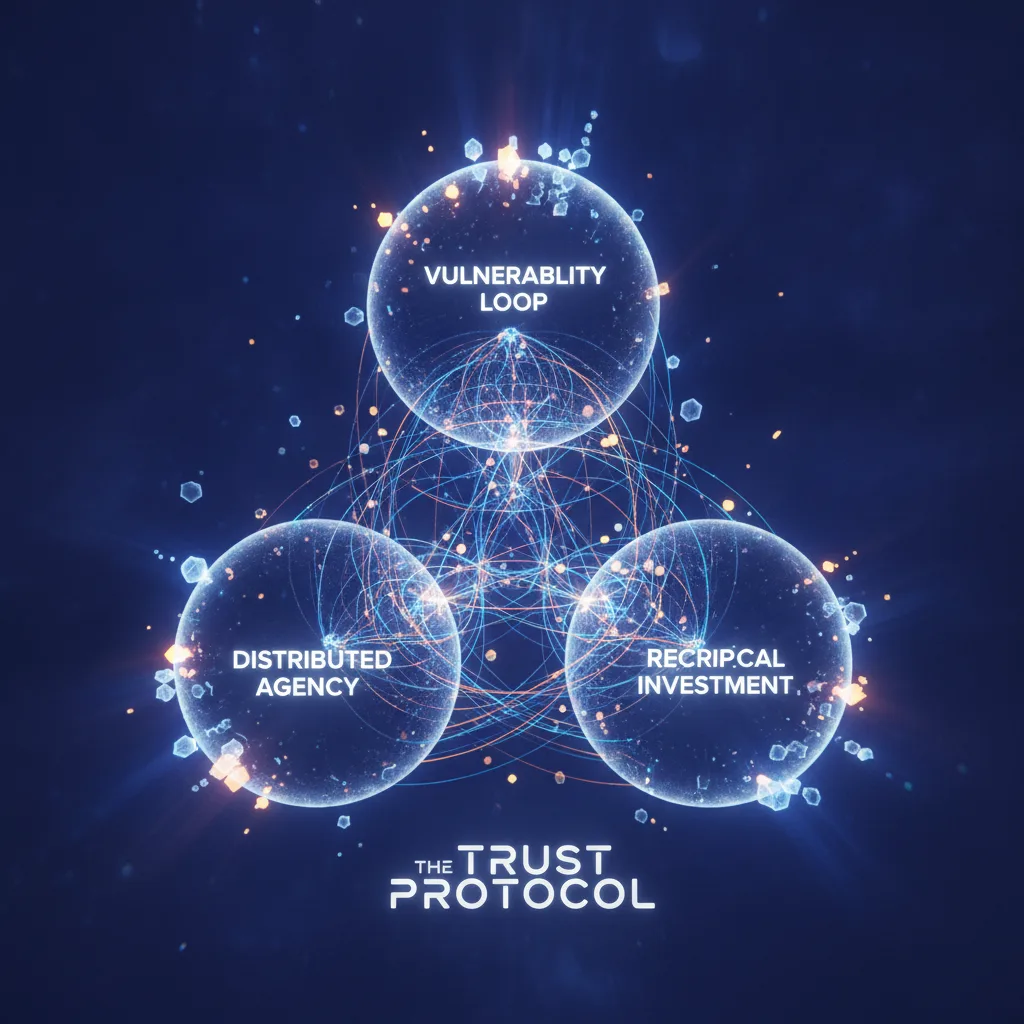
The Linus prank wasn't just a one-off joke; it was a living demonstration of what I call The Trust Protocol — a framework for understanding how genuine influence and leadership operate in highly decentralized, high-stakes environments.
This isn't about traditional management; it’s about the subtle, often invisible, bonds that allow complex systems to self-organize and even playfully challenge their architects.
#### 1. The Vulnerability Loop
For a prank like this to work, Linus had to be, paradoxically, both respected and approachable enough to be messed with. His public persona might be gruff, but his team clearly knew a different side.
They understood his triggers, his passions, and crucially, they knew he wouldn't retaliate.
This creates a "Vulnerability Loop." The leader demonstrates enough trust in the team (by stepping back, by engaging in the fake bug reports) that the team feels safe enough to be vulnerable themselves (by taking the risk of pranking him).
This isn't about being weak; it's about being human. Linus’s willingness to engage with the fake bug, even his frustration, was part of this loop.
It showed he cared, and that care was reciprocated by the community’s care for him.
Without this underlying trust, the prank would have been seen as disrespectful, or worse, a genuine attack. Instead, it became a moment of shared humanity.
#### 2. Distributed Agency
Think about the logistical nightmare of coordinating a prank across multiple time zones, involving highly skilled individuals, all without a central command structure dictating every move.
This wasn't a project manager assigning tasks; it was distributed agency in action.
Each participant understood the goal (prank Linus), their role (fake bug report, patch review, mailing list comment), and the overall context.
They acted autonomously, yet collaboratively, without needing explicit instructions for every micro-interaction.
This is the holy grail for any founder building a remote-first or open-source-inspired organization.
It's not about micromanagement; it's about setting a clear vision, fostering a culture of ownership, and then letting people run.
The prank succeeded because everyone owned their piece of the deception, contributing their unique skills to the collective goal.
It showcased the power of a self-organizing collective, all moving in the same direction, not because they were told to, but because they wanted to.
#### 3. The Reciprocal Investment
The community’s investment in this prank was enormous. Time, intellectual energy, coordination — all poured into a purely social endeavor. Why?
Because Linus, and by extension Linux, had invested so much in them. This is the "Reciprocal Investment" principle.
When a leader pours their lifeblood into a project, fostering a sense of ownership and belonging, the community responds by investing their own capital, be it time, expertise, or even elaborate birthday pranks.
It's a feedback loop. Linus built the foundation, but the community built the mansion around it.
Their prank wasn't just a celebration of him; it was a celebration of their collective identity, forged in the crucible of Linux development.
It solidified their bond, proving that they were more than just contributors; they were a family, albeit a highly technical, sometimes cantankerous one.
The prank was a social contract, reinforced through shared experience.
Beyond Code: Real-World Implications for Leadership
What does an almost two-decade-old prank on a legendary coder mean for your career, your team, or your company in late 2026? A lot more than you might think.
We're living in an era where distributed teams are the norm, and the old models of top-down command-and-control are dying a slow, painful death.
The Linus prank offers a blueprint for genuine influence in this new landscape.
If you’re a founder or a team lead today, especially in a remote or hybrid setup, ask yourself: could your team pull off such an elaborate, good-natured deception without it devolving into chaos or resentment?
If the answer is no, it's not because they lack creativity. It's because you likely haven't cultivated the kind of deep trust and distributed agency that the Linux community embodies.
You're probably still fighting for control instead of fostering contribution.
This isn't about letting your team mess with you, though a little lightheartedness never hurts. It's about building a culture where:
- People feel safe to challenge assumptions, even yours, because they know it comes from a place of care for the project, not personal ambition.
- Individuals are empowered to take initiative without waiting for explicit permission, trusting their judgment within a shared understanding of goals.
- There's a deep, reciprocal investment where everyone feels a profound sense of ownership, not just over their tasks, but over the entire collective endeavor.
The traditional metrics of leadership often focus on output, efficiency, and growth.
But the Linus prank reminds us that the true measure of a leader, especially in a complex, creative domain, might just be the health and vibrancy of the community they inspire.
It's about building something that can not only function without you but can also surprise and delight you.
The Enduring Legacy of a Human Touch
The story of Linus's 40th birthday prank isn't just a quirky footnote in tech history; it's a testament to the enduring power of human connection, even in the most technical of realms.
It reminds us that behind every line of code, every groundbreaking innovation, there are people – with their quirks, their humor, and their profound capacity for collaboration.
Linus Torvalds may be the "benevolent dictator" of Linux, but that prank showed he's also a deeply human figure, worthy of both immense respect and a good-natured jab from the very community he brought into being.
It’s a powerful reminder that sometimes, the greatest acts of leadership aren't about control, but about cultivating an environment where others feel empowered to lead, to create, and yes, even to prank.
Have you ever seen a moment in your own work or community where a leader's humanity, or a team's collective spirit, truly shone through in an unexpected way?
What's your take on what this prank reveals about leadership in a decentralized world?