PewDiePie Released Odysseus and Ajax After Two OpenAI Bans. Here's What's Reported.
In this article
Bottom line: PewDiePie (Felix Kjellberg) has released Odysseus, a free, self-hosted AI workspace, and a fine-tuned model called Ajax.
Secondary sources describe Ajax as an uncensored model of about 9 billion parameters built on Alibaba's Qwen. The reports say he was banned twice by OpenAI while trying to distill its models.
Nothing I found shows OpenAI "wanted it locked up," and I couldn't verify the claims against the official repo.
The real story is that a small, local, fine-tuned model is now a credible alternative to a hosted API for narrow agent jobs.
I need to correct the headline premise first. The viral version of this story says PewDiePie "freed" an AI that OpenAI wanted locked up. Nothing I could find supports that.
What the sources do say is smaller and more useful. He reportedly tried to distill knowledge from OpenAI's models, got his account banned twice, and then went a different way.
That's a provider enforcing its terms of service, not a cage match.
I'm labeling what's solid and what isn't as I go. Most of the coverage is secondary: aggregator posts, SEO-style guide sites and video summaries.
I couldn't confirm any of it against the official repository.
What Was Actually Released
There are two pieces. Odysseus is a self-hosted AI workspace. One guide site describes it as AGPL-3.0 licensed, with support for backends like Ollama, llama.cpp, vLLM and OpenAI-compatible APIs.
A newsletter alert frames it as an open-source local LLM web UI.
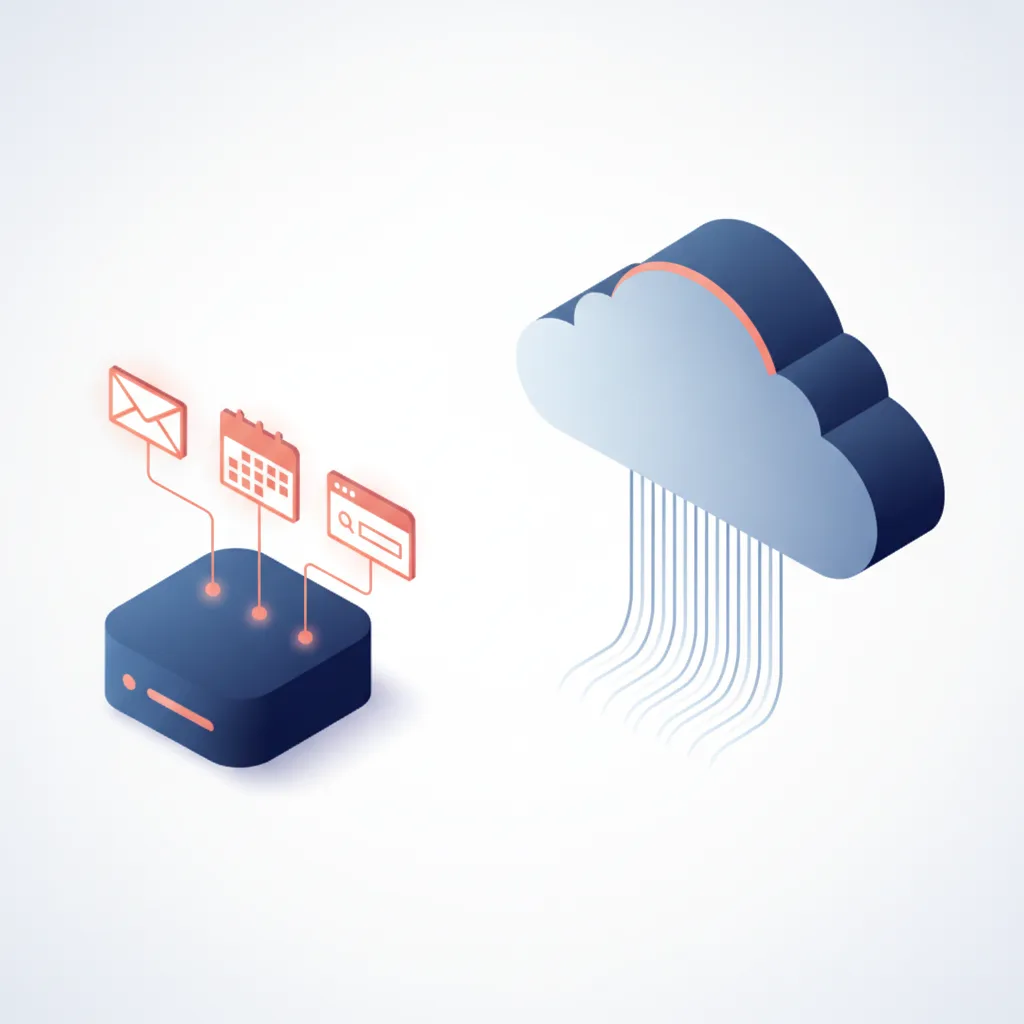
Ajax is the model. Tech-insider describes it as a fine-tuned, uncensored model of about 9 billion parameters, meant for small, specialized tasks like browsing, email and calendar management.
Daily.dev says it sits on a Qwen base but gives a different size. So the base-model details are disputed, and I wouldn't repeat either number as fact.
Even the project name wobbles between pages: some spell it "Odysius," others "Odysseus." One item calls a release "this week" while listing it as 130 days old.
That's the signal to check the repo before you trust any benchmark or star count.
Why the OpenAI Bans Matter More Than the Drama
The reported sequence is distillation, then bans, then a switch to other methods.
According to those same posts, he moved to supervised fine-tuning, GRPO-style reinforcement learning, and an uncensoring tool called Heretic.
Distillation means training a smaller model on the outputs of a larger one. Most hosted providers' terms prohibit using their outputs to train competing models.
That's the likely reason for the bans, and it's an ordinary enforcement action. It isn't a suppression story, and I'd push back on anyone selling it as one.
The bans do point at something real about building on hosted APIs. Your access is a license, not a right. If your pipeline depends on one vendor's outputs, that vendor can end it with an email.
I've seen teams learn this the hard way with rate limits, deprecations and policy changes.
The lesson isn't "never use hosted models." It's that you should know which parts of your system you can't rebuild if access disappears.
The Part Worth Your Attention: Small Models for Narrow Jobs
Here's the claim I find credible, because it matches how production systems tend to work. A 9B-class model, fine-tuned for a tight task set, can do browsing, email triage and calendar actions locally.
Those tasks have constrained outputs, repeatable tool calls and forgiving failure modes.
That's very different from asking a small model to reason through an open-ended research problem. A frontier model will still win there.
But most agent work in a real workflow isn't open-ended; it's a chain of small, boring decisions.
For that kind of work, local has real advantages:
- Cost: no per-token bill after the hardware.
- Privacy: your inbox and calendar never leave your machine.
- Latency: no network round trip per tool call.
- Control: you pin the weights, so behavior doesn't shift under you on a Tuesday.
That last one matters more than people admit. Silent model updates have broken prompts in production for plenty of teams.
The Reality Check
Here's where I'd slow down.
"Uncensored" is not a feature, it's a risk surface. An agent that reads your email and acts on it is exposed to prompt injection.
Removing refusal behavior from a model that has access to your inbox makes that problem worse, not better. If you run Ajax or anything like it with tool access, scope the permissions tightly.
A viral star count isn't a security review. Nearly 90,000 GitHub stars is the figure one source gave for Odysseus. Stars measure attention, not audit quality.
Read what the agent is allowed to execute before you point it at real accounts.
The licensing detail matters. AGPL-3.0 is a strong copyleft license. If you modify it and offer it as a network service, you owe your users the source.
That's fine for personal use and a real constraint for a startup that wanted to wrap it in a product.
Small models fail differently. They hallucinate tool arguments and lose track of long contexts.
A 9B model that handles your calendar 95% of the time is still wrong one time in twenty, and the wrong action might be sending an email.
What I'd Actually Do With This
If you're curious, treat it as an experiment, not a migration. Here's the workflow I'd use.
1. Verify before you install
Find the official repository, not a guide site. Check the commit history, the license file and the model card. If the model card doesn't state the base model and size, that tells you something.
2. Sandbox it
Run it in a container or a separate VM, with a throwaway email account and a test calendar. Don't hand it your primary credentials on day one.
3. Measure on your own tasks
Write 30 to 50 real examples of the jobs you'd delegate: "move this meeting," "summarize unread mail from this sender." Run them against Ajax and against a hosted model.
Count the failures, not the vibes.
4. Keep a fallback
Design the system so the model is swappable. Because Odysseus reportedly supports OpenAI-compatible APIs, that's feasible. The point is that no single vendor, hosted or local, becomes a hard dependency.
5. Respect the terms you agreed to
If you're tempted to distill from a hosted model, read its terms first. The reported bans are a free lesson in what that costs.
Why This Resonates
I think the reason this went so viral is cultural, not technical. A person with a huge audience and no lab, no cluster and no research team shipped a working local AI stack.
Whatever its flaws, that signals how low the barrier has become.
The open-weights ecosystem, Qwen included, did the heavy lifting. Fine-tuning recipes like GRPO are public. The tooling to run it locally is mature.
A motivated individual can now assemble something that would have taken a funded team not long ago.
That doesn't make hosted frontier models obsolete. It means the middle of the market, the routine agent tasks, is getting contested by things you can run on your own hardware.
If you build products on top of API calls, that should factor into your pricing assumptions for the next 12 months.
I'd also be wary of the "Big AI is the villain" framing. Providers set rules, and they enforce them, sometimes clumsily.
Local models have their own problems, mostly around quality ceilings and security. Pick tools based on the job.
The Takeaway
Here's the short version of what I believe after reading everything available. The headline claim is unsupported; the underlying trend is real.
Small, fine-tuned local models are good enough for a growing set of narrow agent tasks. The responsible way to try one is to verify the source, sandbox the access and benchmark on your own work.
And if the reporting turns out to be wrong in details I couldn't check, that's fine. The architecture lesson holds either way: don't build something you can't rebuild.

Where do you draw the line between tasks you'd trust a local 9B model with and tasks that still need a frontier API? I'm curious what's in each bucket for you.
Sources:
- PewDiePie Launches Open-Source Local LLM Web UI
- PewDiePie didn't trust Big AI... so he built his own
- PewDiePie Launches Ajax: 9B AI Model, 2 OpenAI Bans
- Odysseus AI setup guide