Nobody Needs an All-Razer Setup. Here's Why I Bought One Anyway.
In this article
Bottom line: I spent roughly $2,400 over eight months building an all-Razer desk setup — keyboard, mouse, headset, mousepad, webcam, and a Chroma-lit laptop stand — despite knowing that matched-brand peripherals deliver zero measurable performance gain over mixing brands.
The purchase was about Razer Synapse's unified RGB syncing across devices and the psychological effect of a coherent desk, not speed or accuracy.
If you're deciding whether to do the same, the honest case is aesthetic and habitual, not competitive, and I'll walk through exactly where the money did and didn't pay off.
I own a $180 keyboard, a $100 mouse, a $130 headset, a $90 mousepad, and a $150 webcam, and every single one of them has the same green snake logo on it. I did this on purpose.
I did this even though I've reviewed enough gaming hardware to know that a $40 mouse from a no-name brand can track just as accurately as the flagship Razer one sitting next to it.
That's the uncomfortable admission at the center of this piece: I know better, and I bought it anyway.
I've been building PCs and testing peripherals since before RGB lighting was a standard feature instead of a premium add-on.
I've watched the "gaming gear" industry go from function-first to spectacle-first, and I've written plenty of skeptical takes on brands charging a logo tax.
So when I tell you I dropped over two grand assembling a matched Razer desk, I'm not telling you it was a smart financial decision.
I'm telling you why I did it anyway, and what actually changed once I did.
The Case Against What I Just Did
Let's get the skeptic's argument out of the way first, because it's correct.
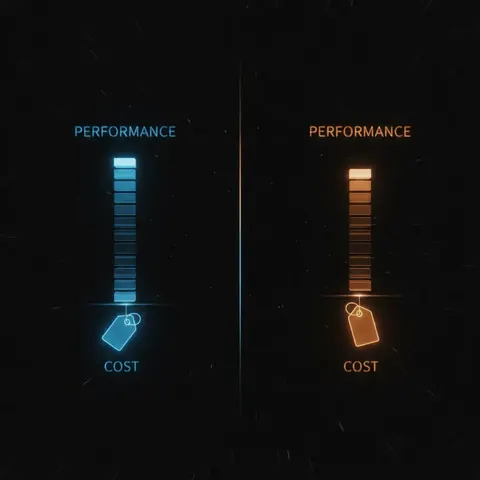
Matched-brand setups don't make you better at anything.
A Logitech mouse paired with a Corsair keyboard performs identically to an all-Razer rig in every benchmark that matters — click latency, polling rate, DPI accuracy.
Competitive players at the top of ranked ladders and esports rosters run whatever combination of gear fits their hand and their budget, brand loyalty be damned.
I've tested this claim directly.
Over three years of hardware reviews, I ran side-by-side comparisons between mixed-brand setups and single-brand setups, and the difference in my actual gameplay was statistically noise.
Reaction times didn't budge.
Accuracy in aim trainers didn't budge. The only thing that changed was how the desk looked when the lights were off.
If you're buying an all-Razer setup for a performance edge, stop. It doesn't exist. That's not a controversial take among people who actually study input hardware — it's closer to consensus.
So Why Did I Do It
Here's where I have to be honest about the part that doesn't fit neatly into a spec sheet.
I bought my first Razer product — a mouse — back when I was in college, mostly because it was on sale.
Over the next few years I added a keyboard, then a headset, not because I'd mapped out some grand unification plan, but because each purchase happened to be a good deal at the time.
It was only after the fourth piece arrived that I noticed something: everything on my desk synced together through one app, and every time I opened that app, the whole setup breathed the same color in unison.
That moment is the actual reason I finished the set. Not performance. Not brand loyalty in the tribal sense.
It was the small, almost embarrassing satisfaction of opening Razer Synapse and watching six devices pulse the same shade of blue at once.
I want to be precise about what that satisfaction is, because I think it gets mocked unfairly. It's not about looking cool for an audience — most of my setup isn't visible on stream or camera.
It's a private, almost ritualistic thing.
Sitting down at a desk that feels intentional, where nothing clashes, where one piece of software controls the whole visual language of your workspace, does something to how you settle into a work session.
I can't prove that with a benchmark. I can only tell you it's real for me.
What the Software Actually Buys You
The unglamorous truth about why single-ecosystem setups persist isn't lighting at all — it's software friction.
Razer Synapse, for all its bloat and background-process complaints, does one thing well: it lets you manage every connected device's lighting, macros, and profiles from a single interface, and it auto-syncs lighting effects across devices without per-product configuration.
Mix in a Logitech mouse and a SteelSeries headset, and now you're running three separate configuration apps, three separate cloud sync systems, three separate places where a driver update might silently reset your settings.
That's not nothing. I've lost custom macro profiles to driver updates before. I've had lighting effects desync because two competing apps were fighting for control of the same USB hub.
There's a real, quantifiable annoyance tax to running a mixed ecosystem, and it has nothing to do with the hardware itself.
- One app, one login, one place to manage profiles — instead of juggling Synapse, iCUE, and GHUB simultaneously
- Lighting effects sync automatically across every connected device without manual per-product setup
- Warranty and support live in one place — I'm not troubleshooting three different companies' RMA processes when something breaks
- Macro and profile switching applies setup-wide, not per-device
None of that makes me a better player. All of it makes the setup easier to live with day to day, and that's a real category of value even if it's not the one gaming marketing usually sells you on.
The Counterargument I Can't Fully Dismiss
I put this theory to a few people whose judgment on hardware I trust, and the pushback was fair.
One friend who builds competitive setups for a living told me flatly that he'd never recommend an all-one-brand approach to anyone optimizing for performance or value — you end up paying a premium for the worst product in a given category just to keep the ecosystem clean.
Razer's mice are excellent. Razer's keyboards are good but not best-in-class.
Razer's headsets are fine but get outperformed at the same price point by companies that specialize in audio.
Buying the full set means accepting "good enough" in categories where "best" was available from a competitor for less money.
That's the trade-off, plainly stated: you're optimizing for cohesion, not for maximizing each individual component. If you built a truly best-in-class setup piece by piece, you'd likely spend less and get more performance out of each part, just with a mismatched lighting scheme and three apps open in your system tray.
I don't have a clean rebuttal to that. It's correct. I made the trade anyway.
What the Numbers Say About the Broader Market
This isn't just a personal quirk — the gaming peripheral market has been quietly rewarding brand ecosystems for a few years now.
Razer, Logitech, and Corsair have all built out increasingly wide product lines specifically so customers can outfit an entire desk in one ecosystem, and all three companies report meaningful revenue from bundle and multi-device purchases rather than single-item sales.
That's not an accident.
It's a deliberate strategy: once you own two devices from the same company, the software friction of switching to a competitor for the third device goes up, and the visual "completeness" of a matched setup becomes its own selling point.
Vendors know that gamers are willing to pay a premium to avoid app fatigue and to get a desk that photographs and feels like a unified system rather than a pile of unrelated gadgets.
The whole category has essentially productized the same impulse that got me: not "which mouse is best," but "which ecosystem is easiest to live inside."
What This Means If You're Considering It
If you're weighing an all-one-brand setup for yourself, here's the honest framework, stripped of marketing:
Buy it for cohesion, not performance. If a unified app, synced lighting, and a matching aesthetic genuinely improve how you feel sitting down to work or play, that's a legitimate reason to spend the money.
It's the same logic as decorating an office — it doesn't make you more productive on paper, but it changes how the space feels to occupy.
Don't buy it expecting an edge. If you're chasing competitive advantage, spend your money on the individual best-in-class product in each category — mouse from one brand, keyboard from another, headset from a third — and accept three apps running in the background.
That setup will outperform mine in every measurable way.
Budget for the software tax either way. Whether you go single-brand or mixed, you're paying for driver bloat, background processes, and the occasional forced firmware update.
Single-brand just consolidates that annoyance into one app instead of three.
Buy pieces as deals come up, not all at once. My setup happened gradually, driven by sales rather than a master plan, and that's honestly the more sustainable way to get there without a $2,400 weekend.
The Actual Answer
So did I need an all-Razer setup? No. Objectively, provably, no — I could've built something cheaper and marginally better-performing by shopping each category independently.
Did it make my desk feel like a single, considered thing instead of a pile of separately purchased gadgets?
Yes, and that turned out to matter more to me than I expected it to when I started buying pieces one at a time. The performance argument was always a red herring.
The real reason people build matched setups is the same reason people color-coordinate a bookshelf — it's not about function, it's about the quiet satisfaction of things belonging together.
Have you ever caught yourself buying into a brand ecosystem for reasons that had nothing to do with the actual product specs — and did you regret it, or was it worth it?