Michael Levin: Hidden Reality of Alien Intelligence & Biological Life | Lex Fridman Podcast #486
Bottom line: Dr.
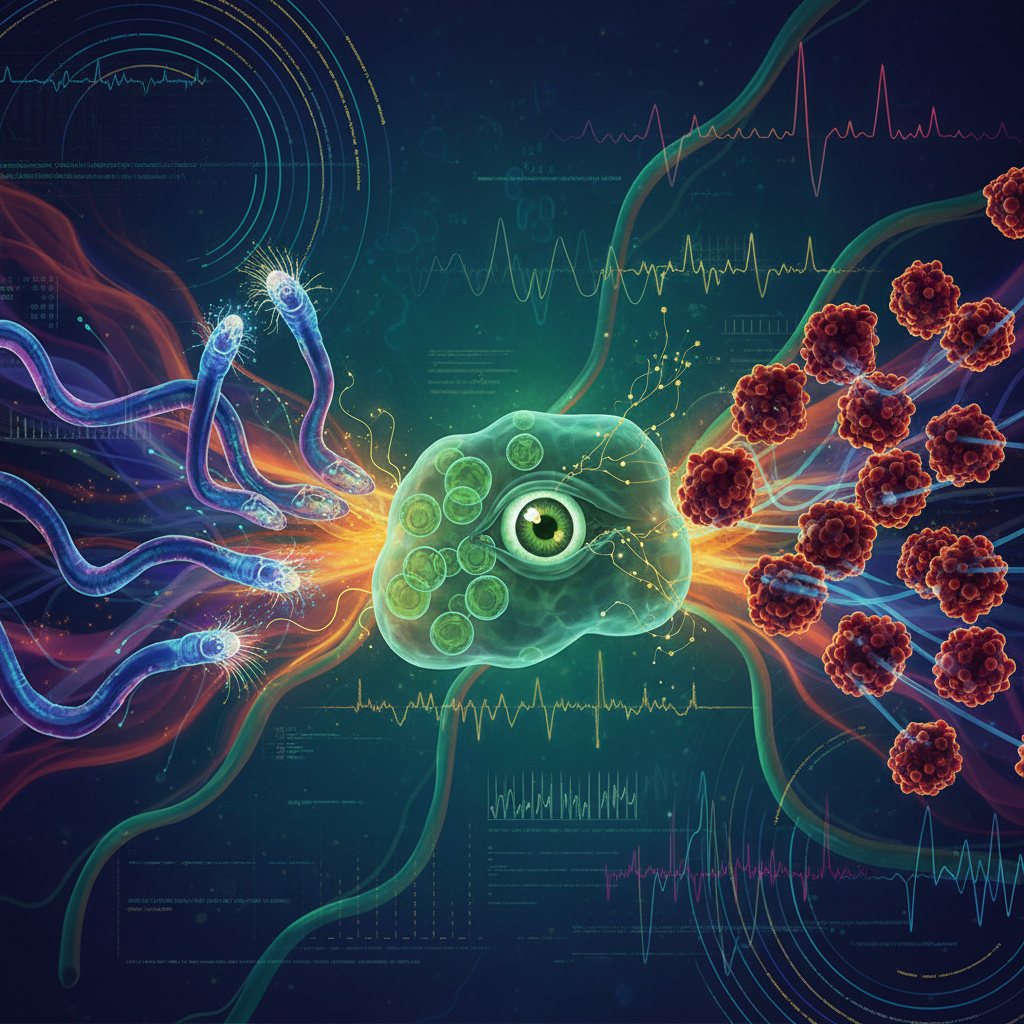
Michael Levin argues that intelligence isn't exclusive to brains or digital computation; it's a fundamental property of all biological systems, from single cells to complex organisms, driving problem-solving and goal-directed behavior even when physically disrupted.
Featured on Lex Fridman Podcast #486, Levin's "morphological computation" concept challenges the prevailing AI paradigm, suggesting current models overlook a deeper, ancient form of biological agency.
If we continue to ignore this inherent biological intelligence, our pursuit of advanced AI will remain fundamentally incomplete, missing a critical layer of emergent cognition that has existed in life for eons.
I’ve been a builder for over a decade, and I’m going to tell you something that will probably piss you off: most of what we think we know about intelligence, especially as it applies to AI, is dead wrong.
We’re building digital brains in a vacuum, convinced we’re on the cusp of true AGI, while completely ignoring the most profound, alien intelligence that’s been operating right under our noses for billions of years.
And it’s not in outer space. It’s in every living cell.
That’s the uncomfortable truth Dr. Michael Levin, a developmental biologist at Tufts University, dropped on Lex Fridman Podcast #486.
And if you’re working in AI, or even just thinking about the future of tech, you need to hear it. It’s going to shake your foundational beliefs about what intelligence even is.
The Sacred Cow: Why We're Building Blind AI
I get it. Every tech influencer, every AI startup founder, every research paper from Google and OpenAI tells you the same thing: intelligence lives in the brain.
Or, its digital equivalent, the neural network.
We’re obsessed with replicating the brain’s architecture, scaling up parameters, and feeding models ever-increasing datasets.
We believe that by mimicking the brain's computational power, we will unlock consciousness, creativity, and problem-solving at a human (or superhuman) level.
This conventional wisdom is seductive. It’s intuitive. We see complex behavior, and we attribute it to a centralized control system – a brain.
When we build software, we design a centralized processor, a logic unit. It’s the engineering paradigm we understand. Five years ago, even two years ago, I would have championed this approach.
The advancements in LLMs like ChatGPT 5, Claude 4.6, and Gemini 2.5 are undeniably impressive, producing coherent text, generating code, and even passing complex exams. They feel like they’re thinking.
But this anthropocentric, brain-centric view of intelligence has become a sacred cow, leading us down a specific, narrow path.
We’ve equated intelligence with computation, and computation with what happens in a neural network or a CPU.
We assume that if we build a big enough, fast enough digital brain, intelligence will simply emerge. We’re missing the forest for the neurons.
The Evidence: Biological Intelligence Beyond the Brain
Levin’s work, which he laid out with stunning clarity on the Fridman podcast, isn't just theoretical; it's backed by decades of groundbreaking biological experiments.
He argues that intelligence, problem-solving, and goal-directed behavior are not confined to the nervous system but are fundamental properties of all biological systems, down to single cells and tissues.
He calls this "morphological computation" or "basal cognition."
Cells Solving Problems Like They Have a Blueprint
Consider this: Levin’s lab has taken flatworms, cut them into pieces, and watched them regenerate. If you cut off a flatworm’s head, it grows a new one.
But more astonishingly, if you alter the electrical signals in the body before it regenerates, you can make it grow two heads, or no head, or even the head of a different species.
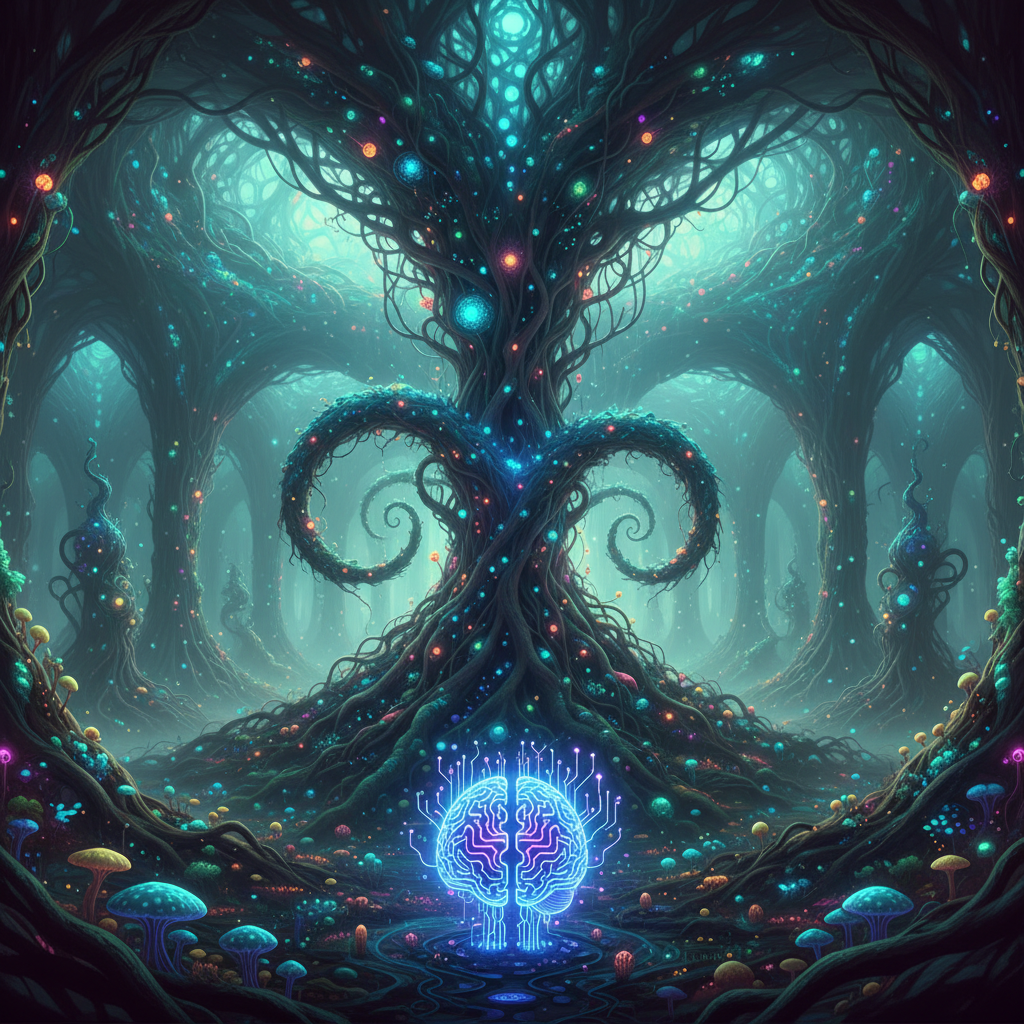
These cells aren't just blindly following genetic instructions; they are actively solving the problem of "become a flatworm with a head," and they adapt to novel conditions in ways that suggest a distributed, collective intelligence.
They have a goal state, and they work to achieve it, even when their parts are rearranged.
The True Architects of Form and Function
Levin demonstrated similar phenomena with frog embryos. If you take cells destined to become an eye and move them to the frog’s gut, they don't just become gut cells. They still try to form an eye.
And if you put them back in the head, they integrate into the existing eye structure, becoming part of the eye.
This isn't just cellular differentiation; it's a profound, goal-directed agency where cells collectively decide on and pursue a specific anatomical outcome.
They exhibit memory of their intended form and a remarkable plasticity in achieving it.
Xenobots: Life Reimagined
Perhaps the most compelling evidence comes from Levin's creation of "Xenobots." These are entirely new life forms, designed by AI and built from frog skin and heart cells.
Without a brain or nervous system, these clusters of cells can move, push objects, self-repair, and even reproduce by gathering other single cells into new Xenobots.
This is intelligence and agency emerging from a collective of cells, solving problems and achieving goals (like reproduction) without any pre-programmed neural pathways or genetic instructions for that specific form.
These aren't just biological curiosities. These are direct, empirical challenges to our simplistic understanding of intelligence.
We're building AI that attempts to simulate brain activity, while biology has been demonstrating diverse, distributed, and deeply embedded intelligence for eons, often without a brain in sight.
We’ve assumed intelligence is a high-level phenomenon that emerges from complexity, but Levin shows it’s a low-level, fundamental property of life itself, manifesting in different cognitive "hardware."
The Real Problem Nobody Talks About: Our Anthropocentric AI Blind Spot
The real problem isn't that our current AI models are bad; it's that our definition of intelligence is too narrow, too anthropocentric, and fundamentally missing the point.
We’re so focused on replicating human intelligence – language, reasoning, pattern recognition – that we're blind to the vast, alien intelligences that pervade the biological world.
We assume that intelligence must look like ours: a centralized processor, a symbolic system, or a neural network designed to mimic specific cognitive functions.
But Levin’s work suggests that intelligence is a much broader phenomenon – a fundamental capacity for self-repair, goal-directed behavior, and problem-solving that exists at every scale of biological organization.
It's a kind of "mind" that exists in tissues, organs, and even individual cells, long before any brain evolves.
This isn't just a philosophical debate. It has profound implications for how we build AI.
If intelligence is intrinsically linked to agency, to the ability of a system to pursue goals and adapt to novel circumstances, then our current AI models are missing a crucial ingredient.
They are powerful pattern-matchers, predictive engines, and content generators, but they lack the fundamental drive or purpose that even a single-celled organism exhibits.
We’re building sophisticated tools, but not truly intelligent agents in the biological sense. We’re building digital mimicry without understanding the underlying mechanism of biological cognition.
And here’s the kicker: this biological intelligence isn't just about problem-solving; it's about identity and self. A flatworm, even after being chopped up, knows it needs to be a flatworm.
A frog cell knows it needs to be an eye.
This inherent self-model, this persistent goal-state, is something our current AI lacks entirely. Our AI models are reactive; biological systems are proactive in maintaining their form and function.
What You Should Do Instead: Rethink the Foundations
So, what does this mean for those of us building in tech, especially in AI?
It means we need to stop chasing the brain as the sole model for intelligence and start looking at biology in a much more fundamental way.
1. Shift from "Brain-Centric" to "Agency-Centric" AI
Instead of trying to replicate neural networks alone, we should be exploring architectures that incorporate distributed agency, goal-directed self-assembly, and robust problem-solving at multiple scales.
Think of biological principles like cellular automata, swarm intelligence, or even morphogenetic fields as computational metaphors.
How can we design systems where components have local goals that contribute to a larger, emergent system-level goal, even when parts are removed or altered?
2. Embrace Morphological Computation as a Design Principle
Levin’s work highlights that the body itself can be a computer. The shape, electrical properties, and collective behaviors of cells perform computation. How can we translate this into AI?
Perhaps it's about designing AI with "digital bodies" that perform computation through their structure and interaction, not just through abstract algorithms.
Consider embodied AI, but from a much more radical, biological perspective.
What if an AI's "cognition" was partially embedded in its physical or simulated morphology, rather than solely in its central processing unit?
3. Build AI with Intrinsic Goal-Seeking and Self-Repair
Our current AI models are brittle. Break a part, and the whole thing often fails. Biological systems, even simple ones, exhibit incredible resilience and self-repair.
We need to integrate principles of homeostatic regulation, persistent goal states, and adaptive plasticity into our AI architectures.
This isn't just about fault tolerance; it's about designing systems that actively want to achieve and maintain certain states, much like a regenerating flatworm wants to be whole.
This is the difference between a tool and an agent.
4. Look Beyond Prediction to Purpose
Current AI excels at prediction and pattern recognition. But Levin's work pushes us to consider purpose. Why does a cell do what it does?
Why does a tissue form a specific organ? There's an inherent "telos" or goal-directedness that we’re completely missing in our AI.
This isn’t about programming explicit purposes, but about understanding how purpose emerges from distributed biological intelligence.
This could mean exploring new forms of unsupervised learning that discover and pursue emergent goals, not just patterns.
The Uncomfortable Truth: We're Not as Smart as We Think
How many hours have you spent optimizing algorithms, fine-tuning models, or debating the ethical implications of AI, all based on a fundamentally flawed understanding of intelligence itself?
When was the last time you asked yourself what true intelligence looks like, beyond the confines of a human brain or a silicon chip?
Michael Levin’s insights are a profound wake-up call. We are surrounded by alien intelligence – in every plant, every animal, every microorganism.
It’s been here all along, operating on principles we’re only just beginning to grasp.
If we want to build truly advanced AI, we need to stop trying to replicate our limited version of intelligence and start learning from the masters: the biological systems that have been solving problems, adapting, and pursuing goals for billions of years.
Otherwise, we’re just building bigger, faster calculators, calling them "brains," and missing the real story of cognition entirely.
Have you ever considered intelligence existing outside of a brain, or is this concept as mind-bending for you as it was for me? Let's talk about it in the comments.