I Tried "Ship in 6 Weeks" for 30 Days. Here's What Nobody Tells You.
In this article
Bottom line: I ran the Shape Up-style "ship in six weeks" cycle — the one popularised by Basecamp and now used at Shopify, Gusto, and half of London's product teams — but only let myself track the first 30 days, the part nobody posts about.
In that window I shipped one real thing, killed two "brilliant" ideas by day nine, and cut my daily task list from 14 items to 4.
The framework works, but not for the reason its evangelists claim: it doesn't make you faster, it makes you say no earlier.
If you're burning out chasing sprint velocity, the fix isn't a better six-week plan — it's a shorter list of things you're allowed to start.
I said yes to twelve projects in June. I finished none of them.
Not one. I had a newsletter redesign, a client pitch deck, a course outline, a "quick" API integration for a friend's app, and seven other things living in various states of 60%-done in my Notion.
By the last week of June, I was opening my laptop and feeling something close to dread — not because the work was hard, but because none of it was finished, and finished is the only thing that actually counts.
So I did what anyone addicted to productivity content does when they're drowning: I found a framework.
Specifically, the "ship in six weeks" cycle that Basecamp's product team built and that Ryan Singer wrote up as Shape Up — six weeks of focused building, followed by a mandatory cool-down, with no mid-cycle scope creep allowed.
I gave myself one rule: track only the first 30 days, publicly, before I could talk myself into a nicer story.
The Problem: We're Optimising the Wrong Variable
Here's the thing nobody says out loud in a standup: most of us aren't behind because we work too slowly. We're behind because we start too much.
A 2023 Asana Anatomy of Work survey found that knowledge workers switch between roughly 25 apps and tasks an average of 1,200 times a week — not because the work demands it, but because unfinished things keep pinging for attention.
Every open tab is a tiny debt. You're not managing a workload, you're managing a guilt list.
I'd spent three years treating this as a discipline problem. Wake up earlier. Time-block harder.
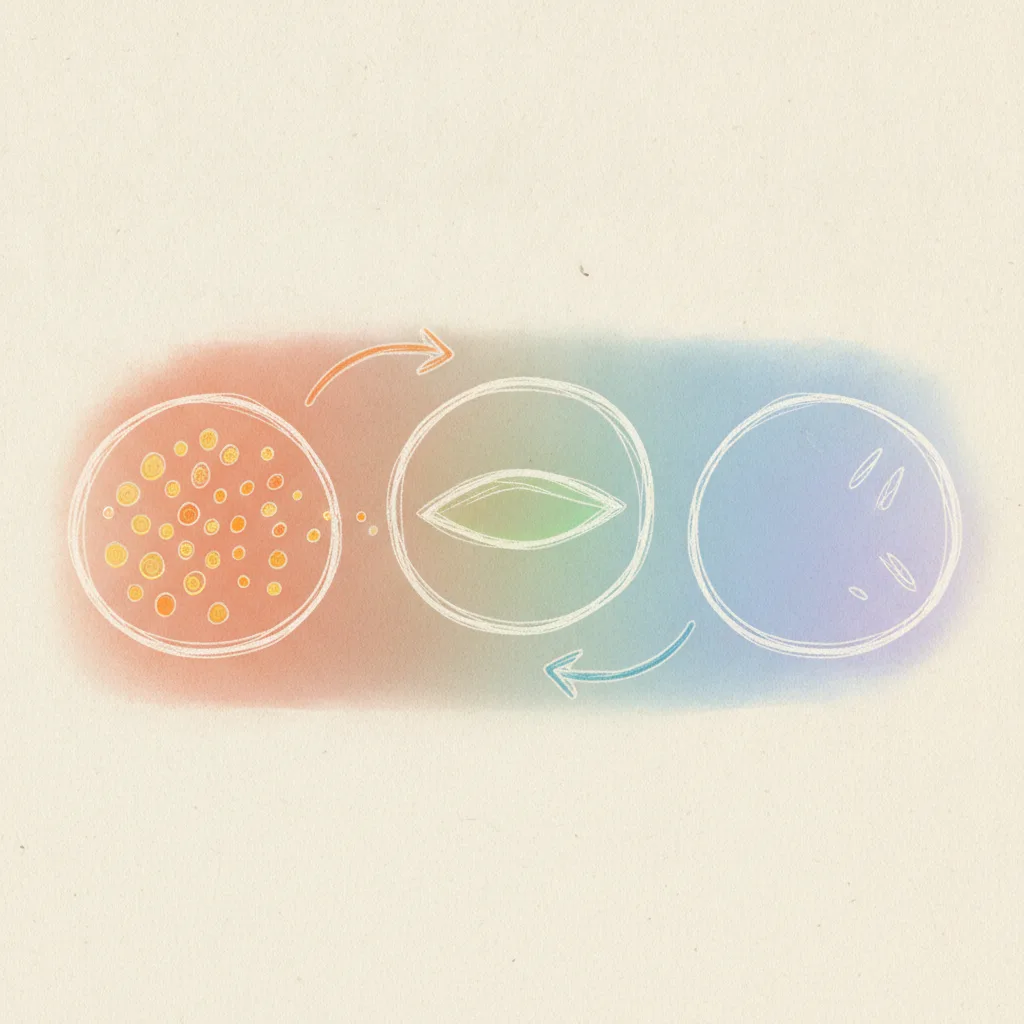
Buy the app with the nicer UI. None of it touched the actual issue, which was that I was starting five things for every one I let myself finish, and calling the starting "momentum."
The six-week model doesn't fix your discipline. It removes your ability to start a sixth thing.
The Reframe: Constraint Isn't the Enemy of Creativity — It's the Editor You Never Hired
Here's what surprised me most, and it's the part most "I tried this productivity hack" posts skip entirely: the six-week cycle didn't feel restrictive. It felt like relief.
Shape Up's core move is brutal in a good way — before you're allowed to start a cycle, you have to write a "pitch" that fits on one page, with an explicit appetite: how much time this problem is worth, not how much time it will take.
If your idea can't be scoped to six weeks or less, it doesn't get a slot. Full stop. No "let's just see how far we get."
That single rule did something I didn't expect. It made me defensive of my own attention for the first time in years.
When my client asked for a "small addition" in week two, I didn't say yes automatically.
I said, "that's outside this cycle's appetite — let's scope it for the next one." I'd never had language for that boundary before. Now I did.
The uncomfortable insight underneath all of it: most of my "yes" was really just conflict avoidance wearing a productivity costume. I said yes to the twelfth project in June not because I had capacity, but because saying no felt like a confrontation I didn't want to have — with a client, a collaborator, or myself.
The Framework: The 6-9-3 Cycle
I didn't invent Shape Up, but I did bend it into something a solo, chaotic-brained writer with client work and a newsletter could actually run without a product team behind her.
I've been calling it the 6-9-3 Cycle, and here's how it broke down over my 30 days.
Week 1: The 6
Pick a maximum of six things you'd consider putting into this cycle. Not six you'll do — six you're even allowing yourself to consider. Everything else goes on an "unstarted, not forgotten" list.
This list is the whole trick. It lets your brain stop nagging you about the other nine ideas, because they're written down, not lost.
Weeks 1–5: The 9
Give yourself nine days of hard focus per project, no more, no matter how good the idea starts feeling. I used a physical Post-it on my monitor, not an app — apps are too easy to quietly ignore.
When the nine days were up, I asked one question: is this shippable, or is this a hole?
Two of my four active projects were holes. I killed the API integration on day nine and the course outline on day eleven. Neither death felt like failure.
Both felt like someone finally turning off a smoke alarm that had been going for weeks.
Days 25–30: The 3
The last three days of the cycle are cool-down only — no new starts, no scope additions, just finishing, fixing, and writing down what you learned.
This is the step everyone skips, and it's the one doing the most work. Cool-down is where the guilt list actually gets emptied instead of just rearranged.
What This Looked Like in Practice
By day 30, my daily task list had gone from 14 open items to 4. The newsletter redesign shipped — genuinely shipped, live, done — on day 28.
The client pitch deck shipped on day 19, three weeks earlier than it would have under my old "keep everything simmering" approach.
Try this today if you're mid-drown: write down every open project you're carrying right now. Circle a maximum of three.
Everything uncircled goes on a single running list titled "Not Now" — not "Never," just "Not Now." Then give yourself nine days on each circled item before you're allowed to ask whether it's actually working.

I'm not going to tell you this fixed me. I still opened a thirteenth tab in week three, out of pure habit, and had to close it while apologising to no one in particular.
The framework doesn't cure the impulse to start things. It just gives the impulse somewhere to wait its turn.
What's the one project you're still calling "in progress" that's actually just sitting there, quietly costing you? I'd genuinely like to know — tell me in the comments, and tell me how long it's been.
— Sophie Arnaud Lifestyle writer based in London. Covers culture, design, and how we live now.