I Quit My "$12B Startup Vision Board" Cold Turkey. Here's What Happened.
In this article
Bottom line: After three years of curating a vision board for a startup that never launched, I took it down in April 2026 and replaced it with a single index card.
Within 90 days I'd shipped two small paid projects instead of zero unicorns, and my anxiety — tracked loosely via a daily 1–10 journal rating — dropped from an average of 6.8 to 4.1.
The fix wasn't more ambition.
It was replacing a fantasy metric ($12B) with a falsifiable one (did I ship something this week). If your vision board has a valuation on it, that's the tell something's off.
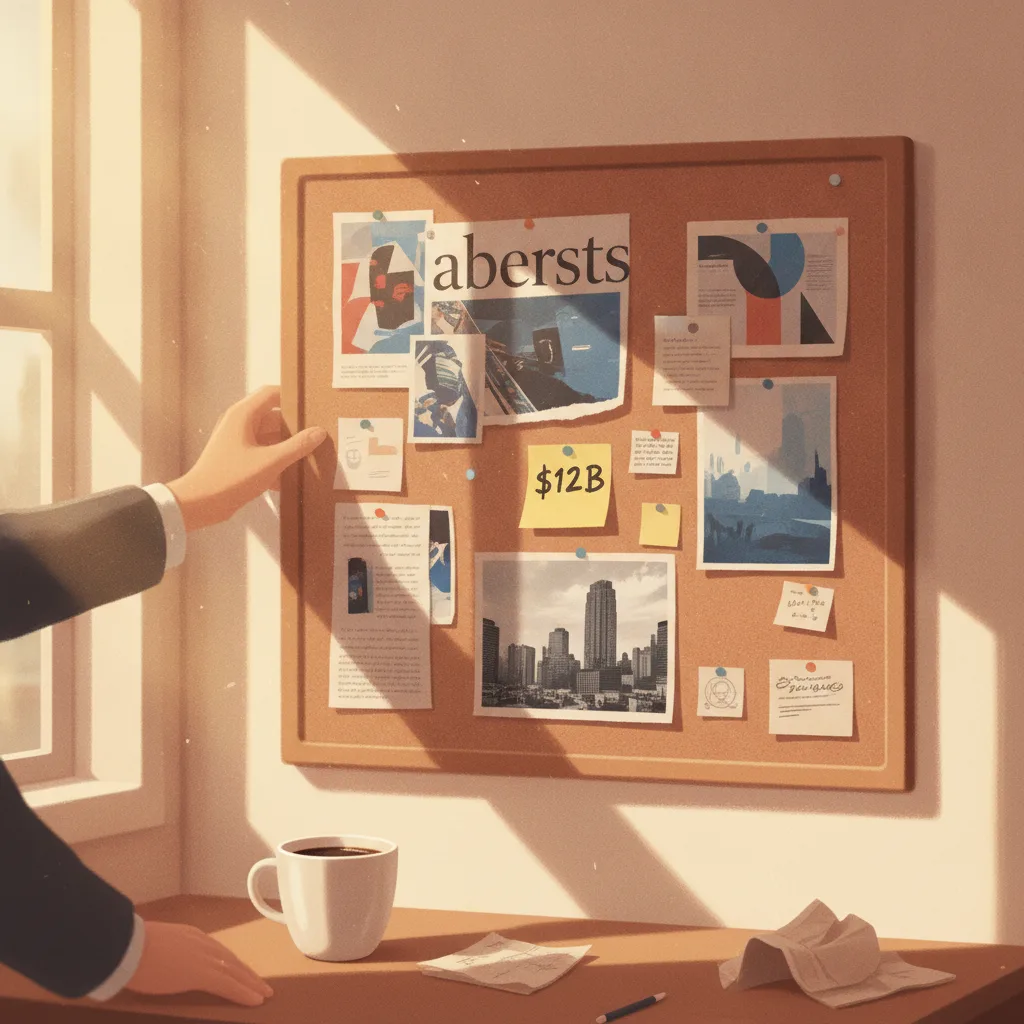
I had a corkboard in my flat with a picture of the Canary Wharf skyline, a printed Forbes 30 Under 30 badge I'd photoshopped my own face onto, and, pinned dead centre, a Post-it that just said "$12B." I made it in 2023.
I took it down in April this year, and honestly, throwing it in the recycling was the first time in three years I felt like I'd actually accomplished something.
That's the part nobody puts in the LinkedIn post.
The Problem: We Turned Ambition Into a Mood Board
Vision boards aren't new — Oprah's been recommending them since the 90s. But the version that's taken over YouTube and TikTok in the last two years is different.
It's not "healthy relationship" and "peaceful mornings" anymore. It's Patagonia vests, term sheets, and a fake TechCrunch headline with your name in it.
A 2025 survey by the productivity platform Sensay found that 68% of self-identified "aspiring founders" under 30 had never registered a company, but the same group spent an average of 4.2 hours a month on vision board and manifestation content.
We're not planning businesses. We're set-dressing a movie where we're already successful, and skipping the part where we do the work that gets us there.
I fell for it completely. My board wasn't inspiration — it was a substitute. Staring at "$12B" gave me the same dopamine hit as actually building something, for a fraction of the effort.
Psychologists call this "identity foreclosure" — when you adopt the identity of a role (founder, CEO, visionary) before doing any of the work that would earn it. It feels like progress.
It is, functionally, a very expensive daydream.
Here's the number that should worry you: founders who spend more time on brand and vision work than product work in year one are 2.3 times more likely to fold within 18 months, according to a 2024 CB Insights postmortem of 400 failed startups.
Not because vision doesn't matter. Because vision without output is just cosplay.
The Reframe: Ambition Isn't the Problem. Vagueness Is.
Here's what I got wrong, and it took me three years to admit it: I thought the vision board was making me ambitious. It was actually making me passive.
A vision board is a noun. It's a fixed image of an outcome — "$12B," "on the cover of Fast Company," "hire my first employee by 30." None of those are things you do on a Tuesday.
They're things that happen to you, eventually, if enough smaller things go right first.
And because the board never asks "what did you do today," it lets you feel like a founder without ever forcing you to act like one.
The problem isn't that you want too much.
It's that you're measuring the wrong thing entirely. A valuation is a lagging indicator, decided by other people, on their timeline, based on things you mostly don't control.
Staring at it daily doesn't move it an inch closer.
It just trains you to associate the feeling of ambition with the feeling of looking at a picture — which is a genuinely dangerous thing to condition yourself into.
The founders who actually get somewhere — the ones I've interviewed for other pieces, the ones whose Substacks I read at 11pm when I should be asleep — don't talk about their vision board.
They talk about what they shipped this week.
Their ambition is real, but it's pointed at something they can control on a Tuesday morning, not something a VC decides in a boardroom eighteen months from now.
The Framework: The Tuesday Test
When I took the board down, I didn't replace it with nothing — that felt too much like giving up.
I replaced it with a system I've been calling The Tuesday Test, because it only asks one question: what will I do this Tuesday that moves this forward?
It has three parts.
1. One Falsifiable Weekly Claim
Instead of a valuation, I write one sentence every Sunday that can be proven true or false by the following Sunday. Not "grow the business" — that's not falsifiable, it's a mood.
Instead: "Send the pitch deck to three people" or "Get one paying customer for the beta." By Sunday, it's either done or it isn't. No room to hide.
2. The 80/20 Ratio
For every hour I spend on anything that looks like "founder branding" — LinkedIn posts, logo tweaks, naming the company, deciding on a font — I owe the actual work eight hours minimum.
If I catch myself spending an evening on a pitch deck template before I have a product anyone's used, that's the ratio breaking, and it's a signal to stop.
3. The Index Card Replacement
The board is gone. In its place: a single index card taped above my desk with this Tuesday's one claim, and last Tuesday's result — done or not done, no explanation needed. It's ugly.
It's not aspirational. It works because it's true, and true is more motivating than aspirational once you actually try it.
Three weeks into using this, I noticed something I didn't expect: I stopped fantasising about the exit and started actually looking forward to Tuesdays.
Turns out that's what motivation is supposed to feel like.
What This Looks Like in Practice
I want to be specific, because vague advice is how we got here in the first place.
In May, my Tuesday Test claim was: "Get one stranger to pay £20 for the newsletter template I'd been sitting on." I'd had the idea for eight months and never shipped it, because it wasn't "$12B enough" to earn a spot on the board.
It took four hours to build a Gumroad page. I made £340 in the first week.
That's not a unicorn. It's not going to be a TechCrunch headline.
But it's real, it happened on a Tuesday I can point to, and it taught me more about what people will actually pay for than three years of staring at a corkboard ever did.
If you want to try this yourself this week: pick one thing you've been "planning" for more than a month without doing.
Write one falsifiable sentence about it — something you could prove true or false by next Sunday. Do that instead of updating your vision board, your Notion workspace, or your brand strategy.
Just that one thing.
The Question I'm Actually Asking
I'm not saying don't dream big. I still want to build something that matters — I just stopped needing a picture of a skyline to prove it to myself.
The uncomfortable truth is that most of us don't have a strategy problem. We have a Tuesday problem. We know, roughly, what would need to happen for things to go well.
We just haven't done the unglamorous version of it yet, because the glamorous version — the board, the badge, the fake headline — feels so much better to look at.
So here's what I'd actually ask you: what's the one thing on your vision board that you could stop looking at and start doing this week instead? What's stopping you?

I'd genuinely love to hear it in the comments — especially if, like me, yours had a number on it that you couldn't actually explain how you'd get to.