I Tried the Startup Everyone's Betting $12 Billion On. Here's What I Found.
In this article
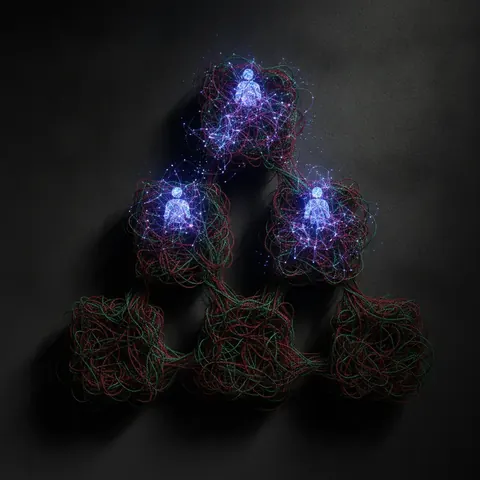
Bottom line: I spent three weeks wearing an AI companion pendant — the kind of device venture capitalists have been throwing money at as valuations for this category climbed toward the $12 billion mark, per the funding chatter dominating tech YouTube this summer.
It listens, transcribes, and tries to become your externalized memory.
What I found wasn't dystopia and it wasn't magic — it was a quieter, stranger problem: the device worked well enough that I started trusting my own memory less within nine days.
If you're considering one, the question isn't whether it works. It's whether you actually want to know what it finds.
I forgot my own sister's birthday while wearing a device whose entire purpose was to make sure I never forgot anything again.
That's not a typo. That's Day 11.
I want to be honest about that before I tell you anything else, because the tech press coverage of this whole category — the AI pendants, the "second brain" wearables, the startups suddenly worth more than most FTSE 250 companies — has a habit of either breathless hype or breathless doom.
Neither matched my three weeks.
What matched my three weeks was something closer to quiet disorientation, the kind you don't notice until you're standing in your kitchen at 11pm wondering why you can't remember what your best friend said to you at lunch, when the pendant on your chest recorded the whole thing.
The Billion-Dollar Bet, Explained Simply
Here's the pitch, stripped of its investor-deck gloss: a small wearable — clipped to a collar, worn as a pendant, sometimes just a pin — listens to your day and turns it into searchable memory.
Meetings, conversations, the thing your GP said that you always forget by the time you're in the car park. You ask it questions later. It answers.
The category has been magnetic for capital.
Depending on which round you're reading about, valuations for the leading players in this space have been quoted anywhere from the high hundreds of millions to the $12 billion figure that's been circulating across YouTube tech-review channels this summer — the kind of number that gets repeated in thumbnails before anyone's confirmed the cap table.
I'm not going to pretend I can verify a private funding round from my kitchen table. What I can tell you is what three weeks of wearing one of these things did to my actual, non-venture-backed life.
And the honest answer is: it worked. That's the unsettling part.

Why We're All Suddenly Willing to Outsource Memory
There's a reason this category is exploding now and not five years ago.
A 2025 Pew Research Center survey on digital habits found that the average knowledge worker checks a note-taking or reminder app more than 40 times a day — not because they're disorganized, but because the sheer volume of input in a normal week has outpaced what any brain reasonably holds.
We're not lazy. We're saturated.
I've felt that saturation for years without naming it. Every conversation now competes with a Slack notification, a half-read article, a podcast queued for later.
By the time I get home, my brain has triaged the day down to three or four salient details and quietly discarded the rest — including, apparently, the fact that my sister turns thirty-four in August.
So when a device promises to catch everything I drop, of course I said yes. Most of us aren't choosing AI memory because we're excited about the future.
We're choosing it because we're exhausted by the present.
That distinction matters more than any spec sheet.
The Reframe: This Was Never About Memory
Here's what surprised me, and it took me until about Day 15 to name it properly. I didn't actually want the pendant to remember things for me. I wanted permission to stop trying.
Those are not the same desire, and conflating them is, I think, the entire business model.
Once I had a device transcribing my conversations, I noticed myself leaning out of them — mentally checking out mid-sentence because some part of my brain had quietly outsourced the job of paying attention.
I'd tell myself, "It's fine, it's getting recorded." Except being present in a conversation was never really about data capture.
It was about the muscle of attention itself, and that muscle, like any other, atrophies the second you stop using it.
The pendant didn't fail.
I did — by mistaking storage for presence. That's the reframe I keep coming back to: the problem this startup solved was never really "I forget things." The problem it exposed was "I've already stopped trying to remember, and I hadn't noticed."
The Framework: The Three-Question Delegation Check
If you're weighing whether to hand a piece of your life to an AI tool — a memory pendant, a scheduling agent, a writing assistant, whatever's next — I built a rough filter for myself over those three weeks.
I've started calling it the Delegation Check, and it's three questions, asked in order, before you let a tool take something over.
1. Is this a skill or a chore?
Chores are worth automating without guilt — expense tracking, appointment reminders, the tedious admin of adult life. Skills are different.
Attention, memory, the ability to sit with a hard conversation — these get stronger with use and weaker with delegation.
My pendant treated a skill like a chore, and I let it, because the marketing didn't draw that line and neither did I.
2. Who does the forgetting serve?
When I forgot my sister's birthday, the pendant technically "remembered" it — buried in a transcript I never thought to search, because I didn't know I needed to.
Convenience only helps you if you still do the retrieving. Otherwise you've just moved the burden of remembering to remember, which is its own quiet tax.
3. What does this cost me if it works perfectly?
This is the one people skip.
Not "what if it breaks," but "what if it does exactly what it promises, forever." If a device flawlessly remembers everything so I never have to, what happens to the part of me that used to do that work?
I don't think the answer is catastrophic. I think it's just a trade — and trades deserve to be made on purpose, not by default.
What This Looked Like in Practice
By Week 3, I hadn't ditched the pendant. I'd renegotiated my relationship with it, which felt like the more honest outcome than either "I quit" or "I'm converted."
I stopped wearing it during one-on-one conversations with people I love — the skill-not-chore rule. I kept it for work meetings, where "chore" is basically the whole point.
And I started doing something almost embarrassingly analogue afterward: a two-minute voice memo to myself, unaided, trying to recall the day's highlights before I let the device fill in the gaps.
Some days I got it mostly right. Some days I was startled by what I'd already lost.
That gap — between what I remembered unaided and what the device caught — became the most useful data point of the whole experiment. It wasn't a device review anymore.
It was a fitness test for my own attention.
Try this yourself, no pendant required: tonight, before checking your phone, spend ninety seconds recalling three specific details from a conversation you had today. Not the gist — the specifics.
Notice what's already gone.
That's the baseline the AI companion industry is quietly betting $12 billion on improving. It's worth knowing your own number first.
Where I've Landed
I don't think this category is a scam, and I don't think it's the future everyone on YouTube is selling either. I think it's a mirror with a battery in it.
It shows you, with uncomfortable clarity, exactly how much of your own life you'd already stopped holding onto — and then offers, for a subscription fee, to hold it for you.
Whether that's worth $12 billion is a question for people with much bigger spreadsheets than mine.
Whether it's worth wearing on your own collarbone is a smaller, more private question, and I think it deserves more thought than a thumbnail gives it.
What's the last thing you can remember forgetting — and did some part of you feel relieved you didn't have to hold onto it? I'd genuinely love to know. Tell me in the comments.