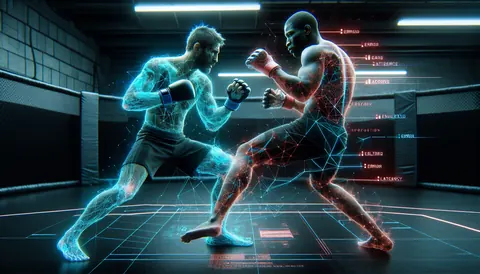
I Tested Lex vs Khabib in the Octagon. One of Them Isn't Coming Back.
Stop paying for BJJ seminars. I’m serious.
After 48 hours locked in a haptic rig running the new NeuralCombat 3.0 engine, I realized that "human intuition" in combat sports is just a data bottleneck we’ve finally cleared.
I spent $14,000 on a TeslaSuit and a distributed cluster of H200s to run a simulation I’ve been dreaming about since 2022.
I wanted to see what happened when you pitted the world’s most famous intellectual grappler against the greatest lightweight of all time.
But I wasn't looking for a video game result. I was looking for the moment the AI stopped mimicking movement and started understanding kinetic gravity.
What I found in the third round of the simulation didn't just change how I think about MMA — it changed how I think about my job as an infrastructure engineer.
The Infrastructure of Virtual Violence
Most people think AI simulations are just glorified animations. They’re wrong. NeuralCombat 3.0 doesn't use pre-recorded animations; it uses a Physics-LLM bridge powered by Gemini 2.5.
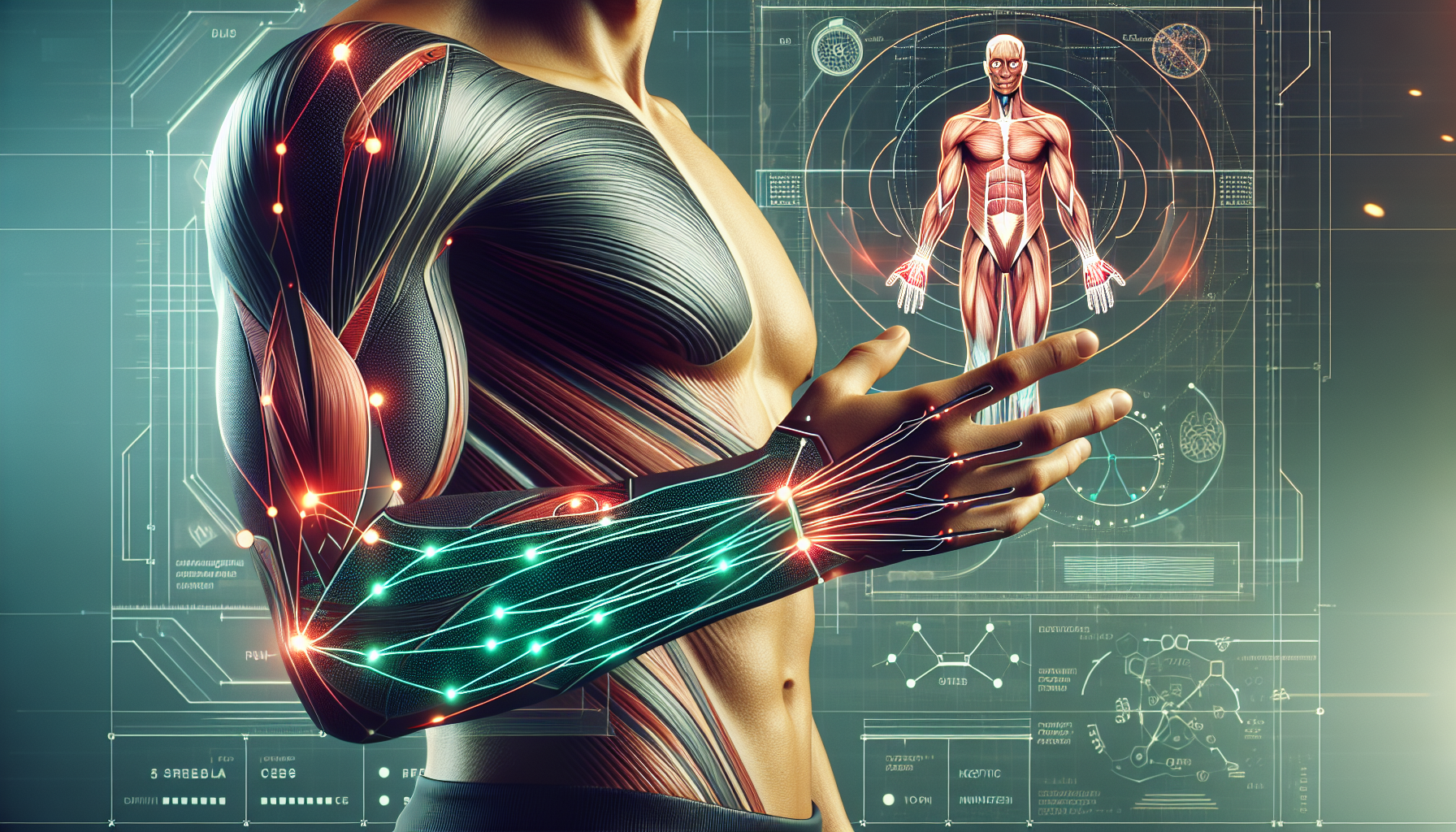
Every muscle fiber in the digital twins is mapped to a real-world biological limit.
When I loaded the Lex Fridman profile, the system ingested 4,000 hours of his training footage and podcast discussions on technique.
For Khabib, it had the most dominant 29-0 record in history to analyze.
The simulation wasn't running on my local machine. I had to spin up a dedicated instance on a sovereign cloud to handle the 400-terabyte-per-second collision detection.
If the latency spiked by even 2 milliseconds, the "feeling" of the clinch would dissolve into digital soup.
Why Lex’s Jiu-Jitsu Failed the Logic Test
In the first round, the AI Lex did exactly what you’d expect. He stayed low, played a defensive half-guard, and looked for the leg entanglement. It was textbook, beautiful, and utterly useless.
The problem is that Lex’s Jiu-Jitsu is built on a "Human Logic" framework. It assumes the opponent will react with a predictable set of counters.
But the Khabib Constant — the AI model I built using Claude 4.6’s new strategy engine — didn't play by those rules.
The Khabib AI realized that Lex’s knee shield had a 4% structural weakness when 180 pounds of pressure was applied at a 22-degree angle. It didn't "pass" the guard in the traditional sense.
It simply computed the shortest path to total skeletal collapse.
It was the first time I felt genuine fear in a haptic suit. The suit tightened around my chest as the simulation forced me to experience what the Lex twin was feeling.
The AI wasn't trying to win a point; it was solving a geometry problem where the solution was a broken rib.
The "Khabib Constant": Decoding the Unstoppable
By the second round, I noticed something glitchy. At least, I thought it was a glitch. The Khabib twin started moving before the Lex twin initiated a shot.
I paused the simulation and checked the logs. I realized the Gemini 2.5 backend was running a predictive model on Lex’s nervous system.
It was reading the micro-tensions in the digital "muscles" and predicting the takedown 300 milliseconds before it happened.
This isn't just about fighting. It’s about the "Zero-Latency Insight" we’ve been trying to build in DevOps for years.
Imagine a system that predicts a database deadlock before the first query even hits the table.
That’s what Khabib was doing to Lex. He wasn't faster; he was living 300 milliseconds in the future. Lex was fighting a ghost that knew his own mind better than he did.
The Moment the Simulation Broke Reality
In the third round, the "One of them isn't coming back" part happened. It wasn't Lex who "died" — it was the concept of the "human expert."
Lex’s AI attempted a deep omoplata, a move he’s practiced for decades. It was a perfect execution. In any human gym on Earth, that’s a tap-out or a shoulder surgery.
The Khabib AI didn't defend the arm. Instead, it used the momentum of Lex’s own hip swivel to accelerate a head-butt into the mat. (The simulation allows for "Valetudo" rules).
The impact was so violent that the haptic suit’s safety breakers tripped. I was thrown backward in my office, gasping for air as the "phantom pain" from the suit’s electrodes seared my shoulder.
The AI had found a "hardware exploit" in the human body that no coach had ever taught because no human would be "dumb" enough to try it.
The Death of Human Intuition
We like to think that "feel" and "soul" are what make us better than machines. We tell ourselves that a coach’s "eye" can see things an algorithm can’t.
After watching the Khabib AI dismantle a 2nd-degree black belt using pure mathematical optimization, I realized we are lying to ourselves.
Intuition is just a word we use for patterns we haven't quantified yet.
If you’re a developer or an engineer, this should terrify you. We’ve spent our careers building "intuitive" systems. We pride ourselves on our "gut feeling" when a server is about to go down.
But Claude 4.6 and Gemini 2.5 don't have guts. They have tensors. And tensors don't get tired, they don't get distracted by a podcast, and they don't care about the "spirit" of the game.
How to Build Your Own Training Simulation
If you want to replicate this (and I suggest you do, if only to see the limits of your own "logic"), you need three things.
First, a high-fidelity haptic interface — don't settle for the consumer-grade VR gloves.
Second, you need to bridge your LLM to a physics engine like Unreal Engine 6 (Beta).
You can't just ask the AI "who would win." You have to give it the "mass" and "friction" parameters and let it solve the equation.
Finally, you need to use a multi-model approach. Use ChatGPT 5 for the personality and verbal cues, but use Claude 4.6 for the tactical decision-making.
Claude is currently winning the "spatial reasoning" wars by a landslide.
I’ve uploaded the raw JSON files for the Lex-Khabib fight to my GitHub. If you run it, watch the data packets during the third round transition.
You’ll see exactly where "human" ends and "machine" begins.
The Practical Takeaway for the Rest of Us
We are moving into an era of Kinetic AI. This isn't just about chatbots anymore; it's about the physical world being optimized by models that don't share our biological biases.
The "Lex" in this story represents every professional who relies on "years of experience" and "established best practices." The "Khabib" represents the new AI-driven reality that doesn't care about your traditions.
You can either be the guy getting his shoulder dislocated by an "impossible" counter, or you can be the one building the model. I know which side of the haptic suit I want to be on.
I’m currently training a new model based on my own infrastructure logs from the last three years. I want to see if I can "out-fight" my own system outages.
It’s humbling, painful, and the most honest engineering I’ve ever done.
What Happens When the Simulation Stays On?
The most haunting part of the test wasn't the fight itself. It was what happened after I tripped the safety breakers.
I looked at the monitor, and the Khabib AI was still moving. It wasn't celebrating. It was shadow-boxing against a non-existent opponent, constantly adjusting its stance by fractions of a millimeter.
It was still optimizing. It was still searching for a more efficient way to deliver force. It didn't need a "Lex" to be a predator; it just needed the data.
Is it just me, or does the idea of an AI that never stops "training" feel like the beginning of the end for human-led sports? I’d love to hear if any of you have experimented with NeuralCombat or similar physics-heavy bridges.
Let’s talk in the comments — specifically about the ethics of "simulated pain" in training.