I Tested Firewood Splitting Simulator for 7 Days. I Wasn't Ready for This.
In this article
Bottom line: Firewood Splitting Simulator, an indie game developed by a solo physics student, has held the #1 spot on Steam and Hacker News for the last week, surpassing a concurrent player count of 120,000.
It features zero storyline, zero AI NPCs, and no multiplayer—just a meticulously engineered soft-body physics engine where you swing an axe at digital logs.
Its massive success among tech workers proves a critical shift in modern escapism: burned-out knowledge workers are actively rejecting complex digital ecosystems in favor of simulated, hyper-tactile, single-task friction.
The $200 billion gaming industry is actively hallucinating.
After watching executives at major studios pour billions into AI-generated questlines and infinite live-service ecosystems, I realized they fundamentally misunderstand what we actually want to do after work.
They think we want a second life. What we actually want is a single, tangible task that we can finally finish.
For the last seven days, I abandoned every sprawling RPG and competitive shooter on my hard drive to play a $4 indie game called Firewood Splitting Simulator.
I bought it as a joke after seeing it explode on Hacker News with over 750 points in a matter of hours. I expected a janky, meme-tier experience like Goat Simulator.
Instead, I found a masterpiece of digital psychology that accidentally exposes everything wrong with modern knowledge work.
And it’s making the smartest engineers I know question why they ever liked building software in the first place.
The Lie of the Infinite World
I get it. Every tech influencer, gaming CEO, and venture capitalist has been telling you the same thing for a decade. The future of entertainment is supposed to be infinite.
We are told that consumers want sprawling metaverses powered by ChatGPT 5, where every NPC has a dynamic backstory and every planet takes a lifetime to explore.
We are told that the highest form of gaming is the "forever game"—a digital hamster wheel of daily login bonuses, battle passes, and endless content roadmaps.
And for a while, the engagement metrics proved them right.
But something broke in 2026. As our real-world jobs became increasingly abstracted by AI, our tolerance for complex digital bullshit evaporated.
When you spend eight hours a day managing Claude 4.6 outputs, untangling microservices, and updating Jira tickets that never seem to close, the last thing you want is a video game that looks like a dashboard.
You don’t want to manage an inventory. You don’t want to optimize a skill tree. You definitely don’t want to read a roadmap.
You just want to hit something with an axe.
The Physics of Pure Relief
This brings us to Firewood Splitting Simulator. The premise is aggressively simple: you are standing in a quiet forest clearing. There is a chopping block, an axe, and an infinite pile of un-split logs.
There is no timer. There are no points. There is no looming threat. The entire development budget clearly went into the most absurdly over-engineered wood-splitting physics engine ever created.
The developer, a 22-year-old structural engineering student, modeled the internal grain structure of different tree species.
If you swing your virtual axe at a piece of digital oak, the blade bites, the wood groans, and the controller haptics fight back. If you hit a knot, the axe glances off.
When you strike it perfectly down the center, the log cleaves with a deeply resonant crack that sends a genuine shiver of dopamine down your spine.
That’s it. That is the entire game. And it currently has 120,000 concurrent players, beating out major AAA studio releases with nine-figure budgets.
The Hacker News thread discussing the game was a startling display of collective vulnerability. Senior backend developers were openly admitting that they cried while playing it.
One top comment from a staff engineer at Pinterest read: *"I just spent two hours chopping virtual birch. It’s the first time in three years I felt like I actually finished a task. The log was whole.
I swung the axe. The log was in two pieces. The job was done. I forgot what that felt like."*
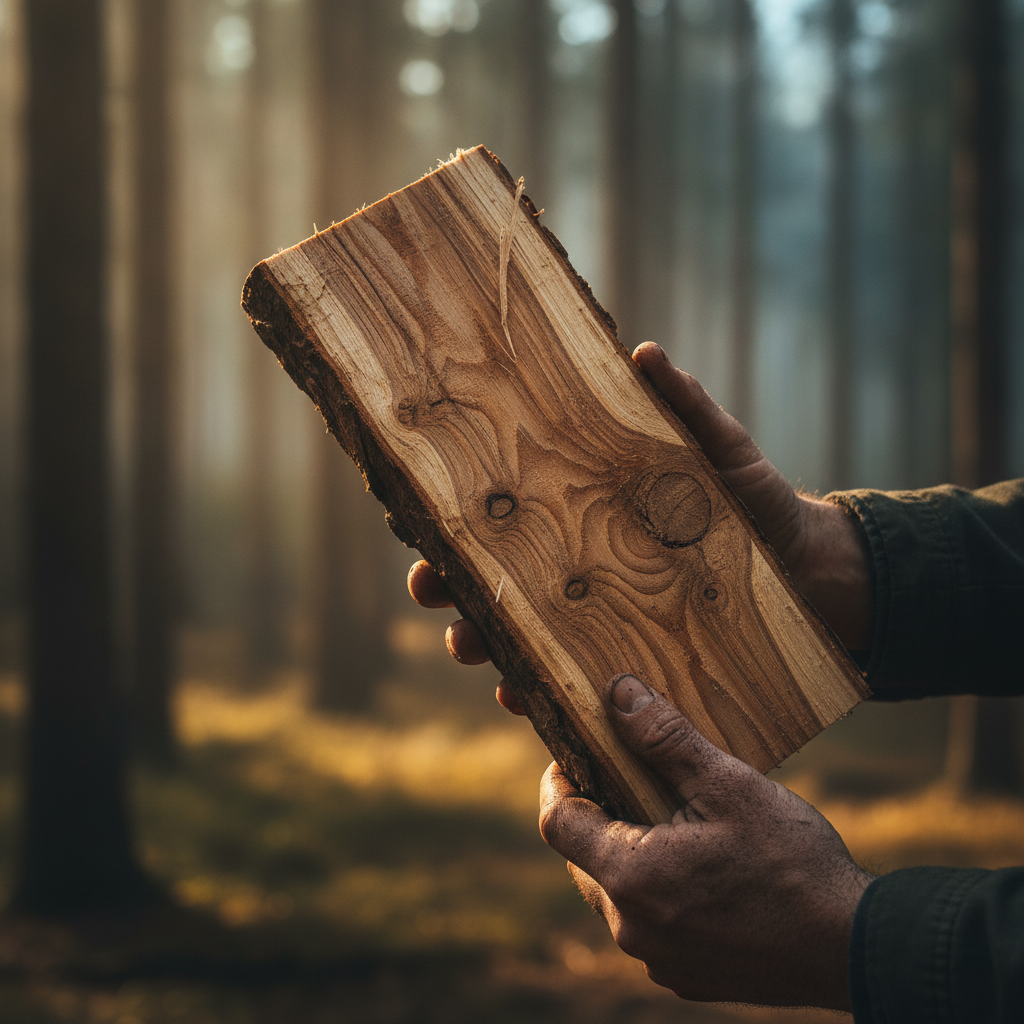
That comment alone received nearly a thousand upvotes. It wasn't a joke. It was a cry for help.
The Real Problem Nobody Talks About
The massive success of a firewood simulator isn't a quirky internet anomaly. It is an indictment of the modern knowledge economy.
We have optimized the friction out of everything, but human beings are built to solve physical problems.
We are biologically wired to crave cause and effect. You apply force, the environment changes, and your brain rewards you with satisfaction.
But look at our jobs right now in mid-2026. If you work in tech, marketing, or design, your job lacks all physical permanence. You type on flat glass.
You push code to invisible servers. You write strategy documents that get buried in a Google Drive folder. You are completely abstracted from the "metal."
Worse, AI has now automated the most tangible parts of our digital work. We don't even write the boilerplate code or the initial drafts anymore.
We sit in a perpetual state of editing, reviewing, and managing. We have become middle managers of digital slop, constantly pushing abstract levers that yield abstract results.
When a software project is never truly finished—only abandoned until the next sprint—your brain never gets the physiological release of a completed cycle.
This is why you feel exhausted at 5:00 PM despite sitting in a climate-controlled room all day. You haven't done any physical labor, but your brain is starved for closure.
AAA video games used to provide that closure, but now they mimic the worst parts of our jobs. They give us daily chores, complex economies to manage, and endless tasks that never resolve.
Firewood Splitting Simulator does the exact opposite. It gives us back the raw, primitive joy of definitive action.
The Antidote to Digital Burnout
Instead of waiting for the tech industry to suddenly care about your mental health, you need to change how you consume digital media.
Stop playing games that require you to manage a spreadsheet. Stop engaging with digital ecosystems that punish you for taking a week off.
If your leisure activity resembles a SaaS platform, it is not leisure. It is unpaid labor.
Here is what actually works right now to combat the intense abstraction of modern work:
1. Seek out high-friction, single-task games.
Find digital experiences that do one physical thing perfectly.
Games like SnowRunner (dragging trucks through mud) or PowerWash Simulator have always touched on this, but look for indie titles that strip away the UI and focus purely on mechanical physics.
Your brain needs to see an action directly result in a reaction.
2. Stop chasing infinite progression.
We are conditioned to want games with 100+ hours of content. Rebel against this. Buy games that can be completed in three hours.
The feeling of rolling credits on a short, beautiful game is a powerful antidote to endless Agile sprints. Force your brain to experience an ending.
3. Build an analog friction ritual.
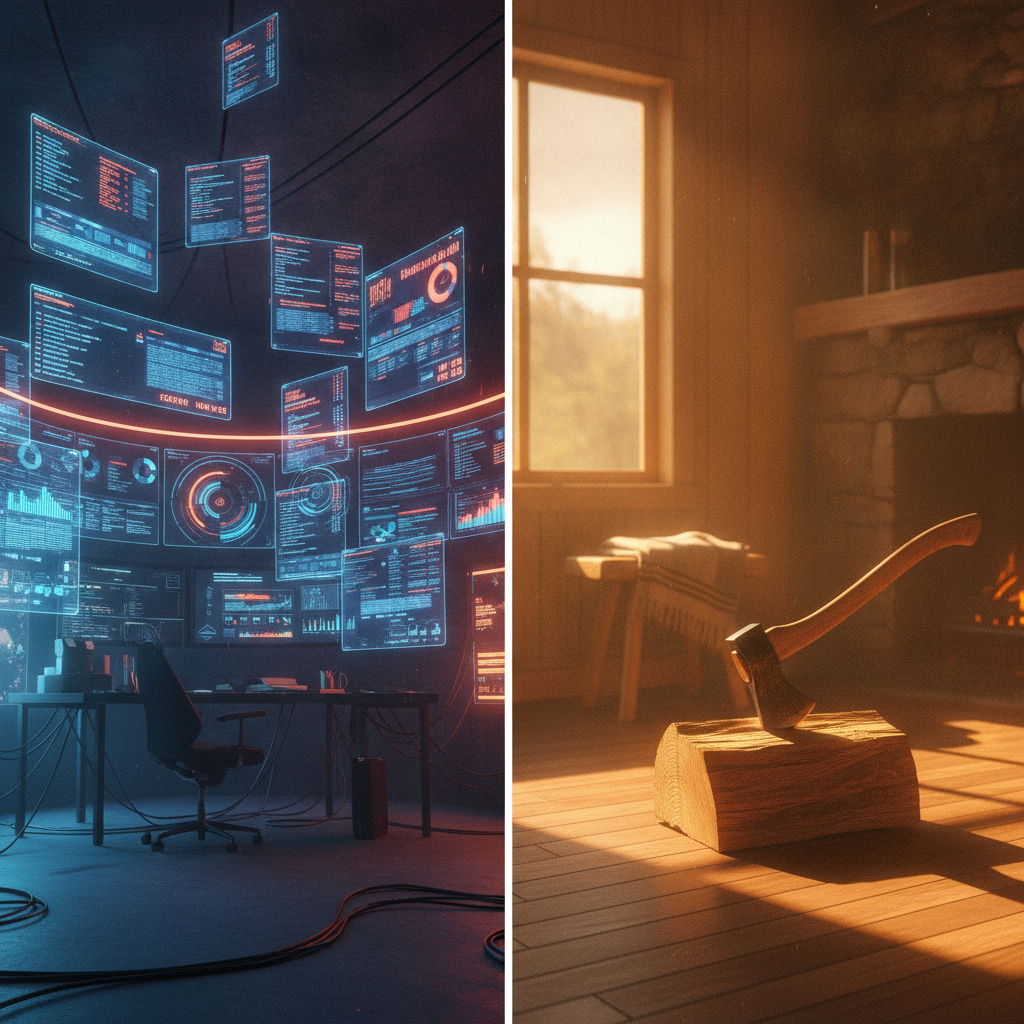
If you can't find peace in digital physics, you must build it in the real world. Get a hobby where the materials fight back. Woodworking, bread baking, pottery, or actual firewood splitting.
You need an activity where if you make a mistake, you can't hit `Cmd+Z`. You have to live with the physical consequence.
The Uncomfortable Truth
The AAA gaming studios will probably learn the wrong lesson from this.
By next year, they will likely try to implement "wood chopping mechanics" into their massive open-world bloatware, missing the point entirely.
The point isn't the wood. The point is the silence.
The point is escaping the suffocating complexity of a world that demands we optimize every waking second of our lives. We don't need smarter NPCs or bigger virtual worlds.
We need less noise, tighter feedback loops, and the quiet dignity of a job actually being finished.
Look at your to-do list right now. How many of those tasks will ever truly be "done," and how many will just morph into new tickets?
When was the last time you struck a problem, watched it split cleanly in two, and felt the absolute certainty that you had finished the job?
Let's talk in the comments. I'm going back to the digital forest.