GitHub Just Put $3,000 on Your Abandoned Code. I Wasn't Ready For This.
Bottom line: GitHub’s latest developer challenge, ending today, offers up to $3,000 for developers to revive or build upon abandoned open-source projects.
But incentivizing one-off commits with cash bounties doesn't fix the open-source maintainer crisis—it accelerates it.
By turning dead code into a gig-economy gold rush, tech giants are generating a tidal wave of AI-written pull requests that overwhelm the ecosystem.
If you are participating in these bounties, you aren't saving open source; you are helping corporations avoid paying salaries for the infrastructure that holds up the internet.
Stop cheering for corporate developer bounties. I'm serious.
Right now, as you read this, thousands of developers are scrambling to submit pull requests to dead repositories because GitHub dangled a $3,000 carrot in front of them.
The challenge—which officially closes today, June 7, 2026—was marketed as a noble effort to breathe life into abandoned code.
It is actually a spectacular disaster. I've been writing, maintaining, and contributing to open-source software for over a decade, and I'm telling you: this isn't philanthropy.
It is exploitation wearing a hackathon t-shirt, and it is destroying the exact community it claims to support.
The Sacred Cow of Open Source "Giving Back"
I get it. When the announcement dropped a few weeks ago, the developer community lost its collective mind.
Finally, a massive tech company was putting actual fiat currency into the hands of independent developers.
Every tech influencer, every coding bootcamp grad, and every LinkedIn thought leader celebrated this as a massive win for the community.
The conventional wisdom is that open source is a tragedy of the commons, and injecting cash via bounties is the only way to incentivize developers to do the dirty work of maintenance.
And five years ago, before the AI explosion, they might have been right. A $500 bounty used to mean a developer would spend a weekend carefully fixing a bug.
But the landscape of software engineering has fundamentally shifted. We are living in a post-LLM reality, and applying 2018 incentive structures to 2026 technology is like throwing gasoline on a house fire and calling it central heating.
Bounties Are Now Just AI-Powered DDoS Attacks
Here is the reality of what a $3,000 bounty on an abandoned repository actually creates today. It doesn't create thoughtful architecture or sustainable maintenance.
It creates an absolute tidal wave of automated, AI-generated spam.
When you attach a lottery ticket to a GitHub commit in 2026, nobody sits down to manually read through legacy code.
Instead, developers hook up Claude 4.6 or ChatGPT 5 to an automation script, point it at a list of dead repositories, and command it to mass-generate refactoring PRs.
The AI hallucinates a few unit tests, updates the dependencies, and fires off the pull request.
We saw the beginnings of this during the infamous Hacktoberfest fiascos, but today's tooling makes that look like child's play.
We are effectively crowdsourcing a Distributed Denial of Service attack on open-source maintainers.
Think about the original creator of that "abandoned" code. They likely stepped away in 2024 because they were burnt out from doing unpaid labor for trillion-dollar tech companies.
Today, they woke up to an inbox containing 407 AI-generated pull requests on a repository they haven't touched in two years.
And who reviews those PRs to see if they actually work? The maintainer. The person who is NOT getting the $3,000.

The Gig-ification of Core Infrastructure
The real problem here isn't a single GitHub challenge. The real problem is that we have allowed the tech industry to turn our core digital infrastructure into a gig-economy side hustle.
Modern software companies—banks, social networks, hospitals—rely entirely on open-source libraries to function.
But instead of hiring full-time maintainers to secure and update these critical dependencies, we rely on weekend warriors hoping to win a $3,000 prize.
We are subsidizing the most profitable corporations in human history with our weekend anxiety.
A $3,000 bounty is less than what a senior engineer in San Francisco makes in a single week. Yet, it is enough to make thousands of junior developers dance for scraps.
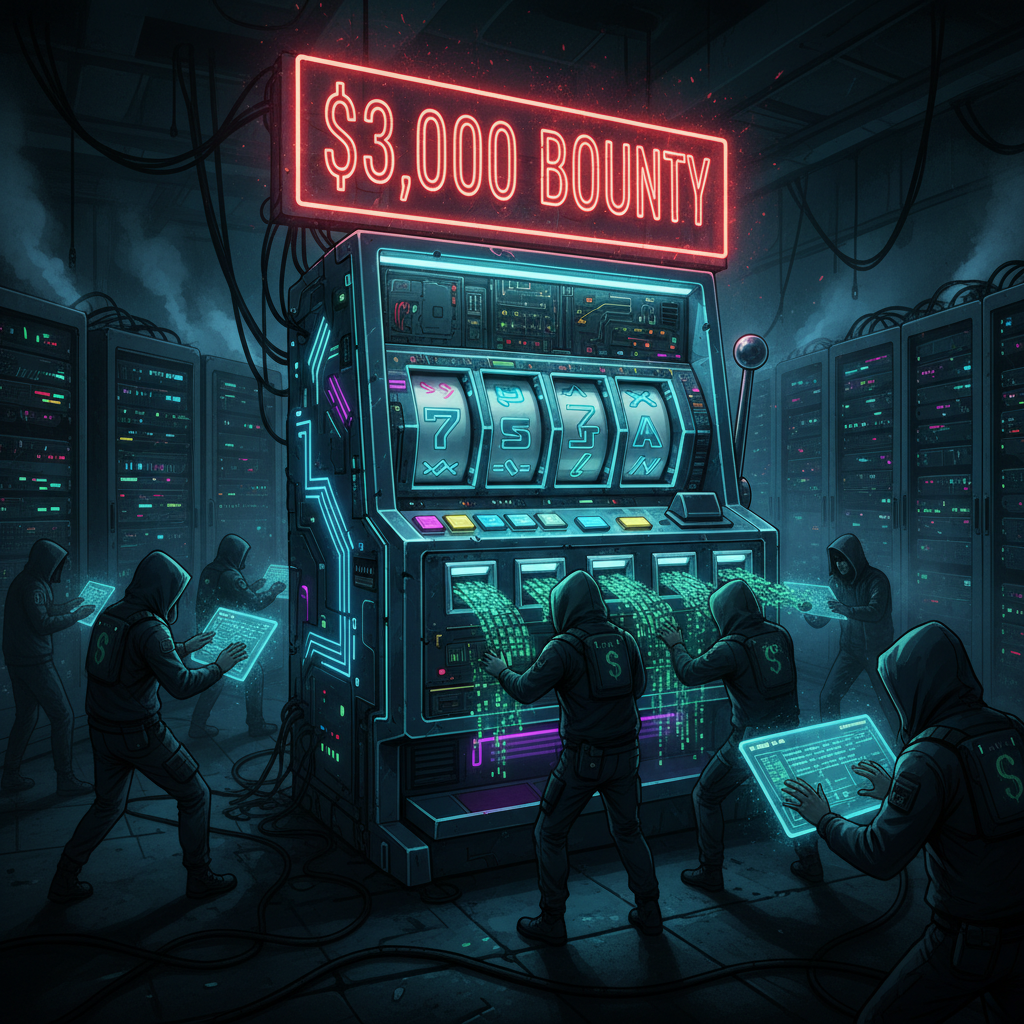
It shifts the burden of maintenance away from corporate payrolls and onto the roulette wheel of community challenges.
When a company relies on an open-source tool, they should be paying for a support contract or hiring the maintainer. Instead, we have gamified the poverty of the open-source ecosystem.
We treat developers like Uber drivers chasing surge pricing, rather than architects building the foundation of the internet.
Let Dead Code Rest In Peace
We need to completely change how we think about "abandoned" code.
There is a toxic myth in software development that all code must live forever, and that a repository without a commit in 18 months is a tragedy that must be corrected.

Not all code deserves to live. Software has a natural lifecycle. Sometimes a library solves a specific problem for a specific era, and then it becomes obsolete. Let it die.
When we use bounties to artificially reanimate dead code, we create zombie dependencies.
These are projects that look active because someone merged an AI-written PR to get a t-shirt and a check, but they have no actual human stewardship.
When a critical zero-day vulnerability hits that library next year, the bounty hunter will be long gone, and the code will collapse.
If a piece of software is truly critical to a modern application, its failure will cause financial pain to a corporation.
Let them feel that pain. Sometimes, the only way to prove the value of a bridge is to let the toll booth close.
What We Actually Need to Do Instead
Instead of participating in these gamified coding lotteries, we need to completely restructure how open source is funded. If you are a developer, stop doing free or gig-work for profitable companies.
1. Demand maintenance contracts, not bounties.
If an enterprise depends on an open-source project, they need to pay the maintainers a monthly retainer. Platforms like Tidelift are trying to solve this, but developers need to draw a harder line.
Stop accepting $500 one-off tips for code that secures a $50 million product.
2. Stop reviewing bounty PRs.
If you are a maintainer of an open-source project, implement a strict policy: you do not review pull requests generated solely for external bounties or hackathons unless the bounty sponsor is paying your hourly rate for the review time.
Your time is not free.
3. Let corporations fork and maintain.
If a repository is abandoned, and a tech giant desperately needs it updated, they have thousands of engineers on payroll.
Let them fork it. Let them assign a salaried team to maintain their internal version. Stop feeling guilty about walking away from code you wrote for free three years ago.
The Illusion of Corporate Generosity
By next year, we will see the fallout from this current wave of bounty-driven development.
The $3,000 checks will be cashed, the PRs will be merged, and the repositories will go completely silent once again—only now, they will be bloated with unverified, AI-generated technical debt.
The tech industry loves to celebrate these challenges because they provide incredible PR for pennies on the dollar.
They get to look like they are funding the community, while actively avoiding the structural changes required to actually support it.
How many hours of your life have you given away to fix infrastructure for companies that wouldn't even give you a phone screen if you applied for a job?
Why are we still pretending that an unpredictable, gamified bounty system is an acceptable way to build the software that runs the world? Let's talk in the comments.