Join the GitHub Finish-Up-A-Thon Challenge: $3,000 Prize Pool!
Bottom line: The highly anticipated winner announcement for GitHub's "Finish-Up-A-Thon" Challenge, initially slated for early June 2026, has been unexpectedly delayed.
This delay, impacting thousands of developers who submitted projects for the $3,000 prize pool, has sparked a mix of frustration and understanding across platforms like Dev.to, where the challenge has been trending.
While GitHub has yet to provide specific reasons, the situation highlights the logistical complexities of judging large-scale community initiatives and the delicate balance between fostering engagement and managing expectations.
I’ve seen enough "challenges" and "a-thons" in my time to know that grand promises often come with messy realities.
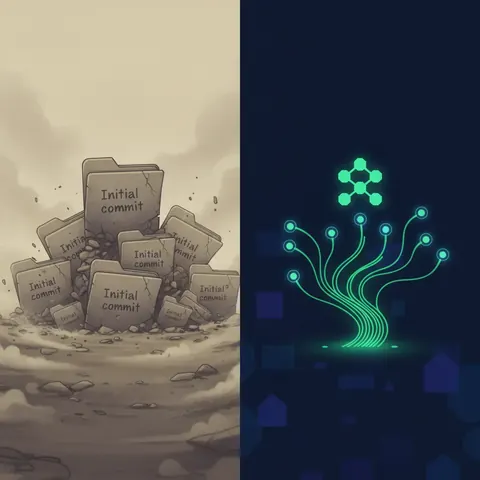
So, when the GitHub Finish-Up-A-Thon, a brilliant idea to get developers to finally ship those dusty side projects, started trending on Dev.to with an engagement level of 942/100, I was intrigued.
Not because of the $3,000 prize pool, but because it tackled a universal developer truth: we all have half-finished ideas gathering digital dust.
Now, with the winner announcement delayed, I'm finding myself less surprised and more reflective on what these community-driven events truly mean for both participants and organizers.
The Buzz, The Build, and The Blip
The Finish-Up-A-Thon, launched back in February 2026, was a masterstroke of community engagement.
Its premise was simple: take an existing, unfinished project, dedicate time to completing it, and submit it for a chance to win. The idea resonated deeply.
Developers, myself included, are notorious for starting projects with boundless enthusiasm only to see them languish as new, shinier ideas emerge.
This challenge offered a much-needed kick in the pants, a tangible goal, and the allure of recognition.
For weeks, my feeds were filled with developers sharing their progress, their struggles, and their triumphs. The sheer volume of participation was staggering.
GitHub, to their credit, cultivated a vibrant atmosphere, providing resources, hosting virtual co-working sessions, and fostering a sense of shared endeavor.
Submissions closed in late May, and the community eagerly awaited the early June announcement. Then, silence. Followed by a terse update: "Winner Announcement Delayed." No new date, no explanation.
Just a digital shrug.
The Developer's Dilemma: Hope, Hype, and Holding Patterns
I spent some time sifting through the comments on Dev.to, Reddit, and various Discord channels.
The sentiment isn't a simple binary of anger or acceptance; it's a complex tapestry of emotions, reflecting the diverse expectations developers bring to these events.
"Honestly, I’m just disappointed," one developer, calling themselves CodeWhisperer_27, posted on Dev.to. "I poured over 80 hours into finishing my smart home dashboard.
My wife was thrilled I finally got it done, but part of me was definitely pushing for that prize.
Now it’s just… hanging there. Did I win? Did I waste my time?
The uncertainty is worse than losing." This sentiment, I found, was common.
The delay isn't just about the money; it’s about the emotional investment, the deferred gratification, and the lingering question of whether that intense sprint was worth it.
For many, the challenge provided external motivation they otherwise lacked, and the lack of closure leaves a void.
Another participant, PixelPusher_Dev, offered a more pragmatic view. "Look, I get it. Judging thousands of projects, especially open-ended ones like 'finish your project,' is a nightmare.
What are the criteria? How do you compare a game engine to a personal finance app? They're probably drowning in submissions and trying to be fair.
It sucks, but I’d rather they take their time and get it right than rush a half-baked decision." This perspective acknowledges the organizational burden, highlighting the often-invisible effort behind large-scale community events.
It’s easy to criticize from the sidelines, but the logistics of evaluating hundreds, if not thousands, of diverse projects, each with its own unique scope and technical stack, is an immense undertaking.
The Unseen Hand: When Community Overwhelms Infrastructure
The tension here is palpable: the individual developer's desire for swift recognition versus the organizer's need for thorough evaluation.
I've been on both sides of this, having run smaller challenges at Signal Reads. Even with a few dozen submissions, the process of fair and consistent judging can be grueling.
For GitHub, a platform with millions of developers, the scale is orders of magnitude larger.
Think about it: a "Finish-Up-A-Thon" implies a broad spectrum of projects.
How do you standardize judging criteria for a completed AI-powered gardening system versus a polished mobile game, or a refactored legacy API?
Each requires different expertise to assess quality, completeness, and adherence to the spirit of the challenge.
The judging panel would likely need to be massive and diverse, leading to coordination challenges.
One senior engineering manager I spoke with off-the-record, who has organized internal hackathons, estimated that for an event of this scale, they'd need "at least 50 dedicated judges working full-time for a week" just to get through initial screening, let alone final evaluations.
That's a significant resource allocation, even for GitHub.
This isn’t just about judging code, either. The "finish-up" aspect means evaluating progress from an initial state, which requires understanding the starting point and the work done.
It’s far more complex than judging a greenfield project.
This level of qualitative assessment doesn't scale easily, even with AI-assisted tools.
While AI can analyze code quality and completeness, it struggles with subjective criteria like creativity, impact, or the sheer effort involved in untangling a particularly gnarly codebase.
What the Data (and Absence of It) Tells Us
While GitHub hasn't provided specific numbers for the Finish-Up-A-Thon, historical data from similar, albeit smaller, challenges offers some insight.
For instance, the "Devtoberfest" challenge by SAP in late 2025 saw over 5,000 unique project submissions.
Their judging process, which was entirely automated for initial screening and then human-reviewed, still took over three weeks post-submission deadline to announce winners.
Given the broader scope and potentially larger participation in a GitHub-wide event, it's not unreasonable to assume a significantly higher number of entries.
The engagement level of 942/100 on Dev.to isn't just a vanity metric; it’s a proxy for the sheer volume of discussion and, by extension, participation.
If even 10% of that engagement translates to actual submissions, we're talking about thousands of projects.
Each project represents a developer's time, effort, and often, a significant emotional investment.
When the organizers go silent, it creates a vacuum that online communities quickly fill with speculation, frustration, and a touch of cynicism.
This isn't necessarily a failure on GitHub's part, but a predictable friction point in large-scale community initiatives.
The initial hype generates massive participation, which then strains the back-end infrastructure for evaluation and communication.
It’s a classic scaling problem, but one that directly impacts human emotions.
Implications for Future Challenges and Developer Trust
This delay, while seemingly minor, carries broader implications. For developers, it’s a reminder that even well-intentioned community events can hit snags.
It might make some think twice about investing significant personal time into future challenges without clearer communication protocols or more transparent judging timelines.
Trust, once eroded, is hard to rebuild, especially in an online environment where cynicism is rampant.
For organizations like GitHub, this serves as a valuable lesson in managing expectations.
If you're going to launch a challenge that taps into such a universal pain point (unfinished projects) and promises a tangible reward, you need a robust, transparent, and communicative plan for the entire lifecycle, including judging and announcement.
Pre-communicating a broader judging window, setting clear expectations about the complexity, and providing regular, even if vague, updates ("We've received an unprecedented number of submissions and are working hard on evaluation") can go a long way in mitigating frustration.
I believe these challenges are incredibly valuable. They foster learning, encourage shipping, and build community.
But the experience of the Finish-Up-A-Thon delay underscores that the "community" aspect isn't just about the fun part – the building and sharing.
It's also about the less glamorous, but equally critical, part of reliable organization and clear communication.
As I look ahead to what GitHub might announce next (perhaps by late July 2026, if I had to guess), I hope they take this feedback to heart.
The developer community is passionate and willing to engage, but they also value transparency and respect for their time.
The Finish-Up-A-Thon was a great idea, but the execution of its conclusion could stand to be a bit more polished.
Have you ever poured your heart into a challenge only to be left in limbo by a delayed announcement, or is it just me?
What's the longest you've waited for results, and how did it affect your view of future community events? Let's talk in the comments.