GitHub Copilot Just Quietly Killed Subscriptions. It's Worse Than You Think.
READ AD-FREE ON SIGNAL READS →
I just paid $482.14 for a coding assistant that used to cost me ten bucks.
I wasn't even building a new startup or refactoring a legacy monolith—I was just doing my daily rounds as an infrastructure engineer.
The invoice hit my inbox at 4:15 AM this morning, and it felt like a cold bucket of water to the face.
For three years, we’ve been living in a golden era of subsidized intelligence, where Microsoft and Anthropic footed the bill for our sloppy prompts and infinite context windows.
The "all-you-can-eat" subscription model for AI is officially dead. GitHub Copilot just quietly shifted to usage-based billing, and if you haven't checked your settings yet, you're about to experience the most expensive "tab-complete" of your career.
This isn't just a pricing change; it's a fundamental shift in how we are allowed to write code in 2026.
The $10 Illusion Is Shattered
We all saw this coming, but we chose to ignore it.
When GitHub Copilot launched, the $10 a month price point was a "loss leader" designed to get us hooked on the dopamine hit of a perfect function completion.
It was the "Uber of AI"—burning VC and enterprise cash to subsidize a behavior that was never economically sustainable.
I remember the first time I used it back in 2021. It felt like magic, and more importantly, it felt free.
I didn't care if it took five tries to get a Kubernetes manifest right because the cost of failure was zero. In 2026, the cost of failure is exactly $0.04 per request on the "Ultra" tier.
But last month, GitHub rolled out the "Pro-Ultra" tier, which integrates Claude 4.6 and ChatGPT 5 directly into the IDE. These models are monsters.
They have context windows that can ingest your entire repository in a single breath, but that compute isn't cheap.
Microsoft realized they can no longer subsidize the massive inference costs for a flat fee. Every time you hit "Generate," you are spinning up thousands of GPUs. The bill has finally come due.
The Rise of the "Token-Frugal" Developer
This morning, I sat at my desk and did something I haven't done in years: I hesitated before asking for help.
I looked at a complex Terraform bug and, for a split second, I calculated the "token cost" of asking Copilot to debug it.
This is the "Silent Squeeze" of 2026. We are moving from an era of creative exploration to an era of token-frugality.
When every suggestion costs a fraction of a cent, your relationship with your IDE changes. I noticed my own behavior shifting within hours.
I stopped asking for "boilerplate" and started writing it myself. I stopped letting the AI "explore" architectural patterns and only used it for the most tedious syntax.
We are being conditioned to think like accountants instead of engineers. If you're working at a large firm, your manager is likely already looking at a "Token Burn" dashboard.
We’re being told to "optimize our prompts," which is just corporate-speak for "stop spending the company's compute money."
Why GPT-5 Killed the Flat Fee
The technical reality is that the new generation of models—ChatGPT 5 and Gemini 2.5—are exponentially more expensive to run than the GPT-4 iterations we grew up with.
Their reasoning capabilities are God-tier, but their "cost-per-token" is a nightmare for a subscription business model.
When I ran a benchmark on a standard microservice refactor last week, the difference in "thought depth" between models was staggering. But so was the price.
Using a high-reasoning model for a simple Python script is like using a SpaceX Falcon 9 to deliver a pizza. GitHub's pivot to usage-based billing is a white flag.
They’ve admitted that the "unlimited" model is unsustainable for high-reasoning agents.
The price of "intelligence" has decoupled from the subscription model.
This creates a new digital divide.
Senior engineers at well-funded tech giants will have "unlimited" tokens, while the indie dev or the junior at a struggling startup will be forced to use "Lite" models that hallucinate twice as often.
Access to truth is now metered.
The Infrastructure Reality Check
As an infrastructure engineer, I see the irony.
We spent the last decade moving everything to the cloud to "save money," only to find ourselves paying a "Developer Tax" just to interact with our own code.
Microsoft and GitHub aren't being "evil" here—they are responding to the brutal physics of data centers. Power and cooling for AI clusters in 2026 are the most expensive commodities on earth.

The "quiet" part of this killing of subscriptions is that it wasn't announced with a bang. It was hidden in a "terms of service" update and a new "Credits" toggle in the settings menu.
If you don't set a hard cap on your usage, Copilot will happily burn through your "Credits" at a rate that would make an AWS bill look like a rounding error.
I've seen one "deep-think" session on a legacy Java codebase cost upwards of $40 in tokens.
How to Survive the Token Apocalypse
So, what do we do? We can't go back to the "Before Times." Coding without AI in 2026 feels like trying to build a skyscraper with a hand-saw. It's possible, but nobody is going to pay you to do it.
Here is the new survival guide:
- Diversify your "Inference Stack." Stop using the most expensive model for everything. I’ve started using local LLMs via Ollama for 80% of my basic coding tasks. It’s "free" (minus the electricity), and it keeps my GitHub credit balance for when I actually need a "Global Reasoning" model.
- Master Context Management. The biggest cost driver is sending too much irrelevant code to the AI. Stop hitting "Chat" on the whole folder. Be surgical. Select only the files that matter. If the AI has to read 10,000 lines to fix a 1-line bug, you are throwing money away.
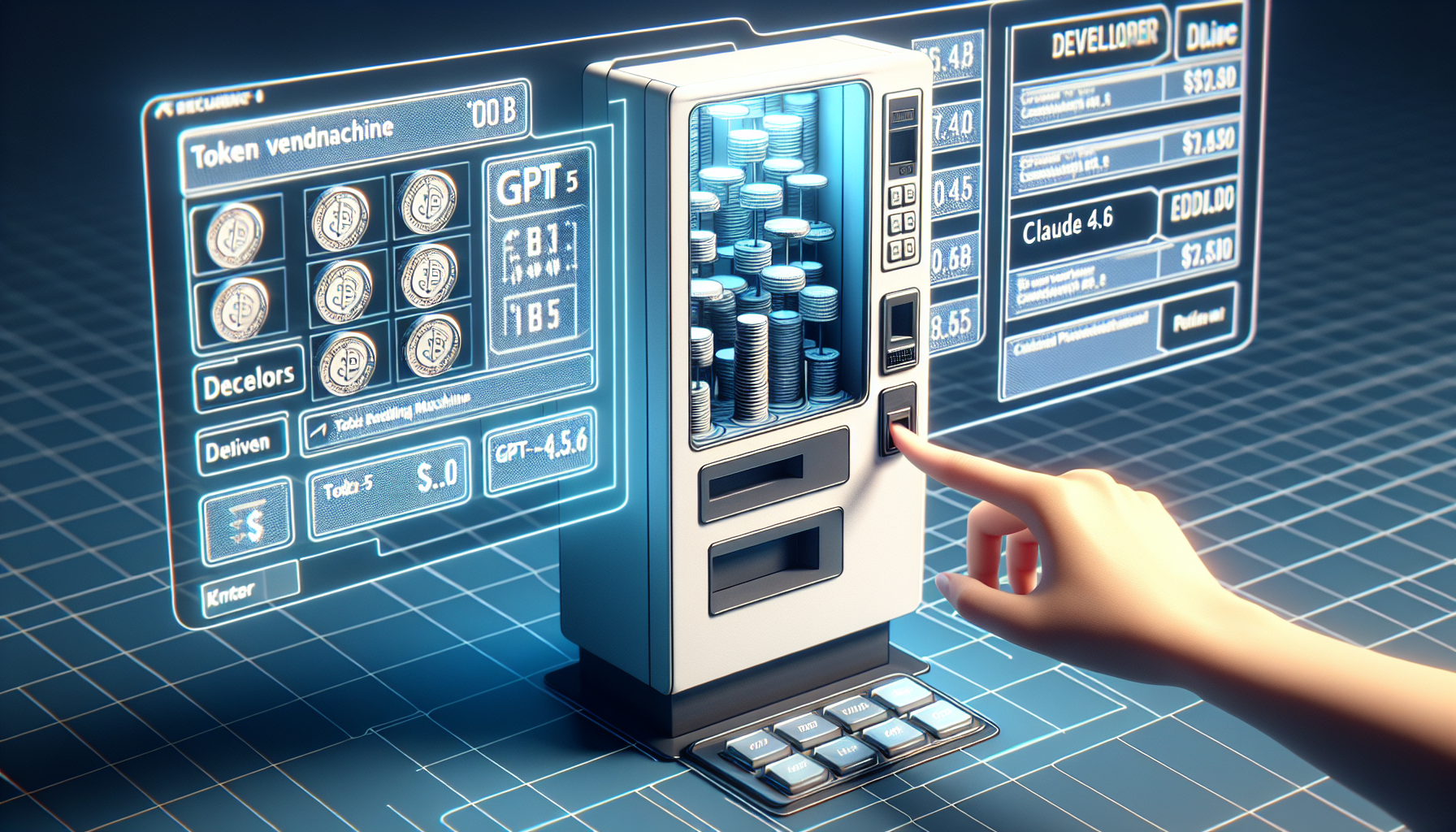
- Demand Token Transparency. We need to see the estimated cost of a prompt before we hit enter. If our IDE is going to be a vending machine, we at least want to see the prices on the buttons.
The End of the "Free Lunch"
The dream of the "AI Peer" who lives in your computer for the price of a Netflix sub was beautiful while it lasted.
But we’ve entered the era of Pay-to-Play Engineering. The developers who thrive in this new environment won't be the ones who can write the best prompts; they'll be the ones who know when not to use the AI.
I’m looking at my $482 invoice and I realize I’m not just paying for code. I’m paying for the habit of laziness I developed over the last few years.
GitHub Copilot didn't just kill subscriptions—it killed the idea that intelligence is cheap.
Have you checked your Copilot billing dashboard this morning, or are you still living in the $10 dream? I’d love to hear if your team is already setting "Token Budgets" in the comments.
***