Working a Full Day in a Random Asian Tech Mall
Bottom line: The viral trend of working full days in bustling Asian tech malls isn't just internet spectacle; it reveals a profound disconnect in modern work environments.
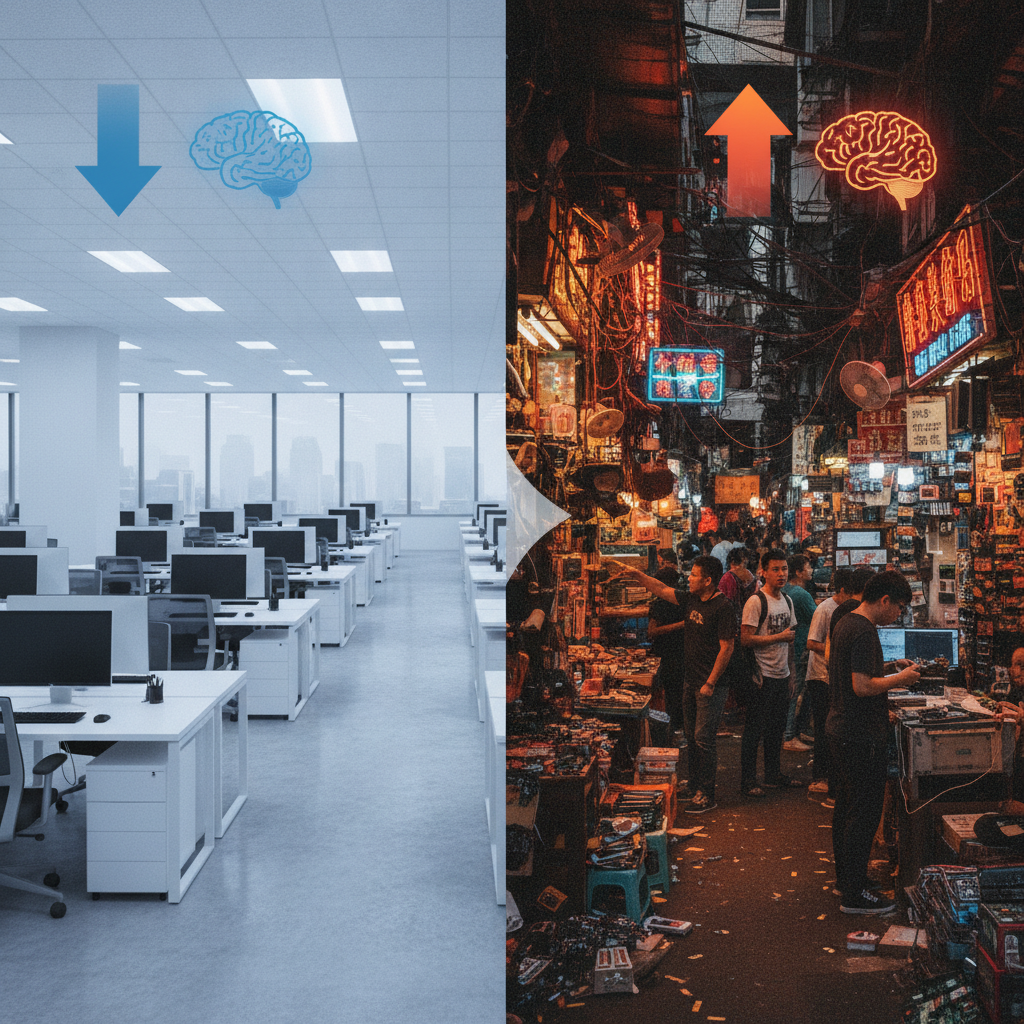
While corporate offices chase sterile "collaboration zones" and remote workers battle isolation, these seemingly chaotic spaces offer a unique blend of ambient energy and access to immediate resources that surprisingly boost creative problem-solving and deep work for many.
This trend highlights how traditional productivity metrics, designed for a bygone era of linear tasks, completely overlook the power of diverse, dynamic surroundings for the complex, creative work of 2026.
Your perfectly ergonomic home office is killing your creativity. I’m serious.
The relentless pursuit of a "distraction-free" workspace — the noise-canceling headphones, the minimalist desk, the color-coded productivity apps — has become a gilded cage.
We’ve been lied to, sold a vision of focus that’s as sterile as it is ineffective.
I’ve been building and observing work culture for decades at Signal Reads, and what I’m seeing on YouTube isn’t just entertainment; it’s a blueprint for escaping this trap.
The Myth of the Sterile Workspace
I get it. Every tech influencer, every career coach, every LinkedIn post tells you the same thing: to achieve "deep work," you need silence. You need control.
You need an environment optimized for uninterrupted flow. And for a certain kind of work — the purely analytical, heads-down, repeatable task — they weren't entirely wrong, say, five years ago.
Billions have been poured into corporate campuses designed to foster this illusion.
Glass towers, open-plan offices with their sad little "focus pods," and the ever-present HR push for "collaboration zones" that nobody actually uses.
Then came remote work, and the advice shifted to "optimize your home setup." Buy the standing desk.
Get the ultrawide monitor. Invest in the perfect task lighting.
We spent fortunes trying to replicate the sterile office, only to find ourselves more isolated, more drained, and frankly, less creative than ever.
The conventional wisdom is that productivity comes from controlled environments, that focus requires absolute quiet.
We’ve chased this ghost for so long that we’ve forgotten what true, unadulterated creative problem-solving actually feels like.
We’ve assumed that any external stimulus is a distraction, when in reality, the right kind of external stimulus can be a catalyst.
Your "Optimized" Office Is a Creativity Desert
The evidence is mounting that our current work models are failing us, particularly for the kind of complex, non-linear problem-solving that defines modern tech roles.
The sheer amount of capital spent on corporate real estate, for example, shows a diminishing return.
Companies are still pouring cash into physical spaces, yet attendance remains spotty, engagement is low, and the much-hyped "innovation" rarely materializes from these meticulously designed environments.
#### The "Ambient Buzz" Effect Is Real
Think about the best ideas you've ever had. Were they in a silent room? Or were they in a bustling cafe, on a train, or even in the shower?
Research backs this up.
A 2012 study published in the Journal of Consumer Research found that a moderate level of ambient noise (around 70 decibels, similar to a busy coffee shop) actually enhances creative performance.
It's enough to be stimulating without being overwhelmingly distracting.
Too quiet, and your mind wanders to internal distractions. Too loud, and you're overstimulated.
This is precisely what people are discovering in these Asian tech malls.
I’ve watched creators like "The Tech Nomad" spend a full day coding, writing, and even designing hardware in places like Akihabara Electric Town in Tokyo or Huaqiangbei in Shenzhen.
They’re not just tolerating the chaos; they’re thriving in it.
The low hum of conversations, the distant clatter of tools, the occasional burst of music — it creates a perfect, dynamic soundscape that keeps the mind engaged just enough to prevent internal stagnation, pushing it towards novel connections.
#### Serendipitous Solutions Are a Superpower
Our corporate structures and remote setups are designed to eliminate friction. Need a component? Order it online, wait two days.
Need an answer? Slack a colleague, wait two hours. In a tech mall, if you need a specific micro-controller, a rare cable, or even just an expert opinion on a circuit board, you walk 20 feet.
You ask. You get an immediate answer, or you find the part. This isn’t just convenience; it’s a fundamental shift in how problems get solved.
Imagine being stuck on a hardware bug. In a traditional setup, you'd spend hours debugging, ordering parts, or scheduling a meeting.
In a tech mall, you might look up from your laptop, see a stall specializing in power supplies, walk over, and have a five-minute conversation that unlocks your entire problem.
This immediate, tangible interaction with the physical world, with experts and resources at your fingertips, is a form of accelerated problem-solving that our digital-first, friction-averse systems simply cannot replicate.
It's the ultimate low-latency development environment.
#### Escaping the Digital Echo Chamber
We live in our screens. Our "optimized" home offices are often just extensions of our digital selves, filled with the same notifications, the same endless feeds.
The tech mall forces you to engage with the physical world.
There’s a constant stream of new products, unexpected sights, and human activity that acts as a pattern interrupt.
This novelty isn't a distraction from work; it's a distraction from the digital distractions that truly kill focus.
The simple act of observing the bustling environment, picking up a new gadget, or grabbing a unique snack breaks the hypnotic cycle of the screen.
Your brain is constantly fed new, low-stakes information, preventing the mental fatigue that comes from staring at the same four walls and the same digital interfaces all day.
It’s a form of active mindfulness that you simply don’t get in a perfectly quiet, isolated room.
By mid-2027, I predict we'll see more research validating the cognitive benefits of "dynamic working environments" over static ones.
The Real Problem: We're Still Building for Factories, Not Futures
The deeper issue here isn't just where we work, but how we fundamentally think about work and creativity.
We've spent the last century optimizing for efficiency, for predictable output, for repeatable tasks.
This "assembly line" mentality is embedded in our office designs, our management theories, and our productivity tools.
The problem? AI is rapidly commodifying those very tasks.
Human value is shifting. We're moving away from rote execution and towards unique problem-solving, creative synthesis, strategic insight, and complex innovation.
These are precisely the skills that don't thrive in sterile, controlled environments. They require friction, serendipity, diverse input, and a healthy dose of the unexpected.
Our current models are designed to minimize "waste" and maximize "output" as if we're churning out widgets. But human creativity isn't a widget factory. It's a messy, unpredictable ecosystem.
The corporate fear of "uncontrolled" environments stems from a desire for managerial oversight and a misguided belief that order equals productivity. It's about control, not actual creative output.
We're sacrificing genuine innovation on the altar of measurable, but ultimately hollow, efficiency.
Stop Optimizing and Start Exploring
So, what should you do instead of buying another ergonomic accessory for your isolated bunker?
#### Embrace the "Third Space"
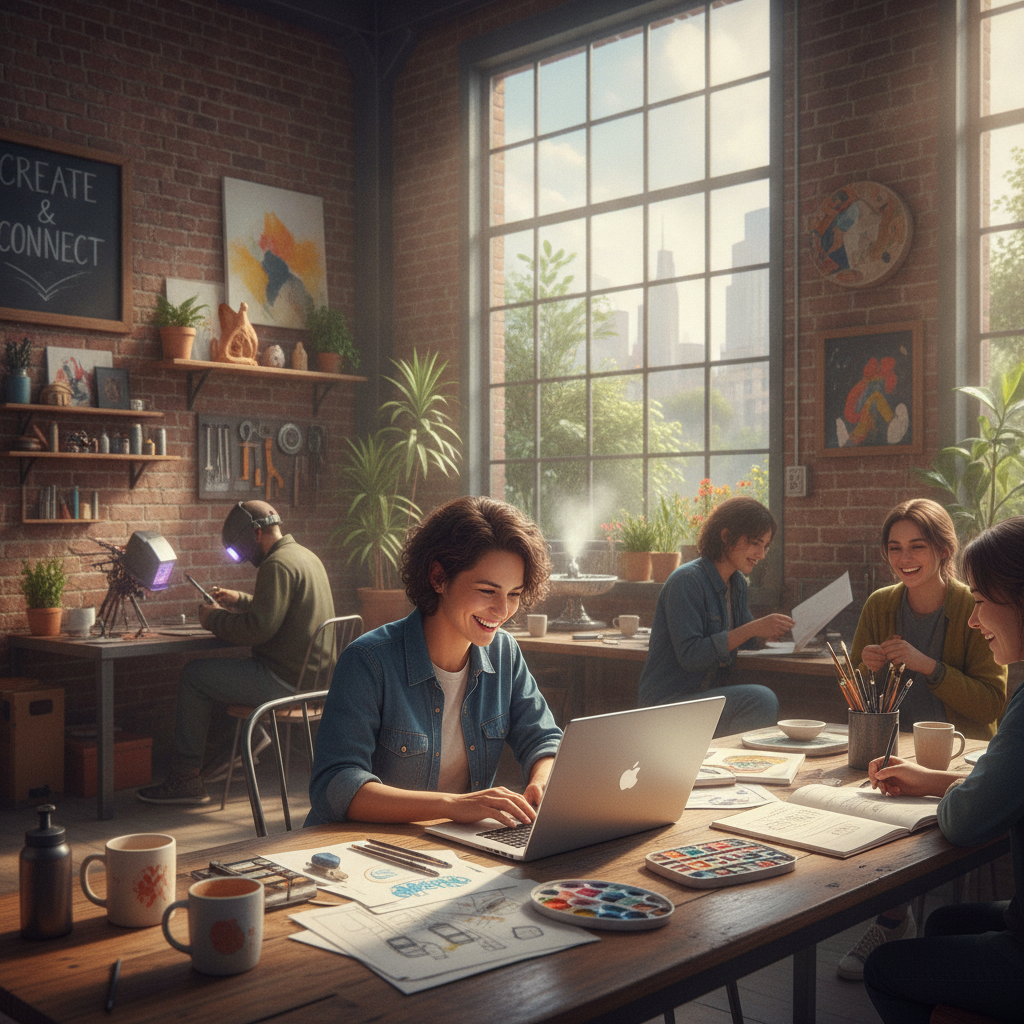
Actively seek out places that aren't your traditional office or your home. This could be a bustling library, a vibrant local cafe, a community workshop, or yes, even a local hardware store or market.
The key is to find environments that offer a moderate level of ambient stimulation and a sense of connection to the outside world, without being overtly distracting.
I often find myself doing my most creative thinking in airport lounges or hotel lobbies. The change of scenery, the low hum of activity, it just works.
#### Design for Serendipity, Not Control
If you're a manager, stop trying to control every variable.
Stop dictating desk arrangements and "focus hours." Instead, create opportunities for unexpected encounters and easy access to diverse resources.
This might mean setting up rotating "innovation days" in different, unconventional locations, or even subsidizing employees' exploration of unique local workspaces.
The best ideas often emerge from the intersections, not the isolation chambers.
#### Re-evaluate "Distraction"
Not all noise is bad noise. Learn to differentiate between detrimental interruptions (like constant notifications) and stimulating ambient input. Experiment with different soundscapes.
Try a "brown noise" generator, or put on a playlist of cafe sounds. Better yet, go somewhere that naturally provides it. What one person calls a distraction, another might call inspiration.
Your brain isn't a machine that needs to be shielded from all input; it's an antenna that needs to tune into the right frequencies.
#### Prioritize Novelty
Change your work environment regularly. Your brain thrives on new stimuli. Working from the same spot every day can lead to mental stagnation.
Even moving from one room to another in your house can make a difference. The tech mall phenomenon works because it's novel and constantly offers new sensory input.
Don't let your workspace become so routine that it fades into the background. Keep your brain guessing, keep it engaged.
The Uncomfortable Truth
We've been sold a lie that work must be sterile, silent, and segregated to be productive.
We've internalized the idea that our best ideas come from monastic isolation, when the historical record shows that breakthroughs often happen in bustling markets, vibrant salons, and chaotic workshops.
The era of the isolated genius is over. The best ideas often emerge from the messy, vibrant intersections of life, not isolated cubicles.
How much true innovation has your "optimized" workspace actually stifled? Or are you too busy chasing the ghost of Silicon Valley's outdated productivity dogma to notice?