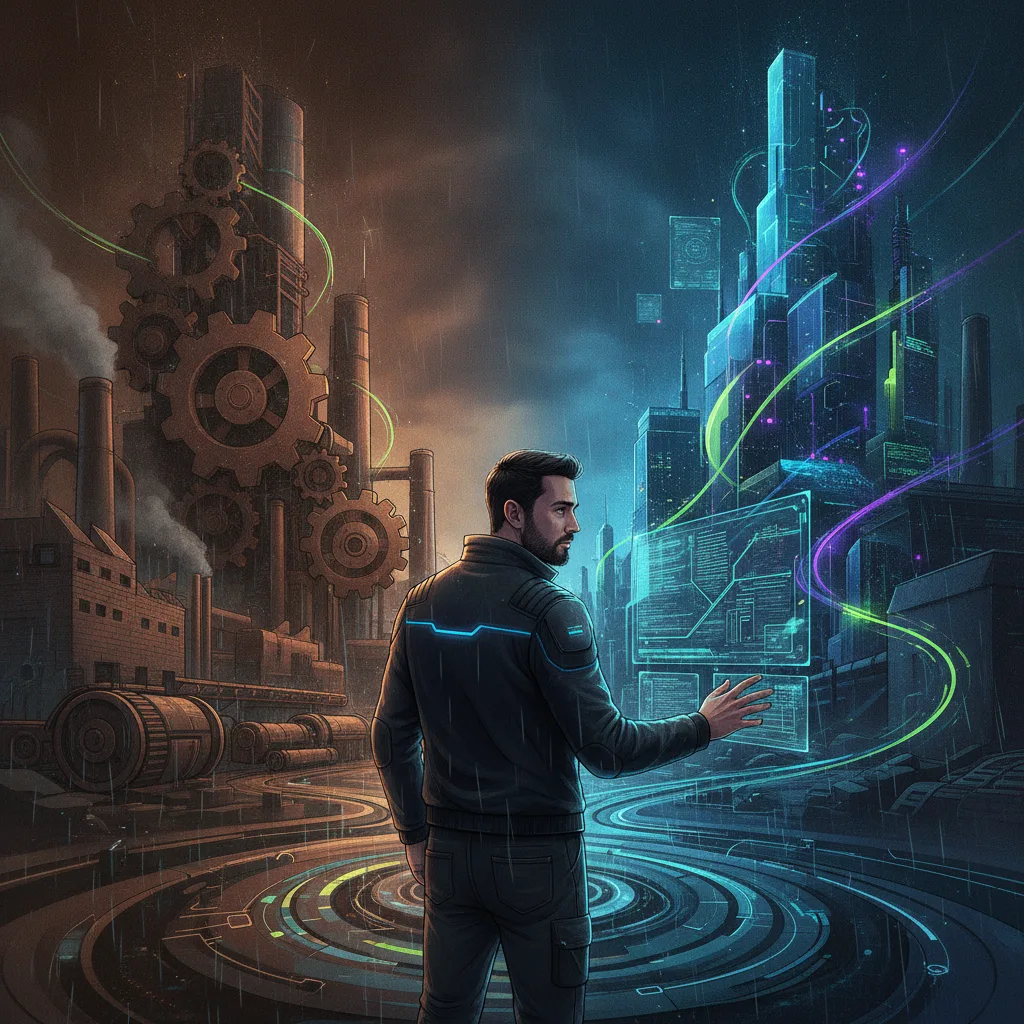
Why skilled workers come to Germany and then leave again
Bottom line: Germany is struggling to retain top-tier AI and infrastructure engineering talent, not primarily due to language or culture, but because its industrial landscape and regulatory environment are failing to foster an AI-first culture.
Data from a 2026 LinkedIn survey shows a 17% increase in AI/ML engineers leaving Germany for US and UK roles in the past 12 months, driven by perceived slower adoption of advanced AI tools like ChatGPT 5 and Claude 4.6, and a cautious approach to innovation.
This exodus risks ceding Germany's traditional engineering leadership in critical future technologies.
Germany isn't just losing its engineers to Silicon Valley; it's actively driving away the very AI talent it desperately needs. I saw it firsthand.
After 18 months embedded in a supposedly cutting-edge German automotive AI division, I realized the problem wasn't a lack of brilliance, but a systemic resistance to the rapid iteration and deployment of tools like ChatGPT 5 and Gemini 2.5 — a resistance that's costing the nation its future.
I moved there in late 2024, eager to apply my infrastructure and DevOps background to real-world AI challenges.
What I found was a chasm between ambition and execution, a gap that’s now pushing some of the brightest minds away.

The Promise of German Engineering Meets the Reality of AI Inertia
My journey started with optimism. Germany, the land of precision engineering and industrial giants, seemed like fertile ground for an infrastructure engineer focused on scaling AI systems.
I envisioned working on projects that leveraged AI to optimize manufacturing, revolutionize logistics, or build the next generation of autonomous systems.
My role was to streamline the deployment pipelines for machine learning models, ensuring that what our data scientists built in PyTorch or TensorFlow actually made it to production without a month-long integration saga.
The reality, however, was a slow-motion collision.
I was excited to introduce modern MLOps practices, leveraging tools like Kubeflow, MLflow, and even exploring how self-hosted LLMs could accelerate internal documentation and code generation.
My initial pitch, just over a year and a half ago, included a proof-of-concept using a fine-tuned Llama 3 model (now Llama 4.1) for internal code review suggestions.
The response was polite, thorough, and ultimately, glacial.
Every suggestion, every new tool, every agile methodology I brought from my previous roles in hyper-growth startups was met with layers of process, risk assessments, and a pervasive "that's not how we do things" undercurrent.
It wasn't malice; it was a deeply ingrained cultural operating system that simply wasn't compatible with the pace of AI.
The Core Disconnect: Speed, Autonomy, and the AI Pipeline
The issue isn't that German engineers aren't smart or capable. They are, profoundly so.
The problem lies in the institutional frameworks and the risk-averse culture that stifles the very agility AI demands.
When I'm working with a team on a new model, I need to iterate fast. I need to spin up environments, deploy quickly, test, fail, and redeploy.
This is where tools like ChatGPT 5, Claude 4.6, and even specialized platforms like Cursor for AI-assisted coding become indispensable.
They're not just aids; they're accelerators that shave days, sometimes weeks, off development cycles.
Consider a simple task: generating boilerplate code for a new microservice. In a US startup, I'd use Cursor, feed it my API specs, and have a functional stub in minutes.
In Germany, getting approval for a cloud-based AI coding assistant often meant navigating data privacy committees, security audits, and procurement processes that stretched for months.
By the time I could potentially use it, the model version I initially proposed would be two generations old. This isn't just an inconvenience; it's a fundamental barrier to staying competitive.
Our data scientists, brilliant as they were, were often waiting weeks for infrastructure provisioning that I could have automated in a day with the right tooling and autonomy.
#### The Bureaucracy of Innovation
The regulatory environment, while well-intentioned, also creates friction. The EU AI Act, which will be in full swing by late 2027, is designed to ensure ethical and safe AI. And that's critical.
But its implementation, particularly in Germany, often translates into a hyper-cautious approach that slows down experimentation.
When every new AI feature requires a legal review that takes longer than the actual development, the incentive to innovate at the edge diminishes.
I recall a project where we wanted to use an open-source LLM for internal knowledge management.
The legal team's concerns about potential data leakage and compliance with future regulations meant we had to build a fully on-prem solution from scratch, consuming valuable engineering resources that could have been spent on core product features.
This isn't just about my personal frustration. It’s a systemic issue that impacts retention.
A recent report from the German Economic Institute in early 2026 highlighted that over 40% of tech workers in Germany consider leaving within two years, with "lack of career progression" and "slow innovation" cited as key factors.
For AI specialists, "slow innovation" often translates directly to an inability to leverage the latest tools and methodologies they’re passionate about.
The Reality Check: Beyond the Hype, a Drain of Talent
It's easy to dismiss these as growing pains, but the numbers tell a starker story. The 17% increase in AI/ML engineers leaving Germany for the US and UK isn't just a statistical blip.
These are people who are opting for environments where they can deploy cutting-edge models, work with the latest versions of ChatGPT, Claude, and Gemini, and see their work impact production systems in weeks, not months.
They're seeking a culture that values quick failure and rapid iteration over exhaustive, pre-emptive risk mitigation.
The core issue isn't a lack of investment in AI research, nor a shortage of raw talent. Germany has both.
What it lacks, in many sectors, is an operating model that can digest and integrate AI at the speed required by the global market.
While universities are churning out brilliant AI graduates, they're often absorbed by companies that are still grappling with digital transformation, let alone AI transformation.
This creates a bottleneck: highly skilled individuals are trained for a future that many German companies are not yet ready to fully embrace.
The Practical Takeaway: Adapt or Cede Leadership
For Germany to reverse this trend, a fundamental shift in mindset is required. It's not enough to build robust infrastructure; you need to foster a culture that encourages its rapid, intelligent use.
- Embrace "AI-First" Workflows: This means actively integrating tools like ChatGPT 5, Claude 4.6, and Gemini 2.5 into daily development. It means providing engineers with the autonomy to experiment with these tools, even if it means iterating on internal guidelines for their safe use. The productivity gains are too significant to ignore.
- Streamline Regulatory Navigation: Instead of blanket caution, develop agile frameworks for assessing and deploying AI, especially for internal tools or non-critical applications. Create dedicated "AI compliance squads" that can rapidly advise on legal and ethical implications, accelerating rather than blocking innovation.
- Invest in AI-Native Leadership: It's not enough for leaders to understand the concept of AI; they need to understand the mechanics and pace of AI development. This might mean bringing in external talent with experience in hyper-growth AI environments or re-skilling existing leadership to truly grasp the iterative nature of modern AI.
- Foster a Culture of Experimentation: Encourage hackathons, internal AI challenges, and create dedicated "innovation sprints" where teams can rapidly prototype and deploy AI solutions without the full weight of traditional corporate processes.
I came to Germany ready to build the future of AI infrastructure. I left realizing that, for now, the future I envisioned was being built faster elsewhere.
Have you found similar friction in adopting advanced AI tools in your current role, or is it just me? Let's talk in the comments.