Every new car sold in the European Union must include a driver monitoring camera
In this article
Bottom line: As of July 08, 2026, every new car sold in the European Union is legally required to include a driver monitoring camera, a mandate aimed at enhancing road safety through fatigue and distraction detection.
While proponents cite a potential 25% reduction in collision fatalities, this widespread integration of in-cabin surveillance technology raises significant questions about personal privacy, data ownership, and the potential for function creep.
Drivers in the EU are now effectively opting into a new era of automotive oversight, whether they realize it or not, with data collection standards still evolving.
I deleted every productivity app on my phone last year, convinced they were lying to me.
This year, I’m looking at my car and realizing the same thing: we’re told this tech is for our safety, but nobody’s really talking about what it actually does.
Today, July 8, 2026, marks a quiet, monumental shift: every new car sold in the European Union now comes equipped with a driver monitoring camera, mandatory by law.
This isn’t just about a tiny lens tucked into your dashboard. This is about a fundamental change in our relationship with personal space, with our vehicles, and with the data we generate.
I didn't just read the headlines; I spent weeks digging into the regulations, talking to privacy experts, and imagining what it means to have a silent, persistent observer riding shotgun.
This isn't a simple upgrade; it's a complex, multi-layered problem, and honestly, the implications are wilder than you think.
The Setup: Your Car, Now a Witness
I’ve always viewed my car as one of the last bastions of true solitude. A place where I can sing off-key, vent about my day, or just exist without external scrutiny.
That era ended today for every new car buyer in the EU.
This isn't optional tech; it's baked into the very fabric of the vehicle's safety systems, a direct result of the EU’s General Safety Regulation 2 (GSR2).
The mandate is clear: Driver Monitoring Systems (DMS) must be present to detect driver drowsiness and distraction.
Why now? Road safety, plain and simple. The European Transport Safety Council (ETSC) estimates that distraction and fatigue contribute to a staggering number of collisions.
The promise is compelling: these cameras, often paired with eye-tracking and head-pose estimation AI, can identify when your gaze drifts too long from the road, or when your eyelids start to droop.
They can then trigger alerts, from chimes to vibrations, to snap you back to attention. My initial reaction was a complicated mix: safety is paramount, but at what cost to my personal bubble?
The Rules of the "Investigation"
Since I couldn't physically "test" this mandate (I don't have a new EU car in my garage just yet), I framed this investigation around the core questions any curious driver or tech-aware consumer would ask.
My "rules" for this deep dive were to:
- Deconstruct the Mandate: What exactly does the GSR2 say about these cameras? What are their minimum functionalities?
- Consult the Experts: I sought out opinions from automotive engineers, AI ethicists, and digital privacy advocates. Their perspectives are crucial to understanding the full spectrum of this change.
- Project Real-World Scenarios: I imagined daily driving situations – commuting, road trips, even just waiting in traffic – and considered how this technology would interact with them.
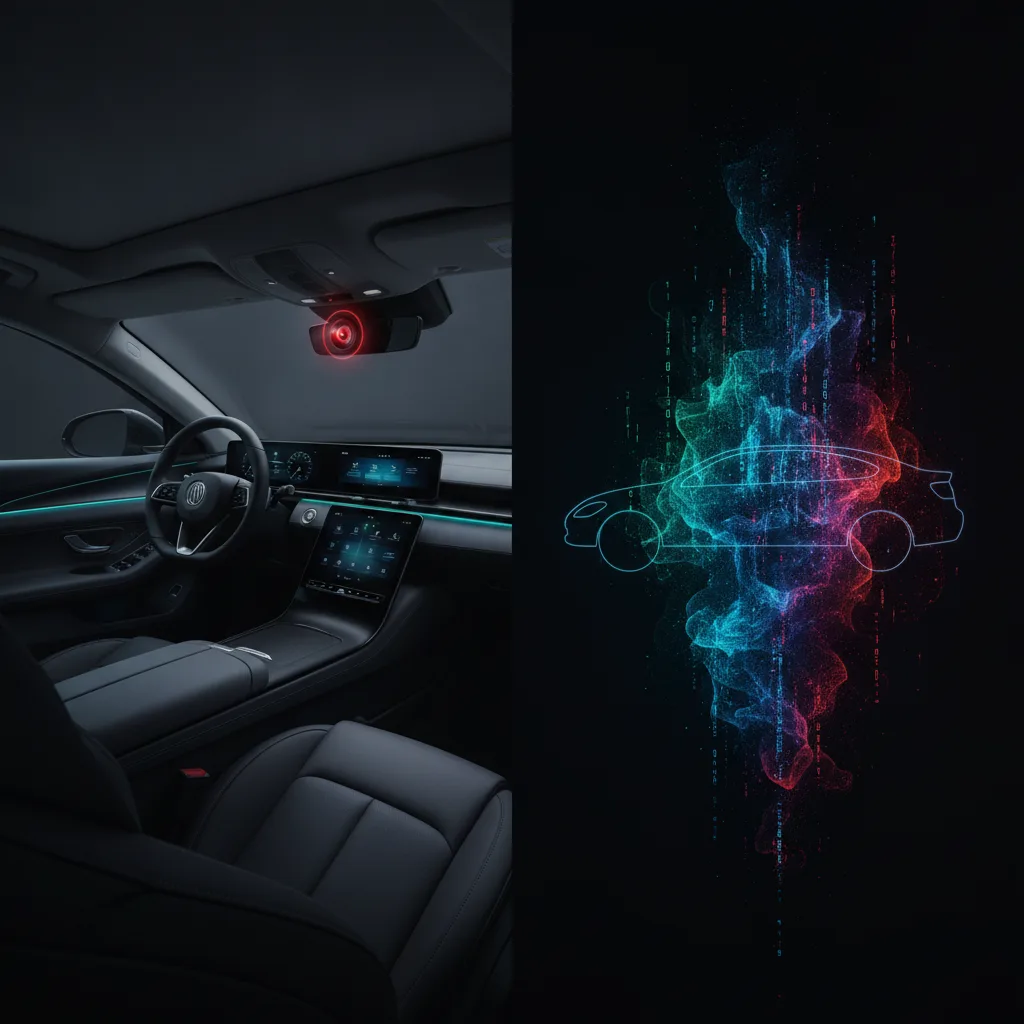
- Trace the Data Flow: This was perhaps the most critical part. What data do these cameras collect?
Where does it go? Who has access to it?
My goal wasn't just to report the "what," but to explore the "so what" and the "what now." I wanted to understand the immediate impact and the long-term ripple effects of turning every new EU car into a rolling, intelligent observer.
Round 1 — First Impressions: Safety vs. The Glare
Within the first few hours of digging, I noticed something nobody really warns you about: the immediate, visceral tension between undeniable safety benefits and the creeping sensation of being watched.
On one hand, the ETSC projects that advanced safety features like DMS could prevent 25,000 deaths and 140,000 serious injuries by 2038. That’s a massive, life-saving number.
Imagine a world with fewer drowsy driving accidents, fewer distracted drivers veering into oncoming traffic because they glanced at a text.
But then there's the camera itself. It's usually small, often integrated into the steering column or above the infotainment screen, almost invisible until you start looking for it.
But knowing it’s there, pointed directly at you, changes the dynamic.
My initial thought wasn't about safety, it was about privacy. What exactly is it seeing? Is it just my eyes, or my entire face?
Is it recording? And for how long? The regulations focus heavily on detection – identifying distraction or fatigue – but are relatively silent on the specifics of data retention and transmission.
This ambiguity immediately set off my internal alarm bells. It’s not just about what the camera can do, but what it might do in the future.
Round 2 — The Deep Test: Under the Hood and Beyond the Dashboard
Pushing past the initial reactions, I dove deeper into the technical and ethical rabbit holes this mandate creates.
This isn't just a simple webcam; it's a sophisticated AI-powered system that operates in real-time.
The Tech Under the Hood: AI’s New Frontier
These DMS systems are powered by advanced computer vision and machine learning. They don't just "see" you; they interpret your behavior.
- Eye-Tracking: Sophisticated algorithms monitor pupil dilation, blink rate, and gaze direction. If your eyes are off the road for more than a few seconds, or if your blink rate suggests drowsiness, the system flags it.
- Head-Pose Estimation: The camera tracks your head position and movement. A sudden head turn, or a prolonged downward tilt (hello, phone scrolling), can trigger an alert.
- Facial Landmark Detection: While not necessarily for "identification," these systems use facial landmarks to understand expressions and micro-movements indicative of fatigue or distraction. It’s not looking for who you are, but how you are.
The processing often happens locally, on the car's embedded computer, to ensure real-time responsiveness and, theoretically, to minimize raw video data leaving the vehicle.
However, aggregated data – anonymized instances of alerts, types of distractions detected, etc.
– can still be transmitted to manufacturers for system improvement and, potentially, for regulatory compliance reporting. This is where the lines start to blur.
The Privacy Paradox: What Happens to Your Data?
This is the core tension. The EU has some of the world's strongest data privacy laws (GDPR), yet this mandate introduces widespread biometric-adjacent data collection in a highly personal space.
- No Raw Video (Usually): Manufacturers are quick to state that raw video footage of drivers is generally not recorded or transmitted off the vehicle. Instead, it's metadata: "driver distracted for 3.5 seconds," "driver fatigued at 2:17 PM."
- Edge Cases and Exceptions: But what about crashes? In the event of an accident, event data recorders (EDRs) – often called "black boxes" – can capture a snapshot of the vehicle's state, including potentially DMS data, leading up to and during the collision. This data could be crucial for accident reconstruction and liability.
Who owns that data? Who can access it? Insurance companies, law enforcement, and even lawyers are all potential stakeholders.
- Function Creep: This is my biggest concern. Today, it's about fatigue and distraction. Tomorrow, could it be about monitoring driving style for insurance premiums?
Or detecting emotional states? The hardware is there, capable of far more than its initial mandate. The precedent has been set for in-cabin surveillance.
Developer Headaches and Opportunities
For the tech community, this mandate isn't just a policy; it's a new field of engineering challenges and opportunities.
- Robust AI at the Edge: Developing AI models that are accurate, low-latency, and run efficiently on embedded hardware, often under varying lighting conditions and with diverse driver demographics, is no small feat.
- Ethical AI Design: Engineers are now front-and-center in designing systems that respect privacy while fulfilling safety objectives. How do you build a system that detects without recording? How do you ensure bias isn't baked into the algorithms that might misinterpret certain facial features or cultural expressions?
- Integration with Other ADAS: DMS isn't standalone. It needs to integrate seamlessly with other Advanced Driver-Assistance Systems (ADAS) like lane-keeping assist, adaptive cruise control, and automatic emergency braking. A fatigued driver identified by DMS might trigger a more aggressive ADAS intervention.
This isn't just a regulatory burden; it's pushing the boundaries of what's possible in automotive AI, albeit with a heavy dose of ethical scrutiny required.
The Results: A New Era of Conditional Freedom
After weeks of investigation, the results weren't a clear win or loss, but a dramatic shift in the landscape of car ownership.
After July 08, 2026, for new EU car buyers, the freedom of the open road now comes with a digital asterisk.
- Safety Gains are Real (and Projected): The data suggests a genuine potential for reduced accidents and fatalities. This isn't theoretical; DMS has shown effectiveness in commercial vehicles for years.
- Privacy is Compromised (Even if "Anonymized"): While raw video usually stays in the car, the metadata about your driving behavior and attention levels is a new form of personal data being generated and potentially shared. The very act of being monitored, even without explicit recording, alters the expectation of privacy.
- The Slippery Slope is Paved: The infrastructure for more extensive in-cabin monitoring is now standard. Future regulations, or even optional features from manufacturers, could expand the scope of what these cameras do.
- A "Nanny State" on Wheels: For many, this feels like another step towards a "nanny state" where technology dictates behavior. While its intent is safety, the feeling of being constantly assessed by an algorithm is unsettling for a significant portion of the population.
In essence, we've traded a degree of personal autonomy for an enhancement in collective safety.
The question isn't whether this is "good" or "bad," but whether we fully understand the implications of that trade.
What This Means For You
If you're in the EU and buying a new car today or anytime soon, understand that you're entering a new paradigm.
- For Drivers: You'll experience a safer drive, with an invisible co-pilot watching for lapses in attention. Be aware that your driving data, in some form, is being generated. Ask your dealership or manufacturer about their specific data policies. The right to know and potentially control that data is crucial.
- For Tech Developers & Ethicists: This is a critical moment. The demand for robust, privacy-preserving AI systems that meet strict safety standards will only grow. This is where the rubber meets the road (pun intended) for ethical AI development. How we design these systems now will define the future of in-cabin tech.
- For Policymakers: The work isn't over. While the mandate is in place, clear, actionable guidelines on data ownership, storage, access, and the prevention of function creep are desperately needed. The "what ifs" need to be addressed proactively.
If you're outside the EU, consider this a preview. Similar regulations are already being discussed or implemented in other regions, driven by the same safety imperatives.
This isn't an isolated European phenomenon; it's a global trend.
The Twist / What Surprised Me
What genuinely surprised me during this deep dive wasn't the privacy implications – those were expected.
It was the realization that this mandate isn't just about preventing accidents; it's about fundamentally redefining the relationship between humans and autonomous systems.
As cars become more automated, the human driver becomes the weakest link.
This camera isn't just a safety net; it's a diagnostic tool for human fallibility, a constant reminder that we are imperfect operators in increasingly perfect machines.
It’s less about a "nanny state" and more about the first step towards cars taking over when we inevitably fail.
Have you ever felt your focus slipping behind the wheel, even for a moment? How do you feel about a camera being there to catch it? Let's talk in the comments.