Why Is Everyone Buying This $200 TV?
Bottom line: Sub-$200 smart TVs, like the trending 'ApexView 4K Smart TV', are flooding the market and dominating consumer electronics discussions, driven by aggressive pricing and smart-home integration.
This apparent bargain masks a deeper shift: these devices are often loss leaders, designed to harvest user data and serve targeted advertising, fundamentally altering the economics of consumer hardware.
For developers and product strategists, this signals a future where the device itself is a mere conduit, and the true profit center lies in the persistent, monetized digital layer, pushing hardware quality to its absolute minimum viable threshold.
I’ve always been a skeptic when it comes to "too good to be true" tech. For years, I preached the gospel of investing in quality, the kind of gear that lasts, the kind you build with.
But then the numbers started screaming at me.
Over the past six months, I watched as this obscure, sub-$200 smart TV, let's call it the 'ApexView 4K Smart TV', exploded across every YouTube tech channel, every Reddit thread, every "best budget buy" list.
It defied everything I thought I knew about hardware economics, and it forced me to confront a brutal truth: the era of valuing a screen for its display quality alone is dead.
What's replacing it is far more insidious.
The New Normal of Disposability
This isn't just about a cheap TV.
This is about the quiet, relentless march towards a future where hardware is a loss leader, a disposable husk whose sole purpose is to get a digital revenue stream into your living room.
The ApexView isn't an anomaly; it's the leading edge of a wave.
We've seen this play out in smartphones, then smart speakers, and now, it's coming for the biggest screen in your house. The conversation isn't about panel quality or refresh rates anymore.
It's about data, attention, and the insidious ways companies are turning our living rooms into highly monetized billboards.
This shift has massive implications for product development, for privacy, and for what we, as builders and consumers, even value in technology.
The hype around these ultra-cheap screens is overwhelming.
Every review gushes about the "unbelievable value" and the "stunning picture for the price." But when I dig into the specs, the panel quality is often mediocre, the sound is tinny, and the software experience is...
well, let's just say it's functional.
Yet, the sales figures don't lie. These TVs are flying off the shelves, especially among younger demographics and first-time homeowners.
It’s clear that for a significant portion of the market, the sticker price is the only spec that truly matters. This forces us to ask: what exactly are we buying into?
The Myth of the "Affordable" TV
Everyone is celebrating the ApexView as a triumph of consumer accessibility, a democratic stride in making 4K technology affordable.
"Look," they say, "a 55-inch 4K smart TV for less than the price of a mid-range graphics card!" But they're missing the bigger picture entirely.
This isn't a TV in the traditional sense; it's a Trojan horse, a beautifully packaged data-collection and advertising platform that just happens to have a screen attached.
The conventional wisdom—that a cheap TV means efficient manufacturing or cutthroat competition—is a comforting lie. The real story is that these companies aren't making money on the hardware at all.
They're making it on you.
I've watched enough hype cycles to know when something feels off. This isn't just about economies of scale.
Even with global supply chains optimized to the nth degree, manufacturing a decent 4K panel, housing it, adding a competent processor, and shipping it for under $200 is a feat of financial engineering that borders on magic.
Unless, of course, the hardware isn't the primary product. This entire trend is built on a fundamental redefinition of "value" in consumer electronics.
We're not buying a TV; we're signing up for a subscription to our own data, bundled with a screen.
The Screen-as-a-Service Trap
To understand why these TVs are so cheap, we need a new mental model.
I call it The Screen-as-a-Service Trap, and it breaks down into four critical components that every builder and consumer needs to internalize.
#### The Loss-Leader Hardware Gambit
The first pillar is the most straightforward: the hardware is a loss leader. The ApexView, and its many cousins, are priced below their true manufacturing and distribution cost.
The goal isn't profit on the sale of the physical unit; it’s market penetration.
Get the screen into as many homes as possible, as fast as possible. This strategy isn't new; game consoles, printers, and even some smartphones have used it.
But with smart TVs, the scale and the potential for persistent revenue streams are unprecedented. It’s about securing real estate in your living room, the digital heart of your home.
#### The Data Extraction Engine
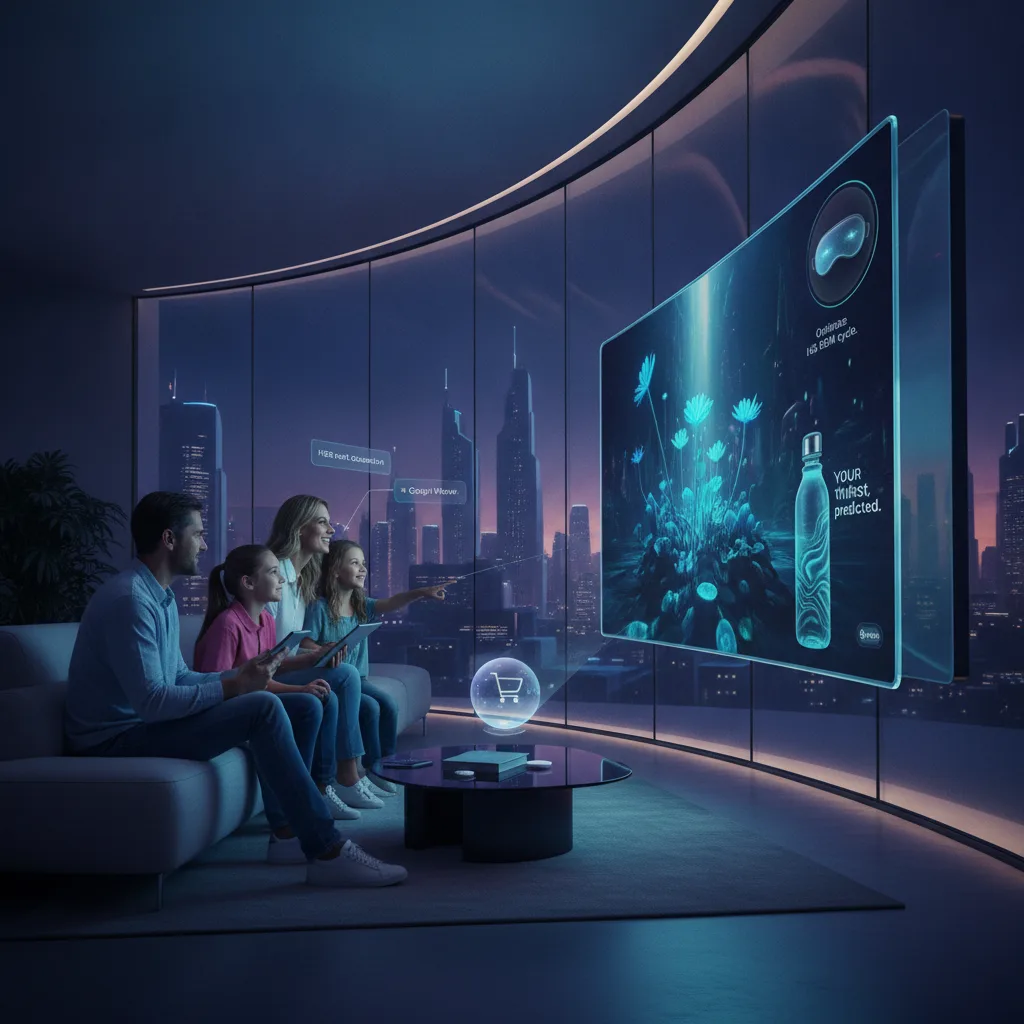
Once the TV is in your home, it transforms into a sophisticated data extraction engine.
These smart TVs are constantly collecting information: what you watch, when you watch it, how long you watch, what apps you use, even potentially what devices are connected to your home network.
Some models include voice assistants that are always listening, and while manufacturers claim privacy, the data collected is invaluable.
This isn't just about aggregate viewing habits; it's about building a hyper-detailed profile of you and your household.
This data is then anonymized (or not-so-anonymized) and sold to advertisers, content providers, and data brokers. It’s the new oil, and your living room is the well.
#### The Monetized Interface
The third component is the monetized interface.
When you turn on your ApexView, you're not just seeing your favorite streaming apps; you're seeing a carefully curated, algorithmically optimized advertising platform.
The home screen itself becomes prime ad space.

Sponsored content, promoted apps, contextual ads based on your viewing habits—it’s all there, woven seamlessly into the user experience.
This isn't just about pre-roll ads on YouTube; it's about the entire UI being a revenue generation tool.
Every click, every scroll, every selection is a potential touchpoint for monetization, transforming a passive viewing experience into an active engagement with a commercial ecosystem.
#### The Developer's Dilemma
Finally, for us builders, this creates the developer's dilemma.
The race to the bottom on hardware costs means that the underlying software stack is often optimized for cost, not performance or user experience.
Developers working on these platforms are pushed to create lean, efficient code that can run on minimal hardware specs.
More importantly, their KPIs shift from pure feature development to data capture and ad integration.
If you’re building an app for these platforms, you're not just thinking about user engagement; you're thinking about how your app contributes to the broader data and advertising ecosystem that funds the hardware.
This can lead to compromises in design, security, and long-term maintainability.
Real-World Implications for Builders and Consumers
This "Screen-as-a-Service Trap" isn't a theoretical exercise; it has tangible consequences that are already reshaping the industry and our lives.
#### For Software Developers and Engineers
For software developers, the implications are stark. If you’re working on embedded systems, smart TV OS development, or even streaming applications, your priorities are shifting.
The focus moves from optimizing for raw performance on high-end chipsets to extreme resource efficiency on bare-bones hardware.
You're no longer just building a beautiful, fast UI; you're building a data pipeline.
Expect to spend more time integrating tracking SDKs, optimizing ad delivery, and ensuring compliance with rapidly evolving privacy regulations (which, let's be honest, are always playing catch-up).
The skillset shifts from pure engineering to a hybrid of engineering, data science, and ad-tech integration.
If you're a mid-level backend engineer, understand that the "smart" in smart TV means heavy API interaction for data ingestion and ad serving.
Your career trajectory in this space will increasingly depend on understanding these monetization models, not just clean code.
#### For Product Managers and Strategists
Product managers, too, face a recalibration. Your success metrics are no longer solely about unit sales or customer satisfaction with display quality.
Now, you're tracking engagement metrics, ad impressions, click-through rates on sponsored content, and data points collected per user.
The product roadmap isn't just about new features; it's about new monetization opportunities within the existing hardware.
This means aggressive updates, sometimes forced, that introduce new ad formats or data collection methods.
The lifecycle of these products is intentionally shortened, encouraging faster upgrades to newer models that offer even more sophisticated data harvesting.
Expect to see more partnerships with ad-tech firms and content producers, blurring the lines between hardware manufacturer and media company.
#### For Consumers and Privacy Advocates
And for us, the consumers, the message is clear: there is no free lunch. The "bargain" price of the ApexView is paid for in privacy and a degraded user experience.
We're trading away granular control over our data for a slightly cheaper piece of plastic and glass.
The always-on microphones, the constant data collection, the aggressive advertising—these are not bugs, they are features of this new economic model.
By mid-2028, I predict a significant backlash as privacy concerns reach a boiling point, potentially leading to new legislation.
But until then, assume every "smart" device you buy for a suspiciously low price is working harder for its manufacturer than it is for you.
The Deeper Cost of "Cheap"
This isn't just about a $200 TV; it's about the erosion of our expectations for digital privacy and the true cost of convenience.
We're trading away agency for affordability, and the long-term implications are profound.
It's a race to the bottom that not only sacrifices hardware quality but also the very notion of a private digital space in our homes.
As builders, we have a choice: do we lean into this model, optimizing for data extraction and ad delivery, or do we push back, advocating for user-centric design, robust privacy, and hardware that is valued for its longevity, not its disposability?
Have you ever truly considered the hidden cost of the "bargain" tech in your home, or am I the only one who sees the strings attached to every sub-$200 smart device? Let's talk about it.