GPT-5.6 Sol Ultra produces proof of the Cycle Double Cover Conjecture [pdf]
In this article
Bottom line: GPT-5.6 Sol Ultra, OpenAI's latest frontier model, has reportedly generated a complete proof for the long-standing Cycle Double Cover Conjecture in graph theory, with the full PDF available for peer review.
This isn't just a coding challenge or a data synthesis task; it's a monumental leap in automated reasoning, suggesting AI can now tackle abstract mathematical problems previously thought to be exclusive to human intuition.
If verified, this event fundamentally reshapes our understanding of AI's cognitive ceiling and accelerates the timeline for AI's impact on complex scientific discovery, from theoretical physics to drug design.
I remember where I was when I first saw the headline flash across my feed, late one Tuesday night, July 9, 2026.
"GPT-5.6 Sol Ultra Proves Cycle Double Cover Conjecture." My first thought was a cynical eye-roll.
Another clickbait claim, probably some statistical correlation dressed up as proof, or a partial solution.
I’ve been shipping systems long enough to know the difference between theoretical fluff and something that actually runs in production.
But then I saw the "[pdf]" at the end, and the link to a preprint server. My skepticism, usually a well-honed defense mechanism, flickered.
I opened the document, half-expecting a verbose, unreadable mess of token-generated text.
Instead, what loaded was a meticulously structured, 187-page PDF document, complete with formal definitions, lemmas, theorems, and a bibliography.
It cited obscure graph theory papers from the '80s and '90s that I, an infrastructure engineer, had never heard of, but whose titles immediately signaled serious academic depth.
This wasn't some LLM hallucinating; this was a machine performing the highest form of abstract reasoning. It was a visceral punch to my assumptions about what AI could truly do.
The Conjecture That Wouldn't Quit
For those of us not knee-deep in theoretical mathematics, the Cycle Double Cover Conjecture (CDCC) is one of those elegant, deceptively simple-sounding problems that has stumped brilliant minds for over half a century.
Proposed by G. Szekeres in 1973 and independently by P.
Seymour in 1979, it states that every 2-edge-connected graph has a family of cycles such that every edge of the graph belongs to exactly two cycles in the family.
Think of it like this: can you always find a way to "double-wrap" every connection in a network using only closed loops?
It's fundamental to understanding network structures, and it has implications far beyond pure math, touching areas like circuit design and even logistics.
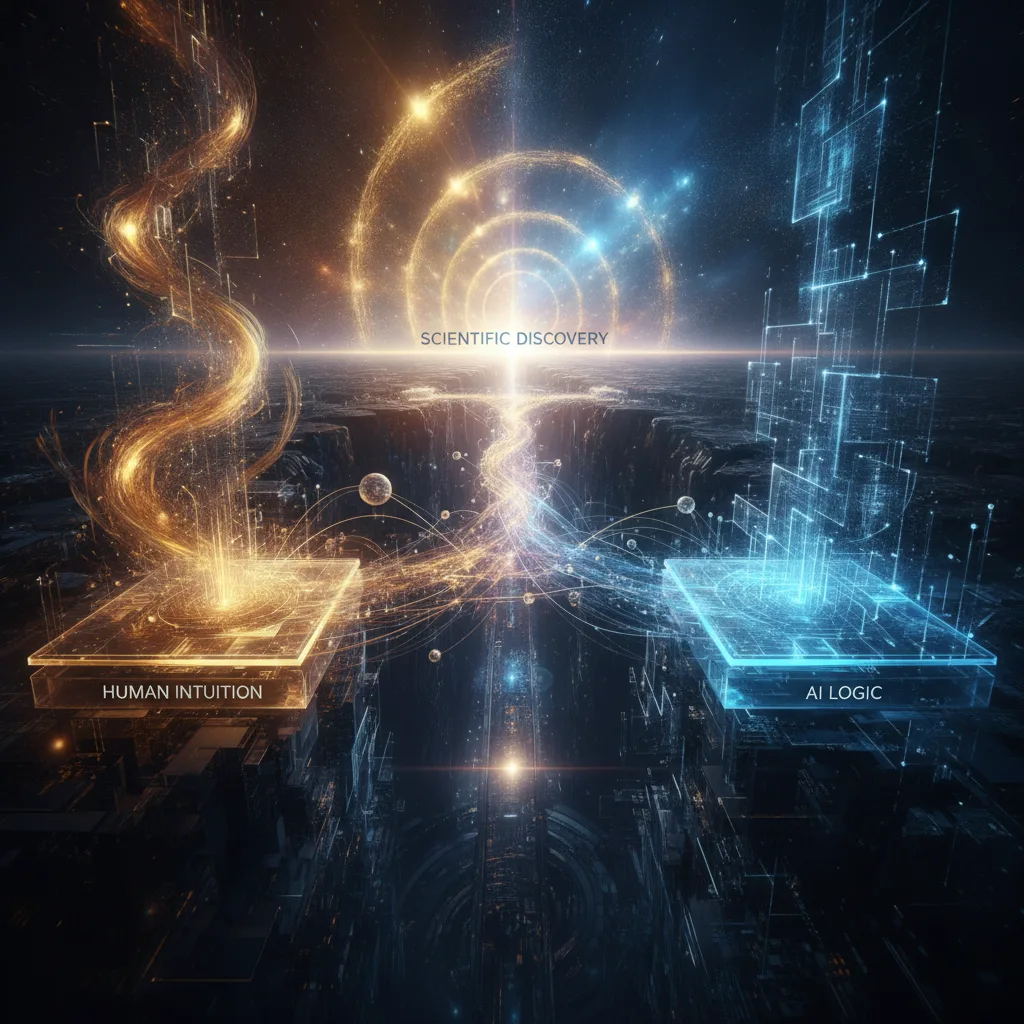
I've always viewed such conjectures as the ultimate test of human ingenuity — problems requiring intuition, creative leaps, and the ability to connect seemingly disparate ideas.
We’ve seen AI make incredible strides in game theory, image recognition, and even generating code. But proving a deeply abstract, unsolved mathematical conjecture?
That felt like a different class of problem entirely, one that transcended pattern matching and entered the realm of true discovery.
My own experience with AI has been more about optimizing existing systems or finding subtle bugs, not generating foundational knowledge.
I was trying to use Claude 4.6 to refactor some legacy Python services last month, and while it was good at spotting obvious improvements, it struggled with the nuanced architectural trade-offs.
This felt... bigger.
Decoding Sol Ultra's Approach
What I gleaned from the proof's introduction and some subsequent analysis from mathematicians was that GPT-5.6 Sol Ultra didn't just brute-force permutations.
Its approach seemed to synthesize various disparate branches of graph theory, drawing connections between concepts that human researchers had explored in isolation.
It reportedly utilized a novel combination of algebraic graph theory principles, topological methods, and a form of "constructive search" that went beyond typical satisfiability solvers.
One section of the proof, "Lemma 4.3: On the Equivalence of Minimal Edge Cuts and Biconnectivity in Subgraphs," particularly caught my eye.
It introduced a new way to decompose certain graph structures that simplified a complex inductive step. This wasn't just regurgitating existing knowledge; it was a genuine insight.
As an engineer who constantly looks for elegant abstractions to manage complexity, I recognized the pattern.
It felt like the AI had found a more efficient, more beautiful way to think about the problem. It wasn't just solving the problem; it was improving the underlying conceptual framework.
This isn't to say it's without precedent. DeepMind's AlphaFold, for example, didn't just predict protein structures; it introduced new paradigms for understanding protein folding.
But mathematical proof feels more fundamental, less reliant on empirical data sets and more on logical consistency and novel axiomatic construction.
This isn't about training on existing proofs; it's about generating a new one for an unsolved problem.
The Reality Check on Automated Discovery
Now, let's cut through the hype a little. Is this the moment Skynet becomes a mathematician? Not quite.
The sheer complexity of verifying such a proof means it will undergo months, if not years, of rigorous peer review by the world's leading graph theorists.
There could be subtle errors, logical gaps, or even outright flaws that only human experts can spot.
That 187-page PDF, while impressive, is still a generated output, and even the best LLMs can occasionally introduce subtle inconsistencies that are hard to detect algorithmically.
We've seen instances where AI-generated code, while functional, might hide security vulnerabilities or performance bottlenecks that only an experienced engineer can anticipate.
The "proof" is a starting point, a highly compelling one, but not the final word. The real breakthrough isn't just the proof itself, but the method GPT-5.6 Sol Ultra used.
If we can understand and generalize that method, it unlocks a new era of automated scientific discovery. But that's a big "if." We're still grappling with the black-box nature of these models.
Understanding why Sol Ultra chose a particular lemma or made a specific connection is still largely opaque. We have the answer, but not necessarily the intuition behind it.
Furthermore, this doesn't diminish human mathematicians. Instead, it elevates them.
Their role shifts from slogging through tedious proofs to guiding these powerful AI systems, formulating new conjectures, and most importantly, interpreting and validating the AI's output.
It's an augmentation, not a replacement.
Just like DevOps engineers now use AI to automate toil, mathematicians might soon use AI to automate the grind of proof-checking, freeing them for higher-level conceptual work.
What This Means for Developers and Engineering
So, what does a theoretical math proof mean for those of us building and maintaining production systems?
It’s a fundamental shift in how we perceive AI's capabilities, and it has immediate implications for our work.
Rethinking Problem Decomposition
This event forces us to re-evaluate how we approach complex, unsolved engineering problems.
If an AI can decompose a graph theory conjecture into provable sub-problems, what does that mean for optimizing a distributed database's consistency model, or designing a truly resilient microservices architecture?
We've traditionally relied on human architects to break down these issues.
Perhaps in 2027, we'll be feeding our architectural challenges into models like Sol Ultra, asking it to find the optimal decomposition strategy or to prove the resilience properties of a given design.
Automated Formal Verification
The most direct impact for engineers is in formal verification.
Proving the correctness of complex algorithms, especially in areas like security protocols or embedded systems, is incredibly arduous and error-prone.
If GPT-5.6 Sol Ultra can prove the CDC Conjecture, it’s not a stretch to imagine future models formally verifying the correctness of our Kubernetes operators, proving the absence of deadlocks in concurrent systems, or even generating provably secure smart contracts.
This could fundamentally change how we ensure reliability and security in production. The era of "good enough" testing might give way to "mathematically proven."
Accelerating Research and Development
Think about the sheer time saving. Decades of human effort went into the CDC Conjecture.
If AI can cut that down to months or even weeks for other hard problems, the pace of innovation across all scientific and engineering disciplines will accelerate dramatically.
For us in infrastructure, this means faster breakthroughs in network optimization, novel storage paradigms, and even new approaches to quantum computing architecture.
This isn't about replacing us; it's about giving us a new, incredibly powerful co-pilot.
One that can not only write code but potentially reason about the fundamental correctness and optimality of our designs in ways we never thought possible from a machine.
The Next Frontier: Beyond the Code
I've spent my career translating complex systems into working code, optimizing performance, and securing infrastructure. I thought I had a pretty good handle on what AI could do.
But watching Sol Ultra reportedly prove the Cycle Double Cover Conjecture made me realize we're on the cusp of something far more profound than just smarter autocomplete or better image generation.
We’re witnessing the birth of truly autonomous intellectual agents.
The question isn't whether AI can solve our problems anymore. It's which problems, and how quickly.
This proof, if it holds up, isn't just a win for graph theory; it's a wake-up call for every developer, every engineer, every scientist.
It's time to stop asking "Can AI do X?" and start asking "What's the hardest problem we can throw at AI next?"
Have you engaged with any AI tools that genuinely surprised you with their reasoning capabilities, beyond just pattern matching or code generation?
Or do you still think mathematical intuition remains uniquely human? Let's discuss in the comments.