UEFA Just Quit FIFA. Nobody Saw This Coming.
Bottom line: On July 30, 2026, UEFA and its national associations formally announced their withdrawal from all FIFA competitions, effective immediately.
This unprecedented split, driven by long-simmering disputes over revenue sharing and governance, effectively fragments global football into two distinct, competing ecosystems.
The immediate impact means European clubs and national teams will no longer participate in events like the FIFA World Cup, forcing a rapid re-evaluation of player contracts, sponsorship deals, and broadcasting rights globally by early 2027.
I woke up yesterday morning, scrolling through my feed, expecting the usual tech drama or AI breakthroughs. Instead, one headline stopped me dead: "UEFA Quits FIFA." My first thought?
"This can't be real." My second?
"How did we miss the signs?" We've all seen corporate power struggles, sure, but this isn't some startup acquisition; this is a seismic split in a multi-billion dollar global institution, a structure that has defined international sport for nearly a century.
This isn't just about football; it's about the fracturing of global governance, a warning shot for any industry built on centralized power.
For decades, FIFA has been the undisputed monarch of global football, its World Cup the crown jewel.
UEFA, representing Europe's powerful leagues and national teams, has always been the wealthiest, most influential vassal.
Their relationship was a tense alliance, a constant tug-of-war for power, money, and control over the sport's direction.
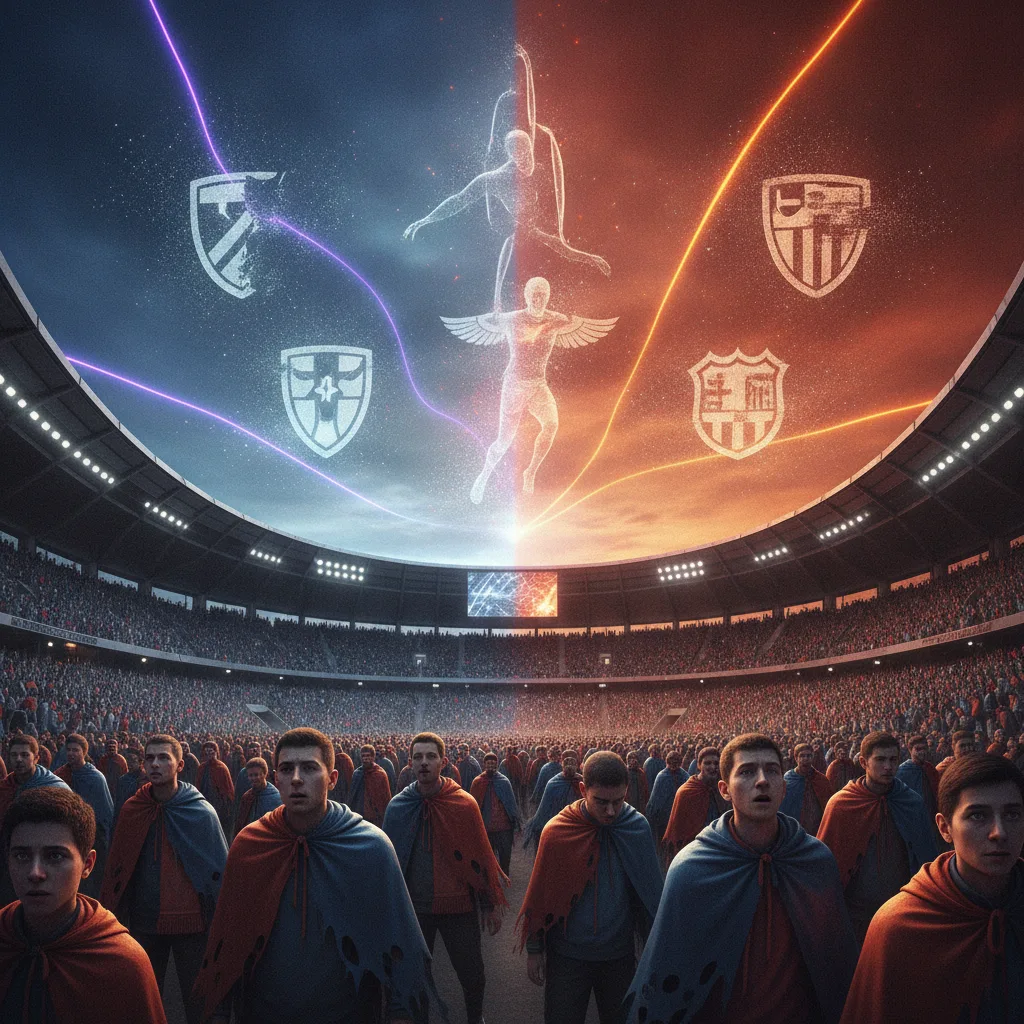
But yesterday, July 30, 2026, that alliance shattered. UEFA, backed by its 55 national associations, declared independence. They will not participate in any FIFA-sanctioned events.
No European teams in the next World Cup. No European clubs in FIFA's expanded Club World Cup. This isn't a negotiation tactic; it's a divorce, finalized and public.
The implications extend far beyond the pitch, touching upon everything from player careers to national economies.
It’s a stark reminder that even the most deeply entrenched global institutions are vulnerable to the forces of decentralization and self-interest.
The initial takes are already flooding in: "It's a temporary spat," "They'll reconcile, they always do," "It's just about money." And yes, money is a huge factor – the fight over World Cup revenues and FIFA's push for more control over UEFA's lucrative club competitions has been boiling for years.
But to dismiss this as mere boardroom squabbling is to fundamentally misunderstand the shift underway. This isn't just a negotiation; it's an ideological schism.
FIFA's vision of a globally centralized, expanded calendar clashed directly with UEFA's desire to protect its existing, highly profitable European ecosystem and its domestic leagues.
The conventional wisdom assumes these behemoths will always find common ground because "the sport needs unity." But what if the sport, or at least its most powerful faction, decided unity under the old terms was no longer desirable?
What if the perceived benefits of self-governance now outweigh the traditional prestige of a unified global system?
We're witnessing a power play where one side decided the table itself needed to be overturned. This isn't about getting a better deal; it's about being the dealmaker.
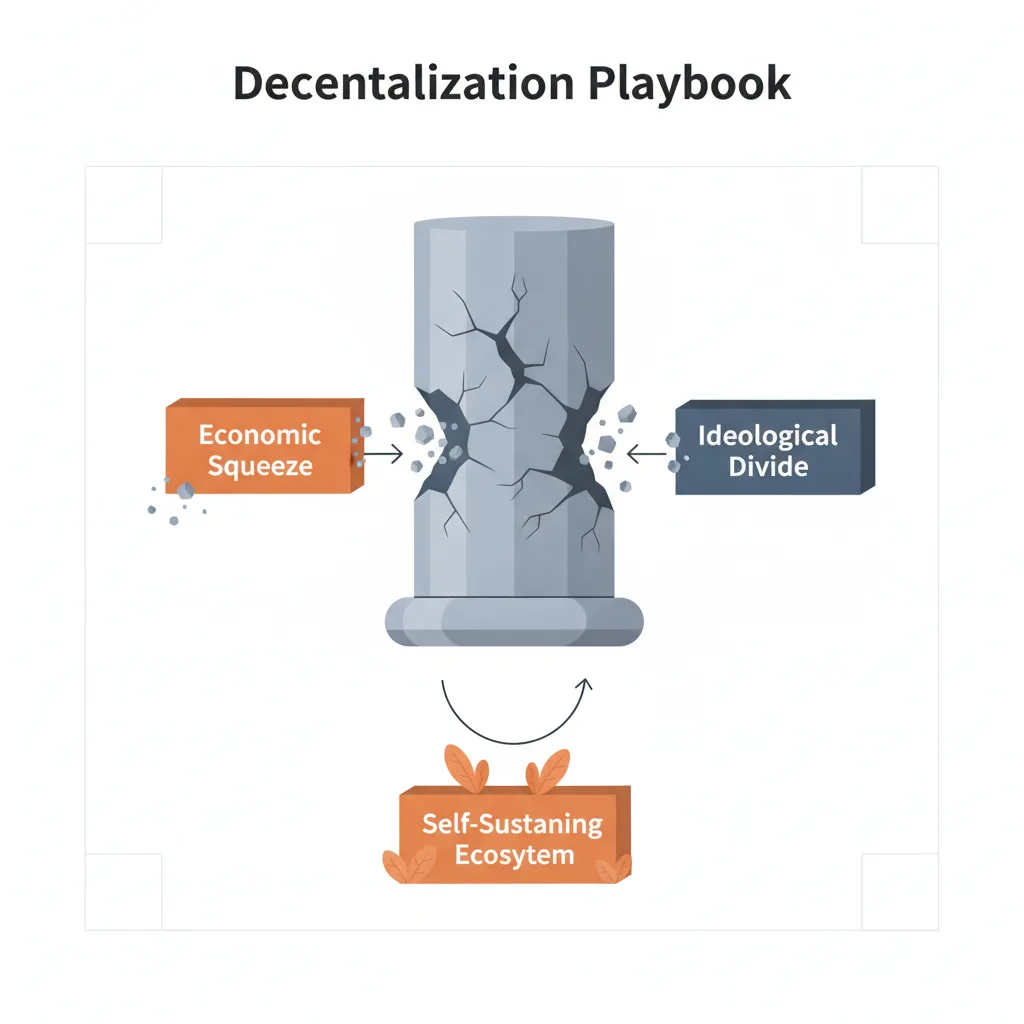
The Decentralization Playbook: Three Stages of Institutional Fracture
What we're seeing with UEFA and FIFA isn't an isolated incident.
It's a pattern, a "Decentralization Playbook" that applies to any large, centralized institution facing pressure from powerful, autonomous sub-groups.
Understanding these stages can help us predict where other global bodies, from political unions to tech consortia, might be headed.
Stage 1: The Economic Squeeze
For years, UEFA felt their immense contribution to FIFA's global success wasn't adequately rewarded.
European leagues generate the most revenue, produce the most star players, and attract the largest audiences.
Yet, they felt FIFA dictated terms, often to the detriment of their own domestic calendars and financial models.
This stage is characterized by a core, powerful sub-group feeling exploited by the central authority, believing they could achieve greater financial independence and control if unburdened by the centralized structure.
It's not just about more money; it’s about control over their money and their assets.
Stage 2: The Ideological Divide
Beyond finances, a deeper philosophical conflict emerged.
FIFA pushed for an expanded global calendar, more tournaments, and a more equitable distribution of resources to less-developed footballing nations.
While noble in principle, UEFA viewed this as an encroachment on their established, profitable structures and a dilution of their premier competitions.
They argued it prioritized quantity over quality, and global expansion over the health of their core product.
This is where the break becomes more than just financial; it's about competing visions for the future, where the central authority's goals diverge irreconcilably from those of its most powerful constituents.
Stage 3: The Self-Sustaining Ecosystem
The final stage is the realization that the aggrieved sub-group can, in fact, thrive independently.
UEFA possesses the financial might, the infrastructure, the star power, and the historical prestige to create its own parallel international competitions.
They have the Champions League, the Euros, and the established relationships with broadcasters and sponsors.
The risk of leaving FIFA is immense, but the belief is that their existing ecosystem is robust enough to not just survive, but potentially flourish without the central body.
This stage marks the point of no return, where the benefits of autonomy outweigh the costs of severance.
The Global Aftershocks: What This Means for Everyone
The immediate fallout from this split is nothing short of chaotic. Imagine a World Cup without France, Germany, England, Spain, or Italy. It’s almost unthinkable, but that’s the reality for 2027.
For players, particularly those in European clubs, their international careers are now fractured.
Do they prioritize club success in UEFA competitions or a World Cup with a potentially diminished global appeal?
Contract negotiations will become a minefield, with agents demanding clauses for participation in either ecosystem.
Talent migration could accelerate, with non-European players potentially opting for leagues outside UEFA's jurisdiction to maintain FIFA World Cup eligibility.
Sponsors and broadcasters are facing a multi-billion-dollar dilemma. Do they back the global reach of a FIFA World Cup, even if it lacks Europe's star power?
Or do they double down on UEFA's events, which guarantee the highest quality of play and established fan bases?
We're likely to see a bifurcation of media rights, forcing tough choices and potentially diluting overall advertising spend across both entities.
This isn't just a sports problem; it's a global marketing and media restructuring event.
National federations outside Europe are caught in the middle.
Do they align with FIFA, hoping to benefit from its global development initiatives, or do they seek partnerships with the powerful UEFA bloc, potentially participating in new, lucrative European-led tournaments?
The geopolitical chess match for sporting allegiance is just beginning.
This isn't merely about football; it's a test case for how decentralized power structures might emerge in other global sectors, like scientific research, environmental governance, or even the burgeoning space economy, where powerful national or corporate actors might decide to go their own way.
This isn't just a story about football; it's a stark illustration of the fragility of centralized power in an increasingly fragmented world.
For decades, we've taken global institutions like FIFA, the UN, or even the World Economic Forum, as immutable pillars.
But the UEFA split shows that when powerful, economically self-sufficient sub-groups feel their interests are no longer aligned with the central authority, they will break away.
This trend, amplified by digital communication and the ability to rapidly form new alliances, poses a profound challenge to traditional governance models across every sector.
It forces us to ask: what is the true value of "unity" when it comes at the cost of autonomy or perceived fairness?
Is this the beginning of an era where powerful entities simply opt out of established global frameworks, forging their own paths and creating parallel realities?
Have you ever seen a major institution or community you belonged to split due to irreconcilable differences, and what did it teach you about the future of collaboration? Let's talk in the comments.