England Just Beat Every Country On Earth. Here's What They Got Right
In this article
Bottom line: England is on track to become one of the first countries in the world to eliminate hepatitis C as a public health threat, hitting the World Health Organization's 2030 targets roughly five years early.
The reason isn't a medical breakthrough — the cure has existed since 2014.
It's a pricing experiment: in 2019, NHS England signed a deal with drugmakers Gilead and AbbVie that decoupled cost from case count, effectively turning a curative medicine into a flat-rate subscription.
That single contract restructuring, paired with aggressive opt-out testing in emergency rooms and prisons, is why a virus that used to kill quietly for decades is now on its way out.
I've spent most of my career writing about tech companies reinventing pricing models — usage-based billing, seat licenses, the great unbundling-then-rebundling of streaming.
So when I read that England was about to eliminate an entire infectious disease, I expected a story about a new drug. Instead I found a story about a new contract.
That's a weirder, better story. And it's one every industry obsessed with "innovation" should sit with for a minute.

Why This Is Happening Now
Hepatitis C used to be a life sentence dressed up as a chronic illness. It attacks the liver slowly, often silently, for years or decades, until it doesn't — cirrhosis, liver cancer, death.
Millions of people worldwide have it and don't know it, because it doesn't announce itself until the damage is severe.
Then, around 2014, direct-acting antivirals (DAAs) changed the math entirely. These are pills, taken for 8 to 12 weeks, that cure hepatitis C in roughly 95% of cases. Not manage.
Not suppress. Cure. That's genuinely rare in medicine — most chronic conditions get treated forever, not solved.
So why did it take another decade for any country to get close to eliminating the disease?
Because curing people one prescription at a time is expensive, and health systems were pricing DAAs the same way they price everything else: per pill, per patient, per course.
Every additional person you find and treat shows up as a new line item on a budget. When your reimbursement system punishes you for finding more sick people, you don't go looking very hard.
England noticed this incentive was broken. And instead of just campaigning harder for testing, they went after the contract.
Everyone's Celebrating the Wrong Thing
Most of the coverage of England's hepatitis C progress frames this as a public health success story — better outreach, better testing, more compassionate care for drug users and prisoners. All true.
All good. But that framing misses the actual mechanism, and I think that's a mistake worth correcting loudly.
The real story is a business model, not a medical one.
In 2019, NHS England struck deals with Gilead Sciences and AbbVie that flipped the standard pharmaceutical payment structure on its head.
Instead of paying per treatment course, NHS England paid a fixed sum for access to as many treatment courses as the health system could actually deliver during the contract period.
Whether they treated 10,000 people or 100,000, the price to NHS England didn't scale with volume the same way.
If you've ever worked in software, you already know this shape. It's a flat-rate subscription instead of metered billing.
It's the difference between paying per API call and paying for unlimited usage on a fixed plan.
And just like in software, the effect on behavior was immediate and predictable: once the marginal cost of treating one more patient dropped near zero, the system stopped rationing and started hunting.
NHS trusts rolled out opt-out testing for blood-borne viruses in emergency departments — meaning if you show up in an ER in a high-prevalence area, you get tested for hepatitis C (and HIV and hepatitis B) unless you specifically decline.
Prisons expanded routine testing. Drug and needle-exchange services became testing and referral points, not just harm-reduction sites.
None of that required new science. It required removing the financial reason not to look.
That's the part the "NHS heroics" narrative undersells. Compassion didn't do this alone.
A restructured incentive did the heavy lifting, and compassion had room to operate because the spreadsheet stopped fighting it.
The Netflix Model for Medicine
I keep coming back to a three-part framework for what actually happened here, because I think it's portable to problems way outside healthcare.
Call it the Netflix Model for Medicine — three moves, in order, each one unlocking the next.
1. Decouple Price From Volume
This is the linchpin. As long as finding a new case costs the system more money, the system has a quiet, structural disincentive to look too hard.
England's flat-fee deal with Gilead and AbbVie removed that disincentive by design. Once treatment access stopped scaling with diagnoses, diagnosing stopped being a budget risk.
2. Go Find Every Case, Aggressively
With the cost ceiling fixed, England could afford to be aggressive about case-finding without blowing up a budget line every time they succeeded.
Opt-out ED testing, prison screening, outreach through homelessness and addiction services — these all target populations where hepatitis C clusters and where people are least likely to seek out testing on their own.
This is the unglamorous, unsexy operational work, and it only makes financial sense once step one is in place.
3. Strip Out Every Point of Friction
A cure that takes 8-12 weeks of oral pills is dramatically easier to deliver than the old interferon-based regimens, which could run a year and came with brutal side effects.
England leaned into that by decentralizing prescribing — getting DAAs out of specialist-only clinics and into primary care and community settings, closer to where at-risk populations already are.
Every extra referral, every extra appointment, is a chance for someone to fall out of the pipeline. England kept shrinking the pipeline.
Put those three together and you get a health system that behaves less like a rationed public service and more like a company that's decided growth is now free, so go get growth.
What This Actually Means Outside Healthcare
If you work anywhere that involves paying for a service on a per-unit basis while also claiming you want more usage of that service, this should bother you a little.
Cloud vendors that charge per API call while claiming to want developers to "build more." Insurance systems that reimburse per procedure while claiming to want preventive care.
Enterprise software priced per seat while claiming to want full adoption.
Every one of these setups has the same quiet contradiction England just resolved for hepatitis C: the stated goal and the pricing structure are pulling in opposite directions.
For people working in health policy specifically, the actionable takeaway is concrete: value-based and subscription-style procurement isn't a gimmick, it's a lever, and it's replicable for other curable-but-underdiagnosed conditions — hepatitis B, certain cancers with strong early-detection tools, even some infectious disease backlogs post-COVID.
Scotland and a handful of other countries are already courting similar deals.
For anyone in tech or business more broadly, the lesson is about looking at your own pricing model and asking an uncomfortable question: is the way we charge for this actually working against the outcome we say we want? England didn't get a new drug.
They got a new invoice, and it changed everything downstream of it.
The Bigger Picture
There's something almost embarrassing about how long it took to fix this. The cure existed. The testing technology existed.
The people who needed treatment existed, often in plain sight — in prisons, in emergency rooms, in addiction services.
What didn't exist was a contract that let the system act on what it already knew how to do.
That's a very human failure mode, and it shows up everywhere, not just in healthcare.
We build the capability, then we build a payment structure on top of it that quietly discourages us from using the capability fully.
Then we spend years wondering why progress feels so slow, when the honest answer is: we priced ourselves out of trying.
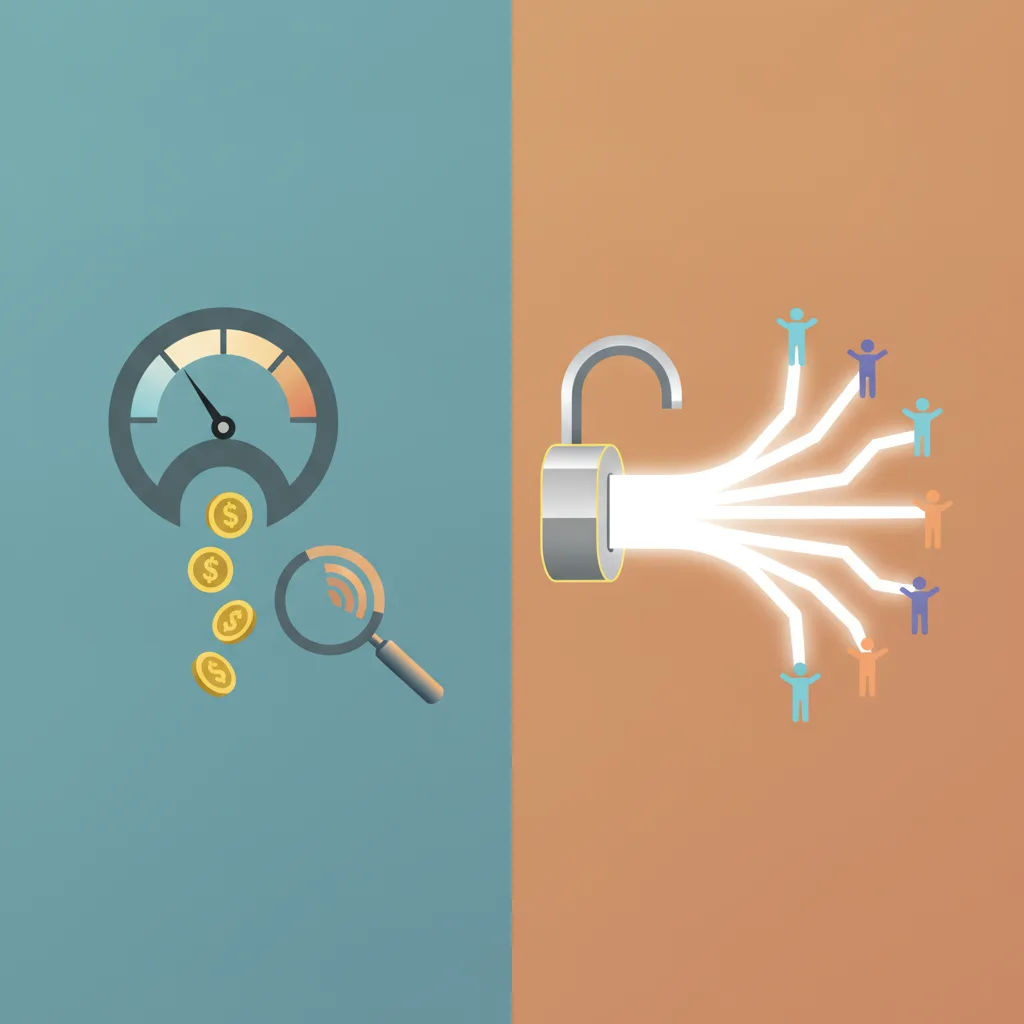
England didn't out-innovate anyone medically. They out-negotiated a bad incentive.
That's a less flattering story than "scientific breakthrough," but it's a far more useful one, because it means other countries — and other industries — don't need a miracle to replicate it.
They need to look hard at their own invoices and ask who's being quietly punished for success.
Where else do you think a pricing model, not a technology, is the real thing standing between "we could" and "we did"? I'd genuinely like to know what you'd flag first.