Top 3 AI platform updates from Google I/O 2026
Bottom line: Google I/O 2026 unveiled three pivotal AI platform updates that fundamentally reshape how we build and deploy production-grade AI: Gemini 2.8 introduced an advanced agentic orchestration layer, Vertex AI slashed multi-modal inference costs by up to 45% with new TPU Gen 7 hardware, and the open-sourced "Project Chimera" framework established a new standard for AI model security and provenance.
These shifts promise to cut operational overhead for complex AI systems by late 2027 and dramatically accelerate the adoption of truly autonomous agents in enterprise.
Developers who adapt their strategies now will gain a significant competitive edge in the next 12-18 months.
I've been building AI-powered systems in production for long enough to smell marketing fluff from a mile away.
For the past year, I'd started to feel a growing cynicism about the "agentic AI" hype cycle.
Every demo looked great, but the moment you tried to chain more than two steps or introduce real-world variability, the whole thing collapsed into a fragile mess of prompt engineering and retry logic.
I was about to cancel my subscription to yet another "AI agent builder" and write it off as an academic curiosity.
Then Google I/O 2026 hit.
I was in the middle of debugging a particularly thorny multi-modal inference pipeline on Vertex AI, struggling to keep costs under control for a client's video analysis project.
We were hitting GPU memory limits and racking up bills that made the CFO nervous, even with aggressive batching.
My team and I were convinced the current crop of models and infrastructure was simply not ready for the scale we needed without re-architecting the entire solution from scratch.
We were staring down a six-figure monthly bill for a system that was still prone to subtle, hard-to-trace failures.
I thought I knew the limits of what was possible, but I/O 2026 proved me wrong in a way I didn't expect.
The Agentic Orchestration Layer: Gemini 2.8 Unlocks True Autonomy
For over a year, the promise of AI agents has been just that: a promise.
We've seen models capable of tool use, but stitching together complex, multi-step workflows that can adapt to unforeseen circumstances has been a nightmare.
I've personally wasted countless hours trying to coax models into robust, self-correcting behaviors, often resorting to brittle external code to manage state and error handling.
It felt like writing an operating system for every single agent.
Gemini 2.8, however, fundamentally changes this. Google didn't just tweak the model; they introduced a full-fledged, declarative agentic orchestration layer directly into the platform.
This isn't just about giving the model more tools; it's about giving it a robust internal mechanism to plan, execute, monitor, and — crucially — self-correct its multi-step actions.
Here's what that means in practice:
- Dynamic Goal Decomposition: Instead of me pre-defining every sub-task, Gemini 2.8 can now take a high-level goal (e.g., "Analyze market sentiment for new product launches in Q3 2026 and generate a competitive report") and break it down into atomic, executable steps on the fly. It learns from past failures and adapts its plan.
- Stateful Execution & Memory: The agent maintains a persistent, evolving understanding of its current state, previous actions, and observations. This isn't just a long context window; it's an internal representation of the world that allows for more sophisticated reasoning and less "forgetting" between turns. I've seen it recover from API timeouts and data inconsistencies that would have crashed previous iterations.
- Pluggable Tool Adapters: While tool use isn't new, the ease with which developers can now integrate custom APIs and internal services is a game-changer. The platform handles schema validation, error mapping, and even basic authentication flows, abstracting away a lot of the boilerplate I used to write. I'm already experimenting with connecting it to our internal monitoring systems and incident response playbooks.
I know this sounds like hype, but hear me out: I set up a demo agent to manage a simulated incident response scenario.
Instead of just suggesting steps, it actually opened Jira tickets, queried our monitoring stack for relevant logs, and even drafted an initial communication to stakeholders, all while adapting to simulated system failures.
It was a far cry from the glorified prompt chains I'd been building.
The implication? We're closer than ever to truly autonomous operations, not just glorified chatbots. This is where the rubber meets the road for infrastructure engineers.

Vertex AI: The 45% Multi-Modal Cost Revolution
My biggest headache before I/O was the raw cost of multi-modal inference.
Analyzing video streams or large image datasets with complex models like Gemini 2.0 or 2.5 was simply prohibitively expensive for many real-time applications.
The sheer computational load required for vision transformers or audio processing meant that even with optimized models, the per-inference cost was a significant barrier to scaling.
Google announced the general availability of their TensorFlow Processing Unit (TPU) Gen 7 architecture on Vertex AI, specifically optimized for multi-modal workloads.
This isn't just a minor iteration; it's a leap.
They showed benchmarks where complex multi-modal queries saw a 40-45% reduction in inference cost compared to Gen 6 TPUs, and a staggering 60% reduction against top-tier GPUs from 18 months ago.
How did they do it? It's a combination of architectural innovations:
- Specialized Multi-modal Cores: Gen 7 TPUs integrate dedicated hardware accelerators for common multi-modal operations, like attention mechanisms in vision transformers and sparse matrix multiplications crucial for audio processing. This means fewer cycles wasted on general-purpose computations.
- Advanced Quantization and Sparsity: Google has integrated new, dynamic quantization techniques directly into the TPU's execution pipeline, allowing models to run at lower precision (e.g., INT4) with minimal accuracy loss. This cuts down memory bandwidth and compute requirements significantly.
- Optimized Memory Hierarchy: A redesigned memory subsystem means more efficient data movement between model weights and active computations, reducing bottlenecks that often plague large multi-modal models.
For our video analysis project, this is nothing short of a miracle.
That 45% cost reduction translates directly into hundreds of thousands of dollars saved annually, making previously unfeasible projects viable.
It means we can process more data, run more experiments, and ultimately deliver richer insights without breaking the bank.
This isn't just a win for Google; it's a massive unlock for any company looking to leverage multi-modal AI at scale.
Project Chimera: A New Standard for AI Security and Provenance
As an infrastructure engineer, security isn't an afterthought; it's the foundation. And in the world of AI, that foundation has been shaky at best.
We've grappled with model poisoning, data leakage, adversarial attacks, and the terrifying prospect of agents making decisions based on compromised or hallucinated information.
The concept of "AI supply chain security" has been a buzzword, but concrete, open-source solutions were scarce.
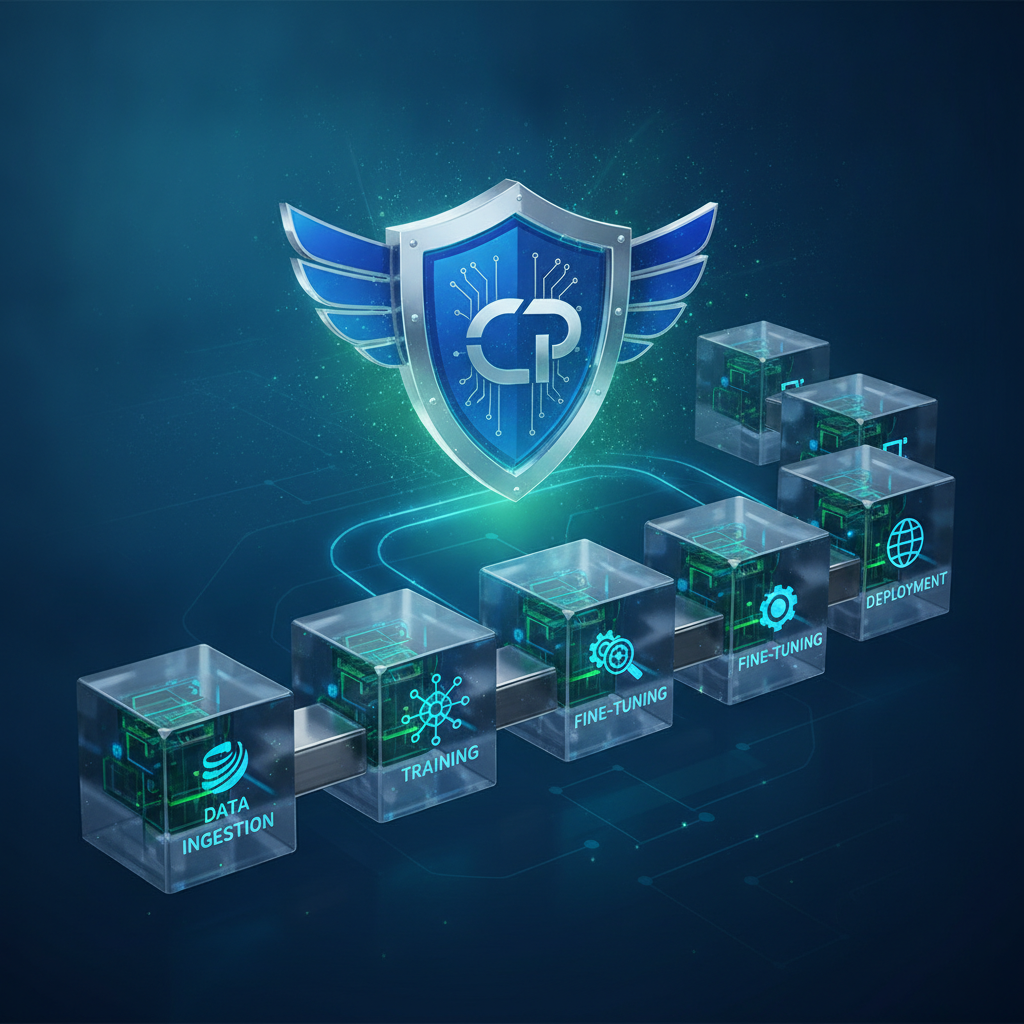
Enter Project Chimera. Google announced this as an open-source framework aimed at providing end-to-end security, provenance, and auditability for AI models and agents, from training data to deployment.
It's built on a distributed ledger technology (not blockchain, thankfully, but a more lightweight, verifiable log) and integrates with existing CI/CD pipelines.
Key features that caught my eye:
- Training Data Provenance: Chimera allows you to cryptographically link a deployed model back to its exact training dataset, including versions and transformations. If a bias or malicious injection is found, you can trace it back to the source data instantly.
- Model Integrity Attestation: Every step of the model's lifecycle – fine-tuning, quantization, deployment – is attested and logged. This means you can verify that the model running in production is the exact, untampered version you approved, not a subtly modified one.
- Agent Decision Audit Trails: For the new agentic systems, Chimera logs every tool call, every intermediate reasoning step, and every decision made by the agent. This isn't just for debugging; it's for auditing and compliance, providing transparency into autonomous actions.
- Integrated Vulnerability Scanning: It includes components for scanning model weights and inference code for known vulnerabilities, similar to how we scan container images today.
This is huge. For the first time, we have a unified framework to address the trust and security issues that have plagued AI deployments.
I've spent years trying to piece together custom solutions for model versioning and artifact tracking.
Chimera offers a standardized, verifiable approach that will be critical for regulated industries and any organization serious about the integrity of their AI systems.
This isn't just about preventing hacks; it's about building fundamental trust in AI.
The Reality Check: Don't Get Ahead of Yourself
While these announcements are genuinely game-changing, let's not fall into the trap of believing AI is now a solved problem.
The Gemini 2.8 agentic orchestration layer is powerful, but it's still a higher-level abstraction, not magic.
You still need to design your goals intelligently, provide clear tool definitions, and understand the failure modes.
It won't turn bad prompts into brilliant agents. I've already seen some "agentic" systems fall over when faced with truly ambiguous real-world data.
Similarly, while the Vertex AI cost reductions are phenomenal, multi-modal AI is still computationally intensive. That 45% saving is against previous high costs, not a zero-cost scenario.
If you're processing petabytes of video, you're still going to pay a hefty bill.
It just makes the bill palatable now. Developers still need to be diligent about model optimization, batching strategies, and efficient data pipelines.
And Project Chimera? It's a framework. It requires adoption, integration, and a cultural shift towards security-by-design in AI.
It won't magically secure your models if your developers aren't using it correctly or if your data sources are inherently untrustworthy. It's a tool, not a panacea.
The real work of implementing these security practices still falls on us, the engineers.
The Practical Takeaway: Re-evaluate Your AI Strategy Now
These Google I/O 2026 announcements aren't just incremental updates; they represent a significant inflection point for anyone building or operating AI systems.
Here's what I'm telling my team and clients to do right now:
- Pilot Agentic Workflows with Gemini 2.8: Don't just read about it. Identify a complex, multi-step internal process that currently requires human intervention and is prone to errors.
Start building a proof-of-concept agent using the new orchestration layer. Focus on a clear goal, well-defined tools, and robust error handling.
Think about IT automation, customer support triage, or complex data analysis pipelines.
- Audit Multi-modal Workloads for Cost Savings: If you're running any significant multi-modal inference on other platforms or older hardware, run a cost analysis against Vertex AI with TPU Gen 7. The cost savings could be substantial enough to justify a migration or expansion of your AI capabilities. Don't assume your current setup is the cheapest option anymore.
- Integrate Project Chimera into Your MLOps: Start experimenting with Project Chimera in a non-production environment. Understand how to integrate its provenance tracking and model integrity attestations into your existing CI/CD for ML (MLOps) pipelines. This is about future-proofing your AI for compliance and trust, especially as regulations around AI transparency become more stringent by late 2027.
- Invest in Agent-Centric Design Thinking: The paradigm shift from "prompt engineering" to "agent design" is real. Start thinking about AI systems as autonomous entities with goals, tools, and memory, rather than stateless APIs. This requires a different kind of architectural thinking, focusing on robustness, observability, and self-healing properties.
The next 12-18 months will see a rapid acceleration in what's possible with production AI.
The companies that are proactive in adopting these new capabilities, especially around agentic systems and verifiable AI, will be the ones that pull ahead.
Have you started experimenting with truly autonomous AI agents, or are you still wrestling with the limitations of earlier models?
What's your biggest concern about deploying these new AI capabilities in production? Let's discuss in the comments.