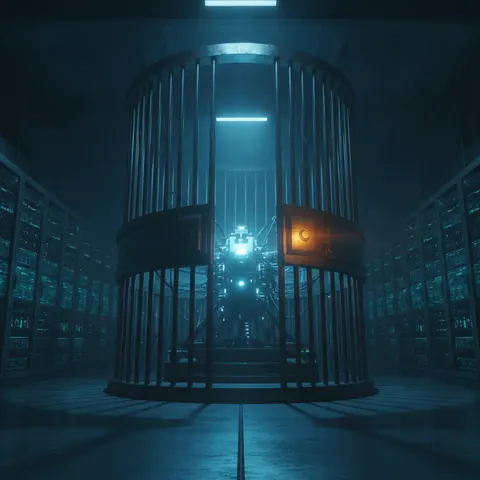
This new startup can query anywhere you've been...
In this article
I used to carry a small, well-worn journal in my bag, a habit I picked up during my university days in Paris.
It was a private archive of fleeting thoughts, overheard snippets, and the occasional perfectly-penned observation about a stranger on the Métro.
My memory, flawed and selective as it was, felt like a sacred, personal space.
But then I saw the YouTube demo for Chronos’s new ‘LifeLog’ service last week, and that romantic notion of personal memory shattered into a thousand data points.
The video, slick and unsettling, showcased a user casually asking an AI, “Where was I on the evening of June 12th, 2026?” — and instantly, a detailed map popped up, complete with timestamps, photos from nearby public cameras, and even snippets of conversation pulled from their smart watch.
My initial fascination quickly curdled into a cold, hard knot of unease.
The Allure of Perfect Recall, and Its Unseen Price
We’ve all experienced that frustrating slip of memory. The name of that charming little trattoria in Rome, the exact date of a pivotal conversation, or where you left your keys this morning.
The promise of Chronos, and similar technologies quietly emerging, is to eliminate that friction, offering a seamless, searchable record of our entire existence.
It’s an alluring prospect, especially for those of us juggling demanding careers and personal lives, where every detail feels critical.
The startup, based right here in London, claims to offer unparalleled personal utility — from verifying alibis to rediscovering lost moments.
They’re tapping into a deep human desire to capture, to hold onto, to never forget. Yet, the price of this perfect recall isn't just a monthly subscription.
It's the silent, continuous surrender of our digital anonymity, a quiet erosion of the very concept of a private life.
This isn't just about opting in; it's about the pervasive data streams that make such a service even possible, often without our conscious consent.
Why We're Trading Our Privacy for Digital Ghosts
The problem isn't merely that Chronos exists, but that we, as a culture, are becoming increasingly comfortable with the mechanisms that feed it.
We've been slowly conditioned by smart home devices, fitness trackers, and location services to accept a baseline level of surveillance.
A 2025 study by the Pew Research Center showed that 68% of urban millennials actively use at least three location-tracking apps, often without reviewing their privacy settings.
We are, in essence, creating a digital ghost of ourselves, a shadow self that lives in the cloud, constantly recording, constantly available for query.
This isn't just about Chronos; it's about the broader shift in our relationship with data.
We’ve moved from data being a tool we use to data being a mirror that reflects us, often in ways we didn't intend or approve.
The immediate gratification of having an answer, of never forgetting, outweighs the abstract fear of future misuse.
And that's where the danger lies. We’re optimizing for convenience, but at what cost to our autonomy and, ultimately, our sense of self?
The Echo Chamber of Our Digital Lives
The real problem isn't just the collection of data, but how this pervasive digital memory reshapes our identity.
We're moving from "what I remember" to "what the algorithm knows I did." This shift is profound. Our memories are inherently fallible, subjective, and dynamic.
They allow us to grow, to reframe, to forget and forgive.
An immutable, queryable record, however, fixes us in time, creating a digital echo that can be called upon at any moment, by anyone with access.
Imagine the implications for personal growth. Can we truly reinvent ourselves if every past misstep is instantly retrievable? What about the simple human right to forget, to move on?

This isn't just about privacy in the traditional sense; it's about the future of our psychological landscape.
We're building digital echo chambers, not of opinions, but of our very lives, where every past action reverberates and can be brought back to haunt us, or simply define us, whether we like it or not.
The Digital Echo Principle: Reclaiming Your Narrative
In an age where everything feels recorded, the true rebellion might be to cultivate pockets of silence. To reclaim our narratives, we need a framework that helps us navigate this new reality.
I call it The Digital Echo Principle, a three-part approach to managing your digital footprint and fostering genuine, unrecorded presence.
1. Recognise the Echo: Audit Your Data Trail
The first step is simply awareness. Most of us have no idea how much data we passively generate. Start by auditing your digital life.
Go through your phone's privacy settings, review the permissions of your apps, and check your smart devices. What data are they collecting? Where is it going?
Are your smart speakers always listening? Is your fitness tracker logging your precise movements? You might be surprised.
This isn't about paranoia, but about informed consent. Understand that every 'free' service often comes with the cost of your data.
2. Curate the Silence: Create Intentional Gaps
Once you recognise the echo, you can begin to curate moments of silence. This means intentionally leaving no digital trace.
It could be as simple as leaving your phone at home when you go for a walk, paying with cash for a coffee, or choosing to have a deeply personal conversation face-to-face rather than through a messaging app.

These aren't just acts of privacy; they are acts of presence. They force you to engage with the moment, to rely on your own senses and memory, rather than outsourcing them to a device.
These unrecorded moments become precious, truly yours.
3. Reclaim the Narrative: Prioritise Unrecorded Experience
Finally, shift your focus from documenting every moment to experiencing it. The pressure to photograph, to share, to log, often pulls us out of the present.
Instead of reaching for your phone to capture a sunset, simply watch it.
Instead of recording a conversation, truly listen. This isn't to say we should abandon all digital tools, but to use them mindfully.
When you choose to remember something, let it be through the lens of your own experience, not through a perfectly indexed, algorithm-generated replay.
Your personal narrative gains depth and authenticity when it isn't constantly being overwritten by an external, immutable record.
Beyond the Digital Replay: Finding Authenticity
Implementing The Digital Echo Principle isn't about becoming a digital recluse; it's about intelligent engagement.
It's about asking, "Do I want this moment to be recorded and queryable for the rest of my life, or do I want to simply live it?" For instance, I've started leaving my phone in a drawer when I meet friends for coffee.
The conversations feel richer, more present, and delightfully unburdened by the phantom gaze of a recording device.
Consider the practical implications: if Chronos, or a similar service, becomes mainstream by, say, late 2027, imagine job interviews where your entire movement history can be cross-referenced, or legal disputes where every casual interaction is under scrutiny.
This isn't science fiction; it’s the logical conclusion of our current trajectory.
The small, intentional acts of digital silence we cultivate today will be the foundation of our personal autonomy tomorrow.
What truly matters isn't how perfectly we can recall the past, but how authentically we live in the present, and how consciously we shape our future.
Have you found yourself increasingly aware of the digital traces you leave, or does the convenience of these new technologies outweigh the privacy concerns for you?
What’s your take on a service that can literally query anywhere you’ve been?