The Day You Hear "It's Cancer": 7 Things Nobody Tells You First
In this article
Bottom line: A cancer diagnosis is a medical crisis, but in the first 48 hours it is also an information-management crisis.
Most people can't absorb what they're told in the exam room, so the best early moves are logistical, not medical.
Bring a second person, get copies of every report, take time before deciding, ask for a second opinion, distrust the statistics you'll Google, delegate updates, and recruit help with the paperwork.
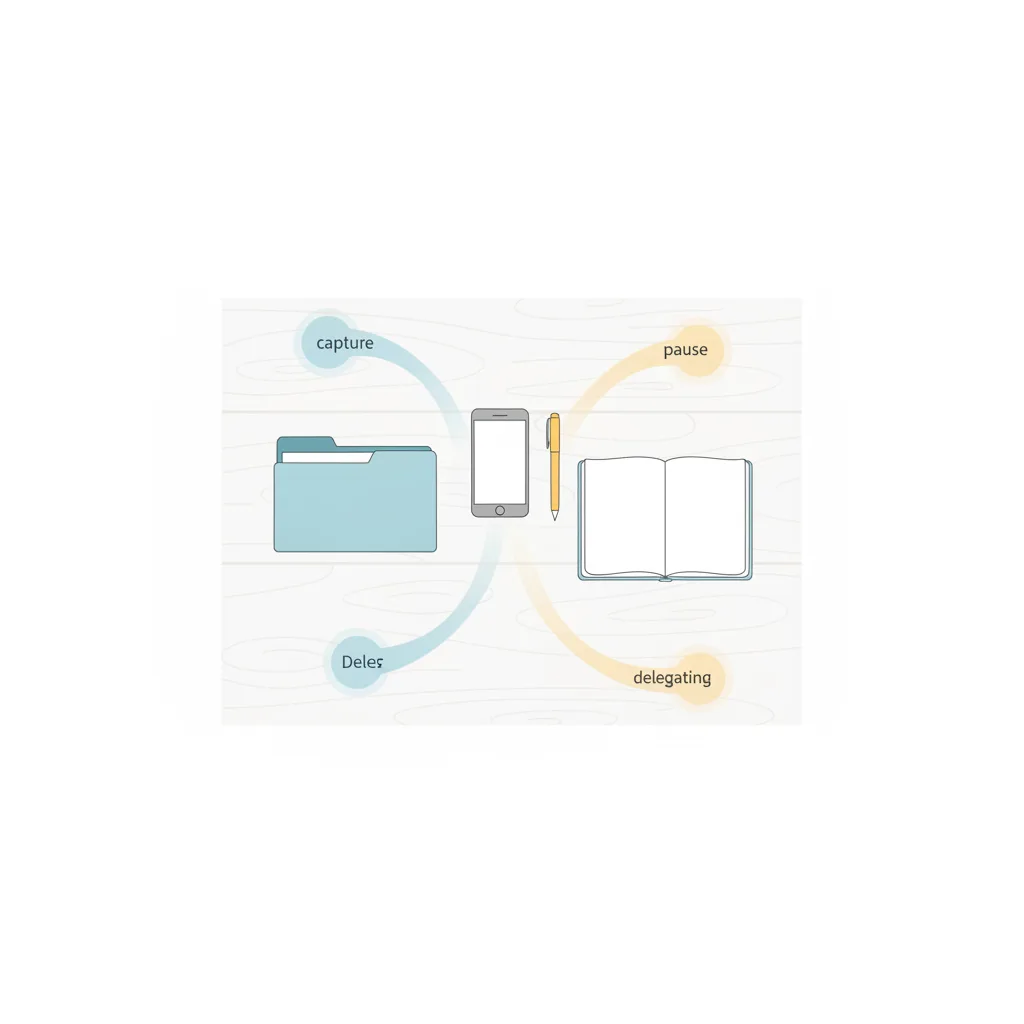
Seven practical habits, grouped under three verbs: capture, pause, delegate.
I don't have cancer.
I want to say that up front, because a post called "The Day You Hear 'It's Cancer'" climbed to the top of Hacker News this week, and I read all of it with the uneasy feeling of someone reading a manual for a machine they're going to operate eventually.
Statistically, a lot of us will.
What got me wasn't the medicine. It was how operational the advice was. Nobody was talking about courage or battles. They were talking about folders, phone calls, and who to put in the room.
That's the angle I think we're all missing. We treat the diagnosis as an emotional event, and it is.
But it's also the moment you're handed a complex project, with no briefing, while your brain is at its worst.
The Word That Deletes the Rest of the Sentence
Here's the thing people who've been through it keep saying: after the word "cancer," you stop hearing. The doctor keeps talking. Stage, grade, options, next steps. You nod. You retain almost none of it.
This isn't weakness. It's how a stressed brain works. Your attention narrows to one threat, and everything else becomes static.
So the usual advice, "be your own advocate," is almost cruel. You are the least equipped person in the room to advocate for yourself at that moment.
The honest version is: set things up in advance so that the version of you who can't think still gets what they need.
That reframe changes everything. You're not trying to be strong. You're trying to build a system that works when you aren't.
The Contrarian Part: Speed Is Not Your Friend
Everyone's instinct, and the culture's, is urgency. Act now. Start treatment.
Every day counts. It feels like a moral obligation to move fast.
Sometimes speed genuinely matters, and your care team will tell you when. But the instinct to decide that day is mostly panic wearing the costume of responsibility.
For many diagnoses there's a window of days or weeks in which to gather information, and that window is where the best decisions get made.

The people who seem to navigate this best aren't the fastest.
They're the ones who bought themselves a few days to think, and asked, directly, "How much time do I realistically have to decide?" That single question reframes the whole conversation.
I'm not a doctor, and nothing here replaces your care team. But the pattern across these accounts is consistent enough to name.
The Framework: Capture, Pause, Delegate
Seven things, three verbs. This is the mental model I'd want in my pocket.
Capture: Don't Rely on Your Memory
1. Bring a second person, and give them a job. Not just moral support. Their job is to write things down, ask "can you repeat that?" and remember what you won't.
Ask the clinic if you can record the conversation on your phone, too. Many will say yes, but ask first.
2. Your records are yours, so collect them. Pathology reports, imaging results, lab values: get copies of everything and put them in one folder, digital or physical.
Patient portals often show results before anyone calls you, which can be jarring, but it also means you can start building your file immediately.
This matters later when you want a second opinion, because a new doctor can only review what you can hand them.
The person who keeps the file becomes the project manager of their own care, and that's a good thing to be.
Pause: Slow Down the Part That Feels Like It Can't Slow Down
3. You don't have to decide in the room. Say it out loud: "I'd like to take a few days to think about this. What's the timeline?" You are allowed to leave without a plan.
Almost every clinician has heard this before and won't be offended.
4. A second opinion isn't betrayal. It's standard practice.
Different centers see different volumes of specific cancers, and a doctor who treats your exact type every week may see something a generalist wouldn't.
Good oncologists generally expect it, and many will help you arrange it.
5. Be careful with Google, especially the numbers. Survival statistics are averages across large groups of people, often based on treatment from years before. They describe a population, not you.
Your specific type, stage, age, and genetics can move the picture dramatically, which is why "the numbers online" are the least useful thing to stare at at 3 a.m.
If you must read, read from the major cancer organizations and hospital systems, and write down questions for your doctor instead of conclusions for yourself.
Delegate: You Have a New Job and You Didn't Apply
6. Assign someone to be the communications person. The "update tax" is real. Every friend, cousin, and coworker will want to know how you're doing, and answering each one is its own exhausting task.
Pick one trusted person, or set up a single group thread, and let them handle the broadcast.
And brace yourself: people will say clumsy things. They'll tell you about their aunt, offer miracle diets, or say "everything happens for a reason." They mean well. You're allowed to not absorb it.
7. The paperwork is a second job, so get help. Insurance approvals, referrals, billing codes, scheduling across three departments. It's relentless, and it arrives exactly when you have the least energy.
Ask whether your hospital has a patient navigator, social worker, or financial counselor. Many do, and many patients never find out.
These people exist specifically to absorb this load, and using them isn't giving up control. It's allocating it.
What This Means If You're Not the Patient
Here's the part that applies to nearly everyone reading this. You will, at some point, be the second person in the room.
That's the role I keep thinking about. It's the one most of us are most likely to occupy: a spouse, a friend, a sibling, a colleague who gets the call.
And the research I'd bet on, the thing every one of these accounts implies, is that a competent, calm second person changes outcomes for the person in the chair.
So, practically, if someone you love gets the call:
- Offer a specific task, not a vague offer. "Let me know if you need anything" puts the work back on them. "I'll come to the appointment Thursday and take notes" does not.
- Be the keeper of the folder. Organize, don't hover.
- Protect their time. Field the texts. Run the thread.
- Don't fix, don't forecast. Skip the statistics and the stories about other people.
If you work in tech, managing a team or a product, notice how familiar this is. It's incident response.
Someone has to hold the runbook, someone has to run comms, someone has to make sure the person under pressure isn't also doing the paperwork.
We already know how to do this. We just don't think to do it for a human being.
The Bigger Picture
I keep returning to why this particular post resonated on a forum known for arguing about programming languages and database choices. I think it's because the community recognized the structure.
Here was a high-stakes, poorly documented system, written by someone who'd been through it, in the form of a checklist.
We love postmortems. We love the honest write-up written after the outage.
And a diagnosis, for the person living it, is the ultimate postmortem-in-advance: the things they wish someone had told them before the incident.
But there's a quieter truth under the checklist. Most of what makes a diagnosis survivable isn't heroism. It's other people showing up with a plan. The capture, the pause, the delegation.
None of it is glamorous, and all of it is love expressed as logistics.
If you take one thing from this, make it the unglamorous one: you can prepare for the second-person role before anyone needs you in it. Know where your family's insurance cards are.
Know who the calm person in your circle is. Know that when the word comes, the most useful thing you can say is, "I'm coming with you, and I'll bring a notebook."
What's the one thing you wish someone had told you before you were handed a crisis you didn't see coming, and who would you want sitting next to you in that room?