This is not what you think: history's most infamous "hack" wasn't code
In this article
Bottom line: The 2016 breach of John Podesta's Gmail — the one that reshaped a U.S. presidential election — wasn't a zero-day exploit or a piece of malware.
It was a phishing email and a single mistyped word: an IT support staffer meant to write "illegitimate" and wrote "legitimate" instead.
Podesta's team clicked the link inside the phishing email rather than going directly to Google, handed over his password, and Russian military intelligence (GRU, tracked as "Fancy Bear"/APT28) exfiltrated roughly 50,000 emails.
The 2018 Mueller indictment shows the same campaign targeted more than 300 people tied to the Clinton campaign and DNC. No custom exploit code was needed.
The vulnerability was a person, in a hurry, reading a link that looked right.
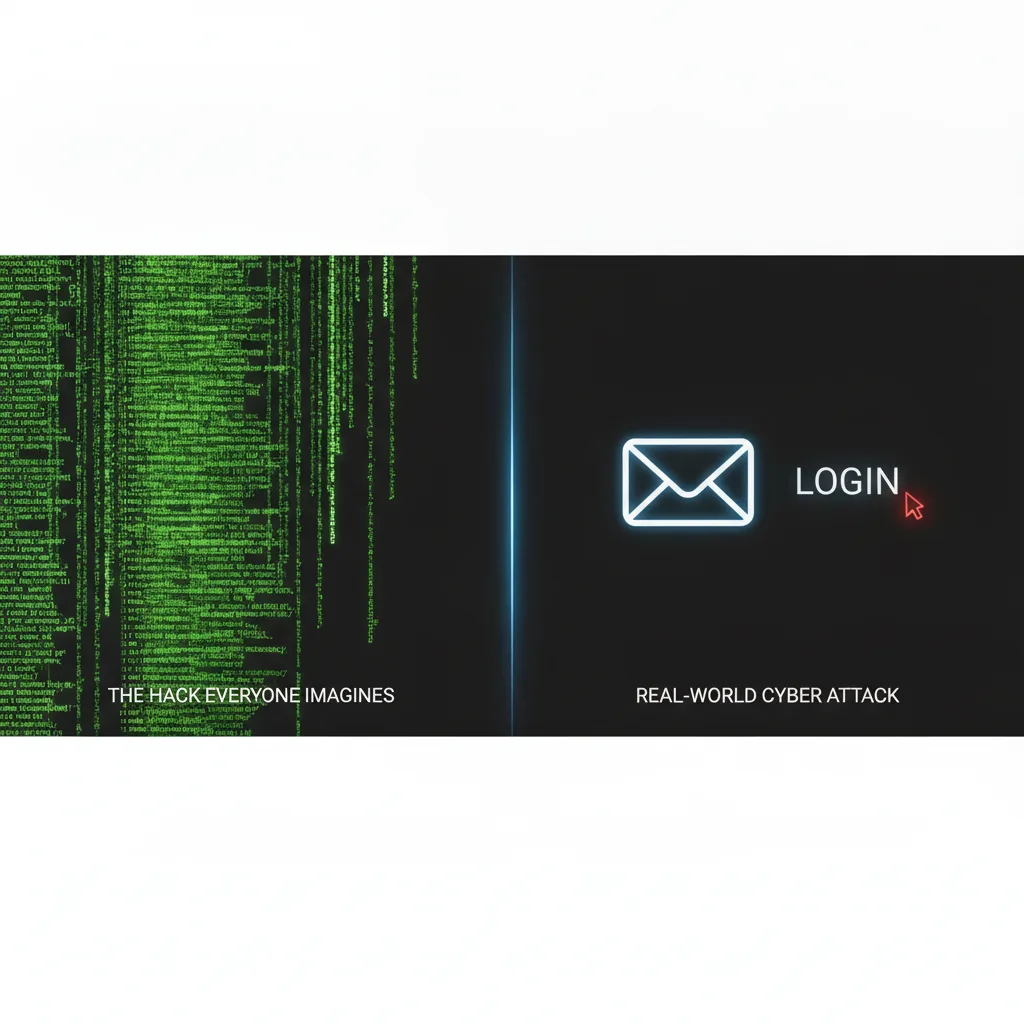
You've been trained to picture hacking as a montage: green text scrolling down a black terminal, a hoodie, a countdown timer, someone typing so fast the keyboard smokes.
I believed that image for most of my career too.
Then I went back and actually read the primary documents behind the most consequential hack in modern American history, and it broke that image completely.
There was no exploit. There was no malware payload doing anything clever. There was an email, a link, and one word typed wrong by someone trying to help.
The Story Everyone Thinks They Know
Ask a room of developers how the DNC and Podesta emails got leaked in 2016 and you'll get some version of "Russian hackers broke into their servers." True in the loosest possible sense, and useless as an explanation of what actually happened.
Here's the setup, and it's almost embarrassingly simple.
On March 19, 2016, John Podesta — chairman of Hillary Clinton's presidential campaign — received an email that looked exactly like a Google security alert.
Someone in Ukraine, it said, had his password and had tried to log in.
He should change it immediately. There was a button for that.
It wasn't from Google. It was from a GRU unit that cybersecurity researchers now track as APT28, or Fancy Bear. The email was one of a phishing wave that, per the U.S.
Justice Department's July 2018 indictment of 12 GRU officers, targeted more than 300 people connected to the Clinton campaign, the DNC, and the DCCC. This wasn't a single lucky shot.
It was a numbers game, and Podesta's inbox is just the one that made headlines.
Round 1: Where the "Hack" Actually Lived
Here's the part that should bother you if you write software for a living.
When Podesta's staff forwarded the email to the campaign's IT help desk to check whether it was real, an aide there — Charles Delavan — typed back that it was "a legitimate email" and that Podesta should change his password through the normal Google process.
Multiple investigative accounts, including David Sanger's reporting in The Perfect Weapon, describe this as a typo: Delavan meant "illegitimate." He has since said in interviews that he recognized it as phishing and intended the advice about resetting the password through official channels to stand regardless of the wording.
But that nuance didn't survive contact with a busy campaign.
What happened next is the actual failure: instead of navigating to Google directly, someone clicked the button embedded in the phishing email itself.
That's the whole hack. A link. A click.
No buffer overflow, no privilege escalation, no reverse shell. The GRU didn't need to write code that broke anything, because the target broke it for them by trusting a message that looked routine.
Round 2: The Part the Movie Version Skips
The technical layer behind this — the part actually built by GRU operators — was mundane by design.
It was a credential-harvesting page dressed up to look like a Google login screen, reached through a shortened URL.
Security researchers at SecureWorks later traced the same bit.ly infrastructure across the broader phishing campaign, which is how the full scope (that 300-plus target list) got mapped after the fact.
Compare that to what a "real" hack is supposed to look like in the popular imagination — something like Stuxnet, which really did involve novel code: four zero-day Windows exploits chained together to physically damage Iranian centrifuges.
Stuxnet took a nation-state team years and enormous technical sophistication.
The Podesta breach took a shortened link, a fake login page anyone could build in an afternoon, and one moment of human trust.
Stuxnet: years of custom exploit engineering to cause physical damage. Podesta breach: one email, one click, zero custom exploits.
The second one changed a presidential election. The first one delayed a nuclear program by maybe a year or two, per outside estimates.
Sophistication and impact aren't the same axis, and conflating them is exactly the mistake that makes engineers underinvest in the boring defenses.

The Results: What Actually Broke
Once the GRU had Podesta's credentials, there was no further "hacking" required. They logged in like anyone else and downloaded roughly 50,000 emails.
Those emails sat quiet for months, then surfaced through DCLeaks and Guccifer 2.0 starting in June 2016, and WikiLeaks began publishing them on October 7, 2016 — a month before the election, in a release timed for maximum disruption.
Every technical postmortem of this incident lands on the same conclusion: the access control that failed wasn't a firewall rule or a patch level.
It was a person deciding, under time pressure, that a message matched a pattern they'd seen before. The exploit was the reader's own trust in a familiar-looking interface.
If you're an engineer, sit with that for a second. We spend enormous effort hardening systems against attackers who understand code better than we do.
Meanwhile the highest-value breach of the last decade succeeded against a target with a full-time IT support desk, because the actual vulnerability was never in scope for any code review.
What This Means for You
If you build or maintain systems that handle anything sensitive, this incident is a better argument for specific investments than any abstract "security is important" slide ever will be:
- Hardware security keys (FIDO2/U2F) over SMS or password-reset links. A phished password is useless to an attacker if the login also requires a physical key that a fake page can't replicate. This is the single control that would have stopped this exact attack cold.
- Domain-based email authentication (DMARC/DKIM/SPF) properly enforced, not just configured and ignored.
- Phishing simulations that mimic the actual tactic — a familiar security-alert template with urgency baked in — not generic "click here to win a prize" tests that no sophisticated attacker would bother sending.
- A support process where "is this legitimate" gets a link-free answer. Delavan's reply included a URL to go check. The safer answer is always: don't click anything, go to the service directly yourself.
If you're a founder or engineering lead reading this thinking "we'd never fall for that," I'd gently point out that a presidential campaign with real security resources did, and so did RSA in 2011, and so did Twitter's own employees in the 2020 verified-account takeover.
The pattern repeats because the fix is unglamorous. Nobody gets promoted for enforcing hardware keys. Everyone remembers who shipped the feature.
The Twist
Here's what actually stuck with me after reading the Mueller report's account of this in detail: the GRU's phishing campaign wasn't even the sophisticated part of their operation.
Their infrastructure, their laundering of the stolen data through DCLeaks and "Guccifer 2.0," and their timing of the WikiLeaks release — that's where the real tradecraft went.
The breach itself, the part everyone calls "the hack," was the cheapest, least interesting step in the entire operation.
We keep telling ourselves that the scary part of security is the exploit. The scary part is that the exploit is usually the easy part, and we keep building our defenses as if it isn't.
Have you ever caught yourself half-clicking a link before your brain finished asking whether it was real? I'd genuinely like to know how close the rest of you have come.