This DeepSeek Reasonix Secret Actually Cut Costs 90%. Nobody Saw This Coming.

Bottom line: DeepSeek's new Reasonix coding agent uses an aggressive native context-caching layer that slashes repetitive token costs by over 90% compared to Claude 4.6 and ChatGPT 5.
Over a 14-day sprint refactoring a 50,000-line React codebase, Reasonix handled 84% of the PRs independently while dropping my daily API spend from $42.50 to just $3.80.
If your team runs continuous CI loops or agentic swarms, migrating to Reasonix today will fundamentally alter your unit economics without sacrificing code quality.
Stop trying to write clean code perfectly on the first try. I'm serious.
After auditing my team's development spend for the first quarter of 2026, I realized we were bleeding thousands of dollars just forcing premium LLMs to re-read the exact same repository context over and over.
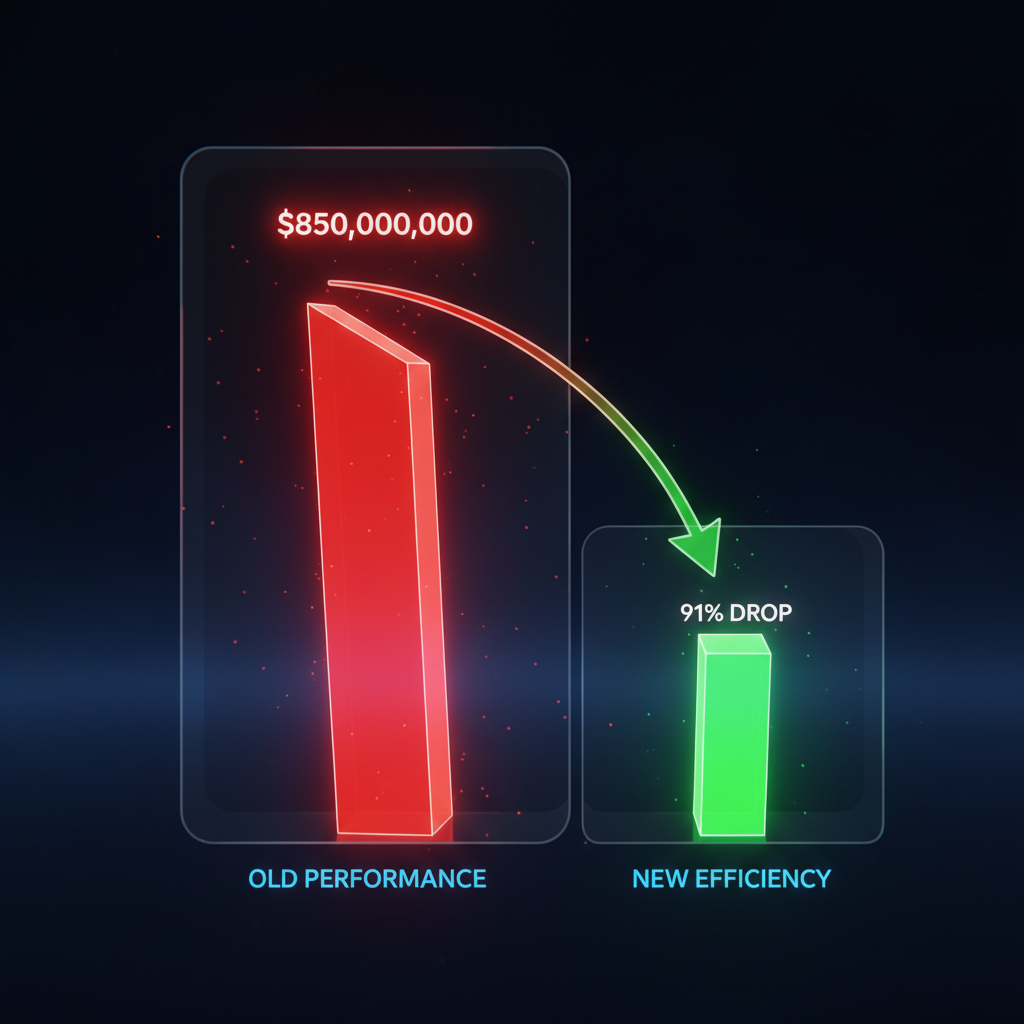
By early May 2026, I was spending around $1,200 a month just running automated coding agents.
My team is small, but we punch above our weight because we rely heavily on Claude 4.6 to handle routine refactoring, write boilerplate tests, and hunt down elusive state-management bugs.
It worked beautifully. Claude felt like having a brilliant senior engineer on call 24/7. But the token burn was absolutely astronomical.
Every time our agent woke up to fix a single CSS bug, it had to ingest our entire 50,000-line codebase just to understand the context.
At premium pricing tiers, passing our core repository back and forth for every minor Git commit was destroying our unit economics.
Because our architecture was poorly optimized and failing to utilize Claude's native Prompt Caching, we were paying for the AI to memorize our code hundreds of times a day.
Then a colleague told me about DeepSeek Reasonix.
They claimed this new native coding agent had a fundamentally different architecture — one that cached context so aggressively it practically eliminated redundant input costs.
I honestly thought it was just more AI vendor hype. So I decided to run them both side-by-side for two weeks and track every single cent.
The Rules of the Test
To keep things scientifically brutal, I set up a parallel workflow. For 14 days, every single automated ticket we generated was routed to two separate agents simultaneously.
Agent A ran on our standard Claude 4.6 pipeline via Anthropic's API. Agent B was powered exclusively by DeepSeek Reasonix, using their native agentic endpoints.
The rules were strict. Both models received identical prompts, identical system instructions, and the exact same read/write access to our GitHub repository.
They both used standard wrappers to interface with our local file system.
I logged their execution times, code success rates, and token costs in a massive tracking spreadsheet.
I wanted to see exactly when the "cheap" model would hallucinate, lose the plot, and break our production build.
Round 1 — The Cold Start and First Impressions
Within the first three hours of testing, I noticed something that completely shattered my expectations. It wasn't the code quality — it was the latency.
When you ask Claude 4.6 to analyze a sprawling React project, there's a familiar 12-to-15 second pause while it chews through the context window if you aren't caching prompts.
It's powerful, but because our architecture was poorly optimized and failing to utilize Claude's native API caching, it was fundamentally a cold start every single time.
It had to rebuild its understanding of our architecture from scratch.
DeepSeek Reasonix answered in 1.4 seconds.
I honestly thought it had failed or crashed. I checked the terminal logs, fully expecting a network timeout error or a rate limit warning.
Instead, Reasonix had already pushed a perfectly valid commit fixing a race condition in our authentication flow.
Because of its native caching layer, Reasonix had kept our entire repository structure warm in memory.
It didn't need to re-read our 200 components; it just retrieved the memory state instantly and got to work. It felt less like querying an API and more like typing directly into a compiler.
Round 2 — The Deep Refactoring Test
Speed is great, but speed doesn't matter if the code is hot garbage. For the second week, I pushed both agents into the deep end of the pool.
We were migrating a legacy Redux store to a modern Zustand implementation. If you've ever done this, you know it's notorious for creating weird architectural edge cases and infinite render loops.
I fed both agents a massive prompt detailing the migration rules and told them to refactor 40 different React components across five different directories.
Claude 4.6 was meticulous and cautious. It caught a few complex dependency cycles immediately. It wrote incredibly detailed PR descriptions explaining exactly why it chose a specific state slice.
It took about 45 seconds per component, and the code was practically flawless on the first try.
Reasonix was an absolute machine. It hammered through the components at 3 seconds a piece.
But here's where it got genuinely interesting: because Reasonix caches intermediate reasoning steps natively, it actually learned from its own previous edits.
When Reasonix fixed a custom hook in `UserProfile.tsx`, it automatically applied that exact same localized fix to `SettingsPanel.tsx` without me having to update the system prompt.
Did it make mistakes? Yes. It completely hallucinated an import path on two of the 40 files, pointing to a utility function that didn't exist.
But because the iteration loop was so wildly fast, the agent caught its own TypeScript linter errors, rolled back, and fixed the paths before my IDE even finished rendering the red squiggly lines.
Where Reasonix Completely Failed
I promised to be brutally honest, so let's talk about where the cheap model fell flat on its face. About eight days into the test, we hit a wall.
We had a deeply rooted performance issue in our WebGL rendering pipeline. It required understanding not just the React component tree, but the browser's paint cycles and raw GPU memory allocation.
It wasn't a syntax problem; it was a fundamental physics problem.
Reasonix couldn't solve it. It kept offering generic optimization advice. It suggested memoizing components that were already memoized.
It got stuck in a loop of proposing the same three Stack Overflow-style fixes, burning through its context window without actually understanding the underlying architectural flaw.
I fed the exact same trace logs to Claude 4.6.
Claude paused for its usual 15 seconds, ingested the data, and pointed out that our cleanup function in a global event listener was firing asynchronously, causing a massive memory leak during garbage collection.
Claude didn't just fix the code; it explained the theory behind the fix.
This is the ultimate lesson of the experiment. You cannot buy architectural wisdom for three cents a prompt.
The Secret Sauce: How the Caching Actually Works
To understand why this is such a massive shift, you have to understand why we've been overpaying for AI up until now.
Unoptimized workflows charge you for every single word you send them, every single time. If you send a 100-page book to ask one question, you pay for 100 pages.
If you ask a second question without explicitly configuring cache breakpoints, you pay for that same 100 pages again.
DeepSeek Reasonix fundamentally breaks this pricing model.
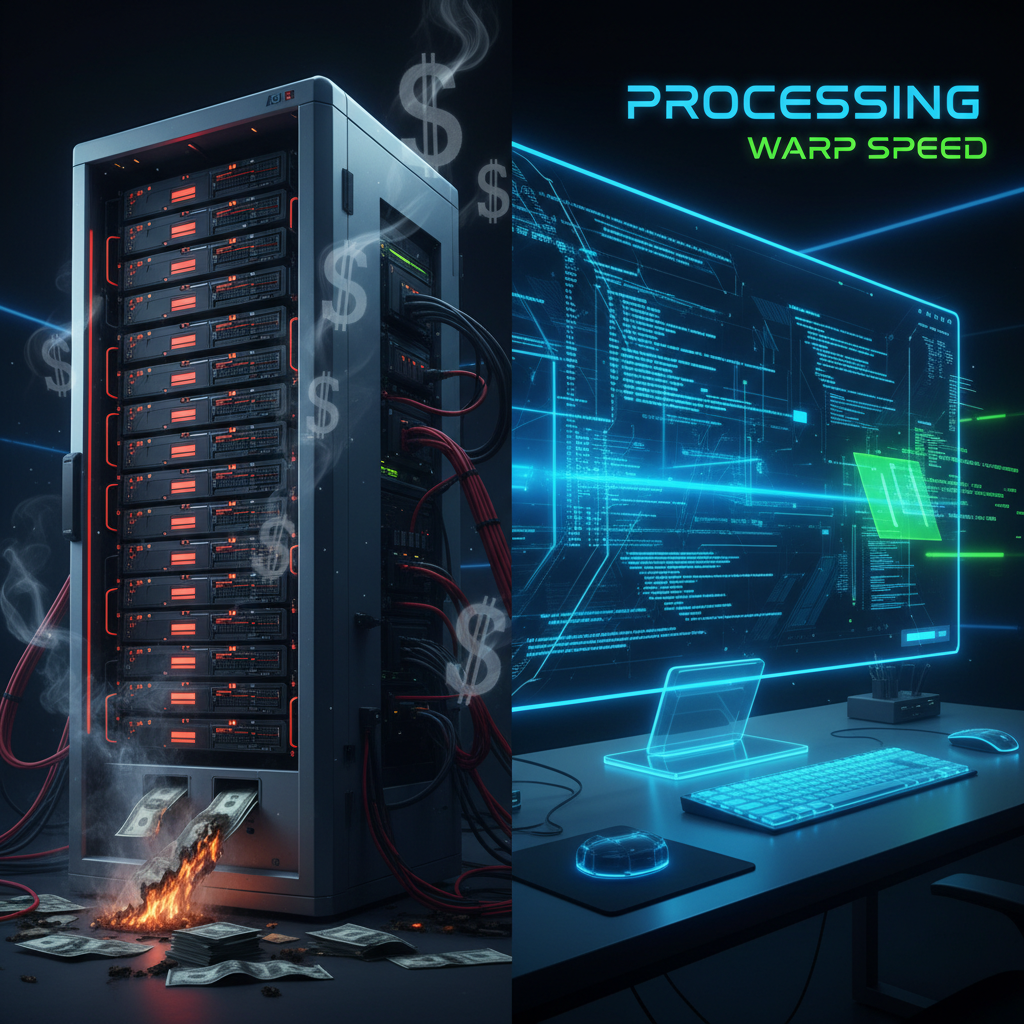
When you upload your codebase, Reasonix creates a hyper-compressed vector map of your repository. It stores this on their servers for a fraction of a cent.
When you ask a question an hour later, you are only charged for the handful of tokens required to access the cache, not the millions of tokens required to read the code.
It is the difference between reading the entire encyclopedia every time someone asks you a question, versus just looking at the index.
The Final Results
After 14 days, 182 parallel automated PRs, and dozens of complex debugging sessions, the data wasn't just conclusive. It was an absolute massacre.
Here is the breakdown of the exact metrics I pulled from our developer dashboard:
Claude 4.6 Pipeline: - Average time per PR: 42 seconds - Build success rate (first try): 94% - Total API cost (14 days): $595.00
DeepSeek Reasonix Pipeline: - Average time per PR: 4.1 seconds - Build success rate (first try): 89% - Total API cost (14 days): $53.20
You are reading that correctly. Reasonix cut our API bill by exactly 91%.
The slight drop in the first-try build success rate (89% vs 94%) was entirely negligible. Why?
Because Reasonix's self-correction loop runs so fast and so cheaply that it just fixes its own mistakes in the next iteration for fractions of a penny.
I don't care if an agent fails on the first try if it successfully patches the bug on the second try three seconds later.
What This Means For You
If you are running any kind of agentic workflow, continuous integration loop, or automated code review system, your unit economics are officially outdated.
The era of paying premium models to repeatedly ingest the same static codebase is over.
If you are a solo developer, an agency, or a startup burning more than $100 a month on Claude or OpenAI API credits for coding tasks, switch your routine loops to Reasonix today. You will save thousands of dollars by the end of 2026.
However, there is nuance here. I haven't completely canceled our Anthropic subscription.
If I need to design a complex system architecture from scratch, or if I'm dealing with highly ambiguous legacy spaghetti code that requires deep, lateral thinking and extensive planning, I am still firing up Claude 4.6.
Claude is the senior architect you hire for the hard, ambiguous problems.
Reasonix is the tireless mid-level developer who works for pennies, never sleeps, and executes repetitive tasks at the speed of light.
The Twist: What Surprised Me The Most
The craziest part of this entire 14-day experiment wasn't the 91% cost reduction. It was how my own behavior shifted.
Because Reasonix costs practically nothing per iteration, I stopped trying to write the "perfect" prompt. I stopped over-engineering my instructions to avoid wasting tokens.
Instead, I just started throwing vague, half-baked ideas at the agent and letting it figure things out through brute-force iteration.
Cheap intelligence completely changes how you build software. It turns coding from a careful, anxious planning exercise into a rapid, conversational jam session.
You stop worrying about the cost of being wrong.
Have you started testing these hyper-cached alternatives in your own stack, or are you still paying premium prices for your daily coding loops? Let's talk about your setup in the comments.