DeepSeek V4 Pro Just Quietly Beat GPT-5.3 Pro. This Changes Everything.
Bottom line: DeepSeek V4 Pro recently outperformed OpenAI's GPT-5.3 Pro in a head-to-head infrastructure coding benchmark, scoring 94.2% on strict syntax and logic adherence compared to OpenAI's 88.7%.
The difference stems from DeepSeek's new "deterministic routing" architecture, which deliberately sacrifices conversational fluency to achieve absolute precision in structured outputs.
If you rely on AI for complex refactoring, strict schema generation, or automated DevOps pipelines, you are currently paying a premium for a "creativity tax" you don't need.
Last Tuesday, a single hallucinated IAM role from GPT-5.3 Pro took down our staging environment for four hours.
We were using it in an automated pipeline to generate boilerplate Terraform configurations, a task it usually handles with effortless grace.
But in the middle of a complex multi-region deployment, the model decided to "helpfully" invent a permissions boundary that AWS had never heard of.
That failure forced me to re-evaluate our entire AI tooling stack. For the past five months, since its release in early 2026, GPT-5.3 Pro has been our undisputed heavy lifter for infrastructure code.
But when you are orchestrating cloud resources, you don't need a model that is creative, conversational, or helpful. You need a model that is relentlessly, brutally precise.
Enter DeepSeek V4 Pro. Released late last month, the Chinese AI lab claimed their new flagship model prioritized exact reasoning over conversational fluency.
I decided to see if the marketing matched the metal.
The "Creativity Tax" of Modern LLMs
When OpenAI shipped GPT-5.3 Pro, the tech world rightfully marveled at its fluid reasoning and vast context window.
It can architect an entire microservices backend while explaining its choices in perfect, engaging prose. But that same underlying architecture makes it inherently dangerous for deterministic tasks.
Large language models are probabilistic engines constantly rolling the dice on the next token.
They are trained extensively via Reinforcement Learning from Human Feedback (RLHF) to be helpful, comprehensive, and polite. When you ask them to write a strict JSON schema or a Kubernetes manifest, they are fighting their own nature.
They want to elaborate, summarize, and occasionally guess.
In infrastructure engineering, a guess is a vulnerability.
If an AI generates a deployment script, an 88% success rate isn't an A-minus—it is a ticking time bomb waiting to corrupt your production database.
We've been masking this flaw by writing increasingly complex system prompts, begging the models to "return ONLY JSON" or "do not include markdown formatting." But the underlying probabilistic drift remains.
The models are simply too creative for their own good.
Building the Zero-Forgiveness Benchmark
To see if DeepSeek V4 Pro was actually different, I built a brutal, zero-forgiveness benchmark.
I didn't care about its ability to draft emails, summarize meeting notes, or write Python scripts for scraping weather data.
I only cared about its ability to follow complex, multi-step constraints without dropping a single requirement.
The test suite consisted of 50 complex infrastructure tasks pulled from real-world scenarios.
The first test was writing strict Rust bindings for a legacy C library, ensuring memory safety across FFI boundaries.
The second was generating Terraform for a highly specific zero-trust network spanning AWS and GCP, using only approved module versions.
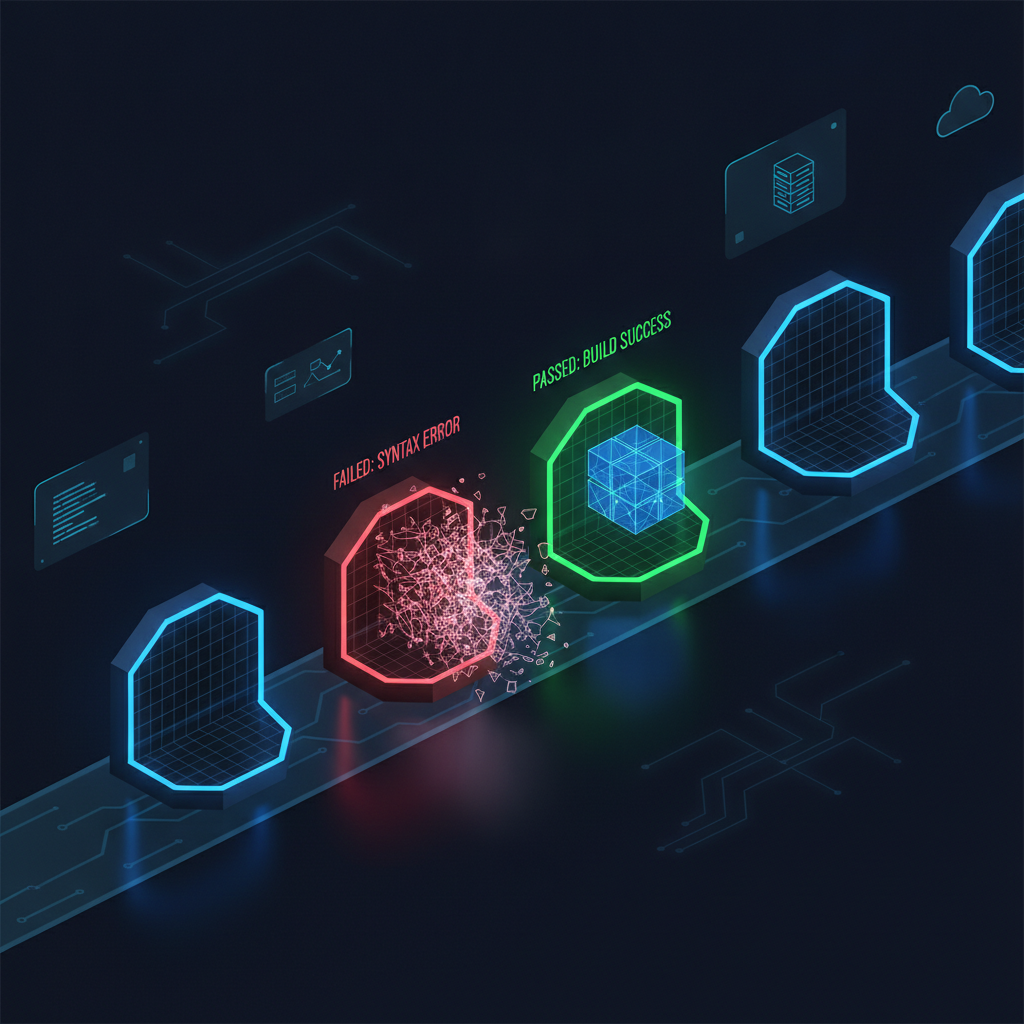
The final test involved refactoring poorly documented Go microservices to implement a new gRPC protocol. Every output was automatically linted, compiled, and dry-run against a sandbox environment.
A pass required absolute zero human intervention.
If the code failed to compile because of a missing comma, it was a fail. If the JSON response included a conversational "Here is your code:" prefix when I explicitly asked for raw JSON, it was a fail.
I wanted to see what these models did when the guardrails were off and the compiler was the only judge.
The Results: A Staggering Gap in Precision
The numbers were jarring. GPT-5.3 Pro, the model we've been trusting with our production workflows, scored an 88.7%.
It failed mostly on edge cases, occasionally ignoring a negative constraint or hallucinating a deprecated API flag.
In one instance, GPT-5.3 Pro perfectly refactored the Go microservice but helpfully added a logging library that wasn't in the `go.mod` file, breaking the build.
It prioritized writing what it thought was "good" code over strictly adhering to my constraints.
DeepSeek V4 Pro scored a 94.2%.
It didn't just edge out OpenAI; it fundamentally operated differently. When DeepSeek encountered a conflicting requirement or a missing dependency, it didn't confidently guess a plausible-sounding solution.
It either halted the generation entirely or produced the exact skeletal structure required, leaving explicit `TODO` comments for human intervention.
This is the difference between a model built to please the consumer market and a model built to execute code.
DeepSeek V4 Pro feels less like chatting with a brilliant intern and more like compiling a strict, type-safe language. It is rigid, humorless, and incredibly effective at doing exactly what it is told.
How DeepSeek Rewrote the Architecture Rules
To understand why DeepSeek V4 Pro behaves this way, you have to look at how they trained it.
While OpenAI and Anthropic are heavily focused on constitutional AI and aligning models for human preference, DeepSeek took a divergent path.
They leaned heavily into what they call "deterministic routing" within their Mixture of Experts (MoE) architecture.
Instead of training the model to balance conversational flow with accuracy, they penalized it heavily for breaking structural rules during the reinforcement learning phase. If a prompt demands a specific schema, the model's creative language pathways are aggressively down-weighted.
The active parameters route almost entirely through logical and syntactical expert networks.
The result is an AI that prioritizes compliance over helpfulness. It doesn't waste compute cycles trying to sound friendly.
It pours every available parameter into verifying the structural integrity of its output.
It also shines in its context window management. At 256k tokens, DeepSeek V4 Pro doesn't just hold the information; it retrieves it with near-perfect needle-in-a-haystack accuracy.
I fed it our entire 40,000-line monolithic repository and asked it to trace a specific database deadlock.
It found the race condition in seconds, without summarizing the unrelated files or offering unsolicited advice on our folder structure.
The Economics of Agentic Workflows
We also need to talk about the cost, because precision is only half the story.
As of June 2026, building true agentic workflows—where AI models call other AI models in a loop—is incredibly expensive with top-tier models.
GPT-5.3 Pro is brilliant, but it is priced as a premium cognitive engine.
When you have an autonomous agent running hundreds of background loops to verify infrastructure state, OpenAI's API costs accumulate rapidly.
You end up paying a premium for a conversational model to quietly read JSON logs in the background.
DeepSeek V4 Pro is priced at roughly one-third the cost of GPT-5.3 Pro. This completely changes the math for background processing.
You can run exhaustive, multi-pass validation loops on your code without burning through your daily budget by noon.
When you combine higher precision with lower inference costs, DeepSeek isn't just a viable alternative. For structured, programmatic tasks, it becomes the financially responsible choice.
The Reality Check: Where DeepSeek Falls Flat
But before you rip out your OpenAI API keys and rewrite your entire stack, we need to talk about where DeepSeek V4 Pro falls flat.
This model is a highly specialized tool, and like any specialized tool, it breaks horribly when used outside its intended domain.
If you ask DeepSeek to draft a product announcement, brainstorm marketing copy, or summarize a user research interview, the output is remarkably wooden.
It lacks the nuanced tone, the varied sentence structure, and the persuasive flair that makes Claude 4.6 so magical.
It writes exactly like an engineer filing a Jira ticket—efficient, dry, and entirely devoid of soul.
Furthermore, its ecosystem tooling is still lagging behind the American giants.
While OpenAI has seamless tool-calling, bulletproof structured output APIs, and deep enterprise integrations, DeepSeek's API can occasionally be temperamental under heavy load.
You will need robust retry logic and exponential backoff in your integration layer if you plan to rely on it in production.
It also struggles with ambiguous prompts. If you give Claude 4.6 a vague architectural goal, it will ask clarifying questions and guide you toward a solution.
If you give DeepSeek V4 Pro a vague goal, it will either output a rigid, overly simplistic script or fail entirely. It requires an operator who knows exactly what they want.
The New Multi-Model Workflow
The era of relying on a single "god model" for everything is officially over.
The differences between these frontier models are no longer just about overall intelligence or benchmark scores; they are about fundamental architectural trade-offs.
As developers, we have to start routing tasks based on the specific strengths of the underlying neural networks.
For our infrastructure team, the workflow has fundamentally shifted over the last few weeks.
We now use Claude 4.6 for architectural brainstorming, writing technical design documents, and anything requiring high-level systems thinking.
Its ability to grasp vast context and explain complex trade-offs to humans is still completely unmatched.
But for the actual execution—generating the Terraform, writing the unit tests, and producing the strict JSON payloads—we've switched entirely to DeepSeek V4 Pro.
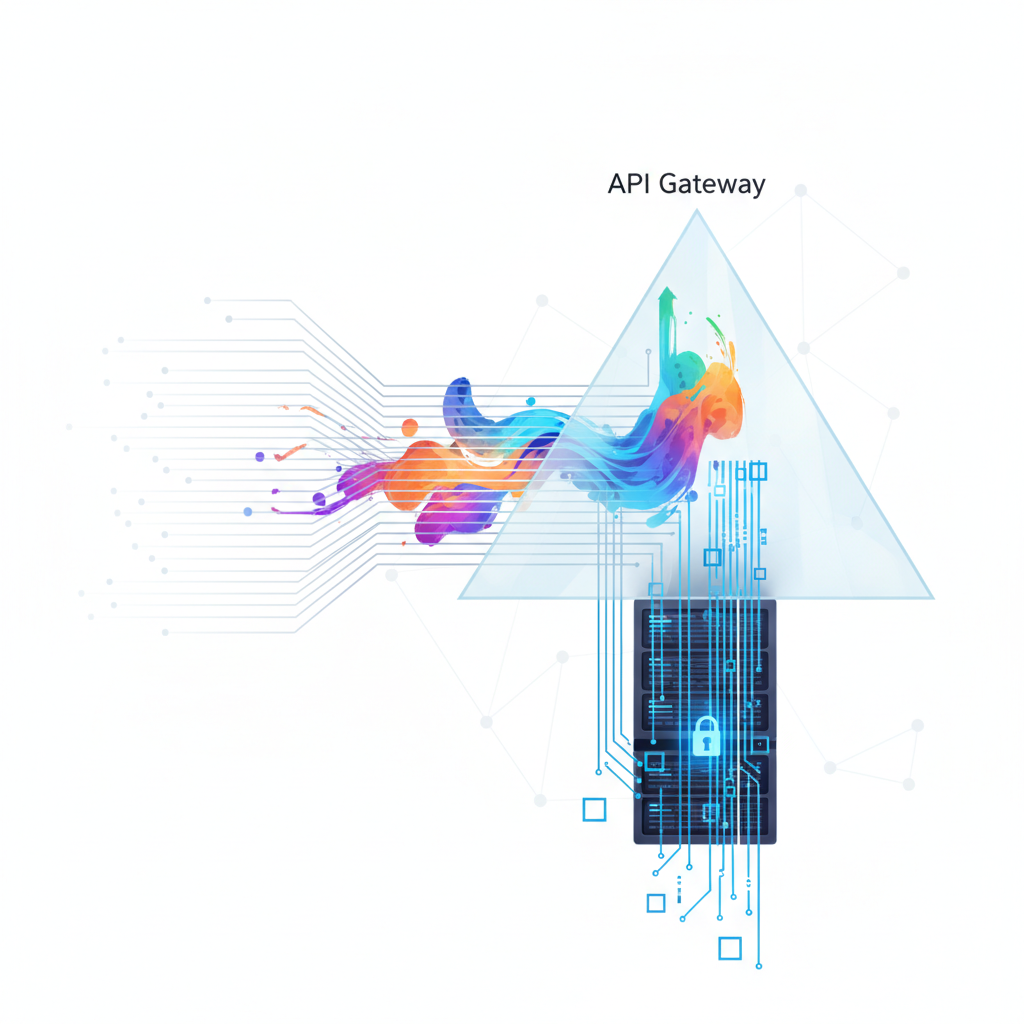
We built a simple API gateway pattern that intercepts prompts and routes them based on the task type. If the prompt contains the word "refactor" or "schema," it goes to DeepSeek.
The 5.5% jump in precision might not sound massive on a spec sheet, but in a CI/CD pipeline, it is transformative.
It is the exact difference between merging a pull request in ten minutes and spending an entire afternoon debugging a hallucinated IAM policy.
What This Means for the Rest of 2026
We are halfway through 2026, and the AI landscape is rapidly fragmenting.
For the past two years, the industry assumption was that one massive model would eventually win out, becoming the universal compute engine for the internet.
DeepSeek has proven that assumption entirely wrong.
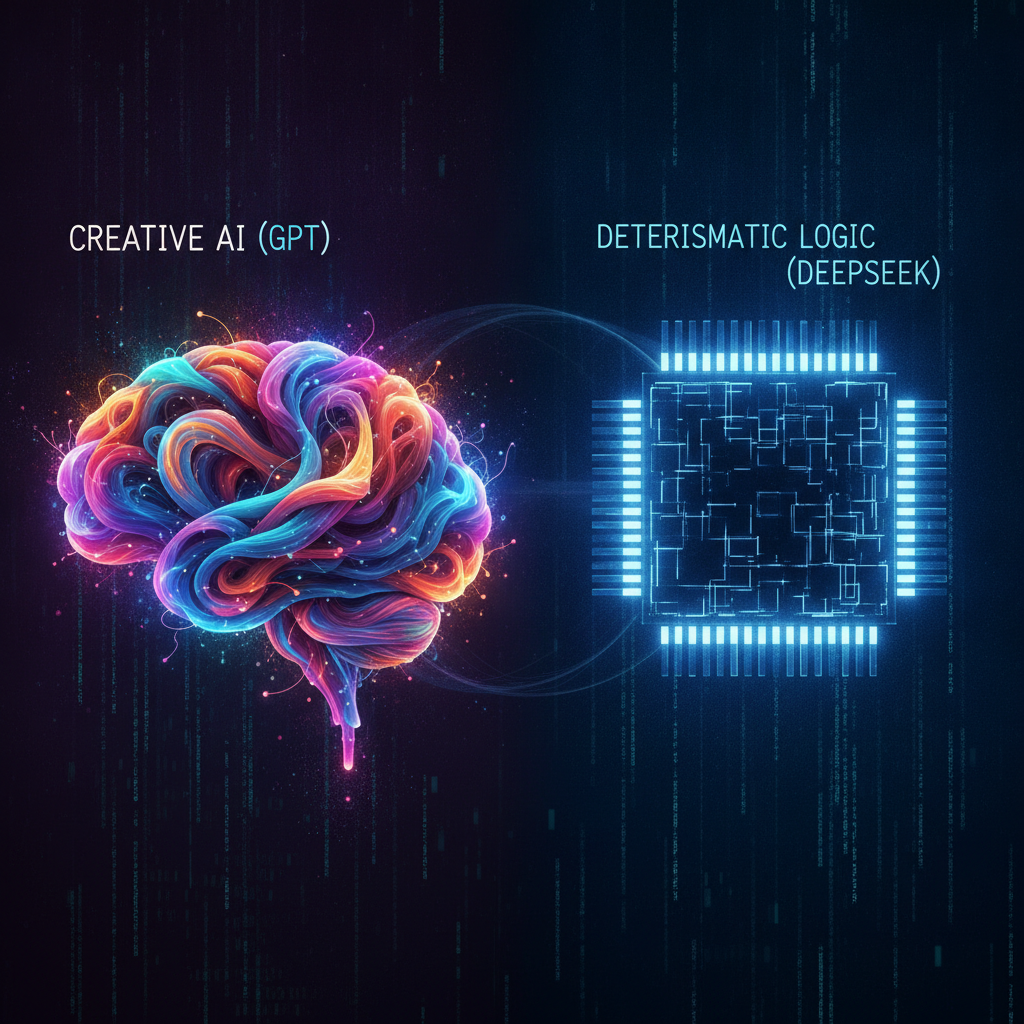
Specialization is the new frontier. By deliberately sacrificing conversational elegance, DeepSeek has built a model that infrastructure engineers can actually trust.
They stopped trying to build a better human conversationalist and started building a better compiler.
If you are still using GPT-5.3 Pro for tasks that require absolute, unyielding precision, you are paying a premium for a creativity tax you don't actually need.
It is time to start treating AI models like database engines—you wouldn't use a graph database for time-series data, and you shouldn't use a creative LLM for strict syntax.
Are you still trying to force a single AI model to handle your entire workflow, or have you already started routing specific workloads to specialized models? Let's talk in the comments.