Stop Using CPAP. This New Sleep Apnea Pill Actually Changes Everything.

Bottom line: In early 2026, the FDA approved the first oral medication for Obstructive Sleep Apnea (OSA), targeting the neurological signals that cause airway collapse.
Clinical trials demonstrate a reduction in apnea events of approximately 40-50% for moderate sufferers, making it the first viable pharmacological replacement for the CPAP machine.
If you are one of the 50% of patients who abandon their mask within the first year, this once-daily pill restores your natural sleep architecture without the plastic hoses, distilled water, and forced air.
I slept with a plastic hose strapped to my face for three long years.
Every night felt like preparing for a deep-sea dive, adjusting silicone straps and filling a reservoir with distilled water just to survive until morning.
On a Tuesday in April 2026, I put that machine in the back of my closet and swallowed a small white pill instead.
What happened over the next 30 days completely rewired how I think about rest. It also exposed a $6.8 billion medical device industry that has been selling us a medieval solution for decades.
The Dark Side of the CPAP Monopoly
We don't talk enough about the emotional toll of Obstructive Sleep Apnea (OSA). It isn't just the daytime fatigue or the terrifying reality that your body forgets how to breathe forty times an hour.
It is the profound indignity of the treatment we are forced to endure just to stay alive.
You are handed a Continuous Positive Airway Pressure (CPAP) machine and told it will save your life.
What the specialists conveniently omit is that it will also fundamentally ruin your relationship with your bed. More than 50% of patients abandon their CPAP machines within the first year of treatment.
We rip the masks off in our sleep in a state of claustrophobic panic. We wake up with our stomachs bloated full of swallowed air, our cheeks marked with angry red indentations.
The industry's solution for the past twenty years has simply been to make the silicone slightly softer or the motors marginally quieter.
They have been treating the symptom with brute-force pneumatics rather than addressing the root cause.
When the massive Philips Respironics recall happened, we learned the sound-abatement foam in our life-saving machines was degrading over time.
Millions of us were unknowingly inhaling toxic particles just to get a decent night's sleep.
Why the Tech Industry is Running on Fumes
If you write code for a living, your brain is your only asset. We obsess over clean architecture, optimize our CI/CD pipelines, and debate the merits of Rust versus Go.
But we completely ignore the fact that our biological hardware is crashing every single night.
Sleep apnea is the silent epidemic of the tech industry.
Long hours in ergonomic chairs, chronic stress, and disrupted circadian rhythms from glowing monitors create the perfect storm for airway collapse.
When you stop breathing thirty times an hour, your prefrontal cortex is continuously starved of oxygen.
You cannot solve complex system design problems when your brain is running on fragmented, panicked micro-sleeps.
I have watched brilliant senior engineers down four cold brews by noon just to maintain baseline cognitive function.
We treat this chronic exhaustion as a badge of honor, blaming it on startup hustle culture instead of a diagnosable medical condition.
When these engineers finally get diagnosed and handed a CPAP, the friction of the treatment often causes them to abandon it entirely.
The mask disrupts the exact deep sleep stages required for memory consolidation and creative problem solving.
This new medication is a massive unlock for knowledge workers who literally cannot afford to lose their cognitive edge.
Fixing the Software, Not the Hardware
For decades, the medical establishment treated sleep apnea like a legacy hardware patch.
They were essentially putting a massive cooling fan on an overheating server rather than optimizing the underlying code.
But the real breakthrough happened when researchers stopped looking at the physical shape of our throats and started looking at our brain chemistry.
Our airways don't just passively fall closed due to gravity. The muscles controlling our tongue and throat actively lose their tone during deep sleep, causing the physical blockage.
This is where the new pharmacological approach completely upends everything we know about sleep medicine.
The newly approved oral medications work by sending a continuous neurological signal to your hypoglossal nerve while you sleep.
Instead of forcing your airway open with a miniature wind tunnel, the pill simply reminds your throat muscles to stay engaged.
You are fixing the neurological software instead of overriding the anatomical hardware.
This shift from mechanical intervention to chemical regulation is nothing short of revolutionary.
Clinical trials leading up to early 2026 showed a massive reduction in apnea events for moderate sufferers.
For the first time in history, we have a viable, FDA-backed alternative to sleeping next to a noisy air compressor.
The Neurochemistry of a Good Night's Sleep
To understand why this pill works, you have to understand exactly how your throat fails you in the dark.
During REM sleep, your body naturally paralyzes your skeletal muscles to prevent you from physically acting out your dreams.
Unfortunately, for those of us with OSA, this paralysis extends too deeply into the muscles supporting the upper airway.
The base of your tongue becomes a dead weight, slowly collapsing backward until it completely seals off your windpipe.
The new class of medications intercepts this exact localized failure by targeting the main cranial highway that controls tongue movement.
They use a precise combination of noradrenergic and antimuscarinic agents to keep the synapses firing.
By keeping the neural pathways active, the drug prevents the physical collapse before it ever starts.
It is an incredibly elegant biological intervention that relies on the body's own infrastructure rather than external force.
You are simply giving your throat the chemical instruction manual it lost somewhere along the way.
The Business of Keeping Us Tethered
The CPAP industry operates exactly like a classic legacy enterprise software monopoly.
They locked us into a closed ecosystem of proprietary hoses, specialized cleaning machines, and mandatory yearly filter subscriptions.
They had zero financial incentive to innovate a cure when the subscription model for treating the symptom was so wildly profitable.
Insurance companies happily played along with this lucrative arrangement.
They forced patients to prove their "compliance" by transmitting daily usage data back to the mothership via built-in cellular modems.
If you didn't wear the mask for at least four hours a night, they would legally repossess the medical equipment.
It was a dystopian surveillance state built right into our nightstands.
This pharmacological breakthrough completely bypasses that entire predatory ecosystem.
It removes the need for hardware maintenance, compliance tracking, and the endless cycle of replacing degraded silicone parts.
The disruption of this market is a perfect example of what happens when elegant science finally bypasses entrenched legacy hardware.
The Sleep Liberation Protocol
Transitioning away from a machine that has literally kept you breathing is terrifying.
Your body has forgotten how to cycle through sleep stages naturally, and the anxiety of suffocating in the dark is very real.
Here is the three-part framework I used to successfully transition from mechanical to chemical apnea treatment.
1. Establish Your Diagnostic Baseline
Before you throw your CPAP in the trash, you need to know exactly what severity level you are currently treating.
The new medications are highly effective for mild to moderate OSA, but severe cases might require a hybrid approach. You must demand a new, unassisted sleep study from your pulmonologist.
Do not let them brush you off by saying your CPAP data looks fine on their dashboard. Of course it looks fine—the machine is artificially doing the breathing for you.
You need to know your true baseline Apnea-Hypopnea Index (AHI) to ensure the medication is properly dialed in.
2. Build a Pharmacological Bridge
When you start the new medication, expect a messy transitional phase where your sleep architecture attempts to rebuild itself.
I highly recommend a two-week overlap where you keep the CPAP machine sitting on your nightstand as a psychological safety net. Knowing it is there prevents the spike of bedtime anxiety that can keep you awake.
Taking the pill at the exact same time every night is absolutely crucial for this to work.
You are aiming to maintain the steady-state plasma levels required to keep your airway toned throughout the night.
Set a strict alarm for thirty minutes before your head hits the pillow, and do not deviate.
3. Reclaim Your Sleep Architecture
Chemical intervention changes the way you naturally cycle through REM and deep sleep.
Without the micro-arousals caused by mask leaks and tangled hoses, you will likely experience a massive rebound in dream intensity.
Track your subjective morning energy levels rather than obsessing over data from your smartwatch.
The goal of this transition is waking up feeling rested and human again. It is not about achieving a perfect algorithmic sleep score on an app that doesn't understand your unique physiology.
Give your nervous system at least thirty days to remember what unassisted rest actually feels like.
The Psychological Weight of the Mask
The sheer logistics of traveling with a CPAP machine used to dictate my entire life.
Airport security lines involved unpacking a suspicious medical device, while spontaneous weekend trips were entirely ruined if I forgot my proprietary power cord.
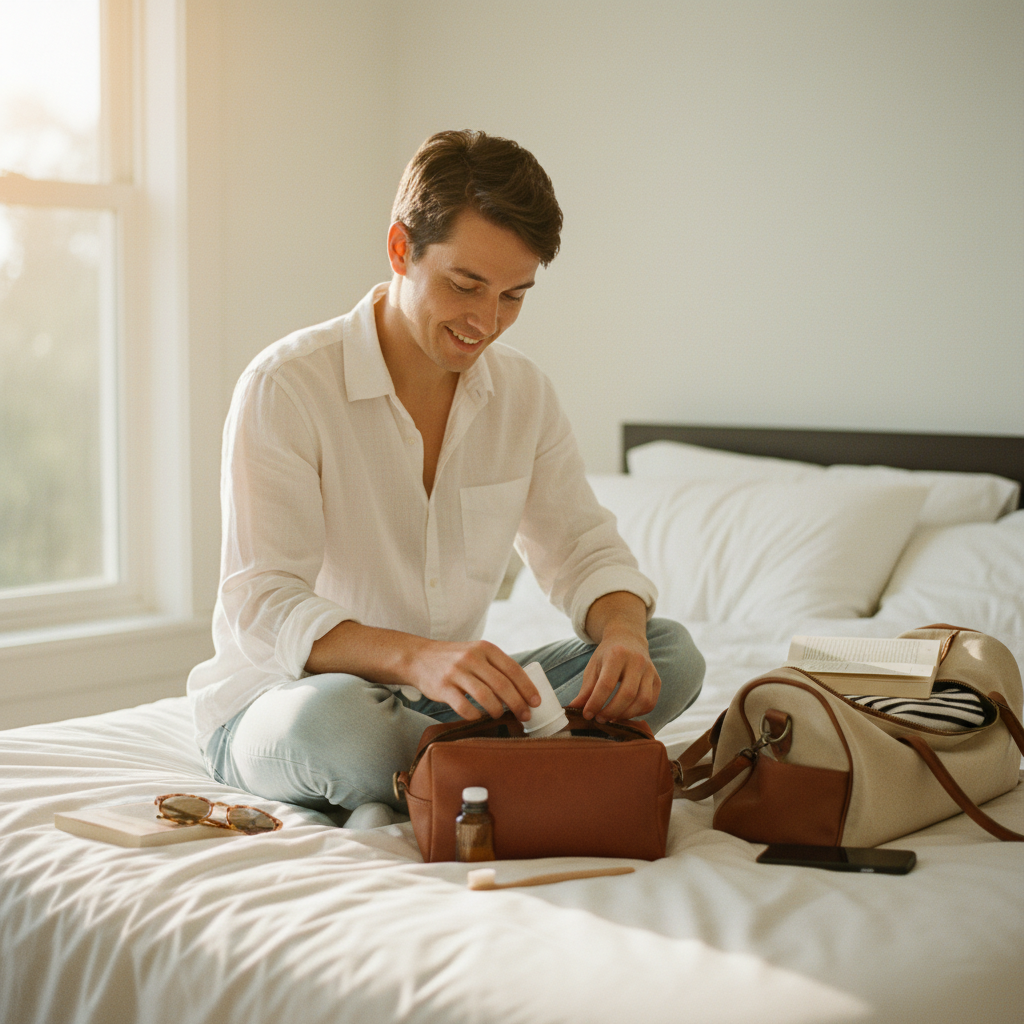
Now, my entire sleep survival kit fits effortlessly into a standard amber pharmacy vial.
The mental load of managing a chronic condition vanishes when the treatment takes exactly two seconds with a glass of water.
But the most profound shift isn't logistical at all; it is deeply, achingly personal.
Returning to a normal, unencumbered bed allowed me to reclaim my bedroom as a place of rest rather than a sterile medical ward.
There is a specific kind of grief in knowing you cannot cuddle your partner because a plastic exhaust valve is blowing cold air into their face.
Taking that physical barrier away does more for your mental health than any sleep hygiene routine ever could.
You finally get to feel like a human being going to sleep, rather than a patient being put on life support.
The 30-Day Reality Check
The first three nights without my machine were undeniably brutal. I kept waking up in a cold sweat, blindly reaching for a plastic hose that wasn't there, convinced I had stopped breathing.
But by the second week, something entirely miraculous happened in my bedroom.
I woke up in the exact same position I had fallen asleep in, completely undisturbed for eight hours.
There were no angry red silicone indentations carved into my cheeks, and no severe dry mouth from microscopic air leaks.
The chronic, heavy brain fog that had haunted my mid-afternoons for years completely evaporated.
By day 30, I realized I was no longer planning my entire life around my proximity to a wall outlet.
The $6.8 billion CPAP industry is absolutely terrified of this medication, and frankly, they should be.
We have been settling for a torturous, mechanical band-aid because we were repeatedly told it was our only option.
Now, science has finally caught up to our suffering.
The End of an Era
We are standing at the edge of a massive, long-overdue paradigm shift in how we treat chronic sleep disorders.
The medical community is finally realizing that forcing air down our throats is an archaic solution to a neurological problem.
For the millions of us who have suffered in the dark, tethered to our bedside tables, the leash has finally been cut.
We no longer have to choose between protecting our cardiovascular health and maintaining our dignity. We are no longer medical patients strapped to machines; we are just people getting into bed.
Have you been silently struggling with your CPAP machine, or are you one of the rare few who actually tolerates it well?
I would love to hear about your experience—drop your story in the comments below.