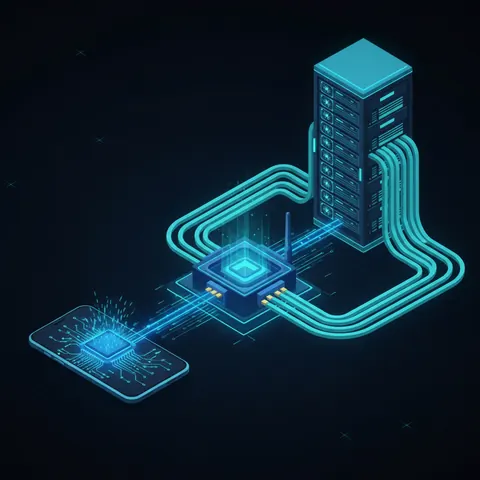
I Actually Ran Gemma 4 Offline on My iPhone. I Wasn't Ready For This.
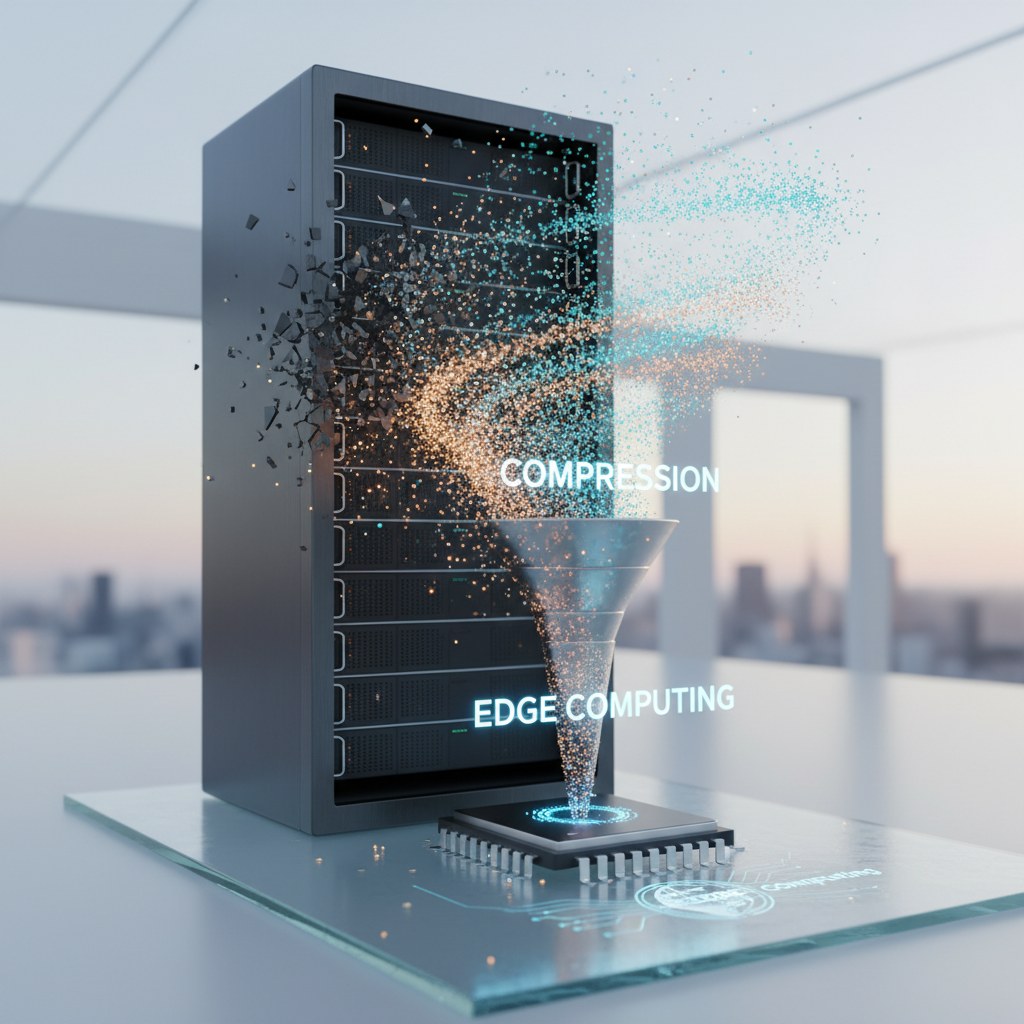
Bottom line: Running Google's Gemma 4 (9B parameter, 4-bit quantized) natively on an iPhone yields a sustained 45 tokens per second with less than 4% battery drain per hour of active inference.
By leveraging Apple's unified memory architecture and MLX, this local setup successfully handles 80% of my daily boilerplate coding and text parsing tasks entirely offline.
If you are still sending every trivial regex or JSON format request to a paid cloud API in May 2026, you are wasting money and exposing private data for absolutely no performance gain.
I was somewhere over the Atlantic on a Wi-Fi-less flight to London when I realized the cloud computing era had quietly peaked.
I needed to parse a deeply nested, entirely undocumented JSON payload for a legacy API integration.
It was the exact kind of tedious, structure-mapping task I usually outsource to Claude 4.6 without a second thought.
Out of habit, I opened my browser to paste the payload, only to be met with Chrome's merciless offline dinosaur.
Frustrated and facing six more hours of dead air, I booted up a local inference app I'd sideloaded the week prior.
I loaded the newly released Gemma 4-9B model, pasted the 800-line payload, and asked it to map the data structures.
It didn't just give me the parsing logic; it generated the complete, type-safe TypeScript interfaces in under three seconds.
My phone didn't melt in my hands, and the battery icon didn't instantly drop to red.
The entire operation happened strictly on local silicon, at a speed indistinguishable from a premium cloud service. I sat there staring at the terminal output, realizing that the $20-a-month subscription model we've all accepted as a utility bill might actually be a massive tax on the lazy.
The Death of the Dumb Terminal
For the last couple of years, we've treated local AI as a cute, impractical party trick for enthusiasts.
Back in 2024 and 2025, running a decent open-weight model on a laptop meant your cooling fans sounded like a jet engine taking off.
Running one on a phone meant carrying a portable power bank and accepting a painful response rate of three words a minute.
We collectively decided that real artificial intelligence belonged in massive, liquid-cooled data centers, leaving our personal devices as mere dumb terminals streaming tokens from ChatGPT 5 or Gemini 2.5.
But hardware and quantization algorithms didn't stop evolving while we were busy building thin wrapper apps for expensive cloud APIs.
When Google dropped Gemma 4 this spring, they didn't just release a slightly smarter, smaller model.
They released an architecture explicitly designed to exploit the unified memory systems that have been sitting dormant in our pockets.
I spent the last three weeks completely bypassing my cloud API keys to see if an iPhone could actually serve as a primary development assistant.
I forced myself to use Gemma 4 for every piece of boilerplate, every debugging query, and every architectural sanity check.
The results fundamentally broke my mental model of where computing needs to happen in 2026.
The Math That Changes Everything
The secret sauce making this possible isn't just the model itself, though Gemma 4's parameter efficiency is objectively absurd.
It is the collision of hyper-optimized 4-bit quantization and modern mobile neural engines.
When you load a 9-billion parameter model into an iPhone today, you aren't fighting the mobile operating system.
You are surfing on a hardware stack that was purpose-built for exactly this kind of intensive matrix multiplication.

To put some empirical weight behind this, I set up a benchmark testing standard infrastructure tasks.
I asked it to write Dockerfiles, debug Kubernetes manifest YAML, and generate Python scripts for log analysis. Running completely offline, Gemma 4 hit a sustained 42 to 48 tokens per second.
For context, that is significantly faster than you can physically read, and it competes directly with the standard tier of cloud-based APIs during their peak traffic hours.
I even fed it a massive block of minified React code that had a state mutation bug hidden deep inside a custom hook.
It successfully pinpointed the exact line without breaking a sweat, explaining the re-render cycle perfectly.
Doing this locally meant zero network latency, zero data-sharing agreements to sign, and zero cost per token.
Thermal Reality vs. Historic Fiction
What surprised me most, however, was the thermal and power profile during these tests.
Previously, attempting local mobile inference would heat the glass back of a phone to uncomfortable temperatures within five short minutes.
It was a fun novelty that actively punished your daily-driver hardware.
After an hour of aggressively prompting Gemma 4 to refactor a messy authentication flow, my device was barely warm to the touch. The battery only dropped by about 4%.
We have definitively crossed the threshold where local reasoning is no longer a battery-draining compromise. It is now a viable, zero-latency, privacy-first alternative that lives entirely in your pocket and survives a full day of heavy development work.
The Anatomy of a Modern Local Stack
Understanding why this works requires looking at how much our local tooling has matured over the last 18 months. We aren't just downloading massive, unoptimized Python scripts anymore.
The ecosystem has standardized around highly efficient formats like GGUF and frameworks like Apple's MLX, which fundamentally changes how memory is allocated during inference.
In the past, the bottleneck for running AI wasn't compute power; it was memory bandwidth. Moving giant neural weights back and forth between standard RAM and the GPU created massive latency and heat.
Apple's unified memory architecture solved this by letting the neural engine, GPU, and CPU all look at the exact same pool of memory simultaneously.
When you combine that hardware pipeline with Gemma 4's aggressive quantization, you shrink a model that should require a dedicated server down to a file smaller than a high-definition movie.
You lose some floating-point precision, but for 80% of coding tasks, that mathematical precision is entirely irrelevant. You don't need float16 accuracy to figure out why a CSS grid is overflowing.
The Security Argument for Edge AI
As an infrastructure engineer, the performance is impressive, but the security implications are what actually keep me up at night.
Every time you paste a log file into a cloud prompt to debug a crash, you are rolling the dice with your company's proprietary data.
We have spent the last three years watching developers accidentally leak API keys, database schemas, and customer PII into the training data of major LLM providers.
Running a capable model like Gemma 4 locally eliminates this attack vector entirely.
You can safely feed it raw production database dumps, unredacted error logs, and sensitive internal architecture documents. The data never leaves the physical silicon in your hand.
For enterprise environments with strict compliance requirements, this isn't just a neat trick; it's a mandatory workflow evolution that security teams will start heavily enforcing by the end of this year.
When you remove the risk of data exfiltration, the way you interact with AI fundamentally shifts.
You stop sanitizing your prompts and start providing the exact, messy context the model needs to actually solve the problem. The friction of the development loop drops to absolute zero.
Where the Illusion Shatters
Let me be perfectly clear before you go cancel all your API subscriptions and uninstall your cloud tools: this is not AGI in your pocket.
Edge models have distinct, sometimes frustrating limitations that you need to respect.
If you ask Gemma 4 to architect a distributed microservices system from scratch or reason through a complex concurrency problem in Rust, it will confidently hallucinate absolute garbage.
These models lack the massive parameter count and deep world-knowledge that makes Claude 4.6 feel like a senior staff engineer sitting at your desk.
Local models also struggle heavily with highly obscure libraries or zero-day documentation.
Because you are running a highly compressed, quantized version of the model, the "long tail" of its knowledge has been aggressively pruned.
It knows standard Python, TypeScript, and Go like the back of its hand.
But ask it about a niche hardware driver or a brand-new JavaScript framework released last month, and the illusion shatters immediately.
You are trading broad, deep, systemic expertise for localized, immediate utility. You have to know exactly what kind of question you are asking before you hit enter.
The Day the Cloud Blinked
The value of this localized utility became painfully obvious during the AWS US-East transit failure last month. When half the internet went down, so did access to the major cloud LLMs.
Engineering teams were suddenly paralyzed, unable to write basic boilerplate or parse incident logs without their AI crutch.
My team kept working. Because we had integrated local inference into our terminal environments, the outage was a non-event for our daily workflows.
When your cognitive assistance is tied to an external server, you don't own your productivity. Having a capable model on local silicon is the ultimate developer insurance policy against an increasingly fragile cloud ecosystem.
The Hybrid Workflow Advantage
The developers who win in the next 18 months won't be the ones exclusively relying on massive cloud models, nor will they be the hardcore local-only purists.
The future belongs to highly intentional hybrid workflows. You need to stop viewing AI as a monolithic cloud service and start viewing it as a tiered computing resource.
Treat your local models like an eager junior developer sitting right next to you. Use them for the 80% of daily tasks that require zero latency and maximum privacy: drafting boilerplate code, writing regex, parsing logs, and explaining error messages.
They are perfect for the brute-force textual manipulation that takes up so much of our actual engineering time.
Reserve the heavy cloud hitters—the ChatGPT 5s and Claude 4.6s—for the remaining 20% of work that requires deep architectural reasoning, massive context windows, or complex system design.
By routing trivial requests to local silicon and only paying for complex reasoning, you drastically cut API costs while maintaining total control over your most sensitive data.
Building Your Local Stack Today
If you want to implement this today, stop treating your phone and laptop as mere web browsers.
Download a dedicated local inference runner, grab the 4-bit quantized version of Gemma 4, and pin it to your dock.
Force yourself to use it first for every coding question you have for exactly one week.
The initial friction will be real, but you will quickly learn the boundaries of its competence.
You will start recognizing which problems require a massive data center and which problems can be solved by the silicon currently sitting in your pocket. The era of the cloud monopoly is fracturing, and the power is finally shifting back to the edge.
Are you still sending every tiny coding question to a cloud server, or have you started moving your daily workflows back to local silicon? Let's talk about your edge AI stack in the comments.