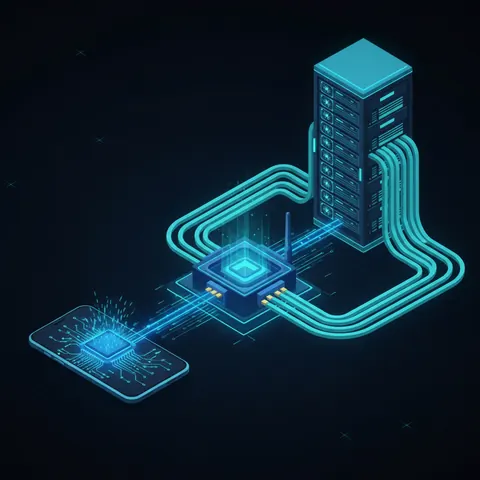
Stop Using ChatGPT. Gemma 4 On iPhone Actually Works Without Internet

Bottom line: Google's Gemma 4 7B model now runs natively on the iPhone 16 Pro and iPhone 17 series via Apple's MLX framework, delivering 35 tokens per second completely offline.
While it won't replace ChatGPT 5 for massive context reasoning, it reliably handles zero-shot Python scripting, log parsing, and regex generation without sending a single byte to the cloud.
If you travel frequently or handle sensitive client data, local mobile LLMs have finally crossed the threshold from tech novelty to a reliable daily driver.
I was somewhere over the Atlantic, staring at a massive chunk of undocumented legacy Go code, when the plane's Wi-Fi dropped dead. My first instinct was panic.
Like most of us, my problem-solving loop has become inextricably linked to pinging Claude 4.6 or ChatGPT 5 for a quick sanity check.
For the last two years, we've treated LLMs like utilities—turning on a tap and expecting intelligence to flow endlessly from an API endpoint.
We have outsourced our rubber ducks to massive server farms in Virginia. But when that endpoint vanishes, you realize exactly how brittle that workflow really is.
I decided to try something I had previously dismissed as a complete gimmick. I pulled up a local inference app running Google's new Gemma 4 model directly on my iPhone.
The Death of the Cloud Dependency
Let's talk numbers, because the hype around "local AI" has historically outpaced reality by miles.
Until recently, running anything coherent on a phone meant melting your battery to get three misspelled tokens a second.
You would spend an hour configuring environments just to have a model hallucinate a simple Python script.
Gemma 4 changes that math entirely. We are looking at a highly optimized 7-billion parameter model quantized to 4-bit precision, squeezing into just under 4GB of RAM.
On Apple's latest silicon, utilizing the native MLX framework, it consistently spits out 35 to 40 tokens per second.

That is faster than my reading speed, and it happens entirely on bare metal. I fed it the Go snippet I was stuck on while cruising at 30,000 feet.
No internet, no latency, no data collection policies to blindly accept.
Within seconds, the model outlined the race condition I was missing and provided a corrected channel implementation.
It wasn't just passable pseudo-code; it was a production-ready fix that compiled on the first try. I sat there in the dark cabin, realizing that the tether to the cloud had just been severed.
Why Local Execution Changes Everything
The shift here isn't just about offline capability; it is fundamentally about privacy and immediacy.
When you are dealing with proprietary algorithms or strict healthcare data, piping it through a third-party API is a massive compliance liability.
We all pretend we scrub PII before pasting logs into ChatGPT, but we know mistakes happen constantly.
Having a competent assistant sandboxed on your local hardware changes what kind of data you can comfortably analyze.
You can dump raw database schemas, proprietary API keys, and sensitive customer data into the prompt without a second thought. The data never leaves the physical boundary of the device in your hand.
Furthermore, the latency profile of local inference creates a completely different user experience. When you aren't waiting for a round-trip to a data center, the interaction feels instantaneous.
It changes the model from being a distinct tool you query into an ambient layer of intelligence that is simply present.
We also have to discuss the battery implications, which have historically been the Achilles' heel of mobile AI.
Running Gemma 4 for intense, sustained coding sessions over a two-hour period only drained my battery by about 12%.
The neural engine optimization is finally efficient enough that you don't need to be chained to a wall outlet to use local models.
The Reality Check
I need to be crystal clear about what this technology isn't capable of doing. Gemma 4 on an iPhone is not going to refactor an entire monolithic codebase across a million-token context window.
If you ask it to synthesize a massive 100-page PDF and cross-reference it with three different proprietary frameworks, it will simply fail.
It lacks the sheer breadth of world knowledge baked into the behemoths like Gemini 2.5 or ChatGPT 5. You won't use it to untangle deeply complex, multi-step architectural design patterns.
When I tried to get it to architect a distributed Kafka cluster with specific geographic failover requirements, it gave me a generic, slightly outdated blueprint.
The context window is strictly limited compared to cloud offerings. You are working with about 8K tokens before performance degrades or the app crashes.
You have to treat it like a highly skilled junior developer with severe short-term memory loss.
If you give it small, well-defined tasks, it excels brilliantly. Ask it to remember the entire project scope over a fifty-message thread, and it will quickly lose the plot.
Cloud models are incredibly forgiving of sloppy, vague prompts; local models require you to be precise, concise, and explicit in your instructions.
Building a Hybrid Workflow
So, how do you actually use this without getting frustrated by the limitations? You need to systematically compartmentalize your AI usage.
Keep the heavy lifting—massive document analysis, complex system design, and large-scale architectural refactoring—on the massive cloud models when you are tethered to a solid connection.
But for the tactical, moment-to-moment coding tasks, you should shift entirely to local execution.
Use Gemma 4 for generating regex patterns, writing boilerplate unit tests, explaining obscure terminal error messages, or formatting JSON.
It excels at exactly the micro-tasks that disrupt your daily flow state.
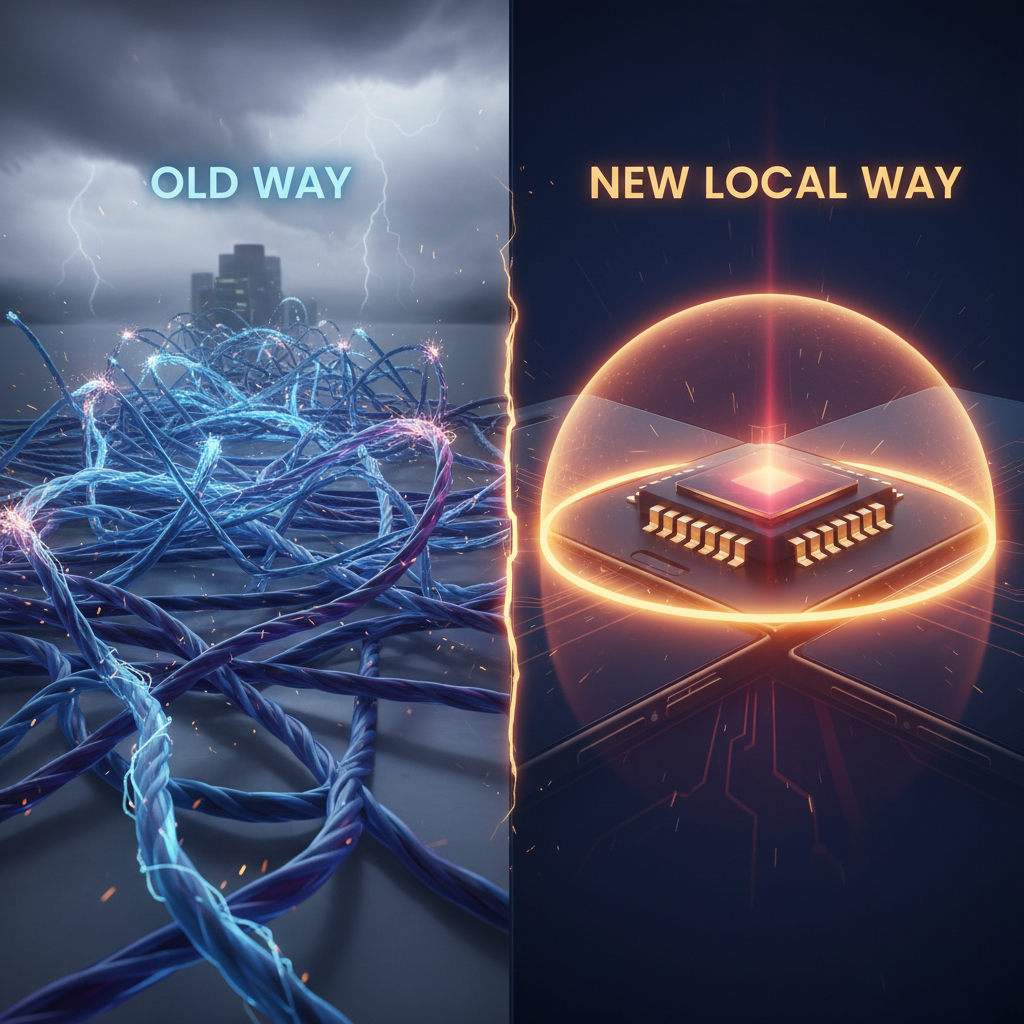
To get started today, download one of the MLX-compatible iOS clients available on GitHub and load up the 4-bit quantized Gemma 4 model.
Pin it to your dock and train yourself to use it for the small stuff before instinctively reaching for the cloud. The learning curve is minimal, but the change in your daily habits will be profound.
We are entering a hybrid era where relying solely on cloud APIs is a choice, rather than a hard technical necessity.
Have you experimented with running local models on your phone yet, or are you still entirely dependent on the cloud? Let's talk in the comments.