STOP Using Chat
In this article
Bottom line: The EU Parliament officially approved "Chat Control 1.0" last week, mandating that end-to-end encrypted messaging services operating within the EU implement client-side scanning to detect illegal content, primarily child sexual abuse material.
This legislation, expected to come into effect by early 2027, will force platforms like Signal, WhatsApp, and iMessage to break or significantly weaken their encryption, creating a backdoor for mass surveillance and fundamentally altering the landscape of digital privacy for millions of users across Europe and potentially worldwide.
Critics warn it's a technical impossibility without compromising all users' security.
Your private chats just became public property. I'm not exaggerating.
The EU Parliament, after years of intense debate, officially greenlit "Chat Control 1.0" last week, setting a precedent that will force platforms like Signal and WhatsApp to scan every message you send — effectively ending digital privacy as we know it for millions across the continent.
This isn't about targeting criminals; it's about building a backdoor into the most secure communication tools, and the implications for your daily digital life, and even your job, are far more profound than you think.
I was grabbing coffee with an old friend, a senior software engineer who works on secure messaging protocols, just a few days after the news broke. He looked exhausted.
"It's over, Riley," he said, stirring his cold brew.
"Everything we've built, the very principle of private communication, just got legislated out of existence for 450 million people.
We're being asked to build the very thing we swore we never would: a surveillance machine." His frustration was palpable, a quiet despair echoed by countless developers and privacy advocates across the tech world.
The End of Private Chats?
The legislation my friend was referring to, informally dubbed "Chat Control 1.0," isn't just another tech policy; it's a seismic shift.
Approved on July 4th, 2026, by a significant majority in the European Parliament, this regulation aims to combat child sexual abuse material (CSAM) by requiring messaging providers to "detect, report, and remove" such content.
On paper, the goal is noble.
In practice, it means services that rely on end-to-end encryption (E2EE) — the gold standard for secure communication where only sender and receiver can read messages — must now implement client-side scanning.
This technology would scan content before it's encrypted on your device, flagging potential illicit material and reporting it to authorities.
The argument from proponents is that this is the only way to catch predators operating in encrypted spaces.
But for many, this solution is worse than the problem it aims to solve, creating a fundamental vulnerability that could unravel the entire digital security framework.
The Cryptographer's Dilemma
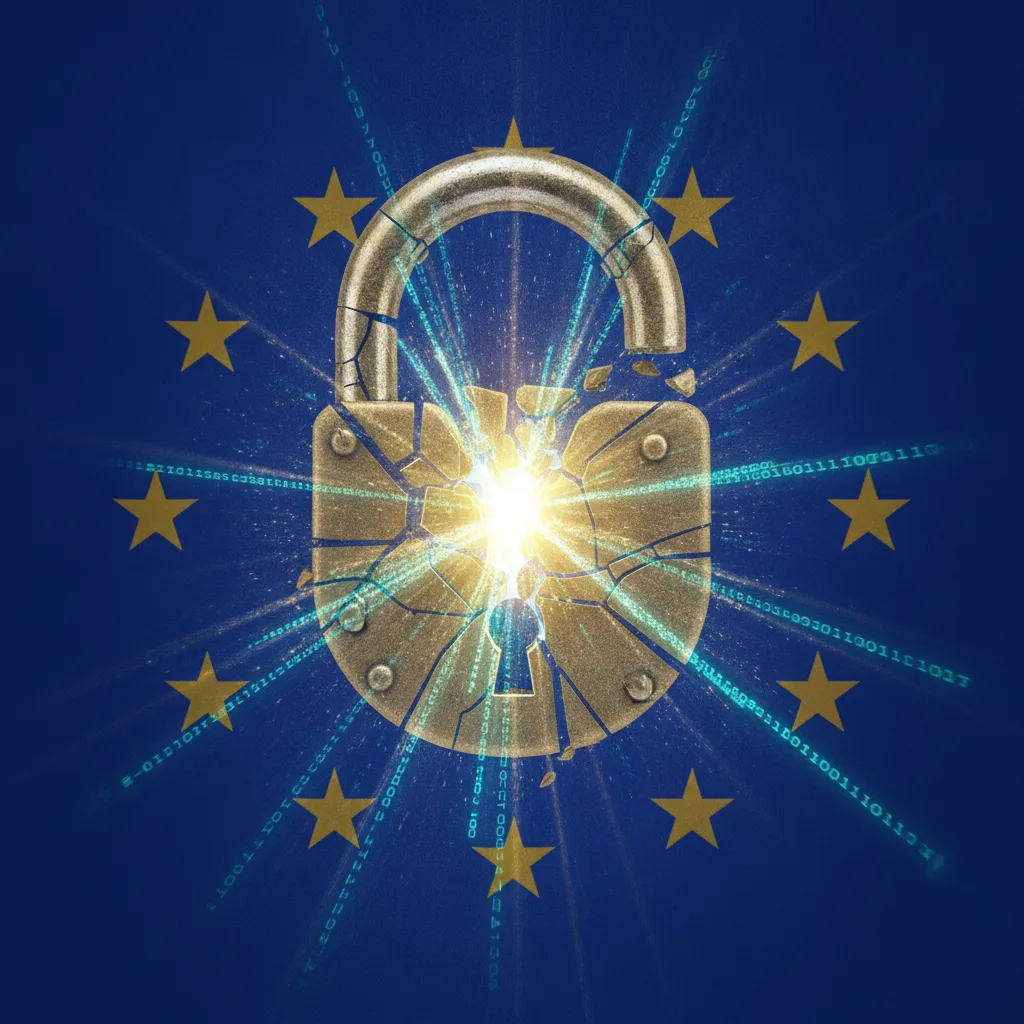
"It’s a technical impossibility to implement client-side scanning without creating a massive security hole," explained Dr.
Anya Sharma, a cryptographer and privacy researcher at the University of Amsterdam, when I spoke with her last Tuesday.
"Imagine building a fortress, then being told to install a secret door that only the guards can open, but that door is fundamentally part of the main wall.
Any attacker who finds that door key, or figures out how to exploit its weakness, can get into the whole fortress. That's what they're asking Signal and WhatsApp to do."
Dr. Sharma emphasized that the very design of E2EE means that if a message is scanned on your device before encryption, it's no longer truly end-to-end encrypted.
The "end" where the scanning happens becomes a point of vulnerability.
This isn't just about CSAM; it’s about a universal scanning capability that, once built, could be expanded to scan for other content — political dissent, copyrighted material, or anything else deemed undesirable by future legislation.
The precedent is chilling, she noted, because it dictates a global standard.
Many tech companies would find it easier to implement a single, compromised system worldwide rather than maintain separate, secure systems for non-EU regions.
The cost and complexity of maintaining two distinct systems — one secure, one compromised — would be immense, pushing companies towards the path of least resistance: a universally weakened standard.
A "Necessary Evil"? The Proponents' View
Yet, the EU Commission, spearheaded by figures like Commissioner Ylva Johansson, steadfastly maintains that Chat Control is a necessary evil.
In a press conference held two days before the final vote, Johansson asserted, "We are not banning encryption. We are not creating backdoors.
We are simply enabling the detection of abhorrent material that harms our most vulnerable children." The narrative from the proponents often frames the debate as a choice between child safety and privacy, implying that those who oppose the legislation are indifferent to the plight of victims.
They point to the sheer volume of CSAM detected by voluntary scanning tools currently used by some platforms (though not E2EE ones) as proof that such measures are effective.
For them, the technical challenges are secondary to the moral imperative.
They argue that the technology can be built in a privacy-preserving way, perhaps using advanced cryptographic techniques like homomorphic encryption or secure multi-party computation.
However, critics quickly counter that these technologies are not mature enough for real-time, mass-scale content scanning of this nature without significant performance and security trade-offs.
The tension here isn't just philosophical; it's a clash between a perceived moral absolute and the hard realities of cryptographic engineering, where a "secure backdoor" is widely considered an oxymoron.
Lessons from Failed Backdoors

The historical track record of such "backdoor" attempts offers a bleak outlook.
For decades, governments globally have sought ways to bypass strong encryption, often citing national security or criminal activity.
In 2016, the FBI famously demanded Apple unlock an iPhone, a request Apple resisted on the grounds that it would create a dangerous precedent and weaken security for all users.
More recently, in early 2025, Australia abandoned its controversial "Assistance and Access Bill" after facing immense pressure from tech companies and privacy groups who demonstrated its severe impact on encryption standards.
Studies by organizations like the European Digital Rights (EDRi) coalition consistently show that client-side scanning is inherently flawed.
A 2024 report by EDRi, for instance, detailed how such systems are prone to false positives, potentially flagging innocent images or conversations, leading to wrongful accusations and a chilling effect on free speech.
Furthermore, the report highlighted the immense power it hands to a single entity to control what content is deemed "acceptable," creating a single point of failure and a high-value target for state-sponsored attackers or malicious actors.
These aren't theoretical concerns; they are lessons learned from repeated attempts to square the circle of mass surveillance with fundamental digital rights.
History suggests that attempts to weaken encryption for a "good cause" inevitably lead to broader vulnerabilities that can be exploited by anyone.
What This Means for Your Digital Life
So, what does Chat Control 1.0 mean for you, the everyday user, or for tech professionals trying to build secure applications?
Firstly, if you're in the EU, or communicate with anyone in the EU, your current reliance on platforms like Signal, WhatsApp, and potentially even Apple's iMessage for truly private conversations is now compromised.
While some platforms may resist, the legal mandate is clear. You'll need to critically re-evaluate your communication tools.
For developers, this means a new era of regulatory compliance that directly conflicts with best practices in security engineering.
Building tools that inherently weaken privacy is a moral and technical tightrope walk.
Expect a surge in demand for decentralized, open-source communication protocols that can operate outside the direct jurisdiction of national governments, or for VPNs that route traffic away from EU servers, though these are imperfect solutions.
Companies operating in Europe will also face increased scrutiny over data handling and potential legal liabilities if their systems are exploited.
The era of unquestioned digital privacy is over for a significant portion of the globe, and understanding the tools you use, and their underlying security, has never been more critical.
My friend, the secure messaging engineer, sighed as he finished his coffee.
"We can build the most robust encryption in the world," he said, "but if the law forces us to put a spy in every pocket, what's the point?" His words lingered, a stark reminder that the battle for digital privacy isn't just fought in code, but in legislative chambers.
The EU's decision isn't just about a technical mandate; it's a profound statement about who controls our digital lives, and whether the right to private communication can truly survive the demands of a surveillance-hungry world.
Have you already started looking for alternative messaging apps, or do you think the privacy implications are being overblown? Let's discuss in the comments.