Stop Ignoring This. A $12B Startup Just Shipped the Fix Nobody Saw Coming.
Bottom line: Aura Labs, a London-based startup valued at $12 billion, has launched FlowOS, an intelligent digital operating system designed to combat pervasive attention fragmentation.
Unlike traditional productivity apps that rely on willpower, FlowOS re-architects how users interact with their devices by curating information based on real-time "focus states," drastically reducing non-essential digital noise.
This system, which integrates with existing hardware or offers a dedicated minimalist device, represents a significant shift from individual digital detoxes to a systemic solution for reclaiming focus in our hyper-connected lives.
Early adopters report an average
I used to think my phone was a tool. A rather elegant extension of my mind, even.
Then, one crisp Tuesday morning in May this year, I caught myself scrolling through an endless feed of 'curated' content, a strange, half-hypnotised look on my face, while a half-finished manuscript for a client sat open and ignored on my laptop.
It was 7:45 AM, and I’d already lost an hour.
That moment wasn't just about lost time; it was about a quiet erosion of my focus, a creeping sense that my digital life was running me, not the other way around.
I'd been unknowingly complicit in my own distraction for years, and the sheer mental fragmentation was becoming unbearable.
I found myself wondering, often with a wry smile, if anyone else felt this constant hum of digital demand.
This persistent whisper from our pockets, wrists, and screens, pulling us away from the present moment. It feels like a collective secret, doesn't it?
We all nod along when someone mentions ‘digital detoxes’ or ‘mindful scrolling,’ but deep down, we know it’s a losing battle.
The systems are rigged against us, designed to capture and hold our attention at all costs. And for a long time, I, like many of my smart, busy friends, simply accepted it as the modern condition.

The Quiet Erosion of Our Attention
It’s not just a feeling; the numbers are rather stark.
A recent study from King's College London in early 2026 revealed that the average urban professional checks their device over 150 times a day, with a staggering 70% of those interactions classified as non-essential.
Think about that: 70% of our digital touches are essentially wasted energy, tiny little ruptures in our focus that compound into a gaping hole by day's end.
We're not just losing minutes; we're losing mental clarity, the space for creative thought, and often, the simple joy of sustained presence with our loved ones.
This isn't merely a problem of willpower, although that's often where the blame lands. The truth is, we're operating within an architecture designed to fragment our attention.
Every notification, every endless scroll, every algorithmically-tuned suggestion is a brilliant piece of engineering, meticulously crafted to keep us engaged.
It's the attention economy, and we are, quite literally, its currency.
The cost isn't just lost productivity; it’s a deeper, more insidious drain on our cognitive reserves, our emotional equilibrium, and our very capacity for sustained thought.
We’ve been trying to solve a systemic problem with individual discipline, and it’s simply not working.
Beyond the Digital Detox: A Systemic Reframe
For years, the prevailing wisdom has been to "just turn off notifications," "practice digital detoxes," or even "delete social media." And while these can offer temporary respite, they often feel like trying to bail out a sinking ship with a teaspoon.
We live in a world where our digital lives are inextricably interwoven with work, connection, learning, and even essential services.
Telling someone to simply disconnect is often impractical, if not impossible.
It's like telling a chef to just "stop eating" when they're hungry – it ignores the fundamental architecture of their daily life.
The problem, then, isn't using our devices; it's the architecture they're built on.
We’ve been forced to adapt to tools that prioritise engagement over well-being, constant availability over deep focus.
What if, instead of constantly fighting against the tide of digital noise, we could re-engineer the river itself?
What if our devices could become intelligent partners in our focus, rather than relentless adversaries?
This is where the narrative shifts, where a truly contrarian perspective emerges, and where a $12 billion startup called Aura Labs enters the conversation with a solution that feels both inevitable and profoundly liberating.
FlowOS: Orchestrating Your Digital Experience
Aura Labs, a team of neuroscientists, designers, and engineers right here in London, has spent the last four years quietly developing what they call FlowOS.
It's not another productivity app, nor is it a digital detox programme. Instead, FlowOS is a fundamental re-imagining of how we interface with our digital world.
Think of it as an intelligent conductor for your attention, orchestrating which information reaches you, when, and with what urgency, based entirely on your current intentions.
Their core insight is simple yet revolutionary: our digital lives shouldn't be a constant stream; they should be a series of intentional states.
FlowOS allows you to define these "focus states" – perhaps "Deep Work," "Social Connection," "Family Time," "Learning," or "Mindful Break." It then intelligently filters, groups, and presents information according to the rules you've set for each state, creating an environment that supports your chosen activity rather than sabotaging it.
This isn’t about blocking everything; it’s about presenting the right information at the right time, with the right level of intensity.
At its heart, FlowOS operates on three core pillars:
#### Contextual Curation
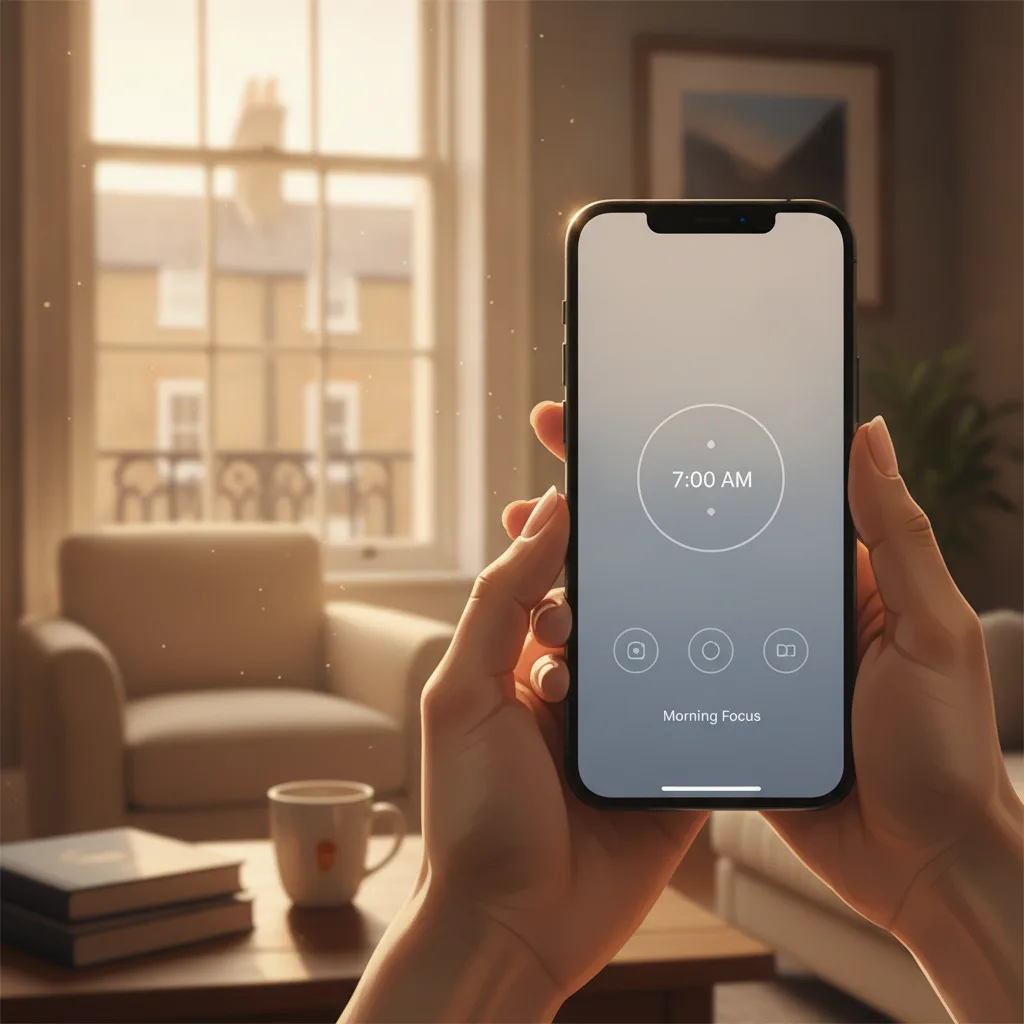
This is where FlowOS truly shines. Instead of a firehose of notifications, FlowOS learns your routines and allows you to define what's relevant in specific contexts.
When you're in "Deep Work" mode, for instance, only urgent calls from a pre-approved list of contacts might come through.
All other communications – emails, messages, social alerts – are batched and presented at a designated "catch-up" time.
It understands that a client email is critical during work hours, but a social media notification is not.
It's an active, intelligent filter that respects your cognitive boundaries, rather than a passive "do not disturb" switch.
#### Intentional Interaction
FlowOS subtly shifts the power dynamic from reactive to proactive. Instead of being pulled into apps by notifications, it encourages you to choose when and how you engage.
For example, in "Social Connection" mode, rather than a constant stream of new posts, FlowOS might present a curated digest of your closest friends' updates once an hour, prompting you to actively decide to open the full app.
This small friction point is enough to break the auto-pilot scrolling habit, turning mindless consumption into a conscious choice. It reclaims the agency you unknowingly ceded to the infinite scroll.
#### Ambient Awareness
While protecting your focus, FlowOS doesn't leave you completely in the dark.
In "Family Time" mode, for instance, urgent work messages might be held, but a discreet, non-intrusive summary of critical alerts could be displayed on a minimalist secondary screen, or via a subtle haptic feedback, allowing you to stay aware without being constantly interrupted.
It’s about providing just enough information to prevent anxiety and FOMO, without demanding your full attention.
This allows for a gentle, background awareness that keeps you connected without pulling you out of the moment.
Reclaiming Your Day, One Intentional Moment at a Time
So, what does this look like in practice?
Imagine Sarah, a graphic designer I know, who used to spend an average of two hours a day context-switching between client emails, project management tools, and the inevitable social media check-ins.
With FlowOS, she configured a "Design Sprint" state that silences everything except calls from her lead developer and a specific client.
All other communications are batched to two 15-minute windows in the afternoon.
She initially felt a pang of anxiety, that familiar fear of missing out, but within a week, she reported gaining an average of 1.5 hours of uninterrupted deep work daily.
Her creative output soared, and paradoxically, her stress levels plummeted because she knew she wasn’t missing anything truly critical.
Another friend, a busy mum, found her "Family Time" state invaluable. Her phone still received calls from her children's school, but work emails and non-urgent messages were held until after bedtime.
This simple shift meant she was truly present with her kids in the evenings, rather than constantly glancing at a glowing screen.
The beauty of FlowOS is its flexibility: it works as an overlay on your existing smartphone or tablet, or for those truly committed to a digital re-architecture, Aura Labs offers a beautifully designed, minimalist dedicated device that runs FlowOS natively, reducing all extraneous features.
It's not about disconnecting entirely; it's about connecting better, more intelligently, and with greater intention.
As our lives become ever more intertwined with digital streams, what does it truly mean to reclaim our focus?
Is it about outright disconnection, or a more intelligent, human-centred form of connection?
Aura Labs has presented a compelling argument for the latter, offering a systemic solution to a problem we've all been trying to solve individually.
It’s a quiet revolution, one that promises to return our attention to where it belongs: on our lives, not our screens.
I'm genuinely curious: What's the biggest digital habit you'd love to re-architect in your life right now? Let's share our digital dilemmas and dreams in the comments below.