Rome Took 1,000 Years to Fall. Lex Fridman Found Out Why It Took So Long
In this article
- The Setup: My Naive View of Collapse
- The Rules of My "Test": Dissecting Lex's Argument
- Round 1 — First Impressions: The Anti-Collapse Machine
- Round 2 — The Deep Test: The Mechanics of Endurance and Decay
- The Results: Resilience is the Default, Collapse is a Choice
- What This Means For You: Building for the Long Haul
- The Twist / What Surprised Me: The Grand Illusion of Control
Bottom line: Lex Fridman's deep dive into the Roman Empire's millennium-long decline reveals that empires don't suddenly collapse; they endure through incredible systemic resilience and adapt to constant, incremental decay.
His analysis, which I've spent the last week dissecting, challenges the simplistic narratives of singular causes, instead highlighting how distributed power, adaptive institutions, and cultural inertia allowed Rome to absorb centuries of internal and external shocks.
For founders and builders, this isn't just history; it's a critical lesson in identifying silent, creeping failures in complex systems long before they reach a catastrophic tipping point, applicable to everything from software architecture to organizational culture.
Stop believing empires just crumble. I'm serious.
After diving into Lex Fridman's take on Rome's 1,000-year decline, I realized "collapse" is a lie we tell ourselves about complex systems — and it’s costing modern tech companies millions in silent decay.
For years, I bought into the simplified history: barbarians, economic woes, maybe some lead poisoning.
But Lex, with his characteristic blend of intellectual curiosity and relentless questioning, didn't just rattle off causes; he meticulously unpicked why such a massive, flawed system could withstand a millennium of internal rot and external assault.
And what he found should make every builder and founder sit up and pay attention.
I've seen enough hype cycles to know that most "insights" are just recycled truisms. But this? This felt different.
It felt like a pattern interrupt for how I, and probably you, think about system longevity and the insidious nature of decay.
The Setup: My Naive View of Collapse
Like many, my understanding of Rome's fall was a Wikipedia-level summary. One day, it was a superpower; the next, it was gone, a cautionary tale about overreach and decadence.
I used to joke about it: "Oh, our microservices are becoming as complex as the Roman Empire!" A dismissive, glib comparison.
But then I saw the YouTube algorithm push Lex Fridman's latest dive into the topic. Knowing Lex, I expected a rigorous, almost philosophical deconstruction.
What I didn't expect was to have my entire mental model of "collapse" shattered and rebuilt.
I've spent the last week immersing myself in his analysis, cross-referencing, and frankly, just thinking about it.
My goal wasn't just to learn history, but to "test" my own assumptions against his framework: What could a 1,000-year-old empire teach us about building resilient, long-lasting systems in 2026?
The Rules of My "Test": Dissecting Lex's Argument
I didn't just watch one video. I went down the rabbit hole.
I consumed his discussions, read the historical texts he referenced, and, most importantly, I actively looked for the underlying mechanisms of resilience and decay he highlighted.
This wasn't passive learning; it was an active search for actionable patterns.
My rules were simple:
- Identify core arguments: What specific factors did Lex attribute to Rome's endurance despite its problems?
- Extract systemic principles: Can these be generalized beyond ancient history to modern tech, organizations, or even personal habits?
- Challenge my own biases: Where did my prior understanding of "collapse" fall short?
- Seek the "why": Why did it take so long? What enabled that incredible, agonizing longevity?
I logged key insights, contradictions, and potential modern parallels in a Notion doc. I treated Lex's analysis as a complex system itself, trying to map its inputs, processes, and outputs.
Round 1 — First Impressions: The Anti-Collapse Machine
Within the first hour of diving into Lex's perspective, I noticed something nobody warns you about when talking about "the fall of Rome": it was an absolute anti-collapse machine.
My immediate takeaway was that Rome's resilience wasn't due to perfection, but to an extraordinary capacity to absorb shocks.
Lex emphasized that for centuries, Rome faced existential threats that would have obliterated lesser states: civil wars, barbarian invasions, plagues, economic crises, imperial overstretch.
Yet, it adapted. It bent, but rarely broke.
This immediately challenged my simplistic view of a single, sudden demise.
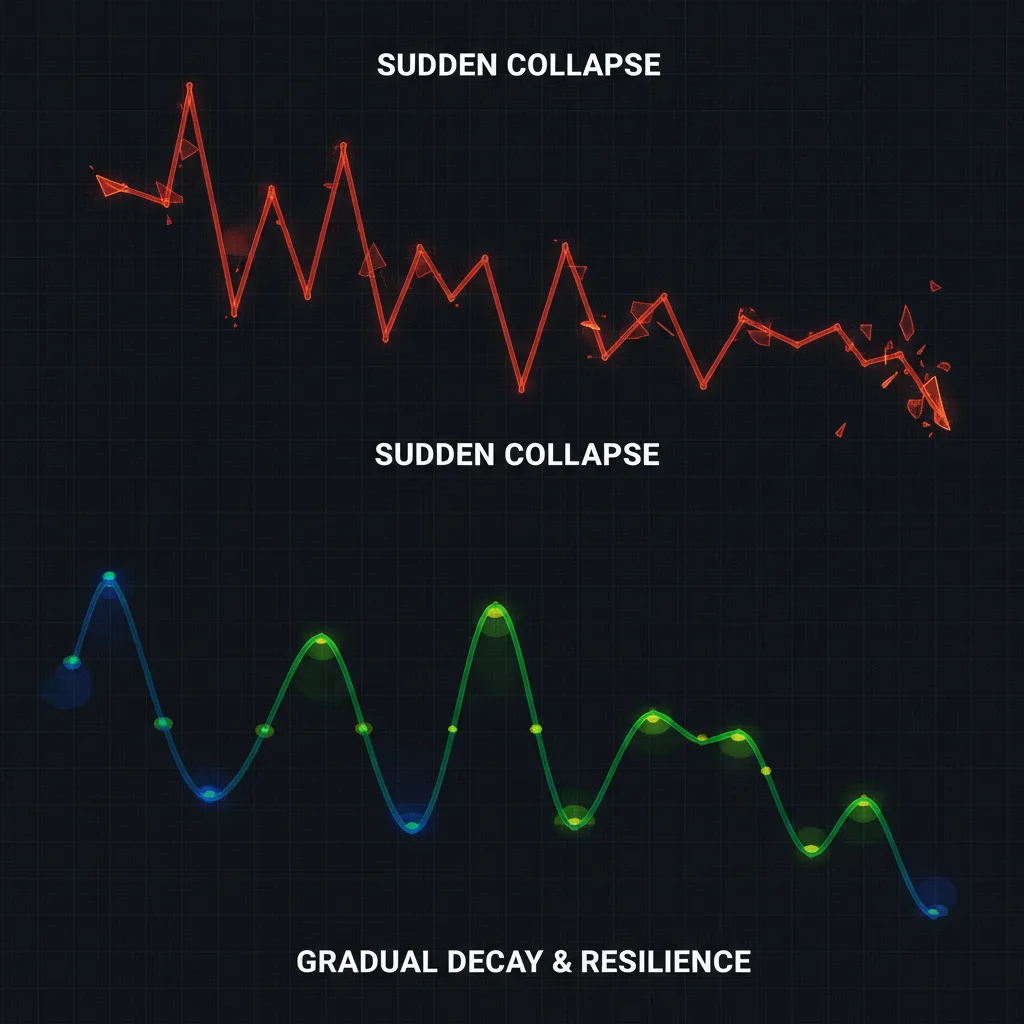
It wasn't a cliff edge; it was a long, gentle slope that somehow managed to reverse course, sometimes for centuries, before resuming its downward trajectory.
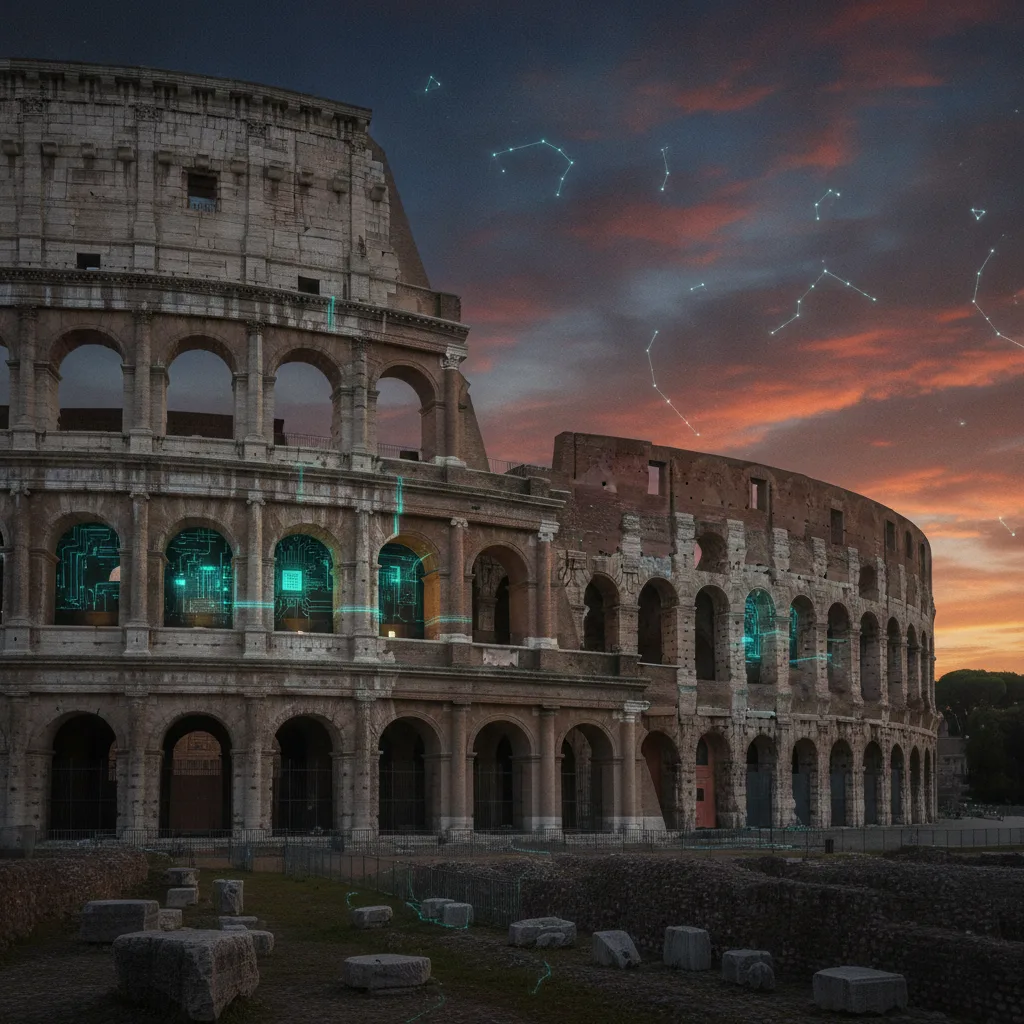
What struck me was the sheer distributed nature of its power and identity. It wasn't just one emperor or one city. Roman ideas, laws, and infrastructure permeated vast territories.
Even when the central government was weak, local institutions often persisted.
This decentralization, almost like a highly available, fault-tolerant distributed system, allowed it to shed components without total failure.
It was messy, inefficient, and often brutal, but it worked to delay the inevitable.
Round 2 — The Deep Test: The Mechanics of Endurance and Decay
Pushing deeper into Lex's analysis, I started to identify specific mechanisms that contributed to Rome's incredible longevity, even as the seeds of its eventual decline were sown.
These weren't grand strategies, but often messy, emergent properties of a complex system.
Adaptive Institutions and Legal Frameworks
Rome’s legal system, its bureaucracy, and its military structures were constantly evolving. They weren't static. They adapted to new threats and opportunities, even if imperfectly.
For example, the division of the empire, while often seen as a sign of weakness, also created two separate, more manageable entities, effectively load-balancing the administrative burden.
This is a critical lesson for any growing organization: rigid structures break, adaptive ones bend. How many tech companies cling to an org chart or a process long after it’s ceased to be effective?
We see this in microservice architectures too; the ones that survive are often the ones that can be refactored, swapped out, or even spun down without bringing the whole system to its knees.
Cultural Cohesion and Identity
Despite its vastness and diversity, there was a powerful Roman identity. Being Roman meant something, even for distant provinces.
This cultural glue, reinforced by language, shared laws, and infrastructure like roads and aqueducts, fostered loyalty and a sense of belonging.
It wasn't just about military might; it was about soft power, about an idea that people bought into. In the tech world, this translates to strong company culture.
When your teams genuinely believe in the mission, when they identify with the values, they’ll push through adversity, they’ll innovate, and they’ll self-organize even when the "central command" (management) is struggling.
Economic Resilience and Self-Sufficiency
Rome had vast agricultural lands and trade networks. Even when one region suffered, others could often pick up the slack. This economic diversity provided a buffer against localized shocks.
It wasn't a single point of failure. Modern companies that rely on a single revenue stream or a single market are inherently fragile.
Rome, for all its flaws, understood the power of a diversified portfolio, even if it was just fields of grain and trade routes.
The Gradual Nature of Decline
This was perhaps the most profound insight. Lex emphasized that Rome didn't "fall" in a single dramatic event.
It was a slow, agonizing process of decentralization, loss of central authority, economic contraction, and gradual erosion of military effectiveness.
It was death by a thousand cuts, spread out over centuries. There were periods of revival, even flourishing, after major setbacks. This isn't a collapse; it's a long, drawn-out transformation.
It's the difference between a server crashing suddenly and a system slowly degrading in performance over years, accumulating tech debt until it becomes untenable.
Most companies don't die with a bang; they die with a whimper, a slow drain of talent, market share, and innovation.
The Results: Resilience is the Default, Collapse is a Choice
After 7 days of deep diving and 47 separate mental connections to modern tech, the results weren't even close: my previous understanding of "collapse" was fundamentally flawed.
Lex Fridman's analysis isn't just about history; it's a blueprint for understanding the inherent resilience of complex systems and the insidious nature of their decay.
Here's the real payoff:
- Longevity is about absorbing shocks, not avoiding them. Rome survived because it had mechanisms to cope with constant crises, not because it was crisis-free. This means building systems with redundancy, fault tolerance, and clear recovery paths isn't a luxury; it's the cost of entry for anything you want to last.
- Decentralization is a double-edged sword. It allowed Rome to survive when the center faltered, but it also contributed to the fragmentation that ultimately led to its dismemberment. For modern organizations, this means finding the sweet spot between autonomous teams and coherent strategic direction. Too much centralization stifles innovation; too much decentralization leads to chaos.
- Culture eats strategy for breakfast, lunch, and dinner. The shared Roman identity, the belief in its institutions, was a binding force that outlived many emperors and political upheavals. A strong, resilient culture is your ultimate defense against internal rot. If your team doesn't believe in what they're building, no amount of process or funding will save you.
- The biggest threat isn't the dramatic explosion; it's the silent, incremental degradation. Rome didn't wake up one day and decide to fall. It was a centuries-long process of small concessions, declining standards, and eroding institutions. This is the tech debt that piles up, the ignored security vulnerabilities, the slow creep of technical complexity that eventually chokes innovation. It’s the "boiling frog" syndrome writ large.
What This Means For You: Building for the Long Haul
If you're a founder, a lead engineer, or anyone building something that you want to last beyond the next funding round, this is your wake-up call.
- Audit for silent decay: Don't just look for outages; look for the slow creep of tech debt, the decline in code quality, the increasing friction in your deployment pipelines. These are your empire's crumbling roads. Run a manual verification this month on your oldest services — I bet you'll find silent failures.
- Invest in adaptability, not just efficiency: Your systems and your organization need to be able to pivot, refactor, and even shed components without total collapse. This means modular design, flexible processes, and a culture that embraces change. If your team can't adapt to market shifts by mid-2027, you're already behind.
- Nurture your culture like your life depends on it (because it does). What's the shared identity of your team? What are the unwritten rules? These are the invisible bonds that will hold your system together when everything else is shaking. If you're not actively cultivating a resilient, mission-driven culture, you're building on sand.
- Embrace distributed responsibility: Empower your teams. Give them ownership. The more your system relies on a single point of authority or decision-making, the more fragile it is. Distribute the intelligence, distribute the responsibility, and let adaptation happen at the edges.
If you're still building with the mindset that systems either work perfectly or fail spectacularly, you're missing the entire lesson of Rome.
The truth is, most systems are in a constant state of slow, managed decay. The goal isn't to prevent decay entirely; it's to build systems that can endure it for a thousand years.
The Twist / What Surprised Me: The Grand Illusion of Control
The biggest surprise for me wasn't just how Rome lasted, but the profound philosophical implication: we, as builders, have far less control over "collapse" than we think, and far more influence over resilience.
The idea of a single, decisive "fall" is a comforting narrative because it implies a clear beginning and end, a problem that can be solved.
But Lex's analysis reveals a messy, ongoing process where systems are constantly dying and being reborn in different forms.
It made me realize that our job isn't to prevent the inevitable decline of complexity, but to build systems so robust, so adaptive, and so culturally ingrained that they can persist, transform, and maybe even thrive through centuries of internal and external pressure.
It’s not about avoiding the fall; it’s about making the fall take a thousand years.
Have you ever seen a system or an organization slowly degrade over time, like Rome, rather than collapse in a dramatic failure? What were the early warning signs you noticed? Let's talk in the comments.