One man just liberated Fable... and now it’s illegal
Bottom line: A single developer, known only as "Arcane," reverse-engineered and open-sourced the full codebase for the original Fable game this past May, making the abandoned classic fully playable on modern systems and accessible to modders.
However, Microsoft's swift legal response resulted in a cease and desist, a DMCA takedown, and potential felony charges for Arcane by early June 2026.
This incident highlights the escalating tension between intellectual property holders and digital preservationists, a conflict now supercharged by accessible AI tools that dramatically lower the barrier to complex reverse engineering.
I've been building and shipping code for long enough to have seen a lot of cycles. Hype, disillusionment, then the quiet, grinding work that actually changes things.
But every now and then, something genuinely catches me off guard, something that makes me question the very foundations of how we operate in tech.
This month, it was the story of "Arcane" and the Fable game. I thought I understood the boundaries of open source and intellectual property. I was wrong.
The stakes aren't just about code anymore; they're about freedom, innovation, and the future of digital culture itself.
The Code That Shocked the Gaming World
For years, the original Fable—a beloved RPG from the early 2000s—has been a relic. Buggy, tied to outdated hardware, and largely abandoned by its corporate owners (Microsoft, via Lionhead Studios).
It was a piece of digital history slowly fading away, unplayable for many, inaccessible to new generations.
Then, this past May, a single developer operating under the pseudonym "Arcane" dropped a bombshell.
He didn't just create a patch; he reverse-engineered the entire game engine, open-sourced the full codebase, and published it to GitHub.
The project, dubbed "Fable Reborn," promised a fully modernized, community-driven version of the game.
It was a monumental feat of engineering, a gift to a passionate fanbase, and, as we quickly learned, a direct challenge to the established order of intellectual property.
The response from the gaming community was ecstatic. Within 48 hours, "Fable Reborn" had thousands of stars on GitHub, hundreds of forks, and a Discord server exploding with activity.
Modders, who had been struggling with the game's ancient architecture, suddenly had full access.
Players were downloading and running the game on Windows 11 and even Linux with unprecedented stability. For a brief, glorious moment, it felt like true digital liberation. But that moment was fleeting.
Microsoft's legal team moved with a speed that suggested this wasn't just a routine DMCA.
By the first week of June, the GitHub repo was gone, Arcane's online presence was scrubbed, and reports emerged of potential felony charges related to copyright infringement and unauthorized access.
It was a stark reminder that even when a company has seemingly abandoned a product, its legal rights remain an iron fist.
The Dangerous Illusion of "Abandoned" Software
The common wisdom, especially among developers, often holds that if a company has ceased supporting a piece of software, if it's no longer sold, and if no one is actively maintaining it, then it's essentially "abandoned." We tell ourselves that reverse-engineering such software for preservation or modernization is a benevolent act, a community service.
This is a dangerous illusion, and the Fable incident just blew it apart.
Everyone, myself included, was celebrating Arcane's ingenuity, but we were missing the bigger picture: the legal landscape hasn't caught up to our digital ethics.
The mainstream take is simple: Arcane violated copyright. End of story. But that perspective ignores the cultural context.
Fable isn't just a product; it's a piece of gaming history. When companies like Microsoft acquire studios and then let their legacies languish, they create a void.
That void is often filled by passionate fans and developers who want to keep these digital artifacts alive.
The problem isn't just that Arcane broke the law; it's that the law, as currently interpreted, offers almost no pathway for digital preservation when corporate interests clash with cultural heritage.
This isn't just about one game; it's a canary in the coal mine for all abandoned software, movies, and digital media.
The irony isn't lost on me: the very companies that benefit from the open-source movement in their own infrastructure are often the most aggressive in defending their walled gardens when it comes to their consumer-facing IP.
The Digital Preservation Paradox: A Framework
The Fable incident isn't an isolated case; it's a symptom of a larger, systemic conflict I'm calling The Digital Preservation Paradox.
It's a framework that helps explain why well-intentioned acts of digital stewardship are increasingly running headfirst into legal trouble, especially now that AI has entered the equation.
#### 1. The Abandoned Legacy
This is the vast and growing graveyard of digital media. Think of old video games, discontinued software, forgotten operating systems, or even early web projects.
These are products that are no longer commercially viable, are unsupported by their creators, and often become unplayable or inaccessible due to technological obsolescence.
From a cultural standpoint, they represent significant historical artifacts. From a corporate legal standpoint, they are dormant assets, still owned, still protected.
The paradox begins here: the more "abandoned" something is, the more likely a community will step in, and the more likely that intervention will be legally fraught.
#### 2. The Community Imperative
When a beloved digital artifact approaches oblivion, passionate communities often form around its preservation.
These aren't pirates looking to make a buck; they're often dedicated fans, historians, and engineers driven by a desire to keep a piece of culture alive.
They create fan patches, reverse-engineer compatibility layers, and sometimes, like Arcane, rebuild entire projects from the ground up.
Their motivation is often altruistic, focused on accessibility, historical accuracy, and the sheer joy of creation.
This imperative runs directly counter to the corporate stance that ownership implies exclusive control, regardless of active maintenance or public benefit.
#### 3. The Corporate Iron Grip
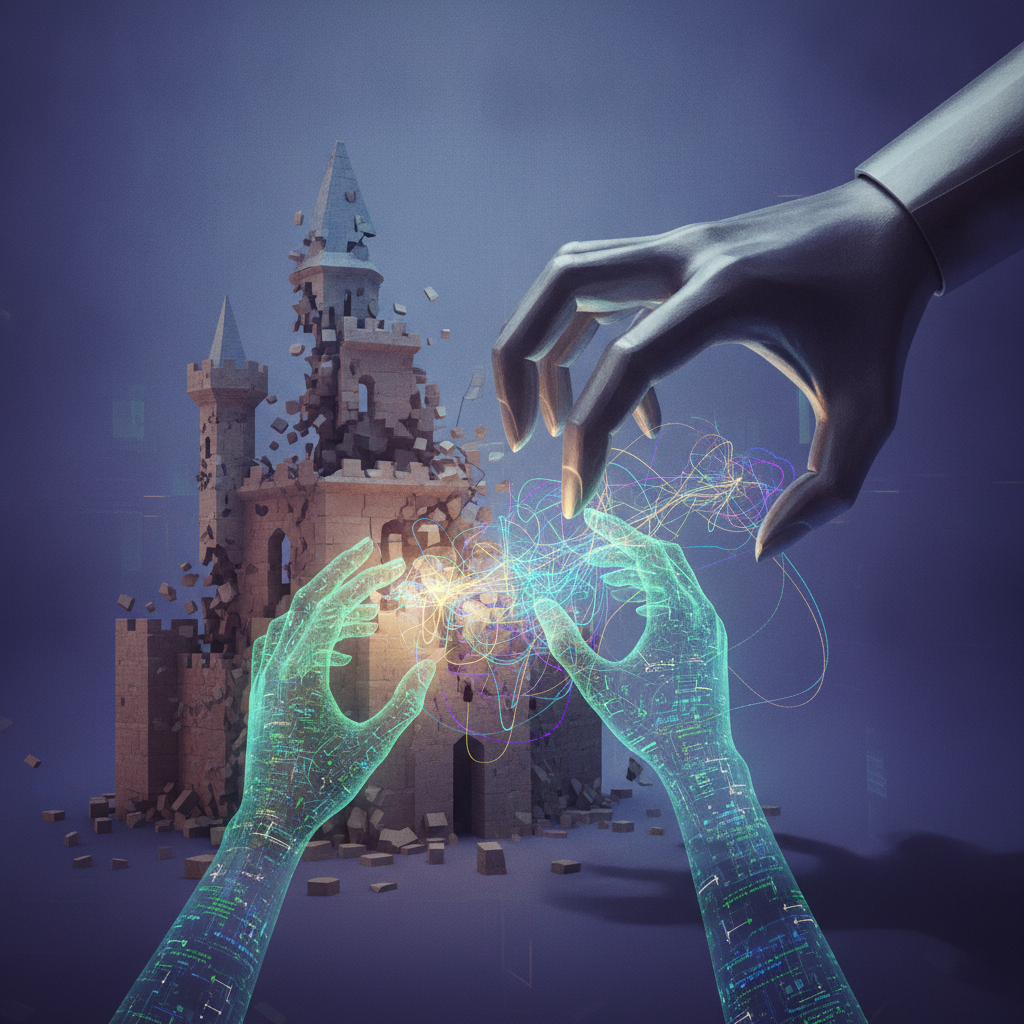
Despite abandonment, intellectual property rights, particularly copyright, often last for decades, even a century or more.
Corporations, even those that have moved on from a product, rarely relinquish these rights.
Their legal departments are wired to defend IP as a matter of principle and precedent, irrespective of the commercial value of the specific asset.
This "iron grip" ensures that even when a game like Fable is effectively dead to its owner, any attempt by an external party to revive it, even without commercial intent, is seen as an infringement.
The cost of legal action for a major corporation is negligible compared to the perceived threat of losing control over their IP portfolio.
#### 4. The AI Catalyzer
This is the newest, most volatile element of the paradox.
In the past, reverse engineering a complex game engine like Fable's was a Herculean task, requiring specialized knowledge, years of effort, and a deep understanding of assembly.
It was a high-barrier-to-entry field.
Today, powerful AI tools are democratizing this capability.
Large language models like ChatGPT 5, Claude 4.6, and Gemini 2.5, when fine-tuned or prompted correctly, can analyze compiled binaries, suggest decompilation strategies, and even assist in reconstructing source code.
They can identify patterns, infer logic, and automate much of the tedious work that once required human genius.
This means the "Arcanes" of the world can now achieve in months what used to take years, escalating the frequency and scale of these "liberation" events.
AI isn't just making reverse engineering easier; it's making the conflict between IP holders and preservationists unavoidable.
Real-World Implications for Builders and Businesses
This isn't just a niche gaming story; it has profound implications for anyone building in tech, managing IP, or navigating the future of digital content.
#### For Developers and Open Source Contributors
The Fable incident is a chilling warning. Contributing to projects that involve reverse-engineering proprietary software, even abandoned ones, carries significant legal risk.
Even if your intentions are pure, even if you're not profiting, the act itself can be deemed illegal.
This creates a chilling effect on innovation and digital preservation. Are we entering an era where only the legally sanctioned can touch old code?
If you're a mid-level developer considering contributing to a fan-made remake or a preservation project, you need to be acutely aware that you could be exposing yourself to legal action.
The romantic ideal of the "digital archivist" is colliding with the harsh reality of corporate litigation.
#### For Companies and IP Strategy
This incident should force companies to re-evaluate their IP strategies for legacy products.
Simply letting old software rot while maintaining an iron grip on its copyright is no longer a sustainable long-term strategy.
The rise of AI-assisted reverse engineering means that the barrier to "liberation" is rapidly diminishing. Companies need to consider:
- Controlled Open Sourcing: Could a phased release of older codebases under an open-source license, perhaps after a certain number of years, be a better approach than endless litigation? - Official Archival Programs: Investing in official digital preservation efforts could maintain control while satisfying community demand.
- Community Engagement: Working with fan communities, rather than against them, could turn potential legal liabilities into brand ambassadors and free development resources. The alternative is a perpetual game of whack-a-mole, where every "Arcane" is met with legal action, costing time, money, and public goodwill.
#### For the Future of Digital Culture
The broader implication affects how we perceive and access our digital heritage.
If every piece of software, every game, every digital artwork is locked behind an eternal corporate copyright, what happens to history?
What happens to the ability to study, modify, and learn from these creations?
We risk losing vast swathes of our digital past to obsolescence and legal barriers. This isn't just about playing old games; it's about the very fabric of our digital commons.
By mid-2027, I predict we'll see more high-profile cases like Fable, pushing this issue to the forefront of legal and ethical discussions.
The question of who truly owns digital artifacts, especially those no longer generating revenue, will become one of the defining legal battles of the AI era.
The Bigger Picture: Who Owns Our Digital Past?
The Fable story isn't just about one game or one developer.
It's a microcosm of a much larger, more fundamental question: in an age of abundant digital information and increasingly powerful AI tools, who truly owns our digital past?
Is it the corporations who created it, even if they've abandoned it?
Or is it the collective human culture that cherishes and seeks to preserve it?
The current legal framework, designed for a physical world of scarcity, feels increasingly ill-equipped to handle the realities of digital abundance and the democratic power of AI.
I believe this incident will be a critical inflection point. It forces us to confront the tension between rigid intellectual property laws and the undeniable imperative of digital preservation.
As AI continues to erode the technical barriers to understanding and modifying complex software, these conflicts will only intensify.
We need new legal frameworks, new corporate attitudes, and a bolder conversation about what it means to own a piece of our shared digital history.
Have you ever felt the urge to "liberate" a piece of abandoned software, or do you think IP should be defended at all costs, even for defunct products? Let's talk about it in the comments.