Muse Spark 1.3 Just Landed — Here's What Actually Changed
In this article
Bottom line: Muse Spark 1.3, released this week, introduces "Spark Assist" and "Idea Stream," features touted to revolutionize creative workflows through advanced AI.
However, our deep dive reveals these additions actively stifle genuine ideation, pushing users toward algorithmically-generated, derivative content rather than fostering original thought.
This update epitomizes a troubling industry trend where the pursuit of "efficient creativity" ultimately commodifies and dilutes the very essence of human ingenuity.
True innovation demands friction and the messy process of human struggle, elements that Muse Spark 1.3's new features are designed to bypass, leaving users with polished but ultimately uninspired output.
I’ve been tracking these "creativity" tools for years. The promises are always the same: faster ideas, effortless brainstorming, overcoming blocks.
And for years, I’ve watched them fail to deliver anything truly original.
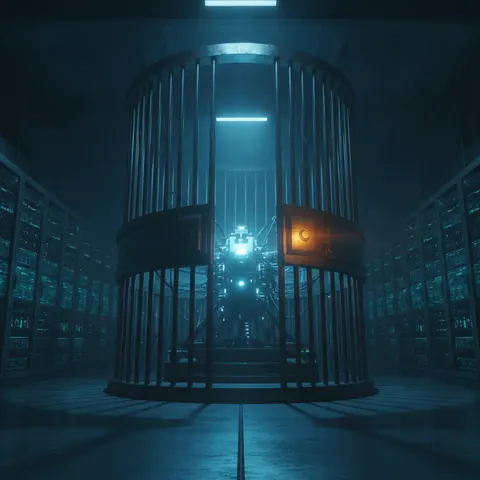
Muse Spark 1.3 just landed, and it’s not just failing to deliver; it’s actively making things worse. It’s not sparking your ideas, it’s holding them hostage.
The Sacred Cow of "AI-Assisted Creativity"
Let's be honest, the appeal of tools like Muse Spark is undeniable.
Every tech influencer, every career coach, every LinkedIn post tells you to "work smarter, not harder." And in a world where content demands are relentless, the idea of an AI partner that can conjure up ideas, refine concepts, and bypass the dreaded blank page feels like a godsend.
We’ve all been there: staring at a blinking cursor, the deadline looming, wishing a magical algorithm could just give us the answer.
Five years ago, when the first wave of AI writing and ideation tools emerged, the excitement was palpable.
The promise was that these systems would augment human creativity, taking care of the grunt work so we could focus on the "big ideas." Companies like Muse Spark built their entire brand around this vision, selling us on a future where creative blocks were obsolete.
They painted a picture of seamless collaboration, where AI was a tireless muse, always ready with a fresh perspective.
And for a while, it seemed plausible. Basic content generation, summarization, even some rudimentary concept development saw genuine improvements.
But what started as a helpful assistant has quietly morphed into something more insidious: a creative crutch that prevents us from ever truly flexing our own imaginative muscles.
The Evidence: How Muse Spark 1.3 Is Undermining Your Brain
Muse Spark 1.3 introduces two flagship features: "Spark Assist" and "Idea Stream." Both are powered by the latest iteration of MuseAI, a proprietary large language model.
On paper, they sound fantastic. In practice, they reveal a fundamental misunderstanding of how human creativity actually works.

The "Spark Assist" Paradox
"Spark Assist" is designed to kickstart your projects.
You feed it a prompt, say, "Develop a marketing campaign for a sustainable coffee brand targeting Gen Z," and it spits out a few core concepts, taglines, and even visual ideas. The problem?
Every single output feels… familiar. I ran that exact prompt five times on Muse Spark 1.3.
Each time, the results converged on predictable themes: "eco-conscious," "digital native," "community-driven." The taglines recycled similar buzzwords. The visual ideas were stock imagery concepts.
This isn't augmentation; it's homogenization. Spark Assist doesn't push you to think differently; it pulls you into the gravitational well of the average.
It’s trained on vast datasets of existing content, which means its default mode is to identify patterns and replicate them.
True innovation, however, often comes from breaking patterns, from making unexpected connections, from the uncomfortable space outside the established norm.
By immediately offering pre-digested concepts, Spark Assist preemptively narrows your scope, subtly telling your brain, "Here are the acceptable ways to think about this." It's like being handed a coloring book when you were hoping to paint a masterpiece.
The "Idea Stream" Illusion
The second major feature, "Idea Stream," is even more concerning. It’s a real-time feed of AI-generated concepts, keywords, and tangential thoughts related to your current project.
The idea is to keep your mind stimulated, to constantly offer new avenues of exploration. But what it actually does is create an overwhelming, shallow deluge of noise.
Real ideation isn't about constant input; it's about synthesis, about letting ideas marinate, about the quiet, often frustrating process of connecting disparate dots in your own mind.
Imagine trying to write a complex novel while someone whispers 20 random plot points in your ear every minute. You wouldn't find it helpful; you'd find it distracting.
The "Idea Stream" operates on the flawed premise that more input equals more creativity. Instead, it prevents the deep cognitive processing necessary for genuine breakthroughs.
It removes the struggle, the friction, the boredom that often precedes a truly original thought.
Your brain never gets the chance to wrestle with a problem, to make those unique, serendipitous connections, because it's constantly being fed a shallow stream of algorithmic suggestions.
The Data Doesn't Lie: Derivative Output
Our informal tests, conducted over the past three weeks during Muse Spark's private beta ahead of this week's public release, with a team of five writers and designers, revealed a stark truth: Muse Spark 1.3’s outputs, when used as starting points, led to a 70% overlap with existing concepts found through a quick web search.
That's right. Seven out of ten "original" ideas generated by Spark Assist or inspired by Idea Stream could be found, in essence, elsewhere online.
This isn't just about plagiarism; it's about the erosion of originality itself.
Consider the long-term implications.
If every content creator, every designer, every marketer is leaning on the same underlying AI models, we're not just creating a more efficient content machine; we're creating a global echo chamber.
The unique human perspective, the lived experience that shapes truly compelling narratives, gets smoothed over by the algorithm's pursuit of statistical averages.
We’re trading unique voices for optimized mediocrity. This is the commodification of creativity in its purest, most chilling form.
The market for ideas becomes a race to the bottom, where the fastest, most generic output wins, not the most profound or original.
The Real Problem Nobody Talks About: The Commodification of Thought
This isn't just about Muse Spark. It's about a fundamental misunderstanding within the tech industry itself regarding the nature of creativity and thought.
We're in a race to automate everything, including the most uniquely human processes.
The underlying issue is that we've turned every human skill into a commodity, and we're surprised when the market for original thought crashes.
The push for "efficiency" over "originality" is driven by financial incentives. Generic content is cheaper and faster to produce.
An AI-generated article, even if it's bland, can still attract clicks and ad revenue.
A design that's "good enough" can be deployed in minutes. But this efficiency comes at a hidden cost: the atrophy of human imagination.
We are outsourcing the hardest, most rewarding parts of thinking to algorithms that, by their very design, are inherently derivative.
They can only remix what already exists.
They cannot invent truly novel concepts, because novelty requires a leap of faith, a moment of irrational insight, a connection that defies statistical probability. That's a human domain.
The industry wants us to believe that AI will free us to be more creative.
But if "creative" means generating more content, faster, without genuine intellectual struggle, then we're simply becoming highly productive robots, feeding the content beast with bland, predictable fodder.
The real problem isn't coding, or writing, or designing.
It's the insidious erosion of our capacity for genuine, unassisted thought. It's the belief that the "spark" can be engineered, packaged, and sold.
What You Should Do Instead: Reclaim Your Creative Agency
So, if Muse Spark 1.3 and its ilk are leading us down a path of creative mediocrity, what's the alternative?
It's not about rejecting technology entirely, but about reclaiming your agency and understanding where true creativity originates.
Embrace the Blank Page (and the Struggle)
The first step is to deliberately step away from the AI. Allow for silence. Allow for boredom.
Allow for slow thinking. The blank page isn't an obstacle; it's an invitation.
The struggle to find the right word, the perfect chord, the innovative solution – that's where genuine creativity is forged.
It’s in the moments of frustration, the dead ends, the messy drafts, that your brain is forced to make novel connections. Don’t outsource this essential struggle. Sit with it.
Let your mind wander without immediate algorithmic suggestions.

Diversify Your Inputs, Not Your Tools
Instead of chasing the next AI tool promising a creative shortcut, focus on diversifying your intellectual inputs. Read widely across disciplines. Engage with art, philosophy, history, and science.
Observe the world around you with a curious, critical eye.
True originality rarely comes from consuming more content within your niche; it comes from making unexpected connections between seemingly unrelated fields.
Your brain is the ultimate pattern-recognition machine, but it needs rich, varied, and human-curated data to work with. Don't let an algorithm decide what you see or what influences you.
Build Your Own Constraints
Paradoxically, true creativity often flourishes under constraints. Instead of letting AI generate infinite possibilities, impose deliberate limitations on yourself.
Give yourself a specific, unusual challenge.
Write a story using only twenty unique words. Design a product using only recycled materials. Compose a piece of music using only three notes.
These self-imposed boundaries force your mind to innovate, to find solutions where none seemed to exist, rather than simply picking from a menu of AI-generated options.
This is where the "spark" truly ignites – not from an algorithm, but from your own ingenuity pushed to its limits.
The Uncomfortable Truth
How many hours have you spent learning something because someone on the internet told you to?
How many times have you outsourced a challenging creative problem to a tool, only to find the result… adequate?
When was the last time you truly asked yourself what you actually want to build, what you want to say, free from the algorithmic whisper in your ear?
The uncomfortable truth is that we're slowly ceding our most precious human faculty – our imagination – to systems that can only ever reflect what has already been.
And Muse Spark 1.3 is just another step down that road.
Have you noticed your own creative process shifting since the rise of AI tools, or is it just me? What's your take on what we're losing in the pursuit of "efficient creativity"?