Memory Prices Just Jumped 500%. Nobody Saw This Coming
In this article
Bottom line: Contract prices for DDR5 memory chips have climbed roughly 500% over the past 12 months, driven by Samsung, SK Hynix, and Micron redirecting fab capacity toward high-bandwidth memory (HBM) for AI data centers instead of standard RAM for PCs and phones.
The result: a stick of 32GB DDR5 that cost around $80 in mid-2025 is now running $250–$400 depending on the retailer, and laptop and server OEMs are quietly passing the cost to buyers.
If you're planning hardware purchases or budgeting cloud infrastructure for the next two quarters, price it in now — analysts don't expect relief before mid-2027.
I was on a call with a friend who runs infrastructure for a 40-person SaaS company last month, and he said something that made me put my coffee down.
"We just got a renewal quote from our server vendor," he told me. "The RAM line item alone went up more than our entire compute budget did last year." He wasn't exaggerating.
He sent me the invoice. A memory upgrade that would've cost his company about $3,200 a year ago now costs north of $14,000.
That conversation sent me down a rabbit hole that's been quietly blowing up on Hacker News for weeks: memory prices have gone up roughly 500% in twelve months, and almost nobody outside of hardware and supply-chain circles noticed until their own invoices did the explaining.
What's Actually Happening, and Why Now
Here's the short version.
The three companies that make almost all the world's DRAM — Samsung, SK Hynix, and Micron — have spent the last two years redirecting fabrication capacity away from the conventional memory that goes into your laptop, phone, and everyday server, and toward high-bandwidth memory (HBM), the specialized chips that sit next to GPUs in AI training clusters.
HBM is dramatically more profitable per wafer than standard DDR5.
When Nvidia, and the hyperscalers buying Nvidia's chips by the tens of thousands, are willing to pay a premium and lock in multi-year supply contracts, the math for a chipmaker is simple: you build what pays best, not what your existing customers are used to buying at existing prices.
The squeeze has been building since late 2024, but it accelerated hard through 2026 as AI data center buildout kept expanding faster than anyone projected a year prior.
By the time regular DRAM buyers noticed, the supply had already been committed elsewhere for quarters.
The View From the Server Room
I talked to a systems engineer who manages infrastructure procurement for a mid-size cloud hosting provider — the kind of company that runs a few thousand servers for other people's startups, not a household name.
He asked not to be identified because his company hasn't finalized its next round of customer pricing and he didn't want to get ahead of that announcement.
"We budget hardware refreshes eighteen months out," he said. "That planning cycle just doesn't work anymore.
We had a quote in March, went back to the same vendor in June for the same spec, and the number had moved 40%. That's not a market adjustment, that's a different category of problem."
His team's workaround has been unglamorous but effective: buying used enterprise RAM off the secondary market, delaying non-critical server refreshes, and in a couple of cases, downgrading planned memory configurations for new deployments and eating the performance hit rather than the cost hit.
He estimates his company's hardware capex for the back half of 2026 is running about 35% over budget, almost entirely attributable to memory.
"The GPUs get all the attention because that's the sexy shortage," he told me. "Nobody wrote headlines about RAM until it started showing up on invoices for people who don't even touch AI workloads."
That's the part that seems to be catching people off guard. This isn't a story about AI companies paying more for AI hardware.
It's a story about everyone who buys a computer paying an AI tax they didn't sign up for.
The Counter-Argument: This Is a Cycle, Not a Crisis
Not everyone thinks this deserves the alarm it's getting.
A hardware supply-chain analyst I spoke with, who covers memory markets for an industry research firm, pushed back on the framing that this is unprecedented.
"Memory pricing has always been cyclical and always overshoots in both directions," she said.
"We saw DRAM prices crater in 2023 because of oversupply — manufacturers cut production, and now we're on the other side of that cut colliding with a demand spike nobody modeled correctly.
That's not a new phenomenon. It's the amplitude that's new."
Her argument is that the fab capacity being redirected to HBM will eventually get rebalanced, either because AI demand growth slows or because manufacturers expand total capacity rather than just reallocating it.
Samsung and SK Hynix have both announced new fab investments aimed at 2027 and 2028 completion. The problem, as she put it, is the gap.
"Capacity you announce today doesn't ship product for two to three years," she said. "So the honest answer for anyone asking 'when does this get better' is: not soon, and probably not smoothly."
That's the tension worth sitting with. One side of this story is a systems engineer watching his budget get torched in real time.
The other is an analyst who's watched memory markets do this before and says the cycle, however painful, has an end date — just not the end date anyone wants to hear.
What the Numbers Actually Show
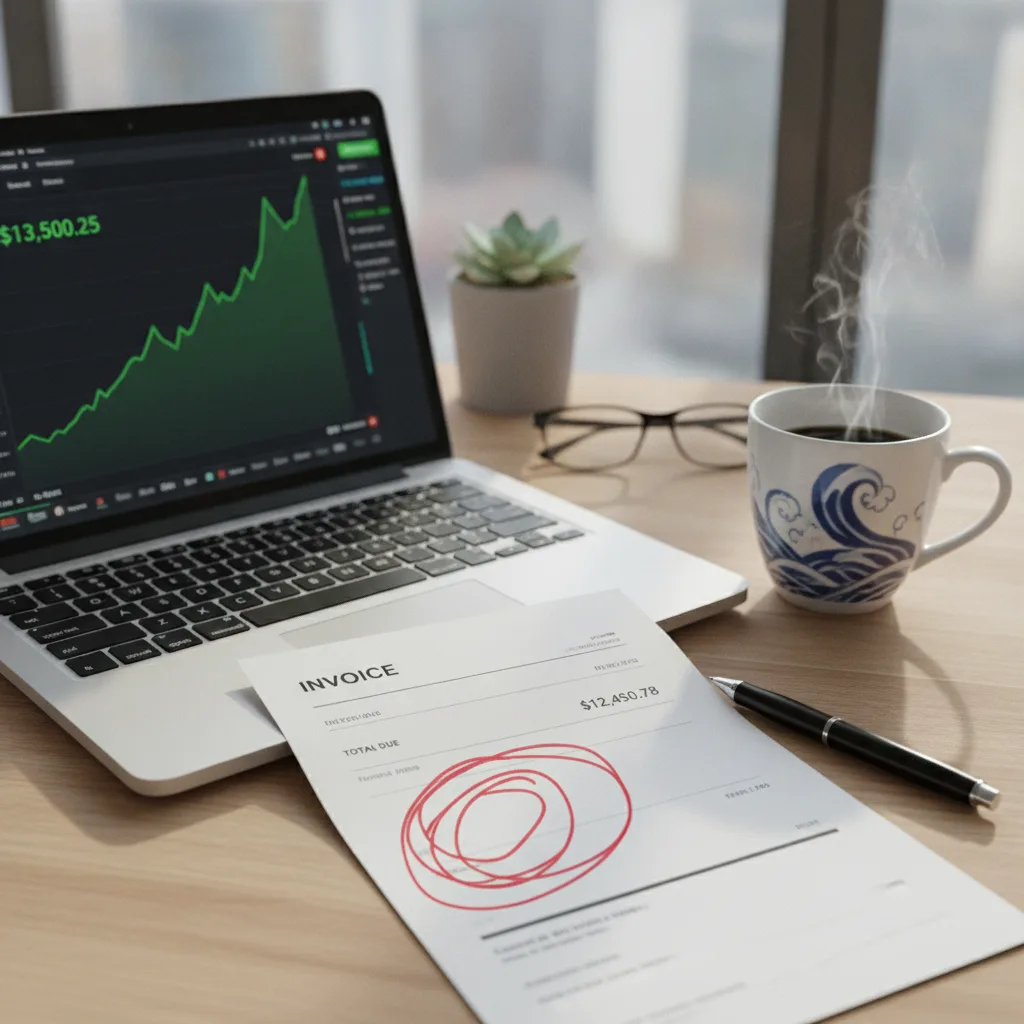
The Hacker News thread that pushed this into wider view cited pricing trackers showing 32GB DDR5-6000 modules moving from roughly $75–$85 in mid-2025 to $250–$400 by August 2026, depending on retailer and region — a 3x to nearly 5x increase depending on which snapshot you compare.
Server-grade RDIMM pricing has moved even more sharply in some enterprise contracts, because that inventory competes more directly with the capacity being pulled toward HBM production lines.
Micron's and SK Hynix's public earnings commentary through 2026 has repeatedly flagged HBM as the primary growth and margin driver, with conventional DRAM described in more constrained, allocation-based terms — company language for "we're prioritizing who gets supply." That's not a leak or a rumor.
It's in their own investor materials.
Laptop OEMs have started passing costs through more visibly in the second half of 2026, particularly on configurations with 32GB or higher memory — the tier that used to be a modest upsell and is now a meaningfully larger price jump than it was a year ago.
PC building communities have documented the same pattern on the retail side, with DIY builders reporting memory now representing a larger share of total build cost than the CPU in some configurations, which was unheard of even 18 months ago.
What This Means If You're Planning Purchases
If you're making infrastructure or hardware decisions in the next two quarters, a few things are worth acting on now rather than waiting out:
- Lock in server memory pricing where you can. Vendors offering multi-quarter price holds are worth the premium over spot buying, given the trend has been consistently upward, not oscillating.
- Reconsider memory-heavy configurations you don't strictly need. The gap between "comfortable" and "sufficient" RAM specs has gotten expensive enough to warrant a second look at defaults.
- Budget conservatively for renewals through at least mid-2027. Both the engineer and the analyst I spoke with agreed on this timeline as the earliest realistic point for new fab capacity to meaningfully ease conventional DRAM supply.
- Watch for secondary and refurbished markets tightening too, as more buyers get pushed there by new-unit pricing — that relief valve won't stay as cheap as it is today.
None of this is catastrophic in the way a total supply cutoff would be.
But it's a real, sustained cost increase landing on a category of spending most companies treated as a rounding error for the better part of a decade.
Back to That Invoice
I asked my friend, the one who called me about his server RAM bill, what he's telling his own team about it. He laughed, not because it's funny, but because there's not a satisfying answer.
"I tell them it's temporary," he said. "I actually believe that. I just can't tell them when."
That's probably the most honest place to leave this.
The AI boom has a very visible bill — the GPUs, the power contracts, the new data centers going up in places that didn't have data centers two years ago.
This is the invisible bill, the one showing up in memory slots instead of headlines, and it's landing on people who never asked to be part of the AI story at all.
Have you seen memory or hardware costs spike in your own budget this year, or is this still flying under the radar where you work?