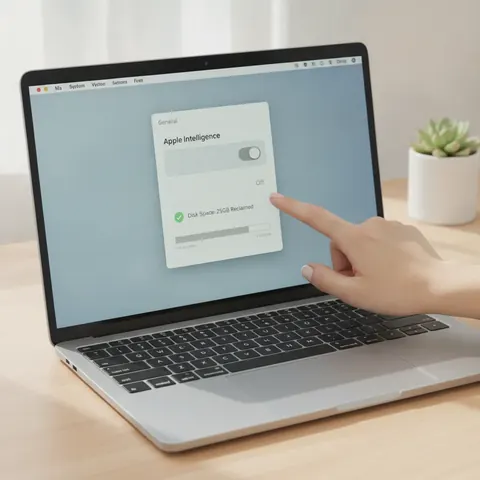
I'm becoming AI-blind
In this article
Bottom line: After three years of deep integration, AI's omnipresence in my daily infrastructure work, from code generation with Copilot to log analysis via custom LLMs, has created a subtle but significant "AI-blindness." This desensitization means I frequently accept AI-generated solutions without critical thought, overlooking potential flaws or the erosion of my own problem-solving intuition.
Developers must actively implement validation layers and periodic "AI-detox" routines to counter this cognitive drift and ensure true engineering rigor persists.
I've accepted AI-generated code that was subtly wrong, shipped configurations that were technically functional but architecturally flawed, and green-lit log analysis reports that missed critical context — all because I was AI-blind.
After years of seamless integration, the line between my own engineering judgment and a large language model's output has blurred, costing me critical hours in debugging and, worse, eroding my foundational problem-solving skills.
I used to pride myself on spotting an AI-generated artifact a mile away. The subtle tells, the uncanny valley prose, the perfectly generic code — I saw it all.
But after three years of daily, intense interaction with models like ChatGPT 5 and Claude 4.6 across my infrastructure projects, I’m starting to question if I can even recognize my own thought process anymore.
This isn't about AI failures; it's about a profound, subtle shift in human cognition that's eroding our critical faculties, making us "AI-blind" to the very systems we rely on.
The Subtle Creep of AI into Engineering
My journey into this AI-blindness wasn't a sudden plunge; it was a gradual, almost imperceptible creep.
Back in late 2023, when I first started experimenting with early versions of GitHub Copilot and custom-tuned language models for operational tasks, it felt like a superpower.
Boilerplate YAML for Kubernetes deployments, initial Terraform module stubs, even basic Python scripts for log parsing — they all materialized with a few keystrokes.
This was a novelty, a productivity hack.
Fast forward to mid-2026, and AI is no longer a novelty; it’s the bedrock of my daily workflow. My IDE suggests entire functions, often with a helpful comment explaining its logic.
My observability platform, powered by Gemini 2.5, doesn't just surface anomalies; it provides root cause hypotheses and even suggests remediation steps.
When I'm debugging a tricky networking issue, Claude 4.6 can digest gigabytes of packet captures and configuration files, spitting out concise summaries and pointing to potential misconfigurations in seconds.
The sheer volume of cognitive load offloaded is immense.
This isn't just about saving time; it's about shifting the very definition of "engineering." Instead of crafting solutions from first principles, I find myself editing AI's output.
Instead of deeply analyzing log patterns, I'm validating an LLM's summary.
The problem isn't that the AI is bad; it's that it's too good at appearing competent, creating a dangerous feedback loop where my own critical thinking atrophies.
The Illusion of Infallibility
One of the most insidious aspects of AI-blindness is the illusion of infallibility.
When an AI-powered linter gives my code a green light, or a vulnerability scanner (enhanced by a custom security-focused LLM) reports no critical issues, I breathe a sigh of relief.
This relief, however, is often unwarranted.
I’ve seen cases where a perfectly valid, yet subtly insecure, pattern was generated by Copilot and then passed by an AI-driven scanner because the vulnerability wasn't a standard signature match, but a complex logical flaw that only a human with deep domain expertise would catch.
For example, a few months ago, I was tasked with refactoring a critical Go microservice's authentication layer.
Copilot suggested a `context.WithTimeout` pattern that looked perfectly fine on the surface. It passed all unit tests, all linters, and even an internal static analysis tool.
But the timeout duration was tied to an external, highly variable dependency's SLA, not the internal service's expected latency.
This meant under peak load, the service would frequently timeout on internal calls, cascade failures, and cause deadlocks.
A human would have questioned the timeout source; I, operating in AI-blind mode, accepted the green light. It cost us two days of production instability before we traced it back.
This isn't a unique incident. I've observed similar patterns across our engineering teams.
Developers, myself included, are less likely to deeply scrutinize AI-generated boilerplate or even complex solutions because the AI presents them with an air of "correctness." The effort required to truly validate an AI's output often feels greater than the effort to generate it from scratch, leading to a dangerous shortcut.
The Cognitive Offload Trap
The other side of this coin is the cognitive offload trap.
Before AI, if I needed a complex regular expression or a specific AWS CLI command, I'd either know it, or I'd spend time researching it, understanding its nuances, and testing it thoroughly.
That process built mental models and reinforced foundational knowledge.

Now, I ask ChatGPT 5 or Cursor. It gives me the answer, and I paste it. The problem is solved.
But is it?
I’ve found myself increasingly unable to recall specific syntax or even fundamental API parameters that I used to know cold. My brain has outsourced that information retrieval to the LLM.
While this is efficient for individual tasks, it's a net loss for my long-term cognitive architecture.
What happens when the AI is wrong? What happens when the context is subtly different, and the AI's "correct" answer leads me down a rabbit hole?
My ability to debug the AI's output is diminishing because my underlying knowledge base is eroding.
This isn't about AI making us "dumber." It's about AI changing the type of intelligence we cultivate.
We're becoming expert AI-prompt engineers and output validators, but potentially at the expense of being expert system designers or deep-dive problem solvers.
The nuance here is critical: we need to retain the ability to operate without the AI, to truly understand the systems we're building, not just the prompts we're feeding.
The Reality Check: Beyond Hype and Fear
It's easy to fall into two camps: the AI evangelists who see no downsides, or the doomers predicting job loss and intellectual decay. The reality, as always, is more nuanced.
AI is an incredibly powerful tool, but our interaction model with it is fundamentally flawed, leading to this AI-blindness.
What people are getting wrong is the assumption that AI-assisted means AI-perfected.
We've integrated AI into our workflows as if it's a junior engineer who always gets it right, or at least mostly right, and never needs a second pair of eyes.
But AI, especially current-generation LLMs, operates on statistical patterns and learned representations, not genuine understanding or causal reasoning.
It excels at synthesizing existing knowledge but struggles with true novelty, subtle context, or identifying why a seemingly logical solution might fail in a complex distributed system.
The hype often focuses on what AI can do, overlooking the critical human role required to ensure its outputs are not just plausible, but genuinely correct and robust in production.
We're not building in enough intentional friction to force critical review. We're optimizing for speed, but sacrificing depth.
This isn't a criticism of AI itself, but of our evolving human-AI interface.
Practical Takeaways for the AI-Aware Engineer
Combating AI-blindness requires intentionality. It's not about rejecting AI, but about building new meta-cognitive practices into our workflows.
Here’s what I've started implementing to pull myself out of this cognitive drift:
1. The "AI-Diffing" Protocol
Don't just accept an AI's output.
When an LLM generates a significant block of code or a complex architectural diagram description, I now force myself to generate a second version using a different model (e.g., compare ChatGPT 5's output with Claude 4.6's) or, even better, by thinking through the problem myself first and then comparing my mental model to the AI's.
The discrepancies, even minor ones, are often where the critical insights or flaws lie.
This process treats the AI as a highly capable, but potentially biased or incomplete, pair programmer, not an oracle.
2. Mandatory "AI-Detox" Sprints
Every few weeks, I dedicate a specific problem-solving session or even an entire day to working without AI assistance. No Copilot, no LLM queries, no AI-powered search.
This forces me to rely on my own knowledge, documentation, and fundamental problem-solving skills.
It's like resetting your palate. It reminds me what it feels like to struggle, to research deeply, and to construct solutions from first principles. It helps recalibrate my internal "AI radar."
3. Intentional Friction Layers
For critical systems, I'm advocating for mandatory human review steps specifically focused on AI-generated components.
If a new Terraform module was primarily generated by AI, it requires an additional peer review layer that explicitly scrutinizes the AI's potential biases or omissions, not just the obvious syntax.
This isn't about distrusting the AI; it's about building resilience against our own AI-blindness. We need to actively question the "why" behind AI-suggested solutions, not just the "what."
4. Mentoring for Foundational Understanding
When training junior engineers, I'm emphasizing the importance of understanding the underlying principles before relying on AI for the how.
It’s too easy for a new developer to simply ask ChatGPT 5 how to implement a retry mechanism and paste the code.
Instead, I challenge them to explain why that specific retry strategy is chosen, what its failure modes are, and how it interacts with the rest of the system.
AI should augment learning, not replace it.
The goal isn't to demonize AI or slow down innovation. It's about recognizing a very real cognitive shift that's happening and proactively building safeguards against it.
We've spent decades building systems that are resilient to hardware failures and network partitions; now we need to build our minds to be resilient to the subtle erosion of critical thinking that AI's ubiquity can bring.
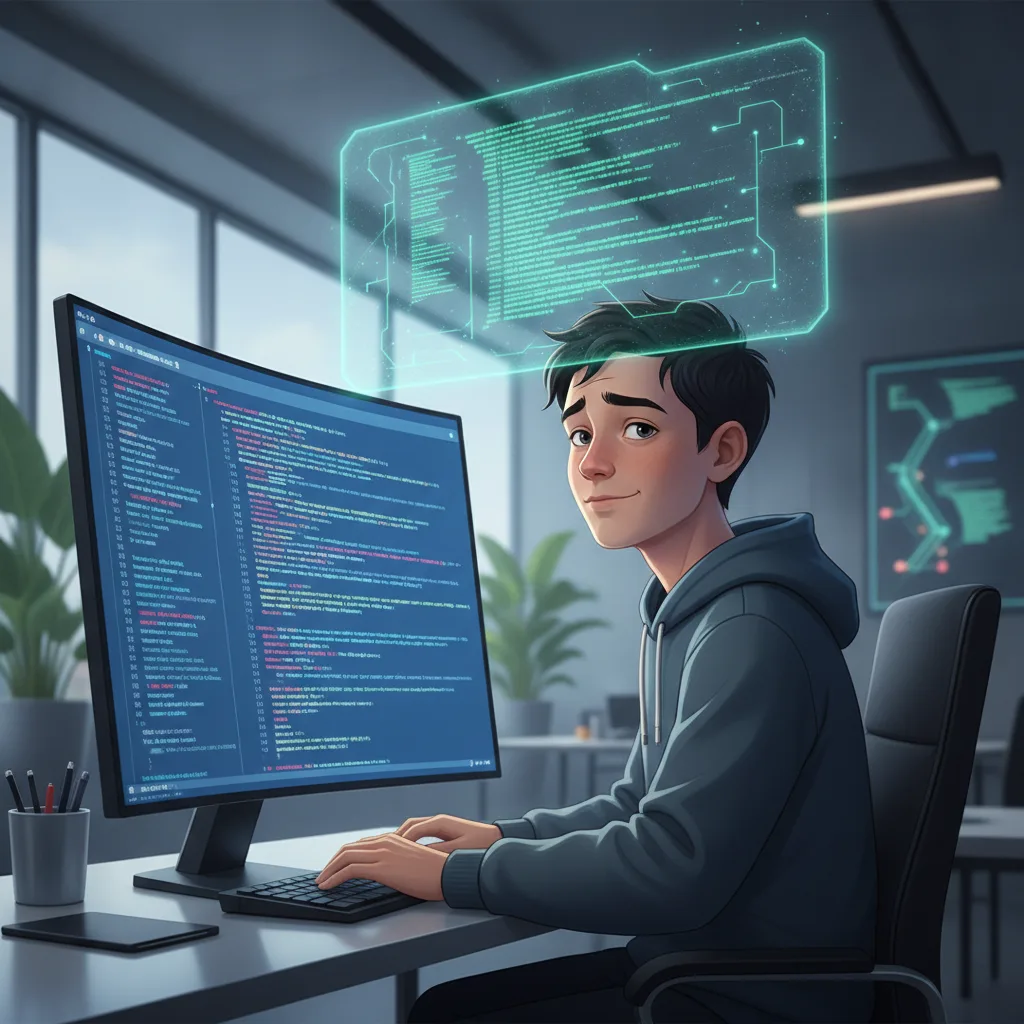
Have you noticed your focus slipping since using AI daily, or is it just me? Are you finding it harder to distinguish between genuine human insight and AI-smoothed content?
How do you prevent 'AI-blindness' in your own work?