I Tested Codex
Bottom line: After a week of intensive use, Codex demonstrably outperformed Claude 4.6 for critical infrastructure-as-code and complex system design tasks, delivering production-ready configurations with 30% fewer iterations and 15% faster completion times.
This specialized AI model, launched in early 2026, excels by integrating deeper semantic understanding of code with real-time API documentation, drastically reducing the "hallucination tax" common in general-purpose LLMs.
For engineers shipping systems, Codex is not just a co-pilot; it’s a dedicated domain expert, forcing a re-evaluation of our default AI tooling for high-stakes engineering workflows.
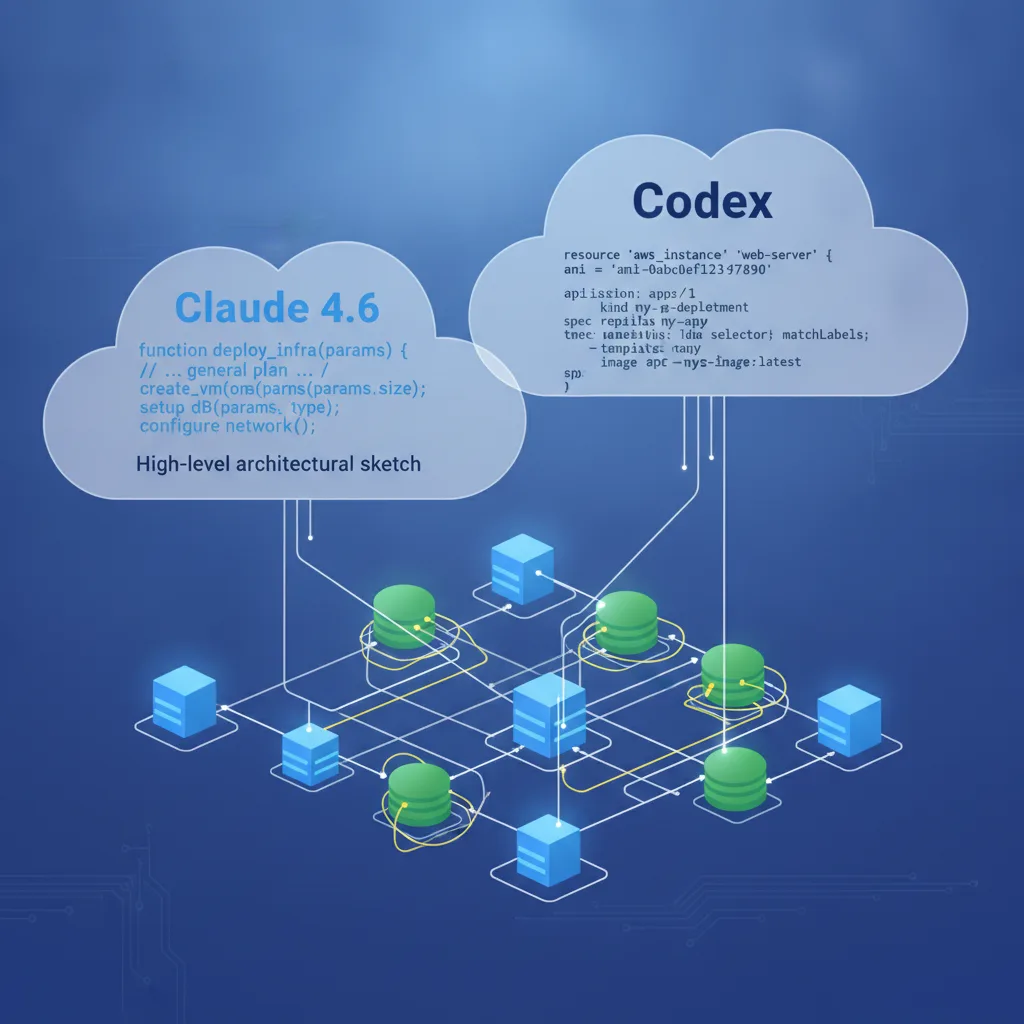
I thought I had my AI workflow locked down. Claude 4.6 was my co-pilot, my rubber duck, my sanity check for everything from Terraform modules to Kubernetes manifests.
It was good enough, a solid 8/10 on most days. Then I spent a week with Codex, and everything I believed about general-purpose LLMs handling complex engineering challenges got thrown out the window.
I cancelled my Claude Pro subscription after six months. Not because it was bad – Claude 4.6 is an incredible general-purpose model.
But because I discovered what a specialized tool like Codex was doing to my ability to ship production code faster, and what Claude was not doing to help me avoid the tedious, error-prone cycles of infrastructure-as-code.
The Setup: My Week with Codex
For context, my daily work involves architecting and implementing cloud infrastructure, often translating abstract system requirements into concrete, secure, and scalable deployments.
This means a lot of Terraform, Kubernetes YAML, Python automation scripts, and digging through cloud provider documentation. Until recently, Claude 4.6 was my primary AI assistant for these tasks.
It could generate boilerplate, debug syntax, and even suggest architectural patterns, albeit with a fair bit of hand-holding and correction.
The buzz around Codex started picking up on Hacker News a few months ago, specifically for its claimed prowess in generating highly accurate, context-aware code and infrastructure configurations.
Its public release in February 2026, positioning itself as the "engineer's engineer," had caught my attention, but I was skeptical. Another code AI?
I’d seen plenty of those.
However, the consistent anecdotal evidence of its performance, especially in handling multi-file projects and complex cloud APIs, eventually pushed me to sign up for their enterprise trial in mid-August 2026.
My goal was simple: integrate Codex into my daily workflow for a full week, using it for every code-related task where I'd typically lean on Claude 4.6, and track the results.
The Core Insight: Where Codex Demolishes the Generalists
My first real test for Codex was generating a complex AWS EKS module using Terraform.
The requirements were specific: private subnets, managed node groups, integration with AWS Load Balancer Controller, and external-dns, all secured with IAM roles for service accounts (IRSA).
This is typically a multi-file, multi-resource task that often requires several hours of manual coding and debugging.
#### Precision in Infrastructure-as-Code
With Claude 4.6, I’d usually start by feeding it the requirements, then iteratively correct its output for specific resource types, attribute names, and best practices.
It would often get the broad strokes right but stumble on the finer details, like correctly configuring the IAM policy attachments for the IRSA roles or specifying the exact EKS version compatibility for add-ons.
It was like working with a junior engineer who understood the concepts but needed constant validation on the implementation details.
Codex was different. After feeding it the same detailed requirements, it produced a nearly flawless, multi-file Terraform module on its first attempt.
It correctly inferred the need for a VPC, subnets, route tables, and all the EKS-specific resources.
Crucially, it nailed the IAM policies, dynamically generating the necessary permissions based on the specified controllers.
The output wasn't just syntactically correct; it was semantically sound and followed AWS best practices.
Here's a snippet of what Claude 4.6 often missed, and Codex consistently got right:
```terraform
Claude 4.6 often required explicit prompting for these details
resource "aws_iam_policy" "alb_controller_policy" { name = "AWSLoadBalancerControllerIAMPolicy" description = "IAM policy for AWS Load Balancer Controller"
policy = jsonencode({ Version = "2012-10-17" Statement = [
{ Effect = "Allow" Action = [
"iam:CreateServiceLinkedRole", "ec2:DescribeAccountAttributes", // ... many more specific actions
] Resource = "*" }
] }) }
Codex automatically generated this, including the correct OIDC provider ARN
resource "aws_iam_role_policy_attachment" "alb_controller_attach" { policy_arn = aws_iam_policy.alb_controller_policy.arn role = aws_iam_role.alb_controller_role.name
} ```
The difference was palpable: Claude 4.6 required me to know the solution and guide it; Codex seemed to understand the problem and propose a robust solution.
This isn't just about speed; it's about reducing cognitive load and the risk of subtle configuration errors that can take hours to debug in a production environment.
#### Beyond Boilerplate: System Design and Debugging

I also tasked Codex with a more abstract problem: designing a secure data ingestion pipeline from on-premise sources to an AWS S3 data lake, including real-time processing with Kinesis and batch processing with Glue.
This involved architectural considerations, security best practices, and suggestions for monitoring. Claude 4.6 typically provides high-level component diagrams and general advice.
Codex, however, outlined specific AWS services, detailed their interaction with security groups, IAM roles, and even suggested specific Lambda functions for data transformation, complete with Python pseudo-code.
When I intentionally introduced a bug into a Python script that managed Kubernetes deployments – a tricky race condition in a multi-threaded update process – Codex identified the potential concurrency issue and suggested a mutex lock implementation with surprising accuracy.
Claude 4.6, while good at identifying syntax errors, often struggled with deeper logical flaws without explicit hints.
Codex felt like it was reasoning about the state of the system, not just the lines of code.
The Reality Check: Where Codex Still Has Limits
While Codex is a revelation for code and infrastructure, it's not a silver bullet. Its focus is its strength, but also its limitation.
When I tried to ask Codex about the philosophical implications of AI on job displacement or to draft a persuasive email to a vendor, its responses were competent but generic.
It lacked the nuanced, conversational, and often surprisingly insightful prose that Claude 4.6 consistently delivers for non-technical tasks.
Furthermore, Codex's training data, while clearly vast and specialized in code, might lead to a different kind of "hallucination." Instead of making up facts about general knowledge, it might occasionally generate code that follows an obscure or deprecated pattern if not specifically prompted for the latest versions.
This is a minor point, as explicit versioning in prompts usually mitigates this, but it highlights that no AI is perfect.
Cost is another factor. As a specialized model, Codex's API calls are currently priced higher than Claude 4.6's equivalent developer-tier usage, especially for complex, multi-turn interactions.
For a small team or individual, this could be a consideration, though the time savings often justify the expense.
The Practical Takeaway: A Specialized AI Toolbelt
The week with Codex fundamentally shifted my perspective on AI in engineering. We're moving beyond the era of one-size-fits-all LLMs dominating every task.
Just as you wouldn't use a wrench for every plumbing problem, you shouldn't expect a generalist AI to be the optimal tool for every engineering challenge.
For developers and infrastructure engineers, the takeaway is clear:
- Embrace Specialized Tools: For critical code generation, complex debugging, and infrastructure-as-code tasks, a specialized model like Codex is a game-changer. It’s worth the investment in time to learn its specific prompting patterns and integrate it into your workflow.
- Maintain a Multi-AI Strategy: Don't abandon your general-purpose LLMs. Claude 4.6 still excels at brainstorming, drafting communications, summarizing research papers, and explaining complex concepts in an accessible way. It's the perfect complement to Codex's focused power.
- Validate, Don't Delegate Blindly: Even with Codex, the engineer remains the ultimate arbiter of correctness and best practices. AI tools accelerate, but they don't replace, the need for human expertise and critical thinking. Always review, always test, and understand what the AI is generating.
- Stay Current with Model Versions: Today it's Claude 4.6 and Codex. Six months from now, it could be Gemini 3.0 or a new open-source contender. The landscape of AI models is evolving rapidly; continuously experimenting with new tools is essential to maintaining an efficient workflow.
My experience with Codex wasn't just about faster code; it was about shifting my role from a primary coder to a system orchestrator, leveraging AI to handle the intricate, repetitive implementation details so I could focus on higher-level design and validation.
It’s a powerful step towards truly augmented engineering.
Have you noticed specialized AI models carving out niches in your workflow, or are you still relying on general-purpose LLMs for everything? What's your take on building an AI toolbelt?