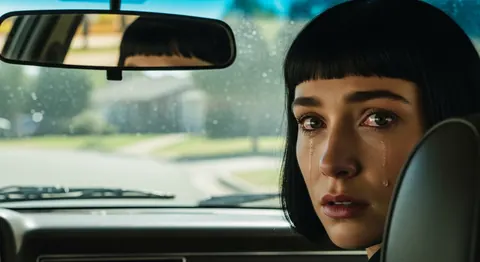
I Quit Q-Anon Cold Turkey. Here’s What Actually Happened to My Brain.
I spent eighteen months convinced that the world as we know it was a theatrical production designed to hide a global war between light and shadow.
In August 2024, I wasn't just a "believer"—I was an evangelist. I had three burner phones, a dedicated "comms" laptop, and a growing distance between myself and every person who actually shared my DNA.
The descent wasn't a sudden fall; it was a slow, seductive slide into a reality where everything finally made sense.
For the first time in my life, I wasn't just a cog in the machine; I was a digital soldier with a front-row seat to history. But when I finally walked away in mid-2025, the "awakening" I experienced wasn't the one I had been promised.
It was a brutal, neurological withdrawal that felt less like a change of heart and more like a physical detox.
Leaving a high-control belief system isn't about "changing your mind"—it’s about rewiring a brain that has become addicted to the dopamine of certainty. Here is what actually happened to my gray matter when I turned off the signal.
The Dopamine Architecture of Certainty
We often talk about conspiracy theories as a failure of logic, but for me, it was a triumph of biology.
The human brain is a pattern-matching machine that craves "cognitive closure"—the end of ambiguity. When the world feels chaotic (as it did during the height of the 2024 election cycles), the brain's "threat detection" centers, like the amygdala, go into overdrive.
Q-Anon didn't just provide answers; it provided a gamified reward system.
Every "drop" I decoded felt like a hit of pure dopamine, a neurological "bingo" that told my brain I was smarter and safer than the unwashed masses. Research into radicalization shows that this creates a feedback loop similar to slot machine addiction.
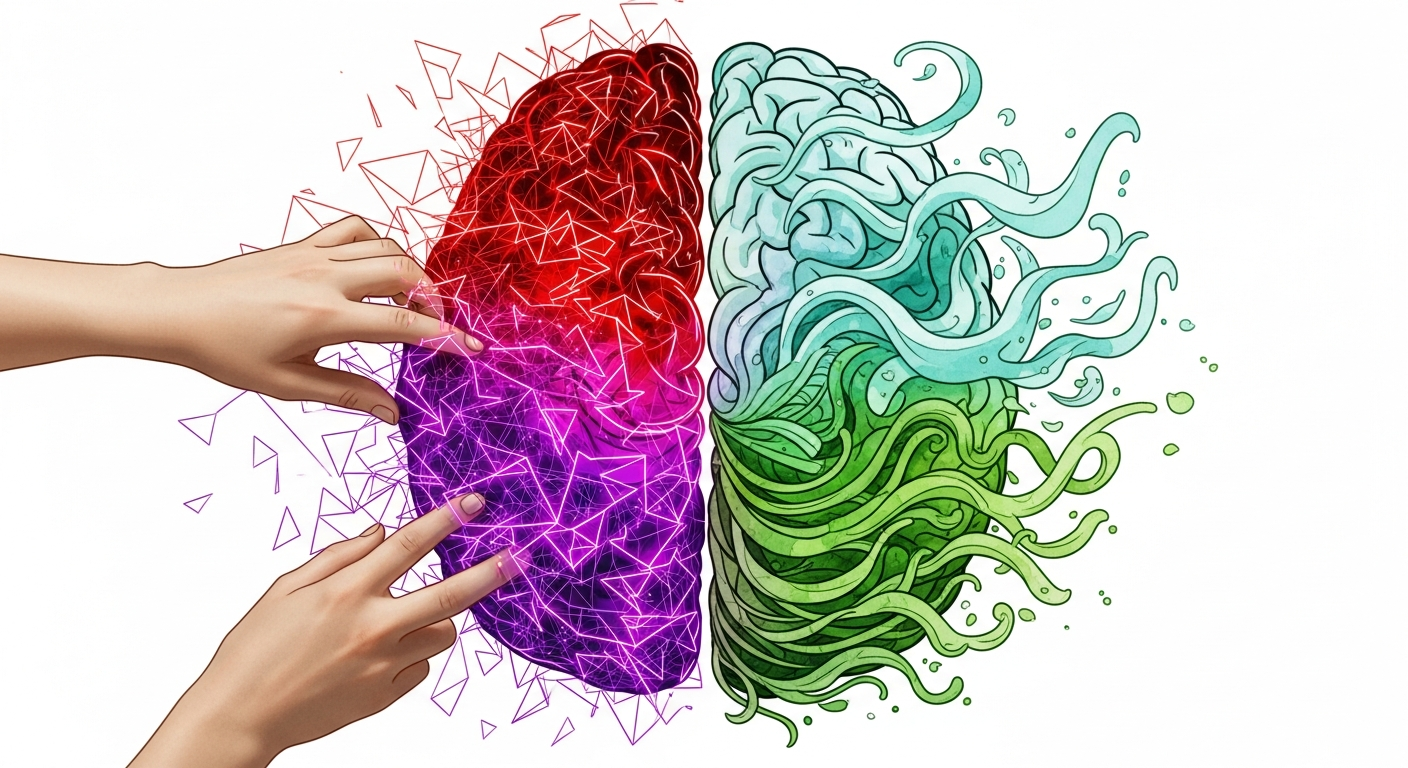
When I was "in," my prefrontal cortex—the part of the brain responsible for critical thinking and impulse control—was essentially bypassed.
I wasn't thinking; I was reacting to a series of high-intensity emotional triggers designed to keep me in a state of perpetual "fight or flight." This is why logic doesn't work on people still in the rabbit hole; you can't reason someone out of a state they were never reasoned into.
Why "Smart" People Fall for "Dumb" Theories
The most painful part of my recovery was admitting that my intelligence was actually a liability.
As a software engineer, I am trained to find patterns in complex data, and that exact skill was weaponized against me. I used my understanding of systems and architecture to build a more "logical" cage for myself.
There is a phenomenon called Motivated Reasoning, where the more intelligent a person is, the better they are at justifying their existing biases.
I wasn't searching for the truth; I was searching for evidence that my chosen reality was correct. My brain would filter out any "noise" (facts) that contradicted the "signal" (the conspiracy).
By early 2026, looking back at my 2024 self, I realized I had been living in a curated echo chamber powered by the very algorithms I once helped build.
The "Great Awakening" was actually a Great Narrowing—a process where my world shrunk until it was only as wide as a smartphone screen. The irony of being a tech professional who fell for a digital cult is not lost on me.
The Moment the Signal Died
My "cold turkey" moment didn't happen because of a debate or a fact-check; it happened because of a sunset.
In July 2025, after a massive "prediction" failed to materialize for the twentieth time, I went for a walk without my phone. For forty-five minutes, I watched the light change over a park in Seattle, and I realized the world was still there.
The "shadow war" I was so invested in hadn't touched the grass, the trees, or the families having picnics.
The disconnect between the digital apocalypse in my pocket and the physical peace in front of me became an intolerable cognitive dissonance. I went home, deleted every encrypted app I owned, and threw my burner phones into a junk drawer.
What followed was the "Gray Period." When you stop the constant influx of high-intensity information, your brain's reward system crashes. I felt depressed, bored, and physically lethargic for weeks because my brain didn't know how to process "normal" reality anymore.
The quiet felt like a threat.
The Reality Restoration Protocol
If you are struggling with "digital vertigo" or trying to help someone come back to the real world, you need more than just facts.
You need a system to rebuild the neurological pathways that were hijacked by the algorithm. I developed what I call the "Reality Restoration Protocol" to manage my own return.
This isn't about "deprogramming" in the cinematic sense; it's about digital hygiene and neurological re-training.
You have to treat your attention as a finite resource that has been exploited by bad actors. Here is the three-part framework I used to get my life back.
1. The Information Diet (Friction over Flow)
The first step was to reintroduce intentional friction into how I consumed data.
Algorithms are designed to remove friction, feeding you the next "hit" before you can even think to ask for it. I stopped using algorithmic feeds entirely for six months.
I switched to RSS feeds for specific, boring news outlets (think local city council reports or specialized technical journals).
If a piece of news didn't have a direct impact on my physical life within a five-mile radius, I ignored it. This forced my brain to downshift from "global crisis" mode to "local community" mode.
2. The Cognitive Gatekeeper (The 24-Hour Rule)
I implemented a strict rule for any "shocking" information: I was not allowed to have an opinion on it for twenty-four hours. If I saw a headline that made my blood boil, I had to wait a full day before I could search for more info or discuss it.
This delay allows the amygdala to cool down and gives the prefrontal cortex a chance to come back online. Most of the time, by the next day, the "breaking news" had either been debunked or had lost its emotional sting.
Patience is the ultimate antidote to radicalization.
3. The Physical Anchor (The "Analog Hour")
Every day, I committed to one hour of activity that was impossible to digitize.
For me, it was woodworking; for others, it might be gardening, cooking, or weightlifting. You need a hobby where "feedback" comes from the physical world, not a notification.
If you mess up a piece of wood, the wood doesn't care about your political leanings—it just breaks. This provides a "grounding wire" for the brain.
It reminds you that cause and effect are real, tangible things that exist outside of a social media thread. Physical reality is the only thing that can truly break a digital trance.
Re-Entering the "Gray Zone"
The hardest part of quitting cold turkey wasn't losing the conspiracy; it was losing the community.
Cults provide a sense of belonging that is incredibly hard to replicate in the fragmented, "loneliness epidemic" world of 2026. When I left, I was suddenly just a guy in his thirties with no friends and a lot of explaining to do.
I had to learn to live in the "Gray Zone"—the uncomfortable space where there are no clear villains, no secret saviors, and most problems are solved by slow, boring bureaucracy rather than "The Storm." It is much less exciting than being a digital soldier, but it is infinitely more honest.

I reached out to my sister, whom I hadn't spoken to since Thanksgiving 2023.
I didn't lead with an apology for being wrong; I led with an apology for being absent. Healing the relationship didn't happen because I "proved" I was sane; it happened because I showed up for her daughter's birthday and didn't mention a single "drop."
The Long Road Back to Focus
Today, February 27, 2026, my brain feels different.
I can read a book for an hour without checking for a notification. I can listen to a podcast about history without looking for "hidden codes" in the narrator's tone.
I’ve even started using AI tools like Claude 4.6 and ChatGPT 5 again, but with a wary, professional distance.
I use them to help me code, not to help me "understand the world." I’ve realized that while AI can process data at an incredible scale, it lacks the human context of suffering, joy, and physical touch that makes life worth living. We are entering an era where our greatest challenge isn't "fake news"—it's the loss of our own attention.
If you feel yourself slipping into a rabbit hole, or if you’ve just climbed out of one, know that the "detox" is the hardest part.
The world isn't as exciting as the conspiracy promised, but it's much more beautiful. And most importantly, it's actually real.
Have you ever felt yourself getting "addicted" to a specific online narrative or community, only to realize later it was distorting your reality? How did you pull yourself back?
Let’s talk about it in the comments.