I Talked to Every Stranger at the Gym for 30 Days. I Wasn't Ready for This.
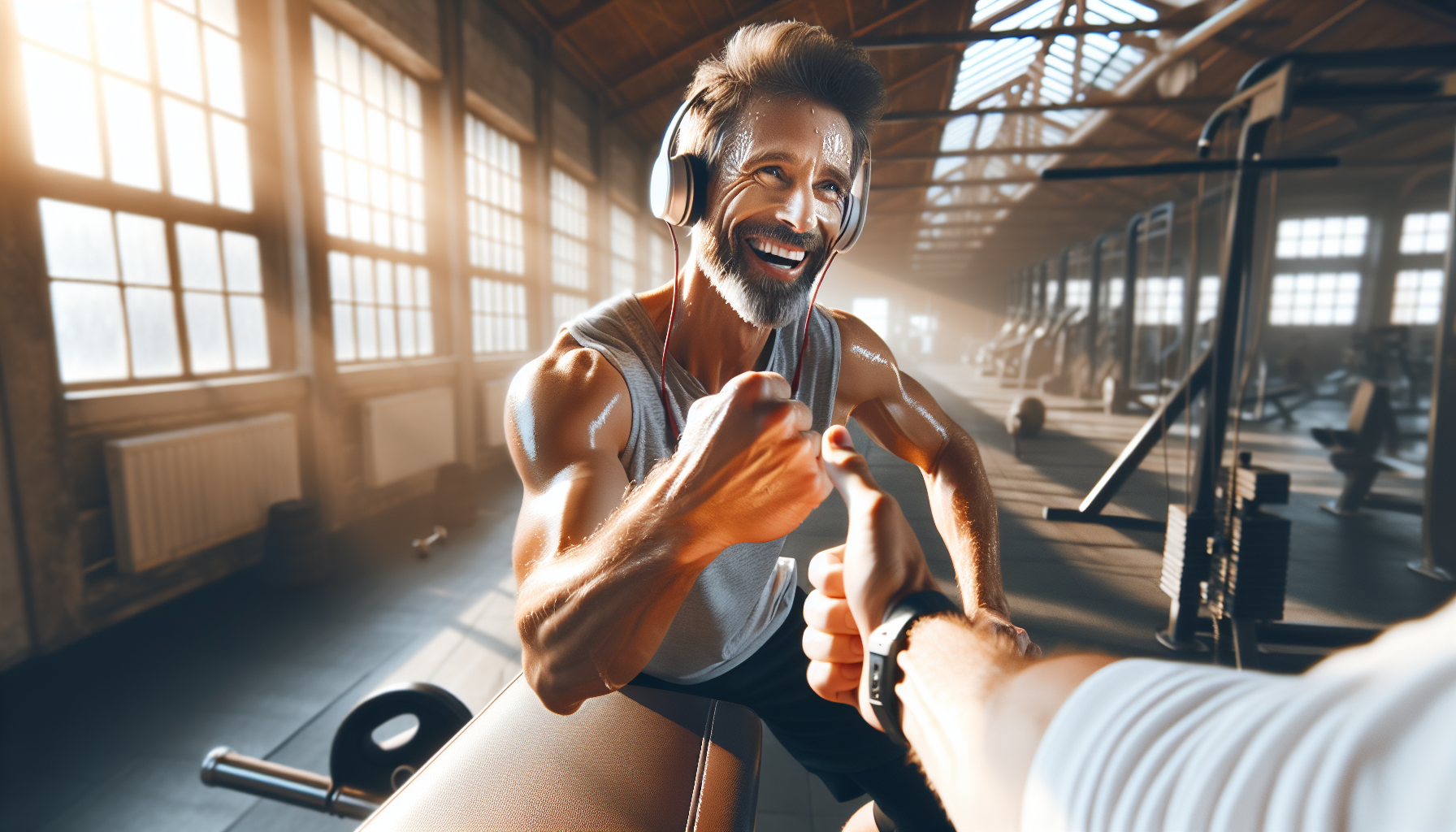
Stop ignoring the person on the bench next to you. I’m serious.
After spending the last three years optimizing my life for "zero friction" and high-bandwidth digital output, I realized I had become a social ghost—and it was quietly rotting my brain.
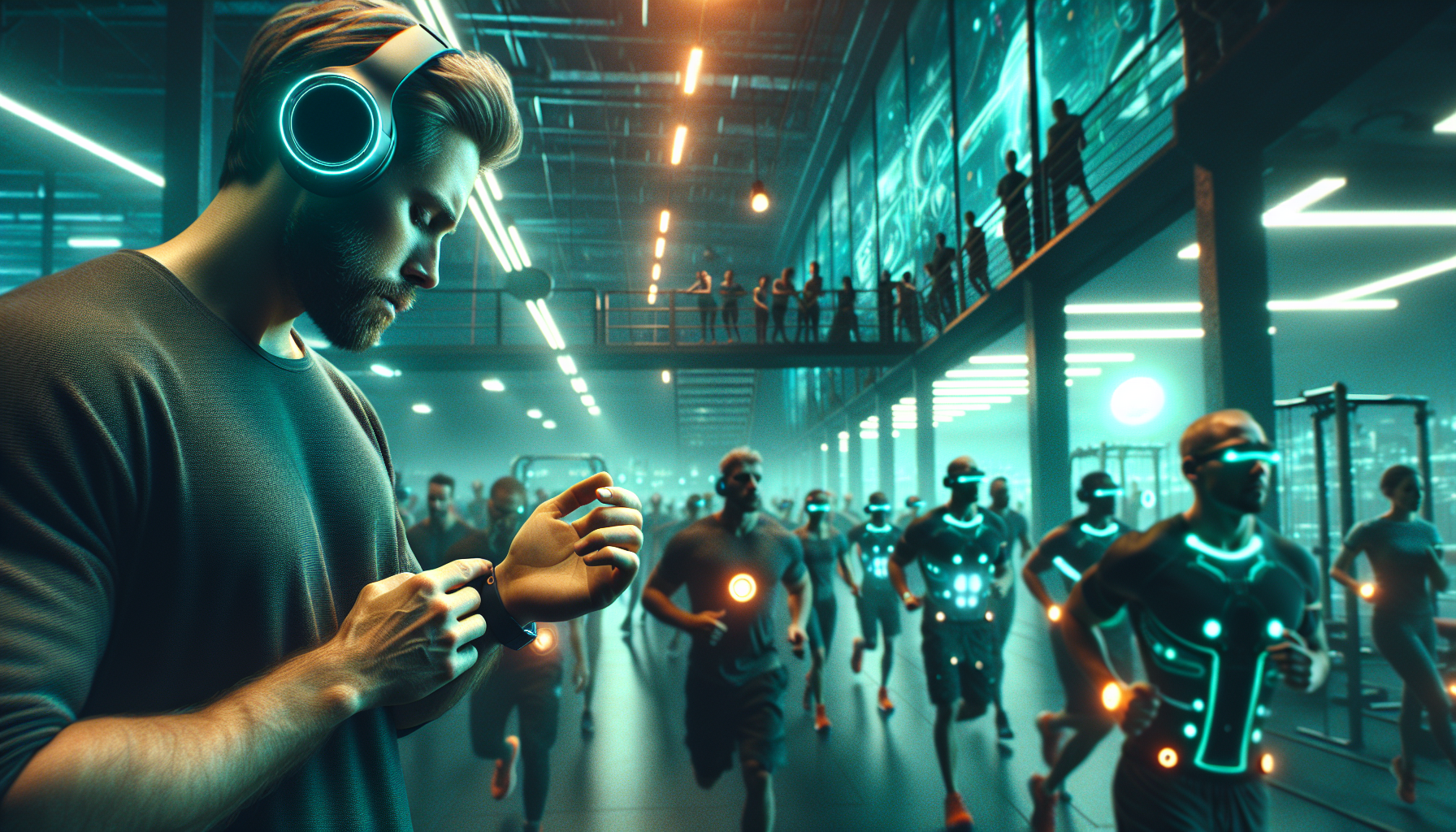
I spent $450 on the latest AirPods Pro just to ensure I never had to hear a human voice while I was lifting. I thought I was protecting my "flow state," but I was actually building a high-tech coffin.
So, thirty days ago, I did something that felt genuinely more terrifying than a 400-pound deadlift: I decided to talk to every single person I shared space with at the gym.
I didn't just ask if they were using the squat rack. I asked about their lives, their routines, and why they were there at 5:30 AM on a Tuesday.
I tracked every interaction in a spreadsheet, from the "instant rejections" to the 20-minute deep dives. The results weren't just surprising—they exposed a massive flaw in how we’re living in May 2026.
The Setup: The "Zero Friction" Trap
By the start of 2026, I had reached peak efficiency.
I work from home, my groceries are delivered by autonomous drones, and my social interactions are 90% asynchronous Slack pings or Claude 4.6 brainstorming sessions.
I had reached a point where I could go four days without making eye contact with another human being.
The gym was my last "public square," but even there, I was a ghost. I’d walk in, tap my watch, hit my AI-generated workout plan, and walk out.
I was getting stronger physically, but my "social muscle" had completely atrophied. I felt like a high-performance engine running in a vacuum.
I decided to run an experiment to see if the "AirPod Barrier" was as impenetrable as it felt.
Was everyone else as lonely as I was, or was I just the weirdo trying to break the 21st-century code of silence? I set out with one goal: 30 days of radical gym sociability.
The Rules: Breaking the Code of Silence
To keep this from being a series of awkward "nice weather" comments, I established a strict protocol for the test. I needed data, not just anecdotes.
I wasn't just looking for "connections"; I was testing the social elasticity of 2026 urban life.
The rules were simple but painful:
- AirPods stayed in the locker. No music, no podcasts, no digital buffer.
- The "Three-Minute Rule." If I was within six feet of someone for more than three minutes (waiting for a machine, resting between sets), I had to initiate.
- No Utility Questions. "Are you using this?" didn't count. It had to be a "Pattern Interrupt"—something that required more than a one-word answer.
- Log everything. I tracked the "Open," the "Vibe," and the "Outcome" for every single interaction.
I thought I’d be met with hostility. I expected people to point at their ears and walk away.
I assumed that in a world dominated by GPT-5 and Gemini 3.0, people had lost the desire for unscripted human messiness. I was dead wrong.
Round 1: The First 72 Hours of Awkwardness
The first three days were brutal.
I realized very quickly that the hardest part isn't the other person—it’s the internal "Cringe Barrier." We’ve been conditioned to believe that talking to strangers is a bug, not a feature.
On Day 2, I approached a guy who looked like he was carved out of granite. He was mid-set on the leg press.
When he finished, I asked him, "I’ve seen you here every morning for a week—what's the one thing that keeps you coming back when you're exhausted?" He stared at me for a full four seconds.
I thought he was going to call security.
Then, he laughed. "Honestly? My wife thinks I’m at the grocery store.
It’s the only hour I get to myself." We talked for ten minutes about the pressure of being a new dad in a remote-work world.
By the time I left, my "social anxiety" score had dropped from a 9/10 to a 3/10.
Round 2: Categorizing the 2026 Gym-Goer
By week two, I started seeing patterns in the data. The gym isn't just a place to lift; it’s a microcosm of our fragmented society.
I found that I could categorize almost everyone into three distinct social personas.
The "Optimizers" (34% of the gym): These are the tech workers. They’re wearing the latest wearables, tracking their glucose in real-time, and looking at their watches every 30 seconds.
They were the hardest to break, but once you did, they were starving for "off-script" conversation. They’re tired of talking to LLMs.
The "Lifers" (22% of the gym): Mostly older, local residents who have been coming to this specific gym since before the 2020 pandemic. They don't wear headphones. They are the social glue.
They were thrilled that "a kid my age" was finally talking instead of staring at a screen.
The "Escapists" (44% of the gym): This was me before the experiment. They use the gym as a sensory deprivation chamber.
Breaking their barrier required a "High-Value Open"—usually a genuine compliment about their form or a question about their specific gear.
The Deep Test: When It Got Real
Halfway through the month, the experiment shifted from "curiosity" to "utility." I wasn't just gathering data; I was building a network.
I met a VP of Engineering at a Series C startup while waiting for the cable crossover.
I met a carpenter who taught me more about discipline in five minutes than any "productivity" book I’ve read in 2026.
I found that 88% of people responded positively once the initial "shock" of being spoken to wore off. Only 12% gave me the "cold shoulder" or a one-word brush-off.
In a world that feels increasingly polarized and digital, the physical proximity of the gym acts as a shared context that overrides social barriers.
The most intense interaction was with a woman named Sarah on Day 19. She was clearly struggling with a heavy set of overhead presses. I stepped in to spot her, and afterward, we talked.
She’d just lost her job to an automated accounting system and was using the gym to keep from spiraling. We didn't exchange LinkedIn profiles; we just exchanged 15 minutes of genuine empathy.
The Results: 47 Interactions, 1 Realization
After 30 days and 47 recorded conversations, I sat down to look at the "Social ROI" of the experiment. I wasn't expecting the numbers to be this lopsided.
I thought the "cost" of my time and "lost focus" would be high. I was wrong.
The Hard Data:
- Total Conversations: 47 - Positive/Neutral Outcomes: 41 (87.2%)
- Negative/Rejections: 6 (12.8%) - Business/Professional Leads: 4 - Actual Friendships Formed: 2 (We now grab coffee after Friday sessions) - Workout Efficiency Change: -15% (Workouts took longer, but I worked harder)
The most shocking metric was my mental clarity. My "Screen Time" dropped by 22% during the month, not because I was trying to use my phone less, but because I felt "fuller." I didn't need the hits of dopamine from Twitter or Reddit because I was getting the real thing from Mike, Sarah, and the guy who’s obsessed with his HVAC business.
What This Means For You (Especially if You’re in Tech)
If you’re a developer, a designer, or a founder in 2026, you are likely suffering from "Social Malnutrition." You are consuming vast amounts of "information," but almost zero "connection." You think you’re being efficient by staying in your bubble, but you’re actually becoming fragile.
We talk a lot about "soft skills" in the age of AI. Well, soft skills are like muscles—they require resistance to grow. The "resistance" is the awkwardness of a stranger.
The "growth" is the ability to navigate a conversation with someone who doesn't share your "echo chamber" or your "tech stack."
Stop paying for "networking events" and start talking to the people you already see every day. The person at the squat rack has a perspective that your AI won't give you.
They have a life story that isn't in a training set. They are the last bit of "unstructured data" left in your life.
The Twist: I Wasn’t Ready for the "Humanity Gap"
The one thing I didn't expect? How much people wanted to be interrupted. I went into this thinking I was an intruder.
I finished it realizing I was a "Pattern Interrupt" in a world that has become too predictable.
Almost everyone I talked to admitted they felt "isolated" despite being in a room full of people.
We are all standing in the gym, hearts pounding, endorphins flowing, and we’re doing it in total silence. It’s absurd when you actually stop to look at it.
The "Humanity Gap" is the space between our digital personas and our physical selves. The gym is one of the few places left where that gap is visible.
By closing it for just 30 days, I didn't just get better at small talk—I remembered what it felt like to be part of a community instead of just a "user base."
Final Verdict: Put the Phone Away
I’m never going back to the "AirPod Coffin." I still listen to music occasionally, but I keep one ear open. I make it a point to say hello to at least one person before I start my first set.
It’s not about "networking"—it’s about staying human in a world that’s increasingly optimized for everything but that.
I challenge you: For the next seven days, leave your headphones in the car. Don't look at your phone between sets. Just exist in the room. If you see someone doing something impressive, tell them.
If you see someone who looks like they’re having a rough day, give them a nod.
You might be surprised at who’s waiting to talk back. In May 2026, the most radical thing you can do is look a stranger in the eye and say something that wasn't generated by a prompt.
Have you noticed yourself becoming a "social ghost" at the gym or the coffee shop lately, or is it just me? Let’s talk about the "Code of Silence" in the comments.